
japanese-art-column
- Jul 21, 2026 - Animals Painted by Kawanabe Kyōsai Are Creepy Cute!?
- Jul 21, 2026 - Surugadai Branch of the Kanō School
- Jul 21, 2026 - Tsuji Kakō: Kyoto Painter with Extraordinary Range of Styles
- Jul 21, 2026 - Kōno Bairei: Central Figure in the Foundation of Modern Japanese Paintings in Kyōto
- Jul 21, 2026 - Anecdote of Takeuchi Seihō: A Gift for the Doctor
- Jul 21, 2026 - Maruyama Iwane: A Japanese-Style Painter Who Was Influenced by the Gorgeous Pictures in the Momoyama Period
- Jul 21, 2026 - Kitazawa Eigetsu: The Nihonga Painter Who Pursued Female Beauty
- Jul 21, 2026 - Yamaguchi Hōshun: Japanese Painter Who Developed an Original Style of Paintings by Incorporating Western Painting Expressions into Yamato-e
- Jul 21, 2026 - Matsunaga Kōgyoku: The Shōwa Period Painter Who Continued to Draw Traditional Japanese Painting
- Jul 14, 2026 - Hamada Kan: An Authority in the Japanese Art World of Kyoto. A Great Master of Bird-and-Flower Painting.
- Jul 14, 2026 - Tonouchi Mishō: A Japanese-Style Painter Who Gave New Sensation to the World of Yamato-e.
- Jul 14, 2026 - Takashima Hokkai: Japanese Painter Who Painted Landscapes and Birds-and-Flowers from a Scientist’s Perspective
- Jul 14, 2026 - Ezaki Kōhei: A Japanese-Style Painter Who Was Widely Active in the Art World of the Shōwa Period
- Jul 14, 2026 - Fukuda Suikō: Shijō School Painter Who Takes the Nickname of “Hawk’s Suikō”
- Jul 14, 2026 - Imanaka Soyū: Japanese Painter Who Painted the Scene Panel Board at Tokyo Kanze Kaikan
- Jul 14, 2026 - Yamamoto Kōun: A Japanese Style Painter Who Kept Painting the Natural Beauty of Saga, Kyōto.
- Jul 14, 2026 - Kobayashi Kahaku: A Key Painter Active Earlier Both in the Kyōto Art Circle and in the Inten Exhibition, Drawing Beautiful Japanese-style Paintings Full of Transparency
- Jul 14, 2026 - Kodama Kibō: The Japanese-Style Painter Who Persistently Explored
- Jul 14, 2026 - Kimura Buzan: One of the Big 4 in the Nihon Bijutsuin. The Best Colorists in the Nihon Bijutsuin.
- Jul 09, 2026 - Hirafuku Hyakusui: A Japanese-Style Painter Who Integrated the Both Elements of Rinpa and Nanga School and Developed His Unique Painting Style
- Jul 09, 2026 - Takaya Kōho: An Artist Who Belonged to the Shijō School and Responded to Orders from the Manias at a Distance from the Painting World
- Jul 09, 2026 - Takamori Saigan: Nanga Painter Who Was Active in the Meiji to Taishō Eras and Called “Nobleman on Street”
- Jul 09, 2026 - Mochizuki Shunkō: Master of Paintings in the Flower-and-Bird Genre Who Loved and Enjoyed the Beauty of the Four Seasons.
- Jul 09, 2026 - Kanashima Keika: A Master of Paintings in the Flower-and-Bird Genre Who Showed His Talent at the Bunten, the Teiten and the Nitten Exhibitions.
- Jul 09, 2026 - Yamaguchi Hachikushi: ‘Screens of Red and White Peonies,’ Exhibited at the Fourth Teiten Exhibition
- Jul 09, 2026 - Abe Shunpō : The Master of Kachō-ga Who Was Active in the Bunten and Teiten Exihibitions
- Jul 09, 2026 - Murakami Kagaku: A Japanese-style Painter, Having Kept on Exploring the Path for the ‘Real Artist’, Overwhelmingly Acclaimed by the Art Experts
- Jul 09, 2026 - Tsubata Michihiko: An Expert of Historical Figures Painting Born in Niigata Prefecture
- Jul 09, 2026 - Yamauchi Tamon: A Japanese-Style Painter Who Was Born in Miyazaki and Active from the Meiji era to the Shōwa Era.
- Jul 08, 2026 - Himejima Chikugai: A Leading Figure of Kansai Nanga Artists Active in the Meiji and Taishō Periods.
Contact Us
Please fill out the form below and submit for your inquiry.
Your privacy is important to us. We are committed to protecting your privacy.
(or press ESC or click the overlay)
CEO Message
(or press ESC or click the overlay)Our Feelings For Kakejiku
Company Profile
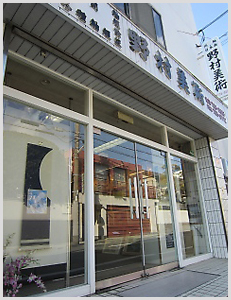
Name Art Nomura
President Tatsuji Nomura
Founded1973
Established1992
Address7-23 Babadori, Tarumi-ku, Kobe city,
Hyougo Prefecture, 655-0021, Japan
Capital10 million yen
URLhttp://nomurakakejiku.com
Our Business
Art Nomura is an art dealer which produces kakejiku (hanging scrolls). We mount many paintings and calligraphic works in kakejiku in my factory. Kakejiku are our main product. We also remount and repair old or damaged kakejiku. We share the traditional Japanese art of kakejiku with people all over the world.
(or press ESC or click the overlay)
Access Map
(or press ESC or click the overlay)Access Map