Maruyama Iwane: A Japanese-Style Painter Who Was Influenced by the Gorgeous Pictures in the Momoyama Period
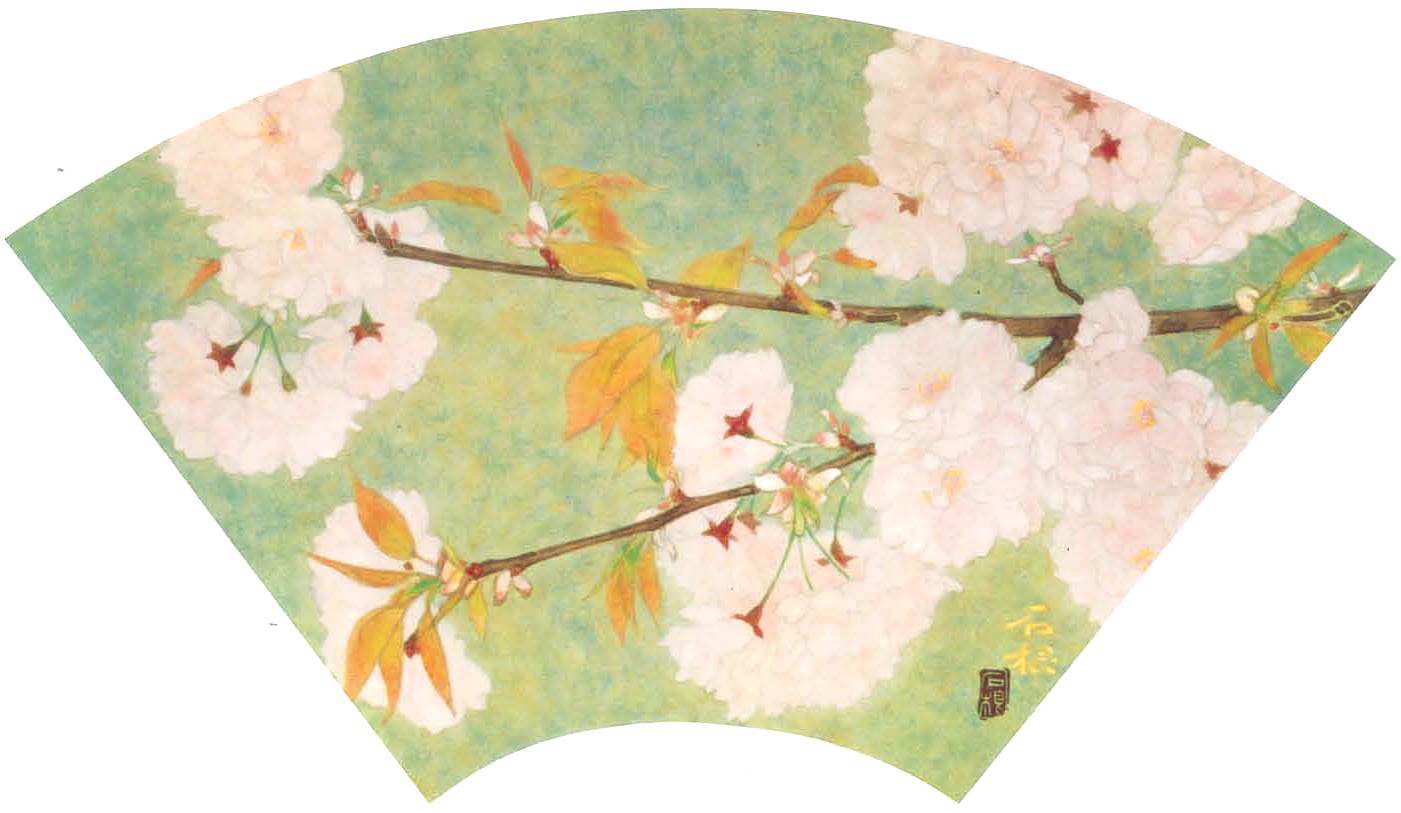
Reijitsu (Glorious Spring Day) by Maruyama Iwane
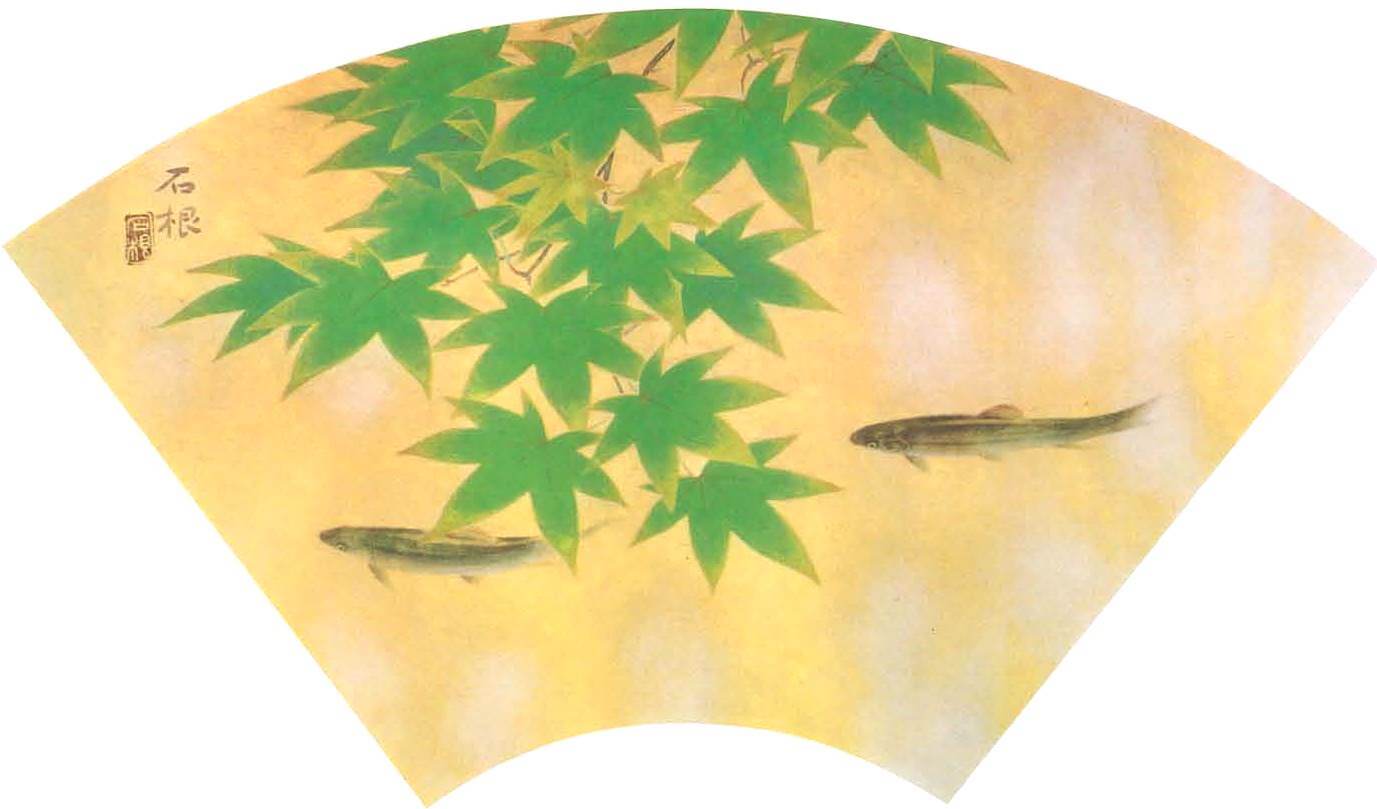
Ryōfū (Cool Breeze) by Maruyama Iwane
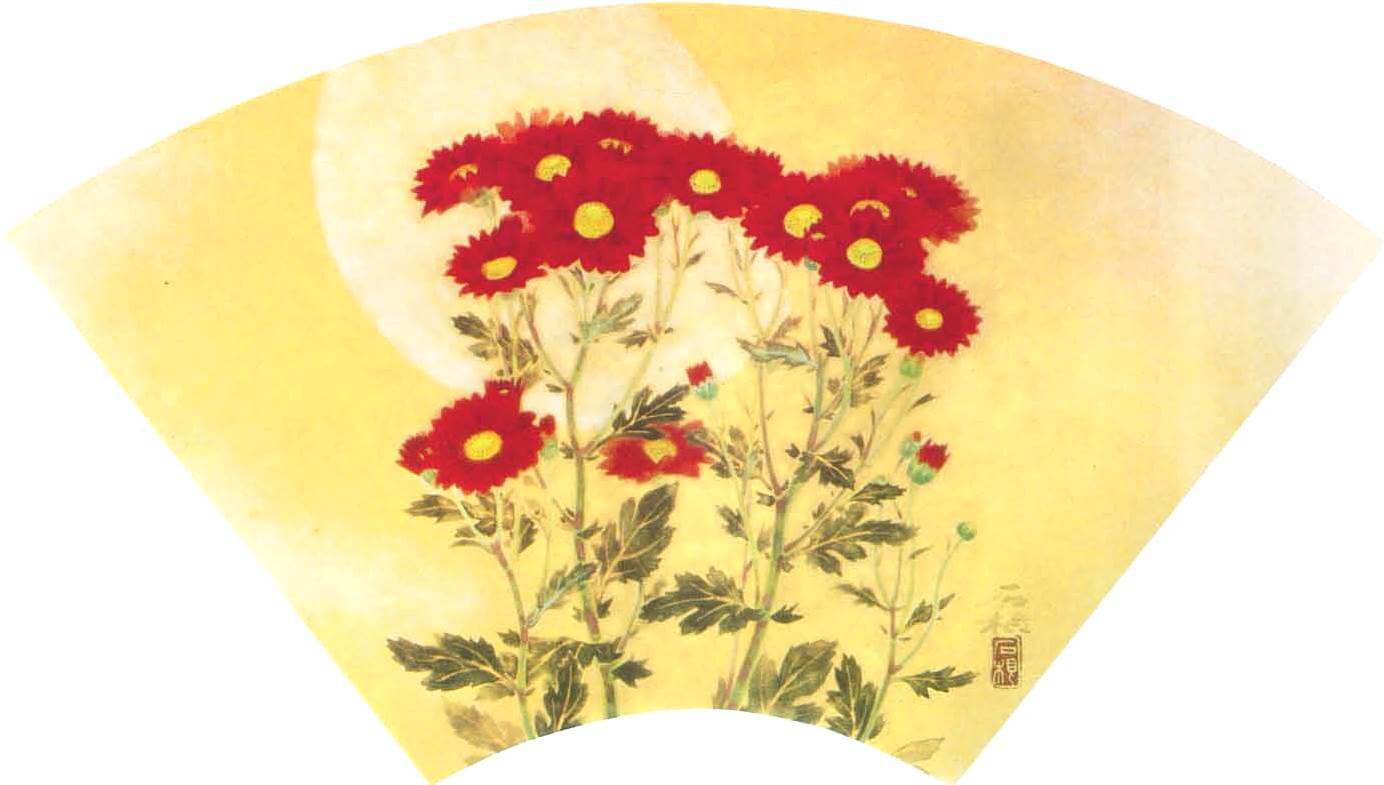
Saigiku (Colorized Chrysanthemums) by Maruyama Iwane
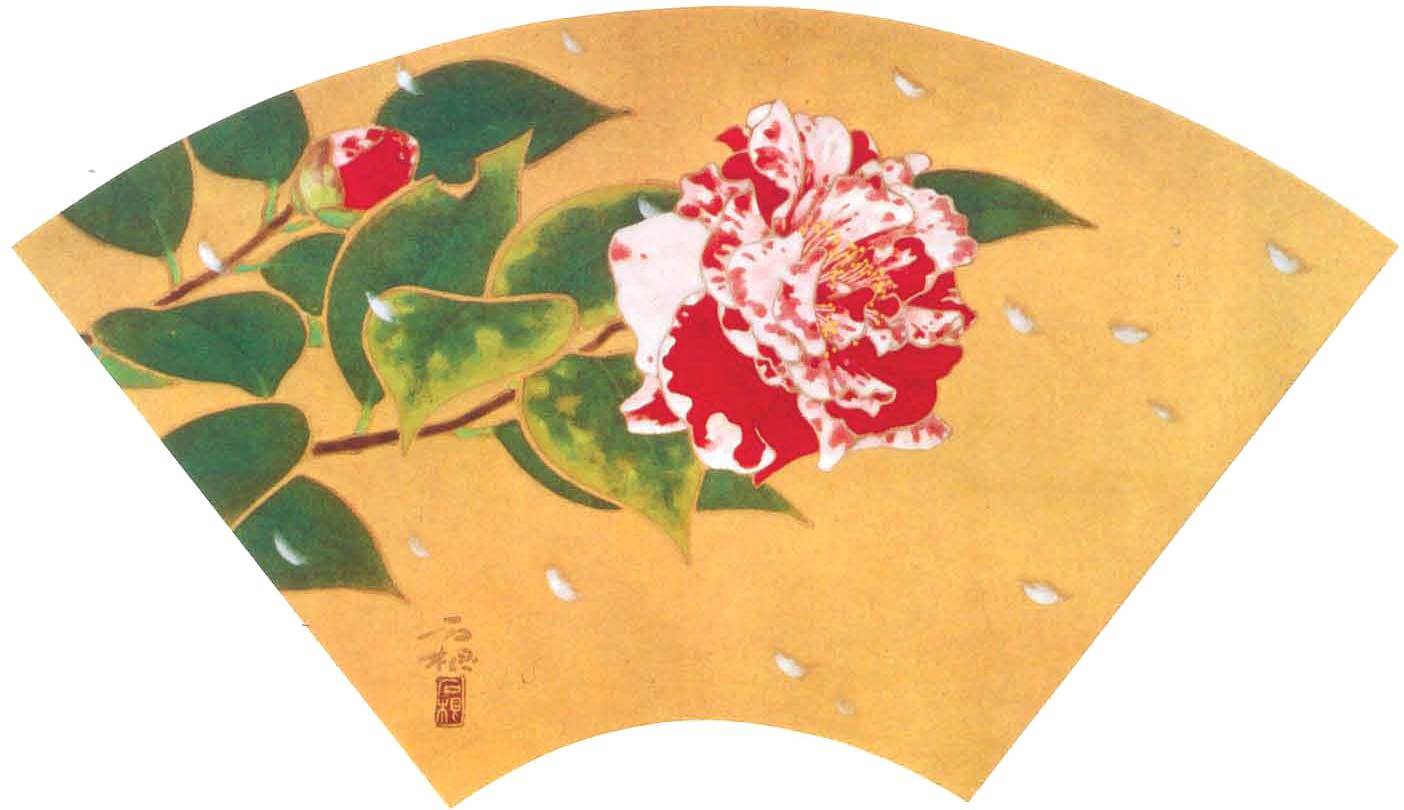
Fūka (Snowflakes Coming on Wind) by Maruyama Iwane

Maruyama Iwane was born in 1919 in Osaka Prefecture. His father was well knowledgeable about Japanese-style painting. That could be the reason why he followed the course to enter and graduate from Kyoto City School of Arts and Crafts, and Kyoto City Specialist School of Painting, which many Japanese-style painters treaded. While he studied the basics of sketching at Kyoto City Specialist School of Painting, he attended Nakanoshima Western Painting Institute in Osaka to try to master drawings. Maruyama Iwane did not belong to any painting organizations for his creative activities. After the World War II, he studied under Nakamura Gakuryō. Gakuryō was a person who tried to express new Japanese-style paintings based on the painting style of the traditional Tosa school. Although Maruyama Iwane spent many years devoting himself to study the painting together with many talents who were disciples of Nakamura Gakuryō, he was spending many times to study the classics staying in his atelier in Osaka after Gakuryō passed away in 1969. The one conclusion that he reached was the world of painters who arranged flora and fauna in venturous manners with *dami-e painting style magnificently and gorgeously on a large screen of gold wall paintings in the Momoyama period. It was a picture that had richly decorative and opened style characteristically. The origin of Maruyama Iwane’s bird-and-flower painting rooted in the world of the Momoyama painting.


  • Dami-e: A style of painting that employs bright and strong colors, particularly mineral pigments such as ultramarine gunjō 群青 or copper green rokushō 緑青, that are applied thickly to a gold or silver foil background. Dami-e was popularly employed for screen and sliding door paintings of the Momoyama period when interest in castle-building increased the popularity of large, brightly colored decorative paintings. This style came to represent the period and was widely disseminated in the screen paintings of temples and wealthy residences.

Looking at the fan surface which flowers and trees of every season are depicted in the picture, “Reijitsu (Glorious Spring Day)” depicts double cherry blossoms that bloom abundantly during the best season in spring at its height. Although it is a picture that drew a branch of the cherry blossoms in full bloom in the limited form of a traditional fan, it also suggests the expanding spatial world beyond the screen. It is a traditional way of Japanese bird-and-flower painting to show the world that expands one after another by drawing the one end. “Ryōfū (Cool Breeze)” can spread the refresh feeling of green maples to the persons who see the picture, ” Saigiku (Colorized Chrysanthemums)” depicts the moon and the small chrysanthemums that bloom the crimson flowers symbolically, which can make us feel a clear autumn air, and “Fūka (Snowflakes coming on wind)” depicts the camellia that blooms in the cold weather with the flowers and leaves glamorously, which can make us feel rather the dignified and intense world of cold air.

Bird-and-flower paintings basically capture sceneries of each four seasons beautifully and send them to people. It brings the breath of nature to some closed spaces. The bird-and-flower paintings that Maruyama Iwane drew showcased the traditional characteristics of such bird-and-flower paintings in the modernization of Japanese-style painting.

He passed away in 1999.
    NameRequired

    SexRequired

    MaleFemale

    CountryRequired

    e-mailRequired

    CommentRequired

    Attached File
    ※Up to 3 MB for each file.


    ← ← "MUST CHECK" / Please confirm the above contents again and check this button.

    Contact Us

    Please fill out the form below and submit for your inquiry.

    ❈FirstName
    ❈LastName
    Country
    ❈E-mail
    (❈Confirm E-mail)
    ❈Inquiry category Question
    Consultation
    Impression
    Request
    Others
    ❈Comment

    is the mark for required item.


    Your privacy is important to us. We are committed to protecting your privacy.

    (or press ESC or click the overlay)

    CEO Message

    Our Feelings For Kakejiku


     The Japanese people have long set a high value on aesthetic senses since ancient times. As a result, the
    peculiar culture which is not seen in other countries blossomed and many aspects of the modern Japanese
    culture come from it. Parts of Japanese culture has been introduced to people in other countries recently,
    so the number of people from other countries who are interested in Japanese culture has been increasing.
    However, the Japanese aesthetic senses, which are the bases of Japanese culture, have been nurtured
    through a long history, intertwining various elements intricately, such as climate, geographical features,
    religion, customs and so on. Therefore, they are very difficult to understand not only for people from other
    countries, but even for the Japanese people. I think the best tool which conveys these difficult senses
    understandably is a “kakejiku.”
     The kakejiku (a hanging scroll; a work of calligraphy or a painting which is mounted and hung in an
    alcove or on a wall) is a traditional Japanese art. It's no exaggeration to say that paintings are what
    express aesthetic senses at all times and places. The kakejiku is an art which expresses the Japanese
    aesthetic senses. The kakejiku has long been used in traditional Japanese events, daily life and so on since
    ancient times. As a result, there are various customs of kakejiku in Japan; kakejiku and the life of the
    Japanese are closely related. We can see Japanese values through kakejiku.
     The kakejiku is a cultural tradition which the Japanese people should be proud of. However, many people
    in other countries don't know much about it because it hasn't been showcased as much. This is why I
    decided to try to introduce it. The kakejiku world is very interesting and beautiful. We want not only the
    Japanese, but also many people from other countries to know and enjoy it. I hope that many people will
    love kakejiku someday.

    (or press ESC or click the overlay)
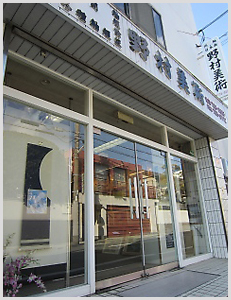
    Company Profile
    syaoku.jpg(120220 byte)

    Name Art Nomura


    President Tatsuji Nomura


    Founded1973


    Established1992


    Address7-23 Babadori, Tarumi-ku, Kobe city,
    Hyougo Prefecture, 655-0021, Japan


    Capital10 million yen


    URLhttp://nomurakakejiku.com


    Our Business

     Art Nomura is an art dealer which produces kakejiku (hanging scrolls). We mount many paintings and calligraphic works in kakejiku in my factory. Kakejiku are our main product. We also remount and repair old or damaged kakejiku. We share the traditional Japanese art of kakejiku with people all over the world.


    (or press ESC or click the overlay)
    Access Map

    Access Map


     The Japanese people have long set a high value on aesthetic senses since ancient times. As a result, the
    peculiar culture which is not seen in other countries blossomed and many aspects of the modern Japanese
    culture come from it. Parts of Japanese culture has been introduced to people in other countries recently,
    so the number of people from other countries who are interested in Japanese culture has been increasing.
    However, the Japanese aesthetic senses, which are the bases of Japanese culture, have been nurtured
    through a long history, intertwining various elements intricately, such as climate, geographical features,
    religion, customs and so on. Therefore, they are very difficult to understand not only for people from other
    countries, but even for the Japanese people. I think the best tool which conveys these difficult senses
    understandably is a “kakejiku.”
     The kakejiku (a hanging scroll; a work of calligraphy or a painting which is mounted and hung in an
    alcove or on a wall) is a traditional Japanese art. It's no exaggeration to say that paintings are what
    express aesthetic senses at all times and places. The kakejiku is an art which expresses the Japanese
    aesthetic senses. The kakejiku has long been used in traditional Japanese events, daily life and so on since
    ancient times. As a result, there are various customs of kakejiku in Japan; kakejiku and the life of the
    Japanese are closely related. We can see Japanese values through kakejiku.
     The kakejiku is a cultural tradition which the Japanese people should be proud of. However, many people
    in other countries don't know much about it because it hasn't been showcased as much. This is why I
    decided to try to introduce it. The kakejiku world is very interesting and beautiful. We want not only the
    Japanese, but also many people from other countries to know and enjoy it. I hope that many people will
    love kakejiku someday.

    (or press ESC or click the overlay)