japanese-art-column

  1. May 21, 2026 - Hasegawa Gyokuhō and Gyokujun: A Parent and Son Who Had Excellent Painting Techniques and Played Actively in Kyoto
  2. May 21, 2026 - Mizuno Toshikata: The Ukiyo-e Artist Who Survived the Meiji Period
  3. May 21, 2026 - Kamisaka Sekka: A successor of the Rinpa School at the Modern Age
  4. May 19, 2026 - Okuhara Seiko: A Female Nanga Painter Who Gained Much Popularity in the Early Meiji Period
  5. May 18, 2026 - Nishiyama Hōen / Nishiyama Kan-ei: Shijō School Painters Who Was Active in Osaka from the Late Edo Period to the Meiji Period
  6. May 18, 2026 - Ukiyo-e Artists Who Painted Musha-e (Ukiyo-e Paintings of Military Commanders)
  7. May 15, 2026 - History of Ukiyo-e (Japanese Genre Pictures)
  8. May 15, 2026 - Kitagawa Utamaro: The Master of Bijin-ga of Ukiyo-e Who Fought Against the Regulations of the Shogunate
  9. May 13, 2026 - Umeto Zaishin, Zaikin, Zaitei: The Lineage of the Hara School of Painting
  10. May 13, 2026 - Hoashi Kyōu: An artist Who Contributed to the Successfulness of Bungo-Nanga
  11. May 13, 2026 - Kawabata Gyokushō: A Japanese-Style Painter Who Is Told to Be the Last Master of Maruyama School
  12. May 13, 2026 - Minagawa Kien: The Confucianist Chinese-Style Landscape Painter Who Was As Skilled As Maruyama Ōkyo
  13. May 13, 2026 - Hara Zaichū: The Founder of Hara School That Was a Painting School to Devote It the Orders by Court Aristocracies
  14. May 12, 2026 - Sakai Dōitsu: The Successor of Edo-Rinpa School Who Was Active During Meiji Period
  15. May 12, 2026 - Fukada Chokujō: Skillful Pre-Modern Japanese Painter Based and Worked Actively in Osaka
  16. May 12, 2026 - Okamoto Shūki: The Best Painter in Drawing Peacocks in the World
  17. May 12, 2026 - Maruyama Ōryū: The Painter Who Succeeded the 4th Generation of Maruyama School
  18. May 12, 2026 - Summary of Mochizuki School That Was Founded by a Japanese Painter, Mochizuki Gyokusen (望月玉蟾)
  19. May 11, 2026 - Gōkura Senjin: The Master of Kachō-ga (Painting of Flowers and Birds) and a Buddhist Painting Who Lived before and after the War Time.
  20. May 11, 2026 - Ochiai Rōfū: “Eva”, Rōfū’s Unique Work Shook Yokoyama Taikan
  21. May 11, 2026 - Kikuchi Keigetsu: The Beautiful Portrayal of Women by ‘The Painter of Lines’
  22. May 11, 2026 - Kikkawa Reika:”Pursuer of Lines” Who Drew About Yūsoku-Kojitsu (Ancient Practices and Usages)
  23. May 11, 2026 - Kawamura Manshū: Master of Landscape Paintings Full of Poetic Imagination
  24. May 11, 2026 - Araki Kanpo : Famous Master of Japanese Paintings As a Professional of Peacocks Paintings
  25. May 10, 2026 - Saigō Kogetsu: One of the Big 4 Disciples of Hashimoto Gahō, a Little-Known Genius of Japanese Painting
  26. May 10, 2026 - How Did Japan’s Largest Artist Collective, the Kanō School Survive the Threat of Extinction!?
  27. May 10, 2026 - Nakamura Hōchū : Painter of Rinpa School and Active in Osaka | His Typical Masterpiece “White Plum Blossoms”
  28. May 10, 2026 - “Rabbit at Home”: Masterpiece of Takeuchi Seihō, One of the Great Painters in Kyoto, Painted at the Age of 75 Years Old
  29. May 10, 2026 - Kumano Shūkō Zukan (Boating on Kumano Painting): Dexterous Tani Bunchō’s Scroll Artworks Applying Realism to Bunjinga Based on His Sketches
  30. May 09, 2026 - Bijinkan-agi-zu (Beautiful Woman with Frogs): Unique World Drawn by Kawanabe Kyōsai, the Master of All Japanese Painting Technique
1 2 5
Contact Us

Please fill out the form below and submit for your inquiry.

❈FirstName
❈LastName
Country
❈E-mail
(❈Confirm E-mail)
❈Inquiry category Question
Consultation
Impression
Request
Others
❈Comment

is the mark for required item.


Your privacy is important to us. We are committed to protecting your privacy.

(or press ESC or click the overlay)

CEO Message

Our Feelings For Kakejiku


 The Japanese people have long set a high value on aesthetic senses since ancient times. As a result, the
peculiar culture which is not seen in other countries blossomed and many aspects of the modern Japanese
culture come from it. Parts of Japanese culture has been introduced to people in other countries recently,
so the number of people from other countries who are interested in Japanese culture has been increasing.
However, the Japanese aesthetic senses, which are the bases of Japanese culture, have been nurtured
through a long history, intertwining various elements intricately, such as climate, geographical features,
religion, customs and so on. Therefore, they are very difficult to understand not only for people from other
countries, but even for the Japanese people. I think the best tool which conveys these difficult senses
understandably is a “kakejiku.”
 The kakejiku (a hanging scroll; a work of calligraphy or a painting which is mounted and hung in an
alcove or on a wall) is a traditional Japanese art. It's no exaggeration to say that paintings are what
express aesthetic senses at all times and places. The kakejiku is an art which expresses the Japanese
aesthetic senses. The kakejiku has long been used in traditional Japanese events, daily life and so on since
ancient times. As a result, there are various customs of kakejiku in Japan; kakejiku and the life of the
Japanese are closely related. We can see Japanese values through kakejiku.
 The kakejiku is a cultural tradition which the Japanese people should be proud of. However, many people
in other countries don't know much about it because it hasn't been showcased as much. This is why I
decided to try to introduce it. The kakejiku world is very interesting and beautiful. We want not only the
Japanese, but also many people from other countries to know and enjoy it. I hope that many people will
love kakejiku someday.

(or press ESC or click the overlay)
Company Profile
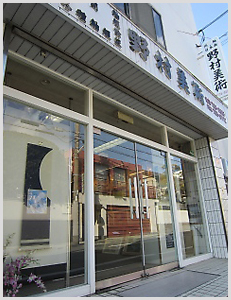
syaoku.jpg(120220 byte)

Name Art Nomura


President Tatsuji Nomura


Founded1973


Established1992


Address7-23 Babadori, Tarumi-ku, Kobe city,
Hyougo Prefecture, 655-0021, Japan


Capital10 million yen


URLhttp://nomurakakejiku.com


Our Business

 Art Nomura is an art dealer which produces kakejiku (hanging scrolls). We mount many paintings and calligraphic works in kakejiku in my factory. Kakejiku are our main product. We also remount and repair old or damaged kakejiku. We share the traditional Japanese art of kakejiku with people all over the world.


(or press ESC or click the overlay)
Access Map

Access Map


 The Japanese people have long set a high value on aesthetic senses since ancient times. As a result, the
peculiar culture which is not seen in other countries blossomed and many aspects of the modern Japanese
culture come from it. Parts of Japanese culture has been introduced to people in other countries recently,
so the number of people from other countries who are interested in Japanese culture has been increasing.
However, the Japanese aesthetic senses, which are the bases of Japanese culture, have been nurtured
through a long history, intertwining various elements intricately, such as climate, geographical features,
religion, customs and so on. Therefore, they are very difficult to understand not only for people from other
countries, but even for the Japanese people. I think the best tool which conveys these difficult senses
understandably is a “kakejiku.”
 The kakejiku (a hanging scroll; a work of calligraphy or a painting which is mounted and hung in an
alcove or on a wall) is a traditional Japanese art. It's no exaggeration to say that paintings are what
express aesthetic senses at all times and places. The kakejiku is an art which expresses the Japanese
aesthetic senses. The kakejiku has long been used in traditional Japanese events, daily life and so on since
ancient times. As a result, there are various customs of kakejiku in Japan; kakejiku and the life of the
Japanese are closely related. We can see Japanese values through kakejiku.
 The kakejiku is a cultural tradition which the Japanese people should be proud of. However, many people
in other countries don't know much about it because it hasn't been showcased as much. This is why I
decided to try to introduce it. The kakejiku world is very interesting and beautiful. We want not only the
Japanese, but also many people from other countries to know and enjoy it. I hope that many people will
love kakejiku someday.

(or press ESC or click the overlay)