Kobayashi Kahaku: A Key Painter Active Earlier Both in the Kyōto Art Circle and in the Inten Exhibition, Drawing Beautiful Japanese-style Paintings Full of Transparency
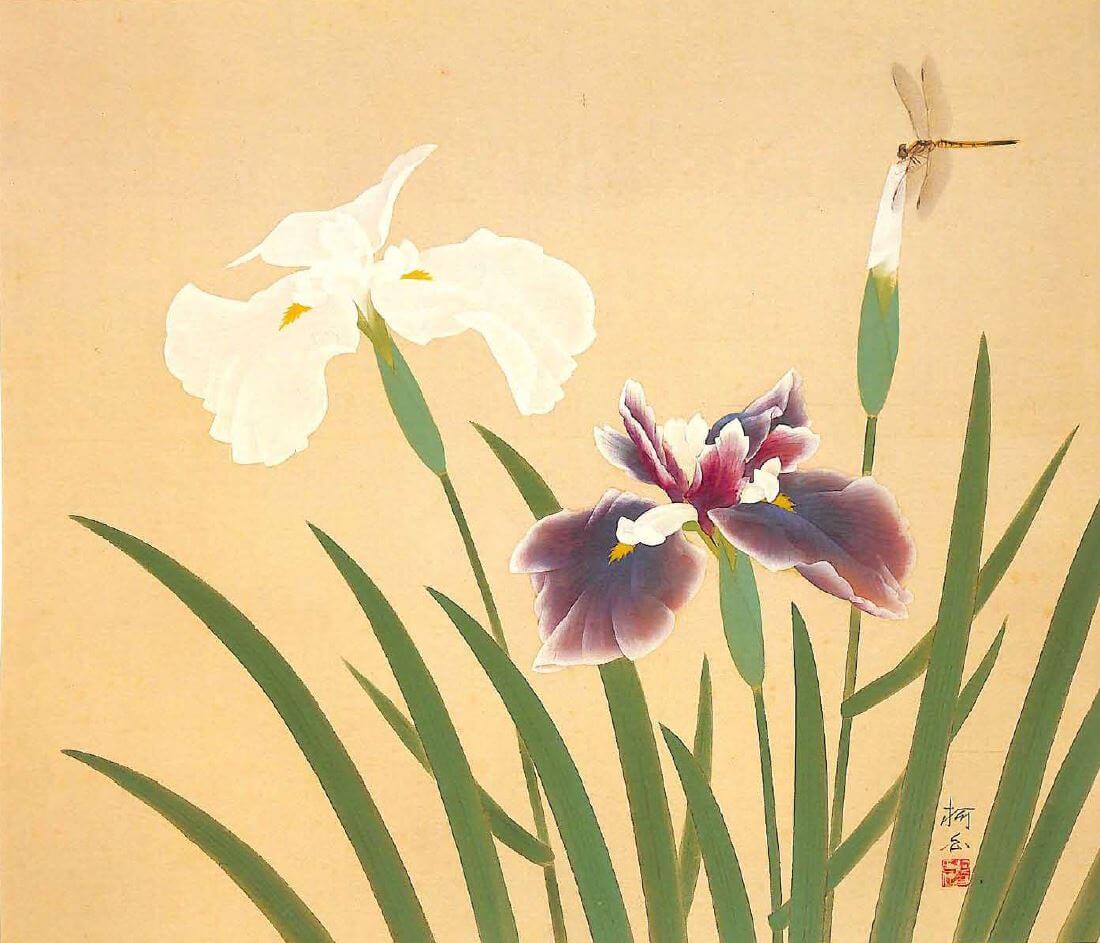
Japanese Iris
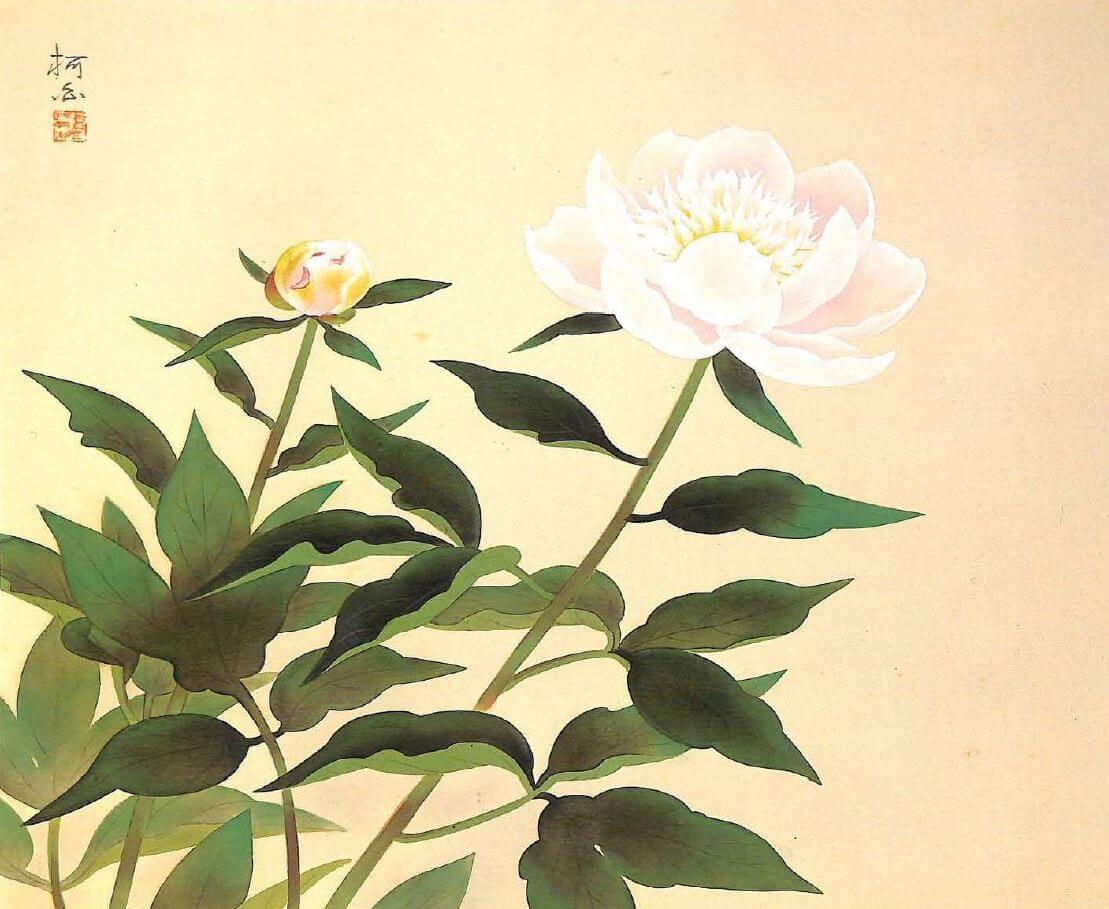
Chinese Peony
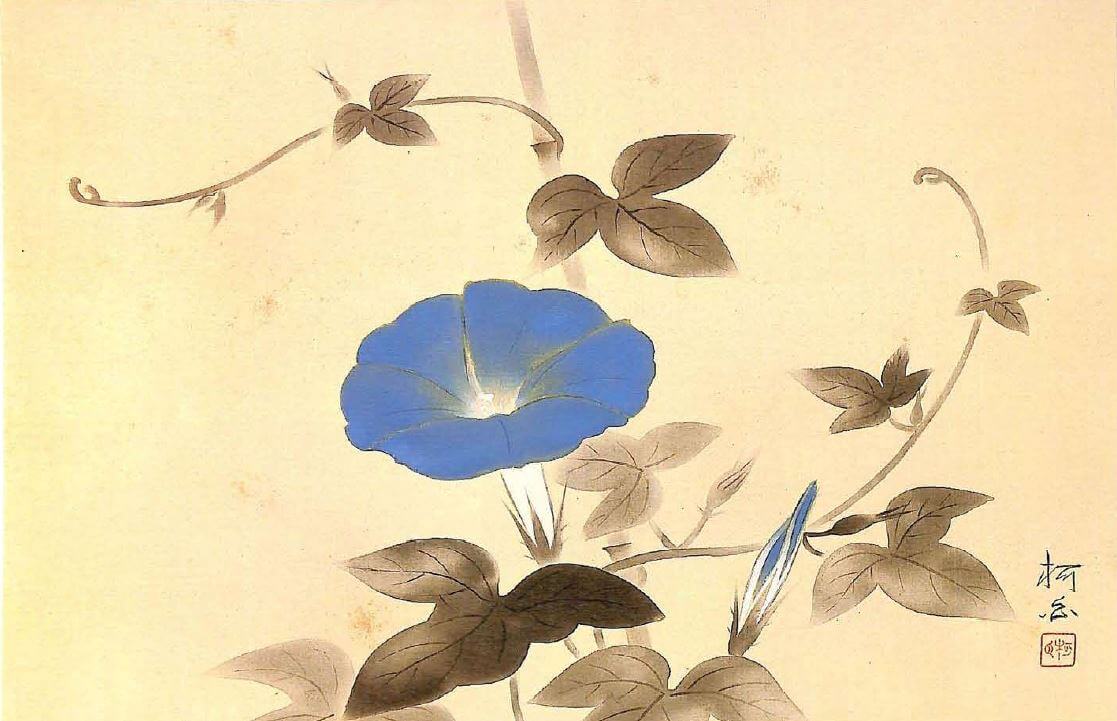
Morning Glory
White Lily
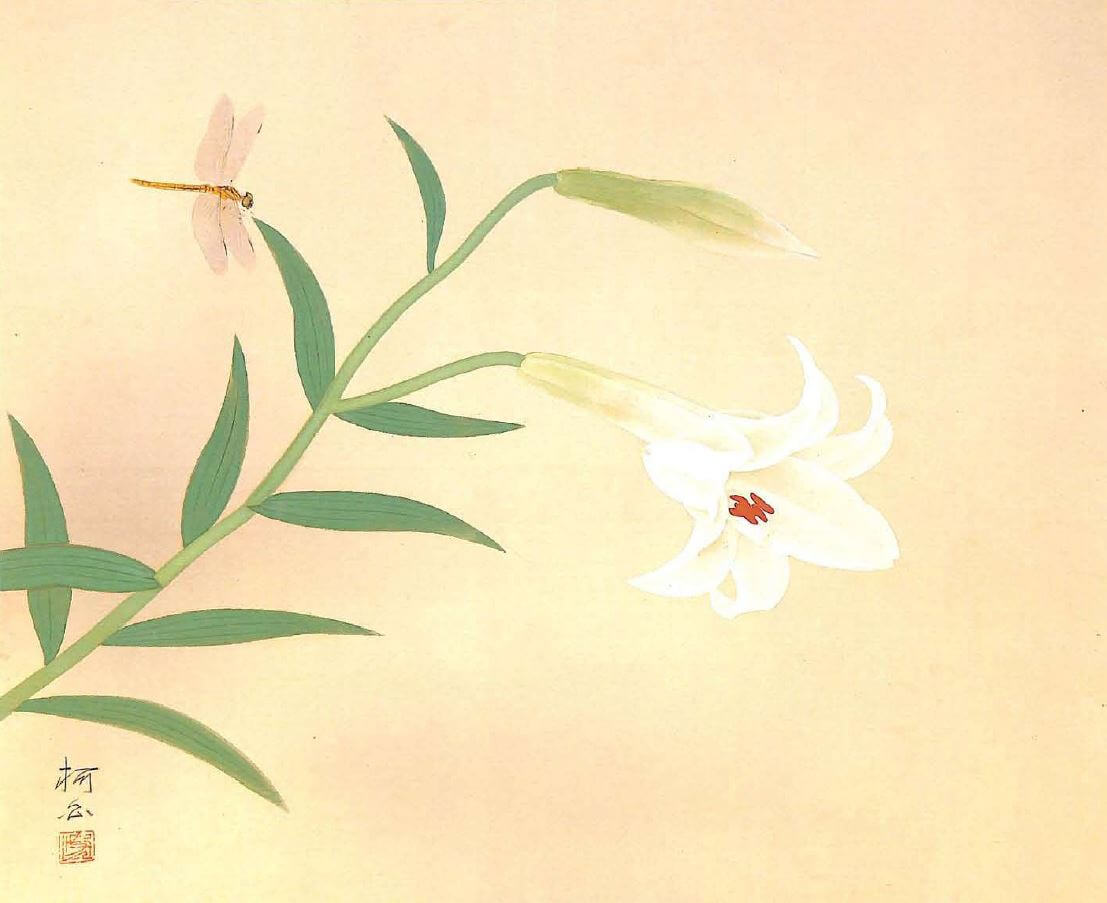
Kobayashi Kahaku grasps flowers as the subject of the painting in tranquility. His style is not to speak eloquently but to be just contemplative. His painting works, nonetheless, are not argumentative, but sharp and brisk. As for the composition of his paintings, the strictness hidden in the delicate brush lines elevates the tone of the painting screen, to the extent that his drawings are referred to as being religious, which does not mean the screen of his works looks either dark or dismal, is rather transparent, and clear in terms of both shape and space. While he follows stringently the spiritualism, the style of the Nihon Bijutsuin which he had belonged to, his works enable us to feel the gleaming modern sense of the painter.
Three Japanese flowers are respectively depicted in each of three works, ‘Japanese Iris’, ‘Chinese Peony’, ‘White Lily’. Although three flowers are apparently modest, each, in fact, is quite strong in character and has also a decorative aspect in nature. While he chooses such flowers as the subject of his painting works, he never put his focus on the bright side of each flower. He put his emphasis on the dignity which is inclusive in each flower. That kind of his style may have some connection with the fact that he had chosen white or whitish flowers as the subject of his works. Those three works make us feel even the touch of the soft and delicate flower petals, with the flower being apparently delicate at first glance, but in fact rather firm and even dignified.
‘Morning Glory’ is said to be Kobayashi Kahaku’s last work, which with such a preconception in mind seems to imply somehow the end of the painter’s life. Sumi ink is really a mysterious painting material in a sense that though it does not possess any coloring, it still creates a colorful world: it presents the world of gloomy, but pure in some time, or of elegance in other time, expressing deeper profoundness than the world depicted simply by any of coloring materials. The flowers of morning glory in ultramarine color surrounded by sumi ink are modest and could be referred to as lone flowers presenting their own style of pure beauty without mixing into anything. The flower giving even a fresh fragrance of the dew-covered petals, is quietly and modestly in full bloom, as if enjoying the transient beauty which is destined to last only until the sun rises higher.
Kobayashi Kahaku was born in 1896 in Ōsaka. He came to Tōkyō in 1912, became a disciple of Imamura Shikō, and later studied painting techniques under Yasuda Yukihiko after Shikō’s death. He was awarded a prize for the first time in the 5th Inten exhibition in 1918 and became a member of the operating committee for the Nihon Bijutsuin. He had often sent to the Inten exhibition many works depicting invigoratingly the fresh-looking of mother nature with the delicate, bur stringent brush lines which he had trained and acquired under his two masters. He had lived in Kyōto in the later period of his life, frequently drawing the scenery surrounding Kyōto with his pure brush touch. He died in 1943 in Kyōto.
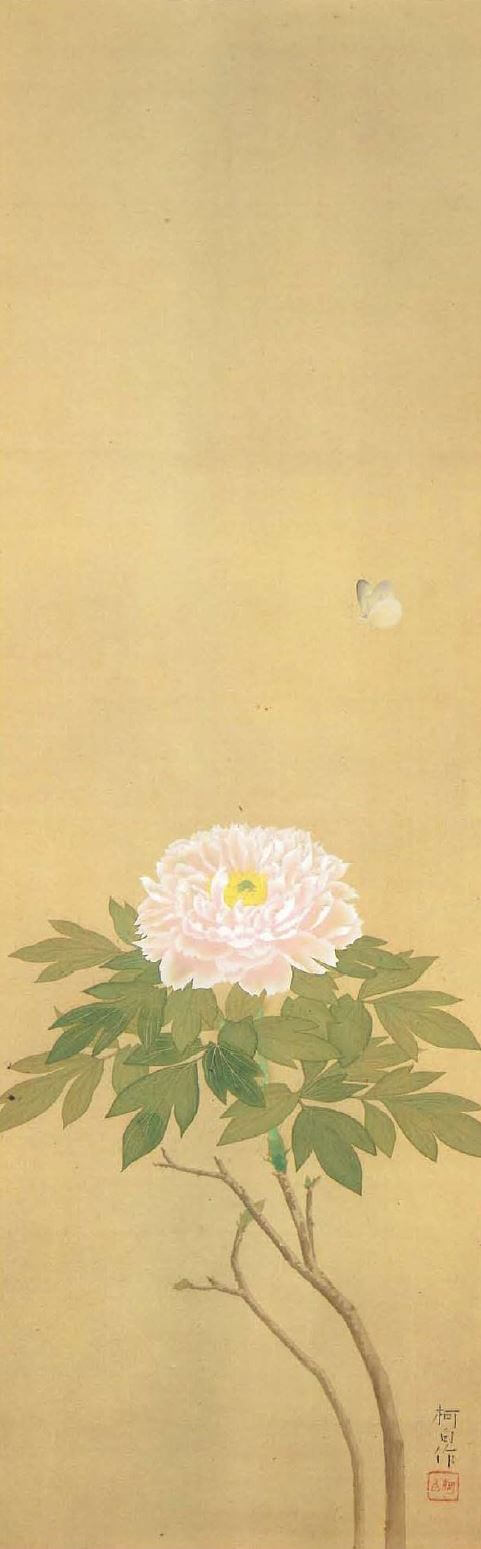
Peony
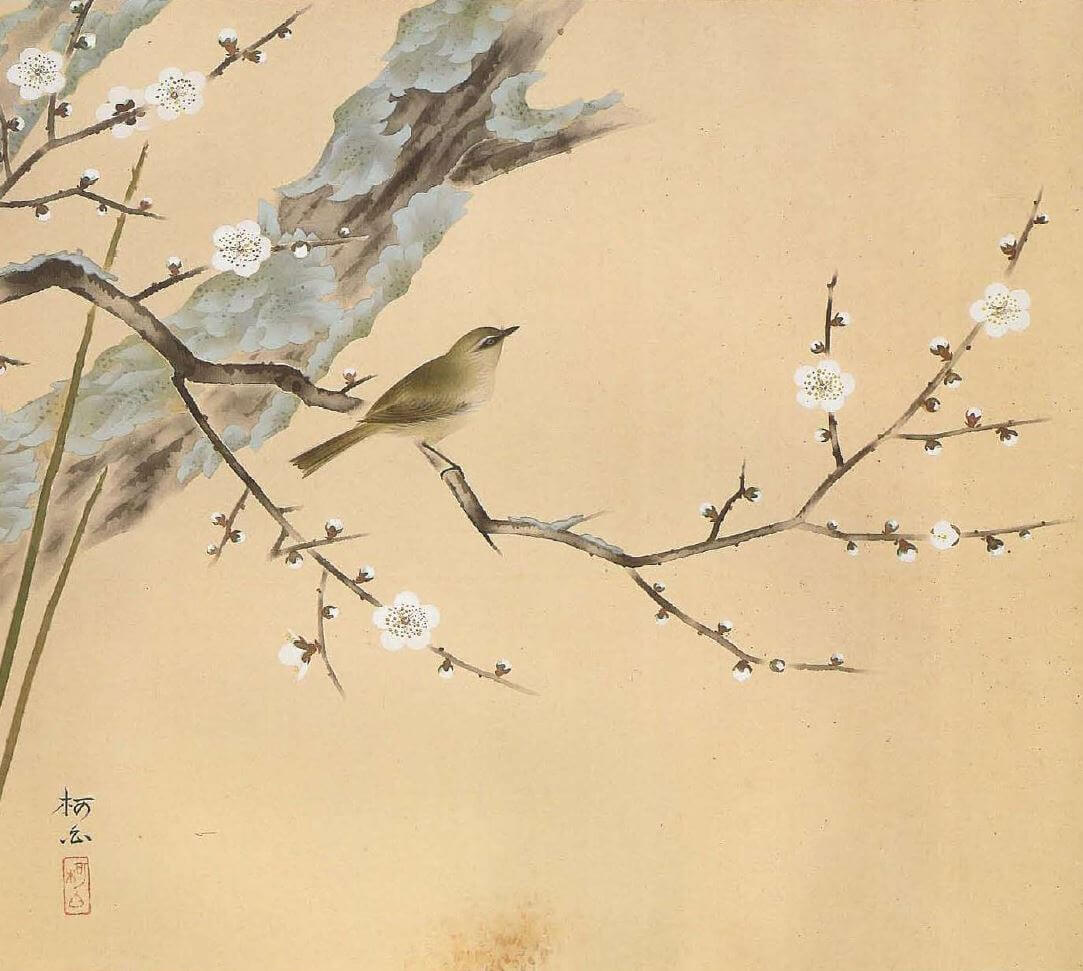
Plum Tree with Small Bird
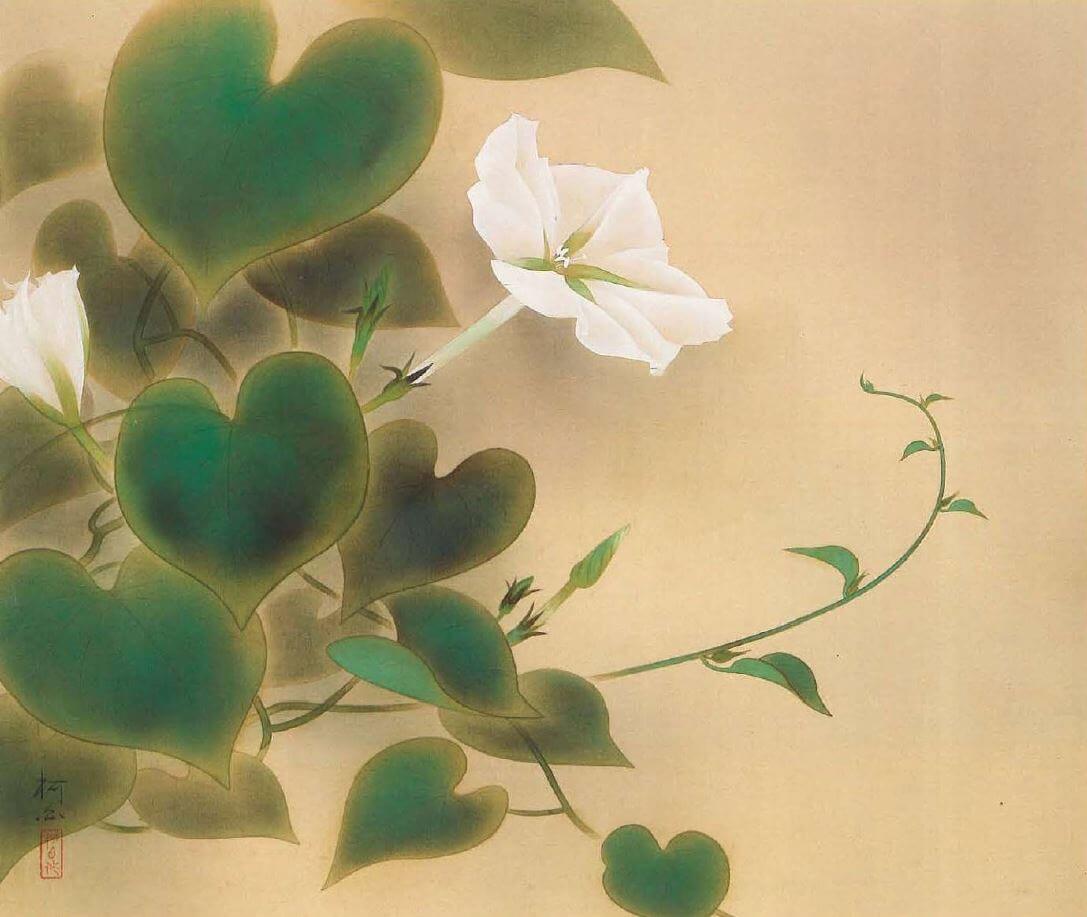
Bottle Gourd
Kobayashi Kahaku, born in Ōsaka in 1896, studied painting techniques first under Imamura Shikō and later under Yasuda Yukihiko. While he had also sent his works to the Teiten exhibition, he had sent works mainly to the Inten exhibition and was recommended to be a member of the operating committee for the Nihon Bijutsuin in 1924. He started to live in Kyōto around 1921, became one of the rare painters who were popular in the Inten exhibition as painters living in Kyōto. Though there were a few painters living in Kyōto who were also active in the Inten exhibition (Tomita Keisen was one of such painters.), the painting style in the Kyōto art circle in general seemed to be somewhat incompatible with the prevailing concept or principle of the Inten exhibition. The painter in Kyōto had not preferred to show off the spiritualism, the style of the Nihon Bijutsuin, rather creating their own aesthetic world in a detached tone. The works drawn by Takeuchi Seihō are good examples of that. The painters who had often sent their works to the Inten exhibition might have been affected by painters in Kyōto. The Keisen’s calm, self-centered, literary, and stylish taste might have been sophisticated by the unique locality as well as the distinctive social relationship of Kyōto. Keisen was also standing out in the Inten exhibition. Kobayashi Kahaku, too, had put emphasis on sketching, choosing something familiar as the subject of his paintings. It is after all the typical feature of the painter active in the Inten exhibition that the Kahaku’s delicate brush touch inherited from his masters is unfolding the classic and refined world. Kobayashi Kahaku had continued to study the painting style of the Tosa school, with his way of color usage full of clarity as well as elegance. On the other hand, what we find is the typical feature of painters living in Kyōto is that he depicts only what he sees, without attempting to draw historical or narrative paintings which were often sent to the Inten exhibition. Moreover, he had often depicted seasonal features in the ‘Kamigata region’, the area surrounding Kyōto, Ōsaka, and Nara. After the death of Keisen, Kobayashi Kahaku had become a key painter living in Kyōto and being also active in the Inten exhibition.
The following three works are all small, but sufficient to show his excellent techniques as well as his real ability.
The work ‘Peony’ thoroughly expresses the beauty of noble and brilliant peony flower in the light color tone, with the cabbage butterfly being no less dignified than the peony flower. Though the work looks old-fashioned at first glance, it makes us feel a new sense of the painter in terms of its coloring as well as composition.
In the work ‘Plum Tree with Small Bird’, a small bird rest in the twig of an old plum tree is quite pretty. What is fascinating is that the twig expressed with the style like *tsuketate technique instead of drawing lines. The work is tinged with the warmness suitable for heralding in spring.
The work ‘Bottle Gourd’ really enables us to feel how skilled the painter’s brushwork and his command of coloring are. The drawing line is stretching well but is not wasted at all. The too fragile and delicate touch of the Bottle Gourd’s flower petals is distinctively visible. The white color, too, seems to be disappearing into the dusk. The work is unfolding a shiny world mixing the white with the green color.
The serene color tone without any flashy colorings commonly heightens the dignity in all of three works, whose freshness is quite impressive.
- Tsuketate: One of the typical techniques of Japanese painting that does not draw the outlines but do with one brushwork containing light and shade, two types of Sumi inks or paints simultaneously at once so that the result can express the shade and the stereoscopic effect, which can be often seen in Maruyama and Shijō schools.