
Yamamoto Kōun: A Japanese Style Painter Who Kept Painting the Natural Beauty of Saga, Kyōto.

Shunen (Spring Garden)
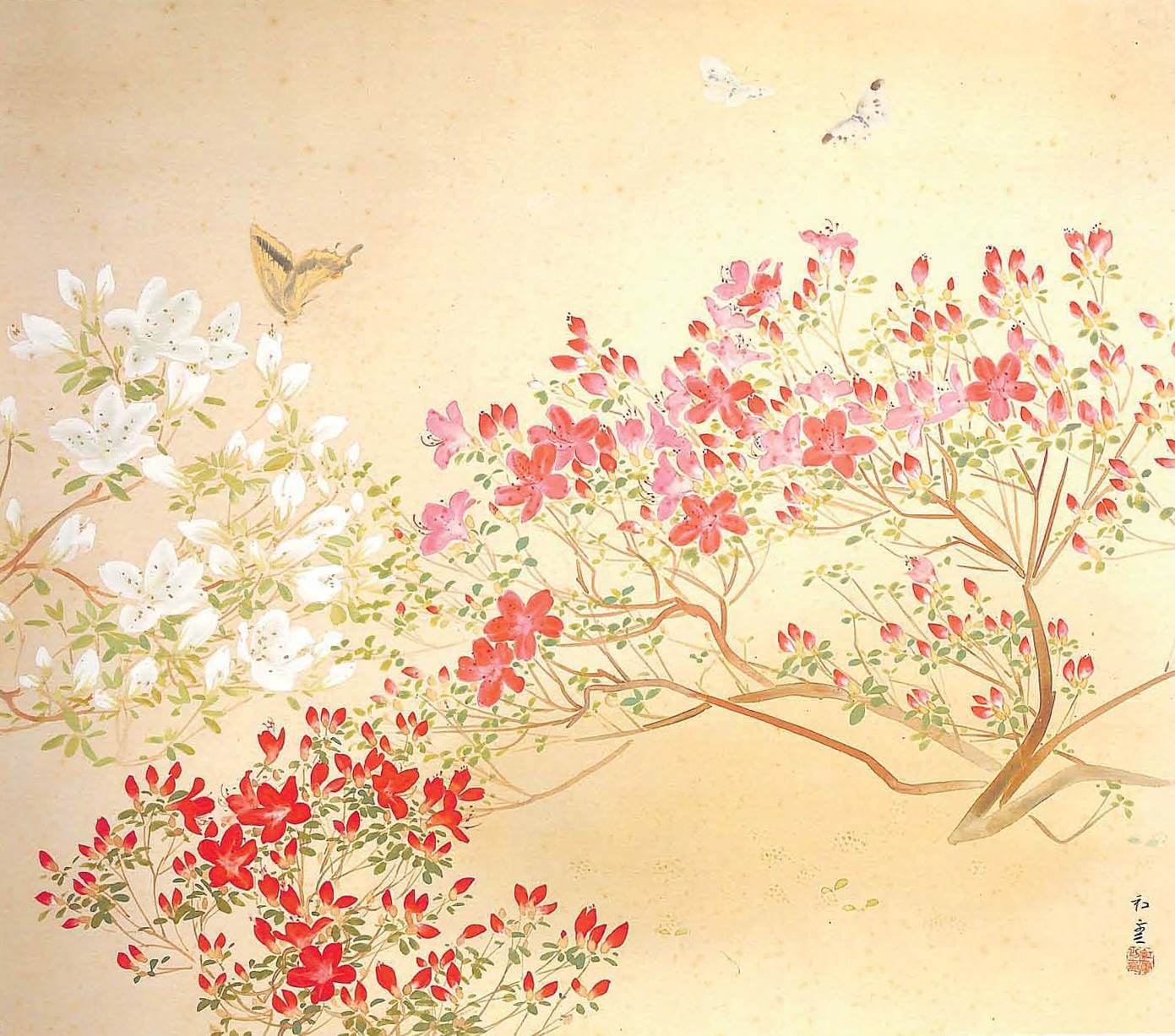
Shun-en (Spring Garden) by Yamamoto Kōun

Shuntei Tansetsu (Light Snow in Spring Garden)
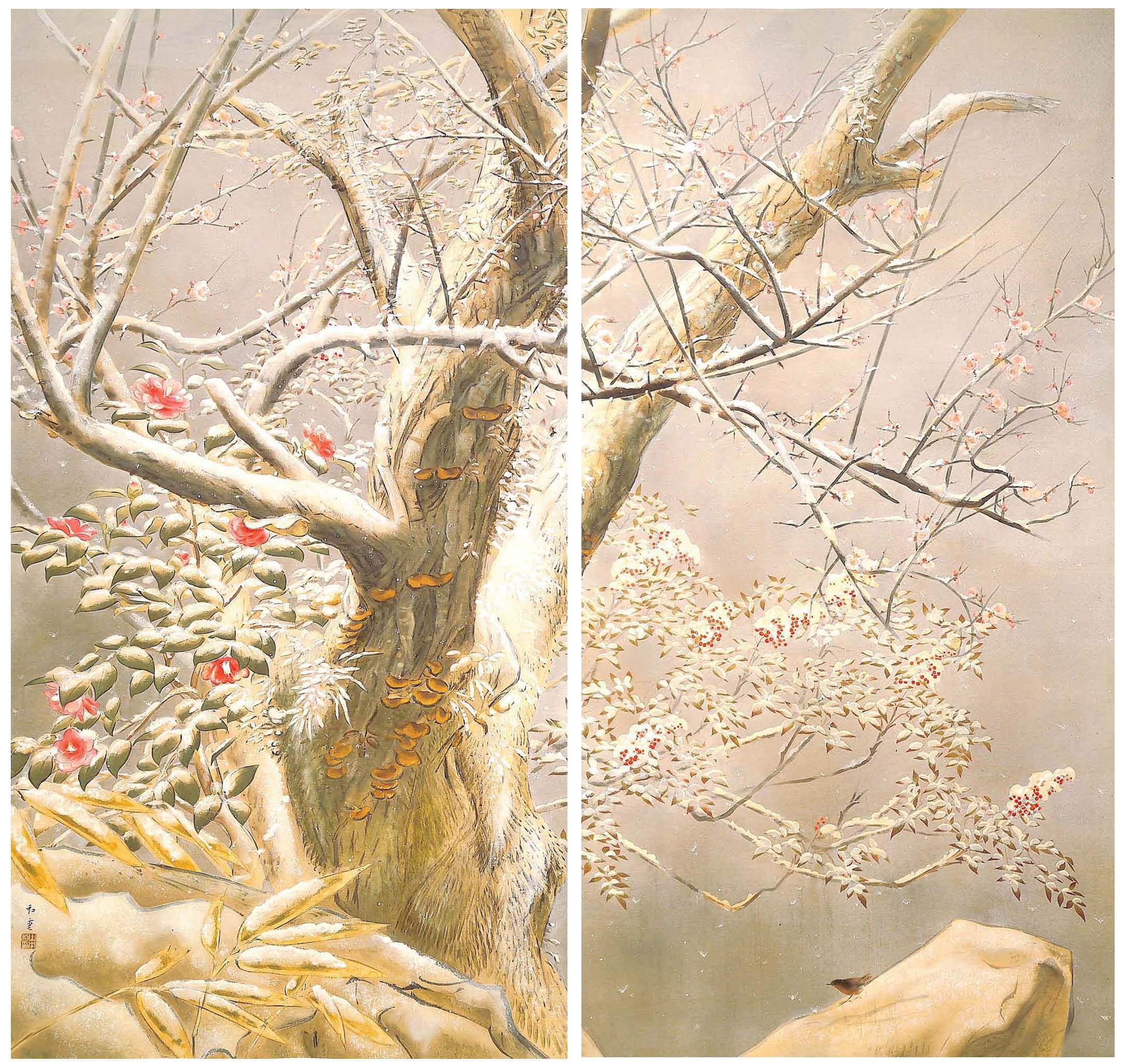
Shuntei Tansetsu (Light Snow in Spring Garden) by Yamamoto Kōun

Yamamoto Kōun, who had settled in Arashiyama of Rakusei (the west part of Kyōto city) for a long time, continued to draw the natural beauty of Saga. Among his long painting career, he drew many paintings on the theme of Arashiyama and Saga, such as “Rankyō Seishū” from the 10th Teiten Exhibition (1929), “Giōji no Haru (Spring in Giōji Temple)” from the 12th Teiten Exhibition (1931), “Saihōji Ryokuen (Green Garden of Saihōji Temple)” from the 5th Nitten Exhibition (1949), “Tukiyo Arashiyama (Moonlit Night at Arashiyama” from the 8th Nitten Exhibition (1965), “Aki no Arashiyama (Autumn Arashiyama)” from the 10th Nitten Exhibition (1967), and so on. In addition, he was also a master of picking sweetfish from the Hōzu River and has left many masterpieces depicting its dynamics.

Yamamoto Kōun was born in Itami City, Hyōgo Prefecture in 1896, and moved to Kyōto at a young age. He graduated from the Kyōto-shiritsu Kaiga Senmon Gakkō school (predecessor of the Kyōto City University of Arts). He entered the Takeuchi Seihō’s art school “Takejō-kai” in 1914. In 1917, “Kawabe (Riverbank)” was selected for the first time at the 11th Bunten Exhibition, and he was expected to become a great painter in the future. By the way, this first prize was a scene where seven or eight cormorants are taking a break on the riverbank where flowers are in full bloom. It was also his pride that it was published in a junior high school textbook at that time. He had been selected consecutively since the 1st Teiten Exhibition in 1919 until the 12th Exhibition in 1931 and has been recommended as a non-inspection artist since 1933. During that time, he was asked to volatilize the ceiling paintings of Kuninomiya family and Daishōji Temple and left great works, and in 1976 he was awarded the Order of the Sacred Treasure.

“Shunen” was made in 1942. It is a drawing of the spring season. The confrontation of the red and white flowers, which are crowded with butterflies, is so delicate, and that is typical of the Kyōto painting school. There is a lovely charm that resembles maidenly grace.

Shunen Awayuki is a work that was exhibited at the 3rd Nitten Exhibition in 1939 without being judged. Although it is based on the harsh Kyōto school style, it has the feel of soft snow.

Byakuya Shūsō (Autumn Flowers in Midnight Sun)
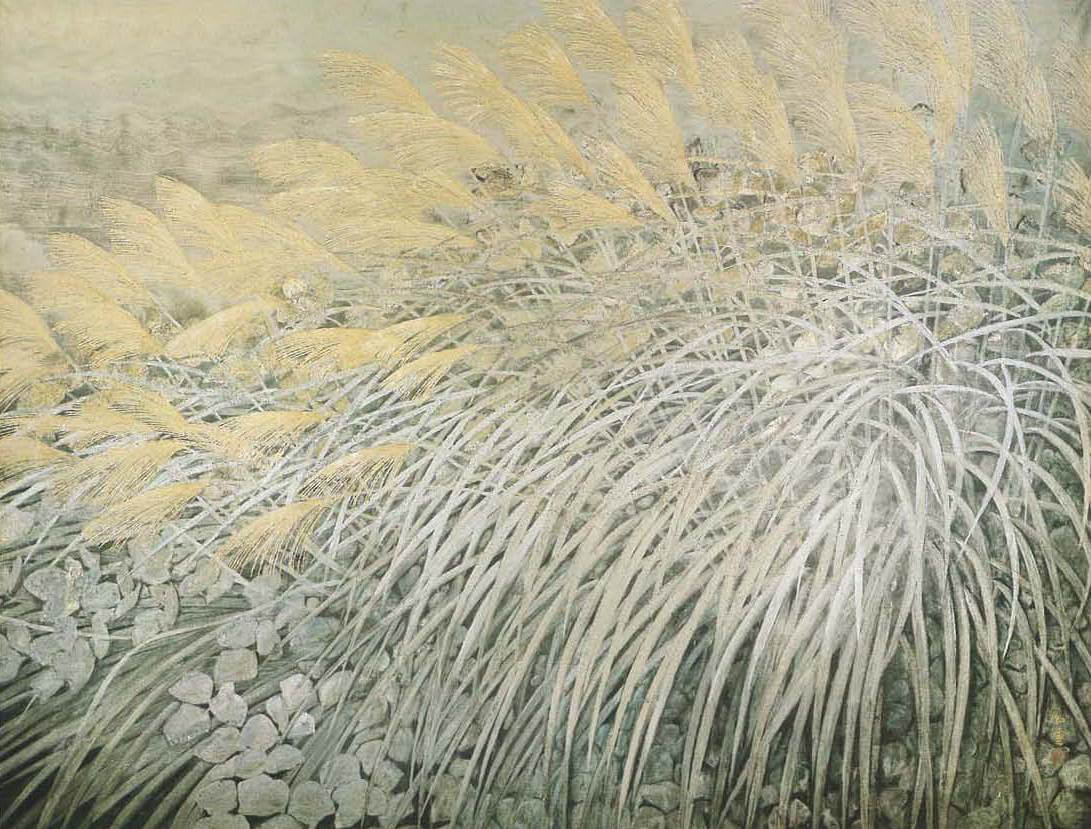
Byakuya Shūsō (Autumn Flowers in Midnight Sun) by Yamamoto Kōun

There are poetry and hallucinations in the autumn field. Especially in the midnight sun, the wild flowers that emerge in the moonlight create an illusionary scene. There is a pampas grass field drawn fully on a large screen. It is rather a Kachō-ga (painting of flowers and birds) that was drawn close to the eyes than a landscape painting that was drawn looking far away. The leaves and stems of Japanese pampas grass that shine brightly show the rhythm of straight lines crossing and the movement of the golden ears swaying in the autumn breeze makes the picture feel gorgeous in the harshness. Ever since Yamamoto Kōun was advised by a master of the Western-style painting world, Yasui Sōtarō, to “draw on-site if you pursue realism,” he had been devoting himself to the on-field principle. It can be said that it is an experimental work of Yamamoto Kōun who introduced a moderate Rinpa school style decorativeness while using the sketch as the basis. This work was exhibited at the 9th Nitten Exhibition in 1966.
    NameRequired

    SexRequired

    MaleFemale

    CountryRequired

    e-mailRequired

    CommentRequired

    Attached File
    ※Up to 3 MB for each file.


    ← ← "MUST CHECK" / Please confirm the above contents again and check this button.

    Contact Us

    Please fill out the form below and submit for your inquiry.

    ❈FirstName
    ❈LastName
    Country
    ❈E-mail
    (❈Confirm E-mail)
    ❈Inquiry category Question
    Consultation
    Impression
    Request
    Others
    ❈Comment

    is the mark for required item.


    Your privacy is important to us. We are committed to protecting your privacy.

    (or press ESC or click the overlay)

    CEO Message

    Our Feelings For Kakejiku


     The Japanese people have long set a high value on aesthetic senses since ancient times. As a result, the
    peculiar culture which is not seen in other countries blossomed and many aspects of the modern Japanese
    culture come from it. Parts of Japanese culture has been introduced to people in other countries recently,
    so the number of people from other countries who are interested in Japanese culture has been increasing.
    However, the Japanese aesthetic senses, which are the bases of Japanese culture, have been nurtured
    through a long history, intertwining various elements intricately, such as climate, geographical features,
    religion, customs and so on. Therefore, they are very difficult to understand not only for people from other
    countries, but even for the Japanese people. I think the best tool which conveys these difficult senses
    understandably is a “kakejiku.”
     The kakejiku (a hanging scroll; a work of calligraphy or a painting which is mounted and hung in an
    alcove or on a wall) is a traditional Japanese art. It's no exaggeration to say that paintings are what
    express aesthetic senses at all times and places. The kakejiku is an art which expresses the Japanese
    aesthetic senses. The kakejiku has long been used in traditional Japanese events, daily life and so on since
    ancient times. As a result, there are various customs of kakejiku in Japan; kakejiku and the life of the
    Japanese are closely related. We can see Japanese values through kakejiku.
     The kakejiku is a cultural tradition which the Japanese people should be proud of. However, many people
    in other countries don't know much about it because it hasn't been showcased as much. This is why I
    decided to try to introduce it. The kakejiku world is very interesting and beautiful. We want not only the
    Japanese, but also many people from other countries to know and enjoy it. I hope that many people will
    love kakejiku someday.

    (or press ESC or click the overlay)
    Company Profile
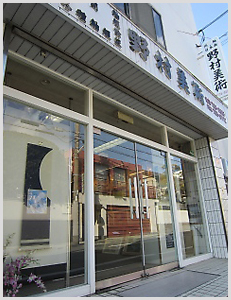
    syaoku.jpg(120220 byte)

    Name Art Nomura


    President Tatsuji Nomura


    Founded1973


    Established1992


    Address7-23 Babadori, Tarumi-ku, Kobe city,
    Hyougo Prefecture, 655-0021, Japan


    Capital10 million yen


    URLhttp://nomurakakejiku.com


    Our Business

     Art Nomura is an art dealer which produces kakejiku (hanging scrolls). We mount many paintings and calligraphic works in kakejiku in my factory. Kakejiku are our main product. We also remount and repair old or damaged kakejiku. We share the traditional Japanese art of kakejiku with people all over the world.


    (or press ESC or click the overlay)
    Access Map

    Access Map


     The Japanese people have long set a high value on aesthetic senses since ancient times. As a result, the
    peculiar culture which is not seen in other countries blossomed and many aspects of the modern Japanese
    culture come from it. Parts of Japanese culture has been introduced to people in other countries recently,
    so the number of people from other countries who are interested in Japanese culture has been increasing.
    However, the Japanese aesthetic senses, which are the bases of Japanese culture, have been nurtured
    through a long history, intertwining various elements intricately, such as climate, geographical features,
    religion, customs and so on. Therefore, they are very difficult to understand not only for people from other
    countries, but even for the Japanese people. I think the best tool which conveys these difficult senses
    understandably is a “kakejiku.”
     The kakejiku (a hanging scroll; a work of calligraphy or a painting which is mounted and hung in an
    alcove or on a wall) is a traditional Japanese art. It's no exaggeration to say that paintings are what
    express aesthetic senses at all times and places. The kakejiku is an art which expresses the Japanese
    aesthetic senses. The kakejiku has long been used in traditional Japanese events, daily life and so on since
    ancient times. As a result, there are various customs of kakejiku in Japan; kakejiku and the life of the
    Japanese are closely related. We can see Japanese values through kakejiku.
     The kakejiku is a cultural tradition which the Japanese people should be proud of. However, many people
    in other countries don't know much about it because it hasn't been showcased as much. This is why I
    decided to try to introduce it. The kakejiku world is very interesting and beautiful. We want not only the
    Japanese, but also many people from other countries to know and enjoy it. I hope that many people will
    love kakejiku someday.

    (or press ESC or click the overlay)