news

  1. Nov 03, 2025 - Japanese Scroll Mounting and Restoration|A Difficult Kakejiku Project from the United States
  2. Oct 20, 2025 - Shibata Zeshin: The Two-Sworded Artist Who Amazed the World
  3. Oct 27, 2025 - Danger!! That Way of Hanging Could Make Your Scroll Fall!!
  4. Oct 13, 2025 - Request for Production of a Small-Sized Nichiren Mandala Hanging Scroll
  5. Oct 06, 2025 - Challenging New Nichiren Mandala Hanging Scroll Commission
  6. Sep 29, 2025 - Request for Production of a New Type of Nichiren Mandala Hanging Scroll
  7. Sep 22, 2025 - Lotus-Patterned Brocade for Nichiren Mandala Production
  8. Sep 15, 2025 - New-Style Nichiren Mandala Hanging Scroll Production
  9. Sep 08, 2025 - Nichiren Mandala Scrolls to Italy – Making Requests Continue
  10. Sep 01, 2025 - Custom Nichiren Mandala Hanging Scroll|A Buddhist Kakejiku Commission from South Africa
  11. Aug 25, 2025 - A Kakejiku Shop Committed to Attentive Customer Service
  12. Aug 18, 2025 - Japanese Hanging Scroll Souvenir|Red Fuji Kakejiku Chosen by a Visitor from Texas
  13. Aug 11, 2025 - Heart Sutra Hanging Scroll|Mounting Japanese Calligraphy as a Custom Kakejiku
  14. Aug 04, 2025 - Japanese Scroll Mounting|Cloud Dragon Calligraphy Made into a Custom Kakejiku
  15. Jul 28, 2025 - Bonsai Display Scrolls|Custom Shikishi-Kake and Tanzaku-Kake Made in Japan
  16. Jul 21, 2025 - Japanese Hanging Scroll Restoration|A Kakejiku Remounting Request from Germany
  17. Jul 14, 2025 - Antique Kakejiku Restoration|Japanese Hanging Scroll Repair for an American Art Dealer
  18. Jul 07, 2025 - Scroll Restoration Request from a Customer in Hong Kong: Stain Removal and Severe Creases Beautifully Repaired
  19. Jun 30, 2025 - Japanese Hanging Scroll Souvenir|A Meaningful Kakejiku to Remember Your Stay in Japan
  20. Jun 29, 2025 - The Essence of Japanese Art: Uemura Shōen and the Beauty of “Shibori”
  21. Jun 28, 2025 - Hokusai’s “Nisshin Jomazu”: A Series of Prayers and Humor from a Master in His Twilight Years
  22. Jun 27, 2025 - The Solitary Master of Tigers: The Glory and Oblivion of Ōhashi Suiseki
  23. Jun 26, 2025 - The Producers Behind Ukiyo-e: Discovering the World of Edo’s Print Publishers
  24. Jun 24, 2025 - The Ōoku of Edo Castle: A World of Splendor and Secrecy for Women
  25. Jun 25, 2025 - Munakata Shikō: The Journey of “Munakata of the World” Born in Aomori
  26. Jun 24, 2025 - A Unique “Yōkai Culture” Unmatched in the World — The Background of Japan’s Distinctive Character Perception
  27. Jun 24, 2025 - Takeuchi Seihō: The Great Master Who Unified the Kyoto School Tradition in Modern Japanese Painting
  28. Jun 24, 2025 - Yokoyama Taikan’s “Muga” — The State of Enlightenment Expressed Through a Child
  29. Jun 24, 2025 - Katsushika Hokusai, Ukiyo-e, and “Thirty-six Views of Mount Fuji” — Innovation and Techniques in Japanese Art
  30. Jun 23, 2025 - Why Art-Loving Travelers Choose Kakejiku as a Japanese Cultural Souvenir
Contact Us

Please fill out the form below and submit for your inquiry.

❈FirstName
❈LastName
Country
❈E-mail
(❈Confirm E-mail)
❈Inquiry category Question
Consultation
Impression
Request
Others
❈Comment

is the mark for required item.


Your privacy is important to us. We are committed to protecting your privacy.

(or press ESC or click the overlay)

CEO Message

Our Feelings For Kakejiku


 The Japanese people have long set a high value on aesthetic senses since ancient times. As a result, the
peculiar culture which is not seen in other countries blossomed and many aspects of the modern Japanese
culture come from it. Parts of Japanese culture has been introduced to people in other countries recently,
so the number of people from other countries who are interested in Japanese culture has been increasing.
However, the Japanese aesthetic senses, which are the bases of Japanese culture, have been nurtured
through a long history, intertwining various elements intricately, such as climate, geographical features,
religion, customs and so on. Therefore, they are very difficult to understand not only for people from other
countries, but even for the Japanese people. I think the best tool which conveys these difficult senses
understandably is a “kakejiku.”
 The kakejiku (a hanging scroll; a work of calligraphy or a painting which is mounted and hung in an
alcove or on a wall) is a traditional Japanese art. It's no exaggeration to say that paintings are what
express aesthetic senses at all times and places. The kakejiku is an art which expresses the Japanese
aesthetic senses. The kakejiku has long been used in traditional Japanese events, daily life and so on since
ancient times. As a result, there are various customs of kakejiku in Japan; kakejiku and the life of the
Japanese are closely related. We can see Japanese values through kakejiku.
 The kakejiku is a cultural tradition which the Japanese people should be proud of. However, many people
in other countries don't know much about it because it hasn't been showcased as much. This is why I
decided to try to introduce it. The kakejiku world is very interesting and beautiful. We want not only the
Japanese, but also many people from other countries to know and enjoy it. I hope that many people will
love kakejiku someday.

(or press ESC or click the overlay)
Company Profile
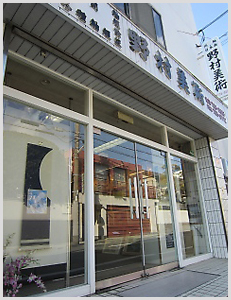
syaoku.jpg(120220 byte)

Name Art Nomura


President Tatsuji Nomura


Founded1973


Established1992


Address7-23 Babadori, Tarumi-ku, Kobe city,
Hyougo Prefecture, 655-0021, Japan


Capital10 million yen


URLhttp://nomurakakejiku.com


Our Business

 Art Nomura is an art dealer which produces kakejiku (hanging scrolls). We mount many paintings and calligraphic works in kakejiku in my factory. Kakejiku are our main product. We also remount and repair old or damaged kakejiku. We share the traditional Japanese art of kakejiku with people all over the world.


(or press ESC or click the overlay)
Access Map

Access Map


 The Japanese people have long set a high value on aesthetic senses since ancient times. As a result, the
peculiar culture which is not seen in other countries blossomed and many aspects of the modern Japanese
culture come from it. Parts of Japanese culture has been introduced to people in other countries recently,
so the number of people from other countries who are interested in Japanese culture has been increasing.
However, the Japanese aesthetic senses, which are the bases of Japanese culture, have been nurtured
through a long history, intertwining various elements intricately, such as climate, geographical features,
religion, customs and so on. Therefore, they are very difficult to understand not only for people from other
countries, but even for the Japanese people. I think the best tool which conveys these difficult senses
understandably is a “kakejiku.”
 The kakejiku (a hanging scroll; a work of calligraphy or a painting which is mounted and hung in an
alcove or on a wall) is a traditional Japanese art. It's no exaggeration to say that paintings are what
express aesthetic senses at all times and places. The kakejiku is an art which expresses the Japanese
aesthetic senses. The kakejiku has long been used in traditional Japanese events, daily life and so on since
ancient times. As a result, there are various customs of kakejiku in Japan; kakejiku and the life of the
Japanese are closely related. We can see Japanese values through kakejiku.
 The kakejiku is a cultural tradition which the Japanese people should be proud of. However, many people
in other countries don't know much about it because it hasn't been showcased as much. This is why I
decided to try to introduce it. The kakejiku world is very interesting and beautiful. We want not only the
Japanese, but also many people from other countries to know and enjoy it. I hope that many people will
love kakejiku someday.

(or press ESC or click the overlay)