Mounting a Shikoku 88 Pilgrimage Stamp Scroll as a Kakejiku for a Lithuanian Customer Living in Denmark
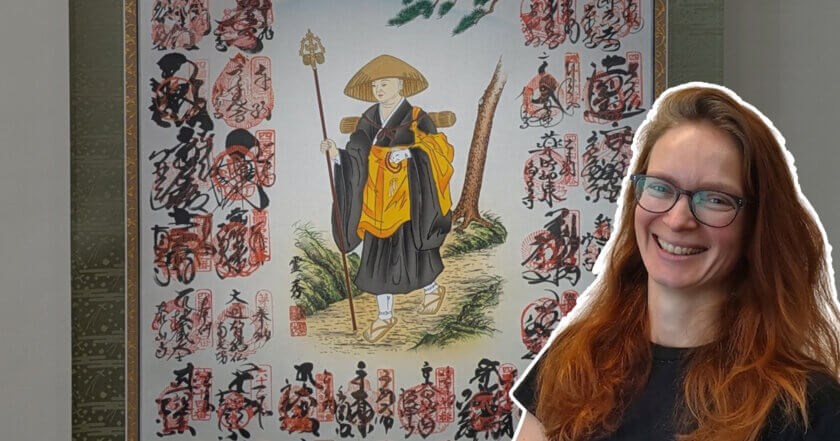
In recent years, more and more people from overseas have been undertaking the Shikoku 88 Temple Pilgrimage. Over the years, we at ART NOMURA have also received many requests to mount pilgrimage stamp scrolls for the Shikoku 88 Temple Pilgrimage, known in Japan as nōkyōjiku, as kakejiku.
In this article, we would like to share the story of a Lithuanian customer living in Denmark who visited Japan for the Shikoku 88 Temple Pilgrimage and later asked us to mount her nōkyōjiku as a kakejiku.
An Inquiry About Turning a Nōkyōjiku Into a Kakejiku
The first inquiry came by email.
Its contents were very clear. The customer wanted to have her nōkyōjiku for the Shikoku 88 Temple Pilgrimage mounted as a kakejiku. She also wrote that she still had her visit to Kōyasan remaining and asked how she could make an appointment to visit us.
At that stage, the discussion had not yet gone into the finer details of the fabric selection or the overall format. Even so, it was already clear that she wanted to preserve the nōkyōjiku for her pilgrimage in a proper and lasting form.
In her later reply, she explained that she hoped to bring the scroll once all ninety stamps, including the additional stamp for the final thanksgiving visit (orei-mairi) and the Kōyasan stamp, had been completed, and she also gave us a specific preferred date and time for her visit.
For more information about orei-mairi, please refer to this article.
She Visited Our Shop and Viewed the Fabrics in Person
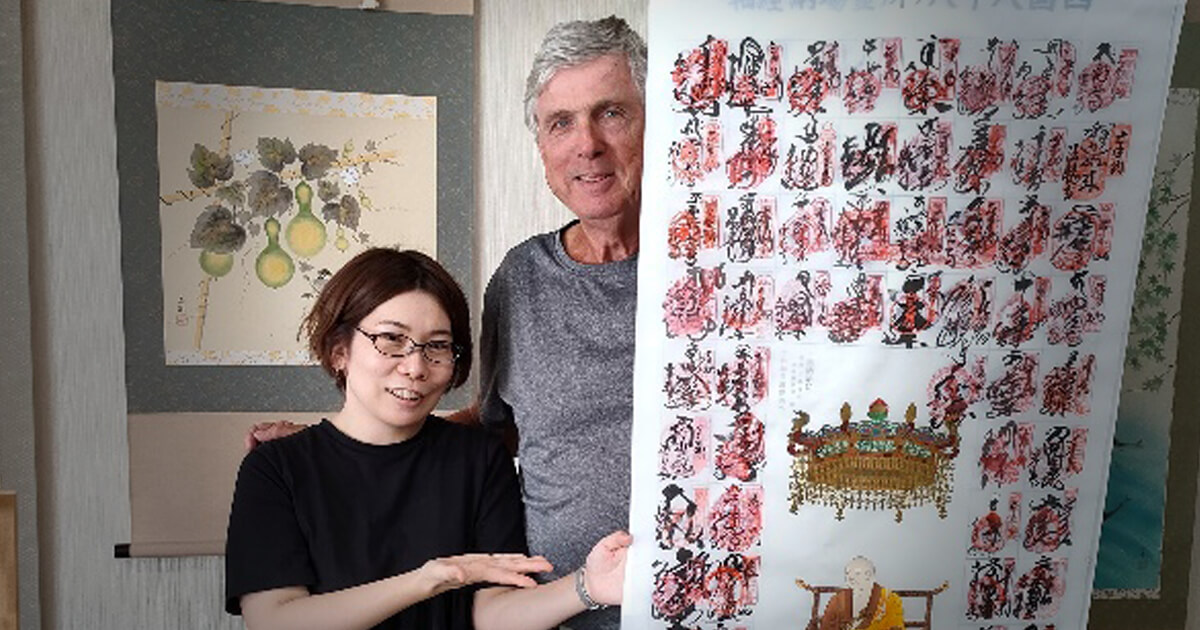
On the appointed day, the customer came to visit us at our shop.
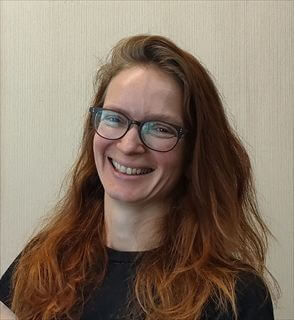
At the shop, we looked together at actual fabric candidates and discussed what kind of overall atmosphere the finished kakejiku should have.
In nōkyōjiku mounting, the choice of fabric has a major impact on the final impression. That is part of what makes it so interesting, but also, to be honest, part of what makes it difficult to decide quickly.
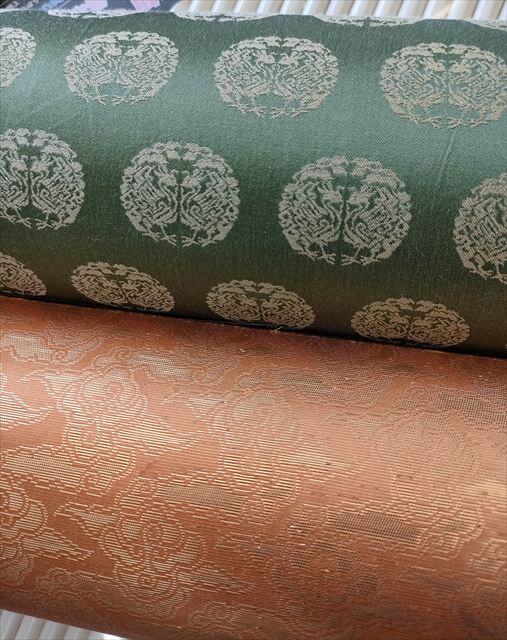
Even in the exchanges following her visit, the customer showed a strong interest in green-toned fabrics, and at that point the mounting was set to proceed with the fabric combination shown below.
After Returning Home, She Asked to Reconsider the Fabrics
After the mounting specifications had been decided and we were preparing to begin the work, we received an email from the customer after she had returned home. In it, she candidly wrote that, after repeatedly looking back at the photos she had taken of the fabrics during her visit, she had started to feel that she wanted to reconsider the choice.
In her actual message, she politely asked whether it was still possible to change her mind.
Fortunately, she contacted us soon after the original discussion. We were therefore able to let her know that changes were still possible, remind her of the fabric numbers she had seen at the shop, and also tell her that we could introduce additional green fabric options not shown in the catalog.
From this point onward, the project moved beyond a simple in-person consultation and developed into a carefully considered post-visit proposal process.
We Prepared and Sent Reference Materials for Additional Green Fabric Options
Because the customer was especially interested in green fabrics, we organized reference materials that included additional green options and sent them to her.
Since there were so many photographs, we did not send everything in a single email. Instead, we divided the materials into several files.
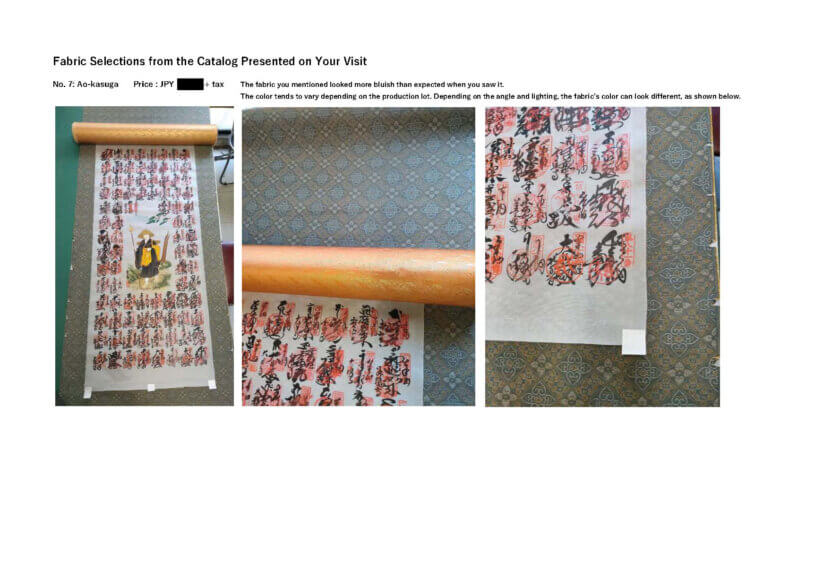
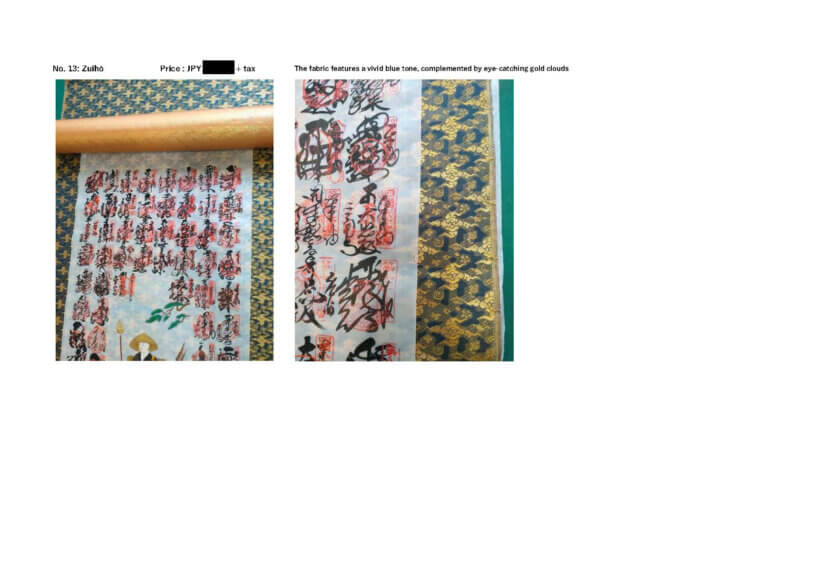
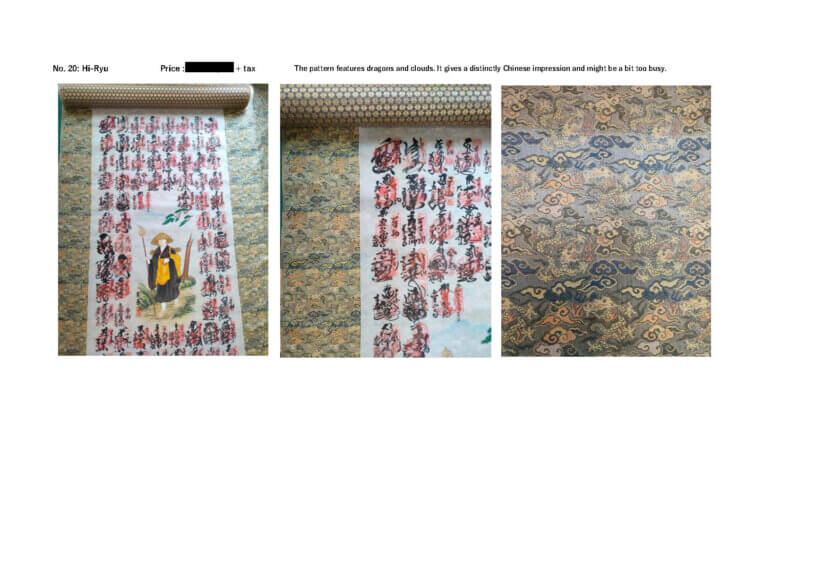
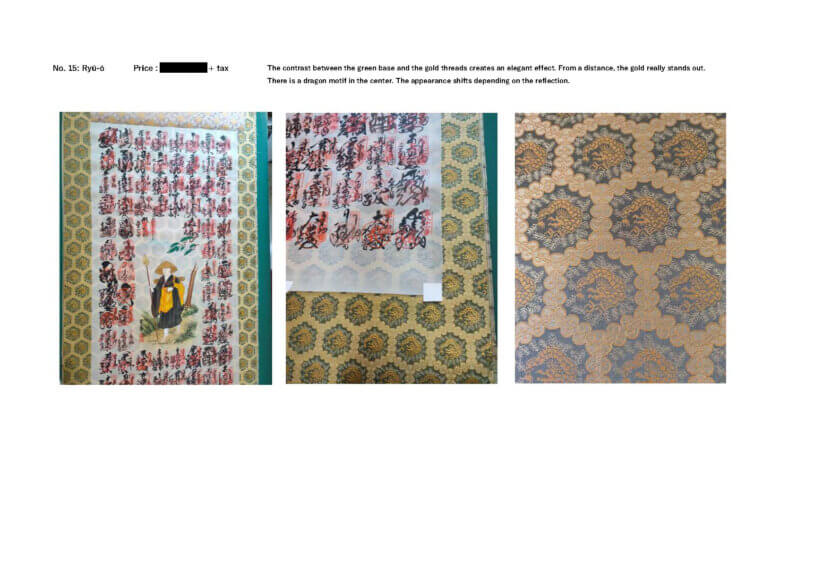
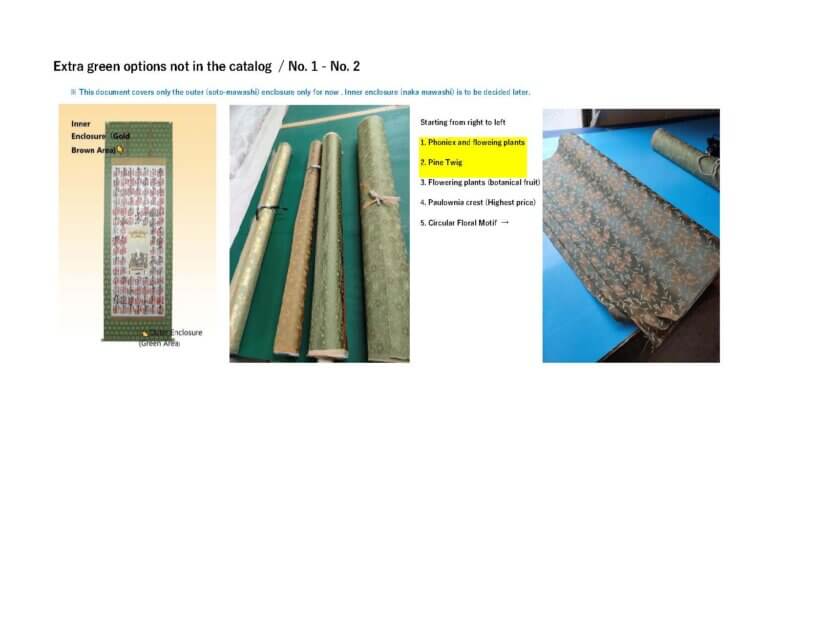
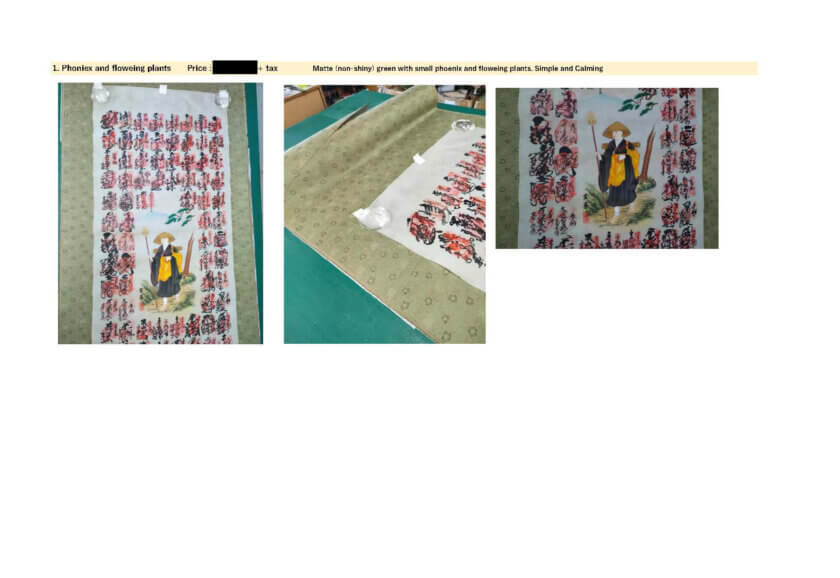
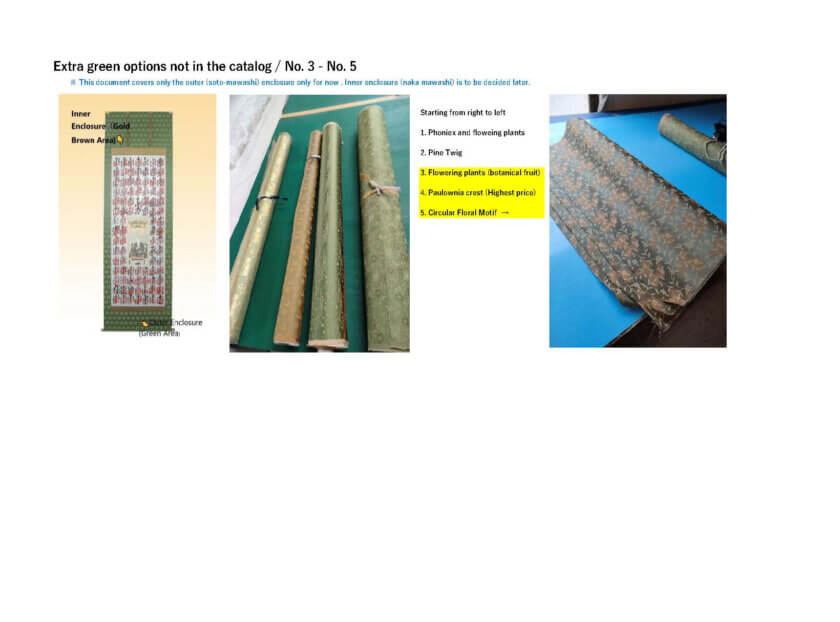
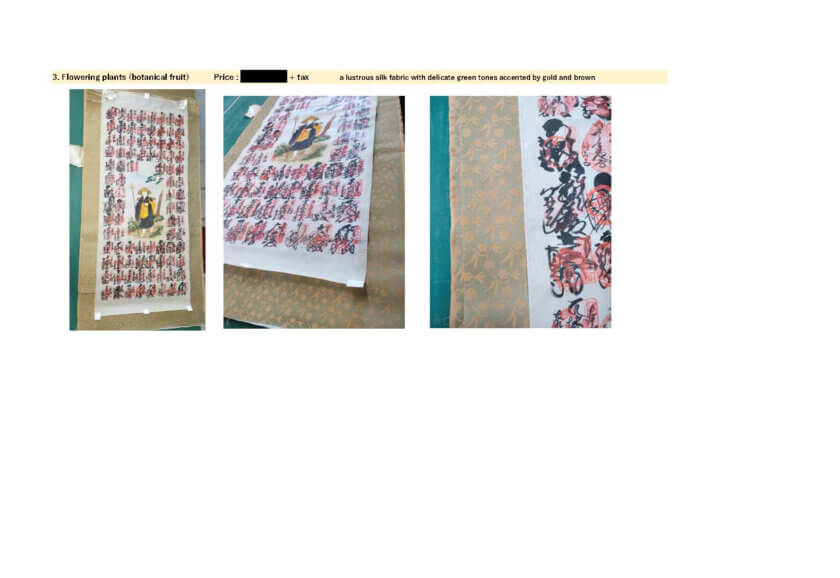
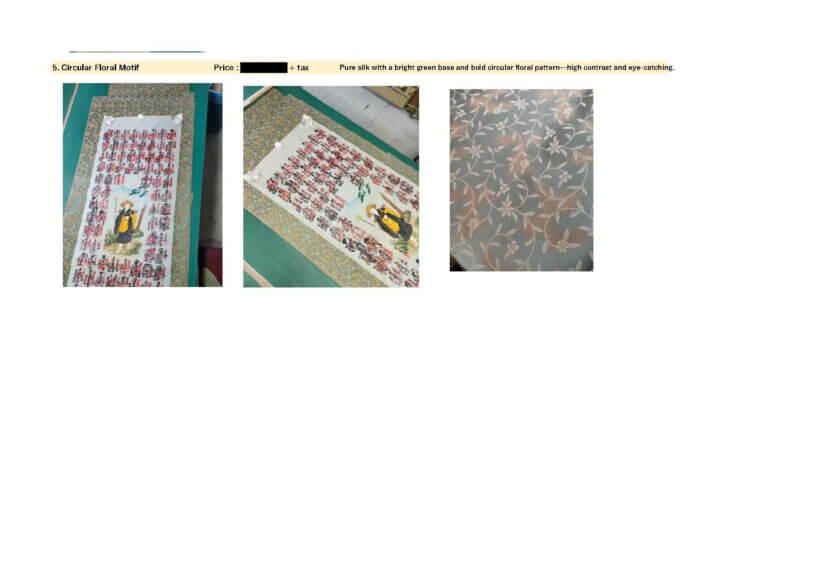
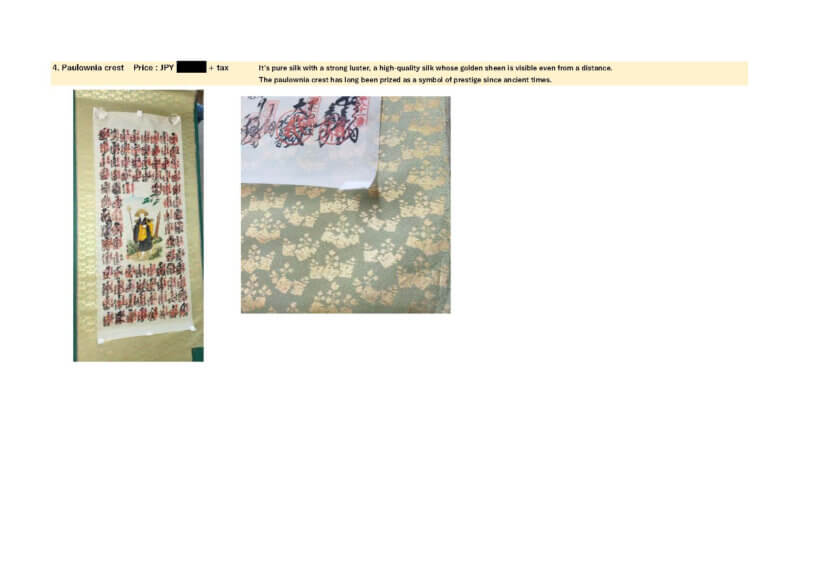
This was certainly painstaking work, but for a customer living far away, these materials became an important basis for comparing the fabrics. For that reason, we made every effort to organize and share the information as clearly and carefully as possible.
The Customer Was Drawn to the “Pine Twig” Fabric and Moved on to the Next Stage of Fabric Selection
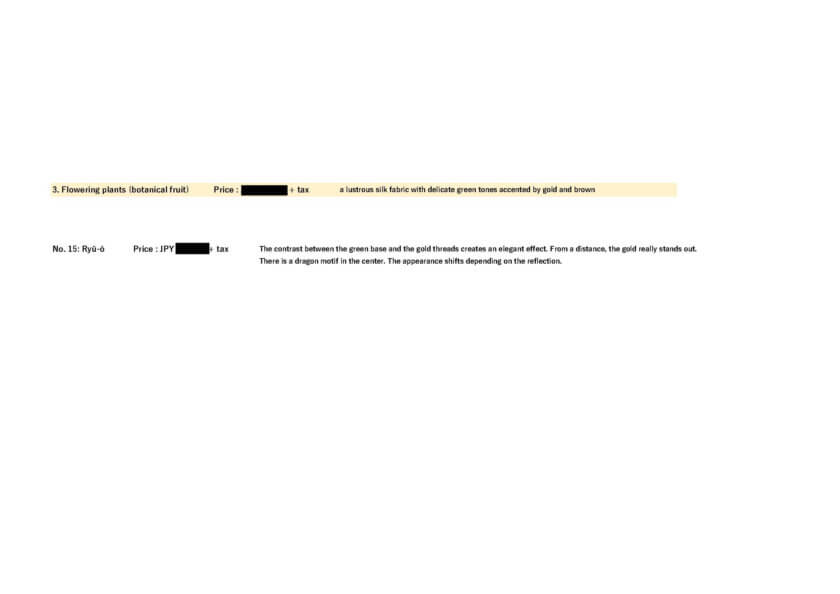
After reviewing the additional materials, the customer told us that she was strongly drawn to the green fabric with the “Pine Twig” pattern.
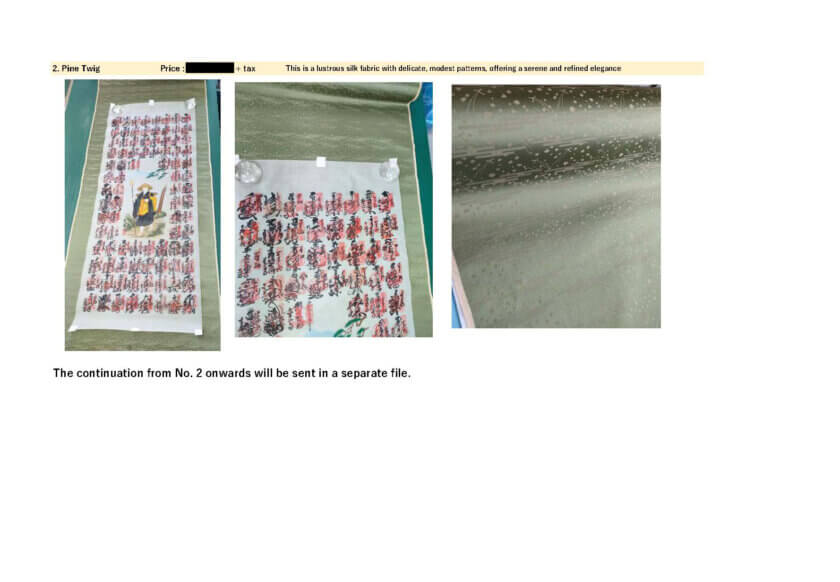
It seems that she found it to be green, yet not too strong, bright and elegant, and something that would suit the overall work very well.
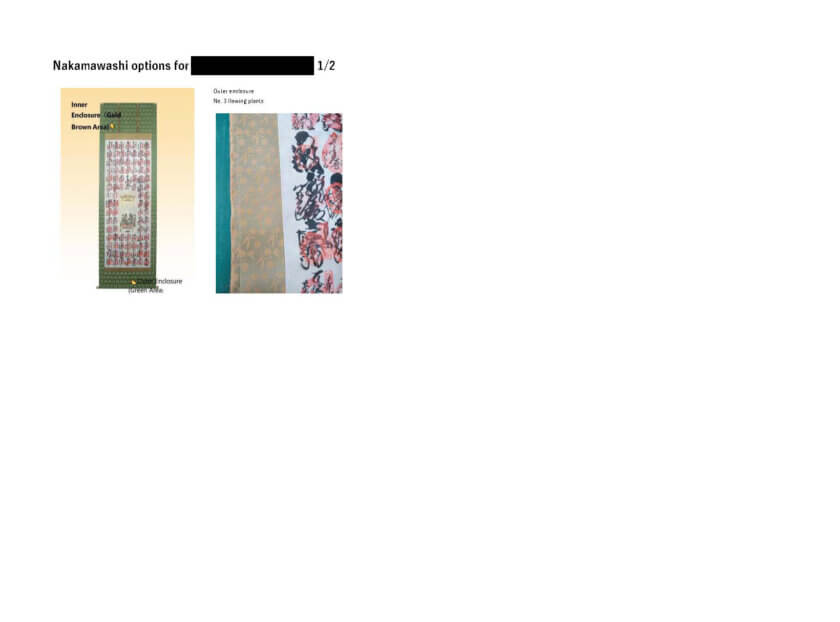
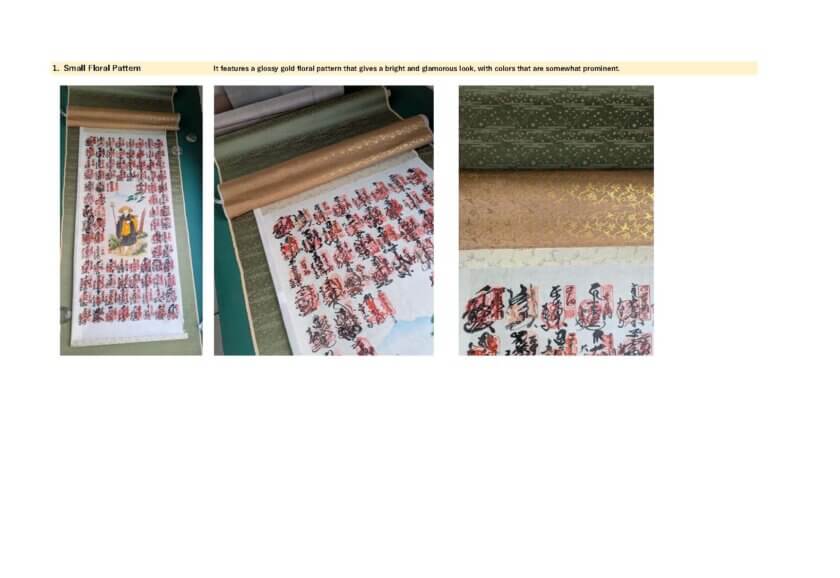
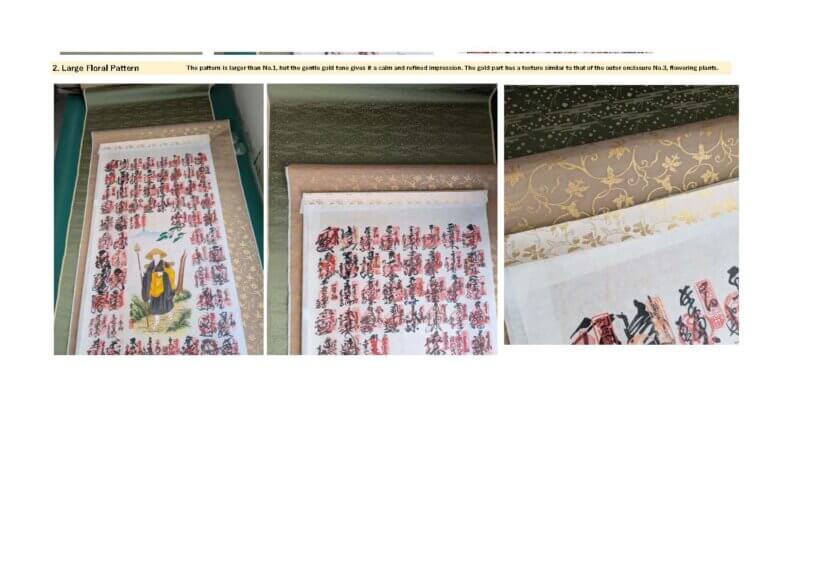
From there, the discussion moved on to selecting the fabric to be used inside this green outer fabric, and based on her wishes, we proposed a variety of options for that as well.
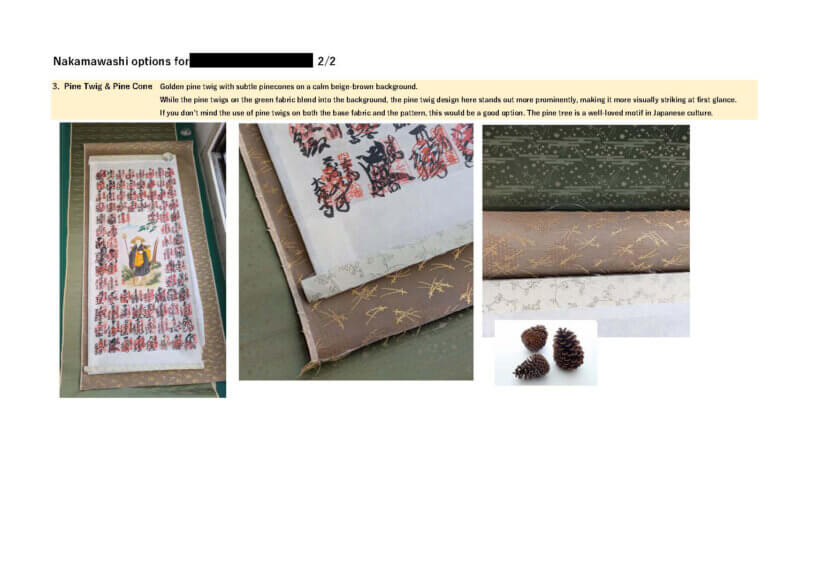
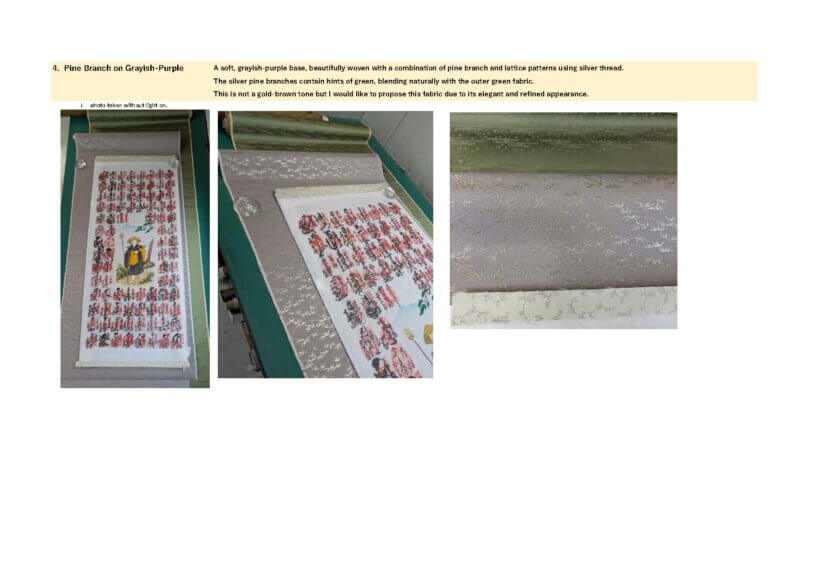
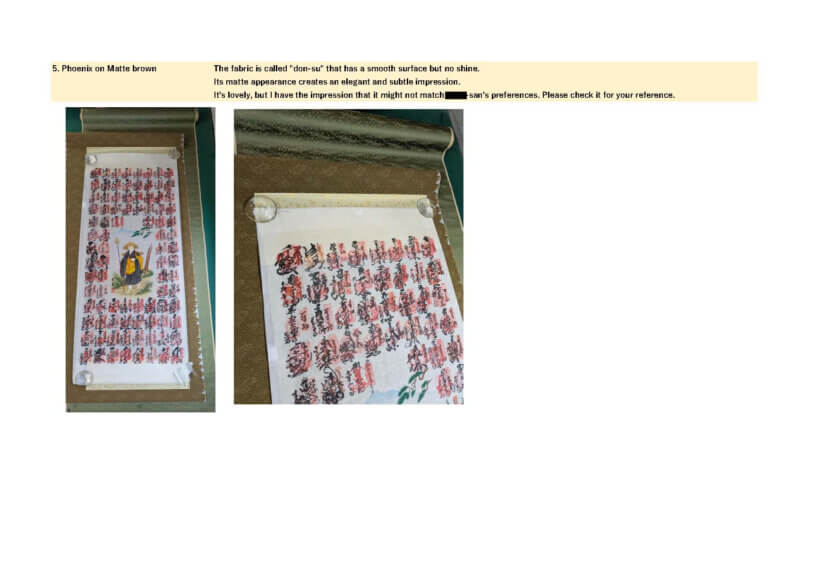
In the End, the Combination Centered on the Small Floral Pattern Was Chosen
After comparing the options over several days, the customer wrote back that, among the naka-mawashi candidates, she liked the small floral pattern best.
The discussion then moved on to the ichimonji fabric. To softly connect the green main fabric with the golden-brown naka-mawashi, we proposed a gentle beige-white fabric.
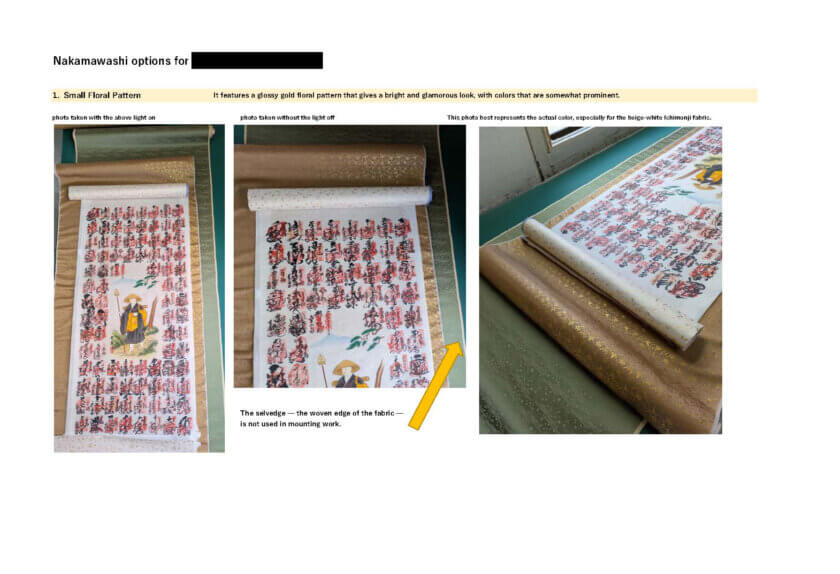
In response, the customer wrote back that “it fits very well” and that “the ichimonji fabric is beautiful too,” and she looked forward to seeing the finished piece.
The Real Work of Mounting Begins After the Fabrics Are Decided
Choosing the fabrics is not the end. That is the point from which the actual mounting work begins.
A nōkyōjiku from the Shikoku 88 Temple Pilgrimage contains many vermilion seals and brush inscriptions, so it requires even more careful handling than an ordinary work.
Because mounting work involves the use of water, we first apply color-fixing treatment to reduce the risk of bleeding, and only then proceed with the backing and mounting processes.
In this project as well, we carried out the work according to the standard procedures for nōkyōjiku mounting.
Completion Notice and the Customer’s Reply
At last, the customer’s nōkyōjiku for the Shikoku 88 Temple Pilgrimage was completed as a kakejiku.
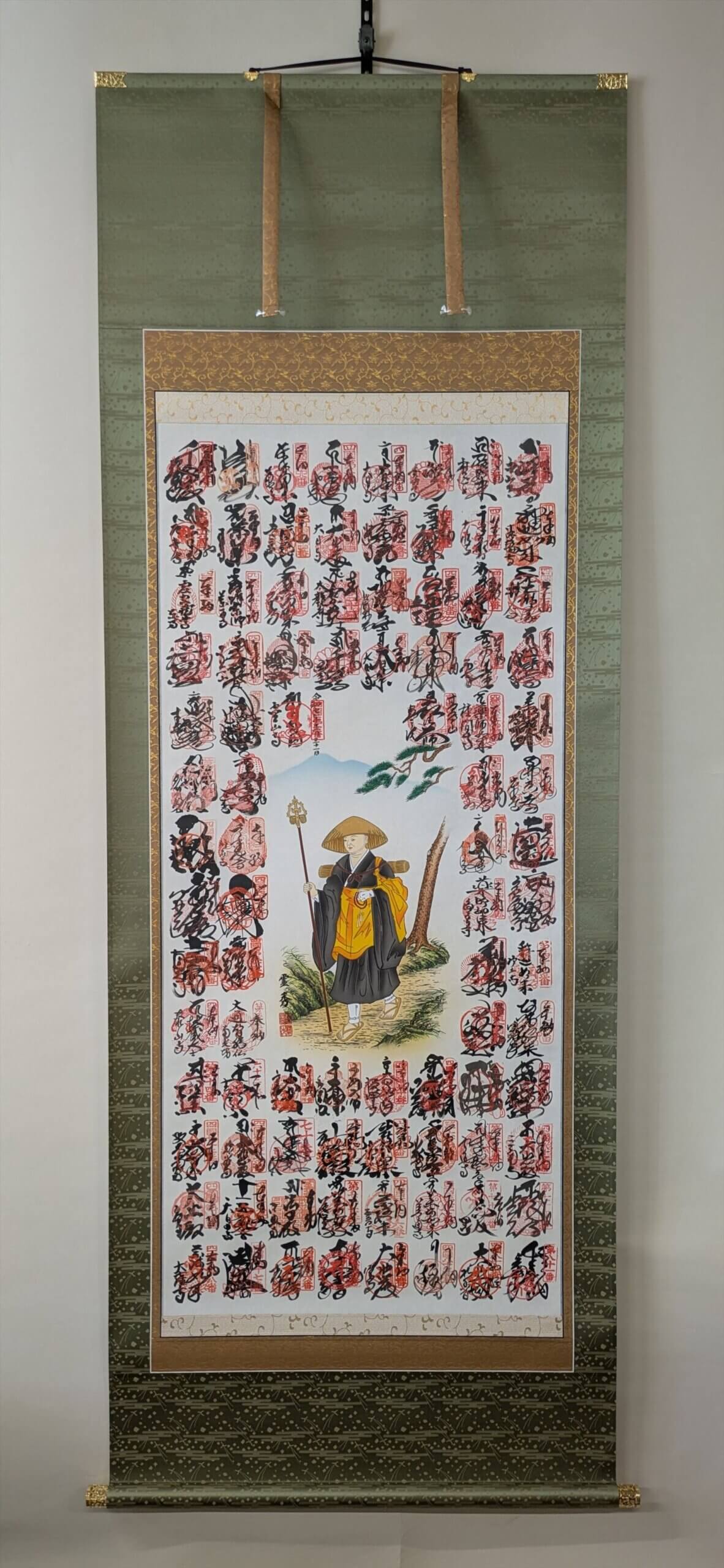
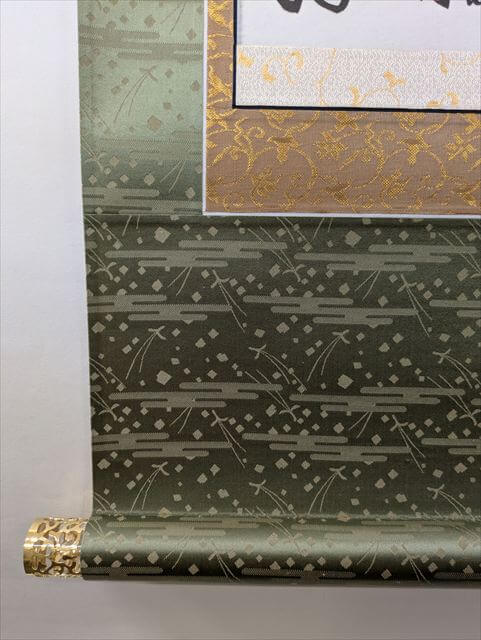
In our completion email, we attached photographs and explained that the finished piece had come together beautifully and that, after the final confirmation, we would proceed with shipping.
It was the moment when the fabrics that had been chosen with such care finally took shape as a single completed kakejiku.
After that, the customer sent us a heartfelt reply saying that it was “truly beautiful” and thanking us for patiently helping her search for the best possible combination together. It made us very happy to know that she appreciated not only the completed kakejiku itself, but also the process that led to it.
This was a project in which not only the finished kakejiku, but also the journey of getting there, became a very meaningful piece of work for us.
Customer Feedback
We were delighted to receive the following wonderful review from the customer after she received her kakejiku.
I came to Art Nomura in June. I wanted my Shikoku pilgrimage scroll mounted into a kakejiku. Tomoko-san helped me out, walking me through all the options (many options for very different budgets are available). My scroll stayed in Art Nomura to be mounted and shipped.
When I got home, I continued having email exchanges with Tomoko-san, who helped me finalise the look to perfection. The result feels very personalised and very special to me.
I recommend Art Nomura to any pilgrim. And I would like to visit again and learn about Japanese art.
Conclusion: Please Feel Free to Consult Us About Nōkyōjiku Mounting
When mounting a nōkyōjiku for the Shikoku 88 Temple Pilgrimage as a kakejiku, we believe it is important that each customer be able to choose, from among many possibilities, the option that truly suits his or her taste.
We would be very happy if the knowledge and experience we have accumulated could help support our customers in making that decision.
You may wish to have your nōkyōjiku for the Shikoku 88 Temple Pilgrimage mounted as a kakejiku, but may not know how to begin the consultation process.
Or you may be unsure about how to choose the fabrics.
If that is the case, please feel free to contact us. After examining the condition of your nōkyōjiku and listening carefully to your wishes, we will work with you to find the most beautiful and natural solution.
More Info About Shikoku 88 Pilgrimages Kakejiku
If you would like to know more about how a Shikoku 88 pilgrimages kakejiku is produced, please kindly watch this video.