A Visit from Australia | Looking for a Distinctly Japanese Kakejiku
Near our shop in Shiomiya, Tarumi, there is a community where many foreign residents live, and information about local shops is often shared among them.

This time, we would like to share the story of a customer who visited our shop after being introduced to us through such a community.

What Brought the Customer to Our Shop

The customer who visited us this time came from Australia. She came to Kobe together with her daughter and stopped by our shop during the trip.
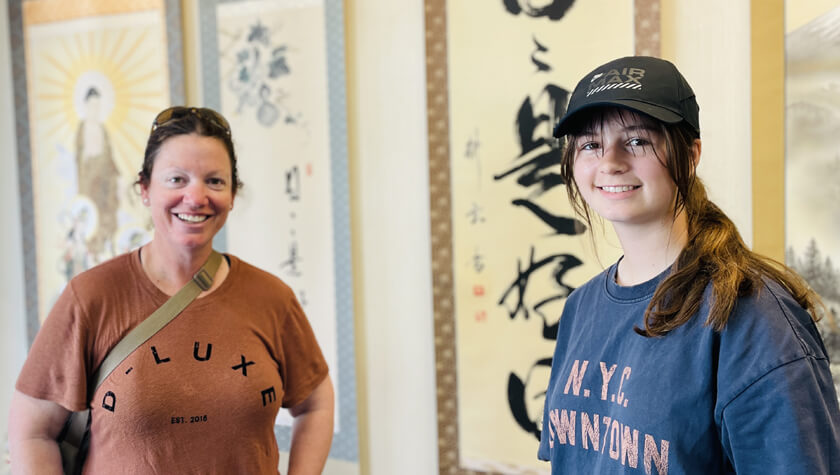
As we spoke, we learned that she had previously lived in Japan, and that our shop had been introduced to her by a Belgian person who had been her neighbor at that time.

This Belgian customer had previously purchased a kakejiku from us, and you can read about that visit here.

There have actually been other cases as well in which customers were introduced to us by this same Belgian customer and later visited our shop to purchase a kakejiku.
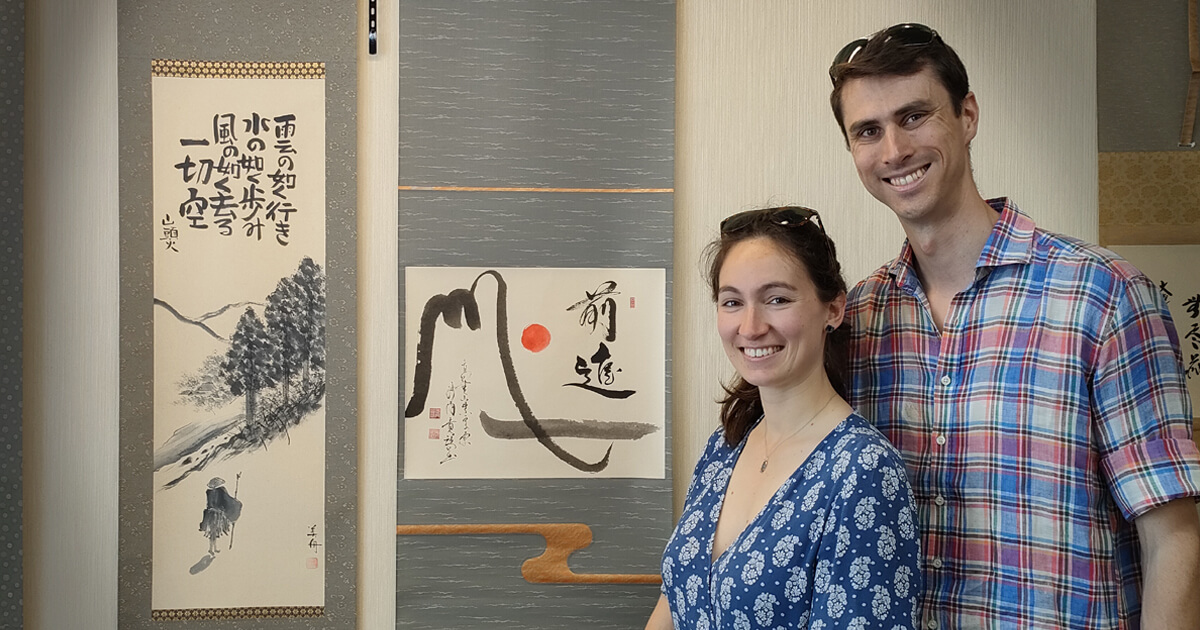
We were truly happy to welcome another customer through this connection, and moments like this remind us how valuable word-of-mouth introductions can be.

Looking for a Distinctly Japanese Kakejiku

This customer was hoping to find a kakejiku that would feel distinctly Japanese and also serve as a meaningful keepsake from the trip to Japan.

We showed her several works in the shop, and because she clearly told us her preferences and wishes, it was easy for us to guide her while narrowing down the direction.

Since she was traveling and had plans afterward, we felt that rather than spending a long time choosing a kakejiku, she wanted to find a good piece within a limited amount of time.

For that reason, instead of simply showing many different works, we tried to quickly understand the direction she was looking for and then narrowed our suggestions to pieces that matched her preferences.

This time, we mainly suggested Mt. Fuji kakejiku and calligraphy kakejiku.

The Piece Ultimately Chosen Was a “Nichinichi Kore Kōjitsu” Kakejiku

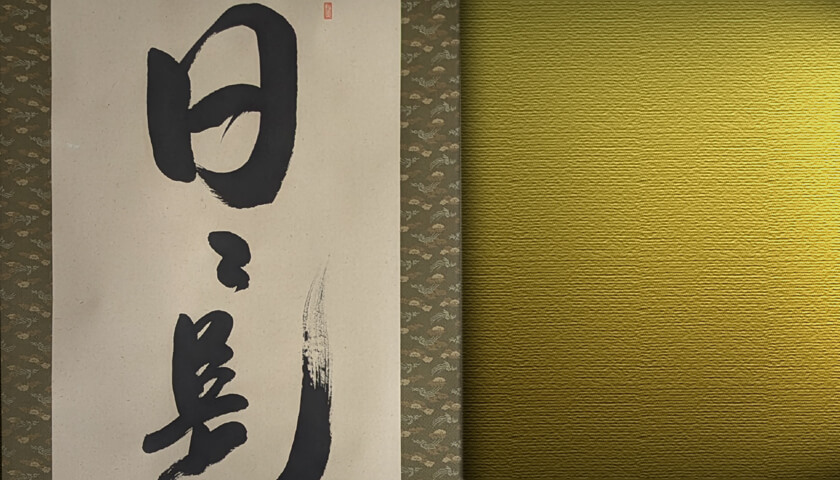
In the end, the piece she chose was a calligraphy kakejiku bearing the words “Nichinichi Kore Kōjitsu,” a Zen teaching meaning that every day is an irreplaceable and wonderful day.
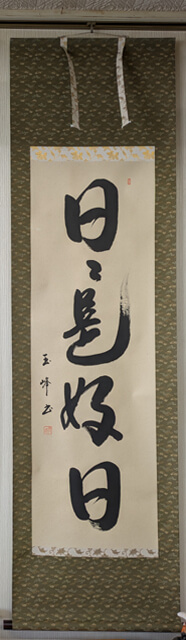
There are many ways a kakejiku can feel distinctly Japanese, but in this case, she was especially drawn to the charm of calligraphy itself rather than to a landscape painting, she seemed to be drawn to a calligraphy kakejiku in which the words themselves held a special charm. She was looking for something with bold characters and deep, rich ink, so we were very glad that this piece seemed to match her image perfectly.

We believe that, together with the meaning of the words, she was able to feel the atmosphere of Japanese culture through this work.

For this trip, she was looking for a piece that could express a sense of Japan as a lasting memory, and we think the meaning of the phrase and the strength of the calligraphy matched what she had in mind.

What matters most is that each customer chooses a piece that truly feels right to them.
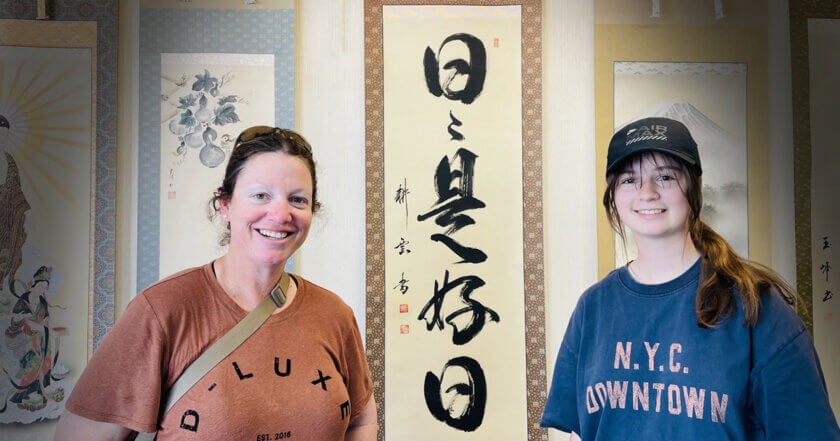
A Review from the Customer

After her visit, we also received the following review, which made us very happy as a company.

Great service, lots of variety, very beautiful works. It was a very enjoyable experience, the seats were very comfy too!

Expanding Connections with Overseas Customers

What was especially memorable this time was that our shop had been introduced through a neighborhood connection from when she had previously lived in Japan.

It is always a great pleasure for us when customers visit us not only through advertisements or online searches, but also through introductions from people who have actually seen our kakejiku.

Moreover, this time it was a case in which a connection between overseas customers led to another visit, which made this visit especially memorable for us.

Cases like this remind us once again that kakejiku are not only appreciated within Japan, but can also be deeply appealing to customers from overseas.

We are always happy to welcome overseas visitors to our shop.

If you are looking for a distinctly Japanese kakejiku but are not sure what to choose, or if you are searching for a piece that you can take home overseas, please feel free to contact us.
    NameRequired

    SexRequired

    MaleFemale

    CountryRequired

    e-mailRequired

    CommentRequired

    Attached File
    ※Up to 3 MB for each file.


    ← ← "MUST CHECK" / Please confirm the above contents again and check this button.


    Contact Us

    Please fill out the form below and submit for your inquiry.

    ❈FirstName
    ❈LastName
    Country
    ❈E-mail
    (❈Confirm E-mail)
    ❈Inquiry category Question
    Consultation
    Impression
    Request
    Others
    ❈Comment

    is the mark for required item.


    Your privacy is important to us. We are committed to protecting your privacy.

    (or press ESC or click the overlay)

    CEO Message

    Our Feelings For Kakejiku


     The Japanese people have long set a high value on aesthetic senses since ancient times. As a result, the
    peculiar culture which is not seen in other countries blossomed and many aspects of the modern Japanese
    culture come from it. Parts of Japanese culture has been introduced to people in other countries recently,
    so the number of people from other countries who are interested in Japanese culture has been increasing.
    However, the Japanese aesthetic senses, which are the bases of Japanese culture, have been nurtured
    through a long history, intertwining various elements intricately, such as climate, geographical features,
    religion, customs and so on. Therefore, they are very difficult to understand not only for people from other
    countries, but even for the Japanese people. I think the best tool which conveys these difficult senses
    understandably is a “kakejiku.”
     The kakejiku (a hanging scroll; a work of calligraphy or a painting which is mounted and hung in an
    alcove or on a wall) is a traditional Japanese art. It's no exaggeration to say that paintings are what
    express aesthetic senses at all times and places. The kakejiku is an art which expresses the Japanese
    aesthetic senses. The kakejiku has long been used in traditional Japanese events, daily life and so on since
    ancient times. As a result, there are various customs of kakejiku in Japan; kakejiku and the life of the
    Japanese are closely related. We can see Japanese values through kakejiku.
     The kakejiku is a cultural tradition which the Japanese people should be proud of. However, many people
    in other countries don't know much about it because it hasn't been showcased as much. This is why I
    decided to try to introduce it. The kakejiku world is very interesting and beautiful. We want not only the
    Japanese, but also many people from other countries to know and enjoy it. I hope that many people will
    love kakejiku someday.

    (or press ESC or click the overlay)
    Company Profile
    syaoku.jpg(120220 byte)

    Name Art Nomura


    President Tatsuji Nomura


    Founded1973


    Established1992


    Address7-23 Babadori, Tarumi-ku, Kobe city,
    Hyougo Prefecture, 655-0021, Japan


    Capital10 million yen


    URLhttp://nomurakakejiku.com


    Our Business

     Art Nomura is an art dealer which produces kakejiku (hanging scrolls). We mount many paintings and calligraphic works in kakejiku in my factory. Kakejiku are our main product. We also remount and repair old or damaged kakejiku. We share the traditional Japanese art of kakejiku with people all over the world.


    (or press ESC or click the overlay)
    Access Map

    Access Map


     The Japanese people have long set a high value on aesthetic senses since ancient times. As a result, the
    peculiar culture which is not seen in other countries blossomed and many aspects of the modern Japanese
    culture come from it. Parts of Japanese culture has been introduced to people in other countries recently,
    so the number of people from other countries who are interested in Japanese culture has been increasing.
    However, the Japanese aesthetic senses, which are the bases of Japanese culture, have been nurtured
    through a long history, intertwining various elements intricately, such as climate, geographical features,
    religion, customs and so on. Therefore, they are very difficult to understand not only for people from other
    countries, but even for the Japanese people. I think the best tool which conveys these difficult senses
    understandably is a “kakejiku.”
     The kakejiku (a hanging scroll; a work of calligraphy or a painting which is mounted and hung in an
    alcove or on a wall) is a traditional Japanese art. It's no exaggeration to say that paintings are what
    express aesthetic senses at all times and places. The kakejiku is an art which expresses the Japanese
    aesthetic senses. The kakejiku has long been used in traditional Japanese events, daily life and so on since
    ancient times. As a result, there are various customs of kakejiku in Japan; kakejiku and the life of the
    Japanese are closely related. We can see Japanese values through kakejiku.
     The kakejiku is a cultural tradition which the Japanese people should be proud of. However, many people
    in other countries don't know much about it because it hasn't been showcased as much. This is why I
    decided to try to introduce it. The kakejiku world is very interesting and beautiful. We want not only the
    Japanese, but also many people from other countries to know and enjoy it. I hope that many people will
    love kakejiku someday.

    (or press ESC or click the overlay)