Request for Kakejiku Restoration From Taiwan Due to Heavy Staining Caused by Air Pollution
Taiwan, like Japan, has high humidity, and depending on the area, it is also an environment that can be strongly affected by air pollution.
Because many hanging scrolls are made of delicate materials such as paper or silk, dirt can easily adhere to them, and over time it may settle into the surface, causing stains and discoloration.
In this case, we received exactly this kind of inquiry from a customer living in Taiwan.
Humidity And Air Pollution, And The Resulting Dirt, Stains, And Discoloration
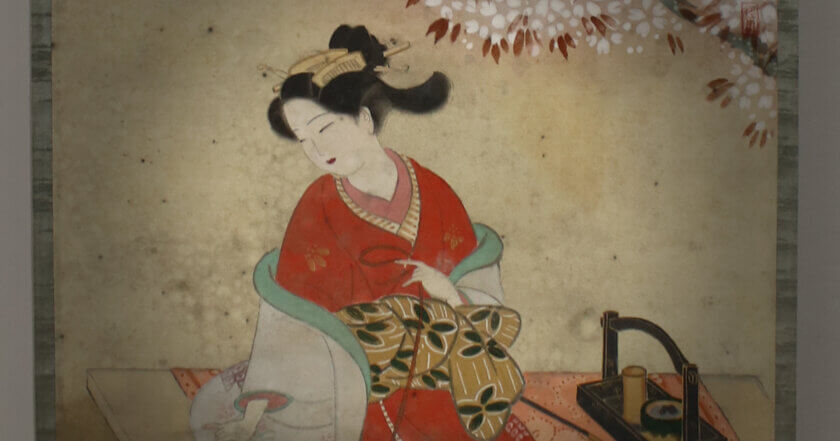
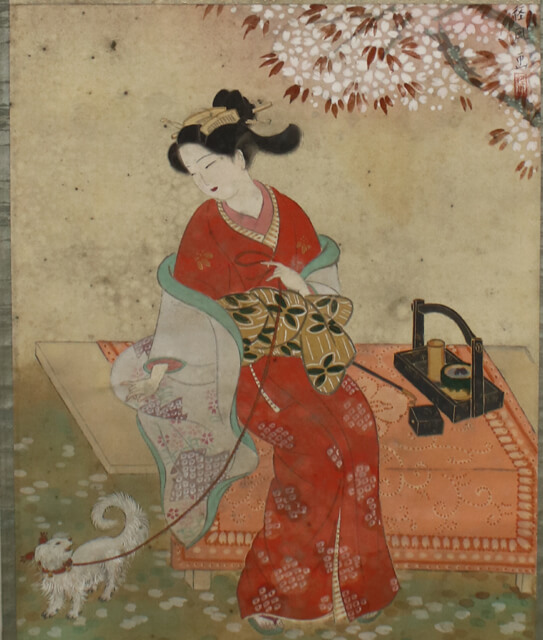
Here is the hanging scroll we were consulted about this time. We can see that the entire piece has a dull, overall layer of grime.
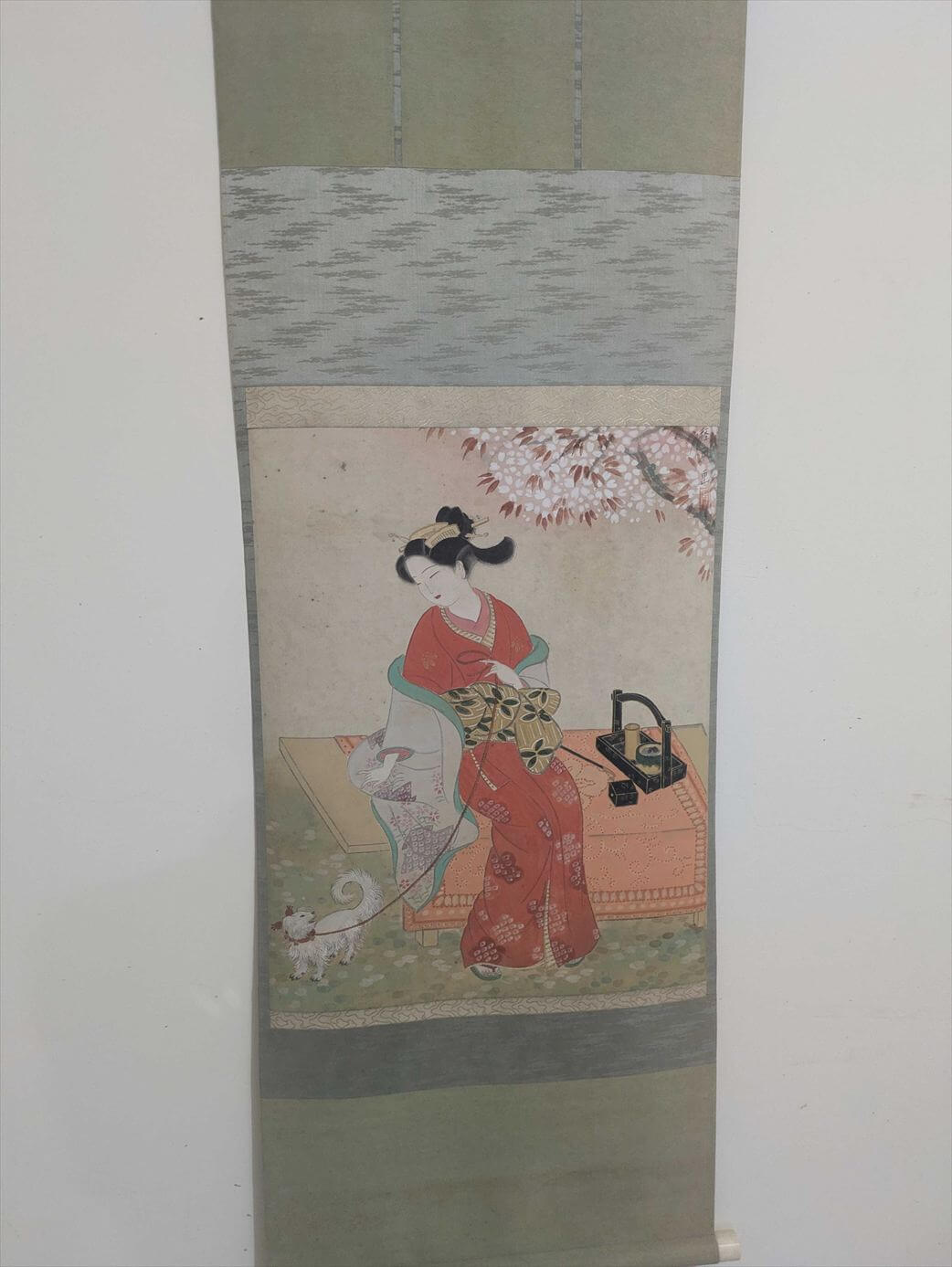
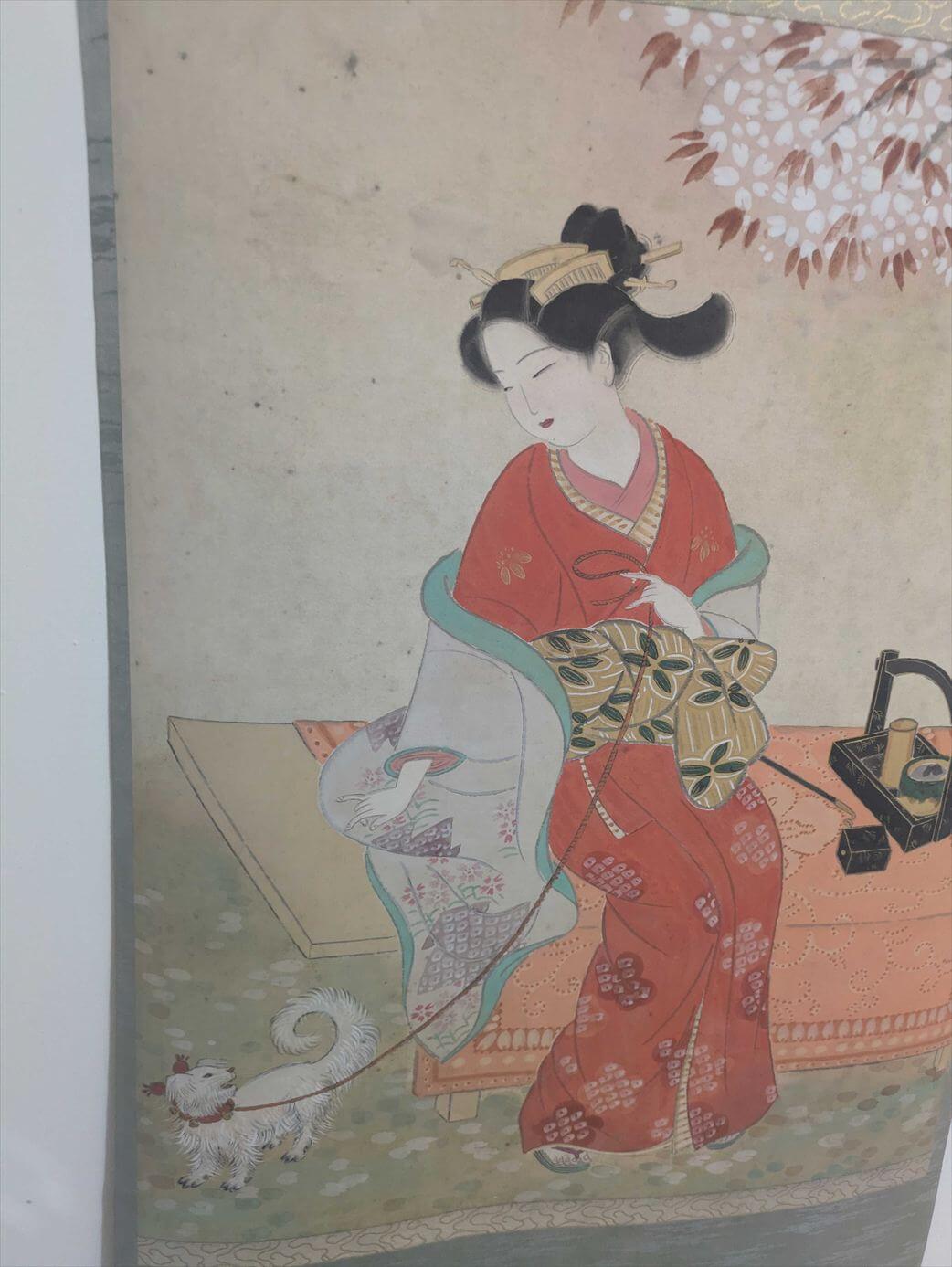
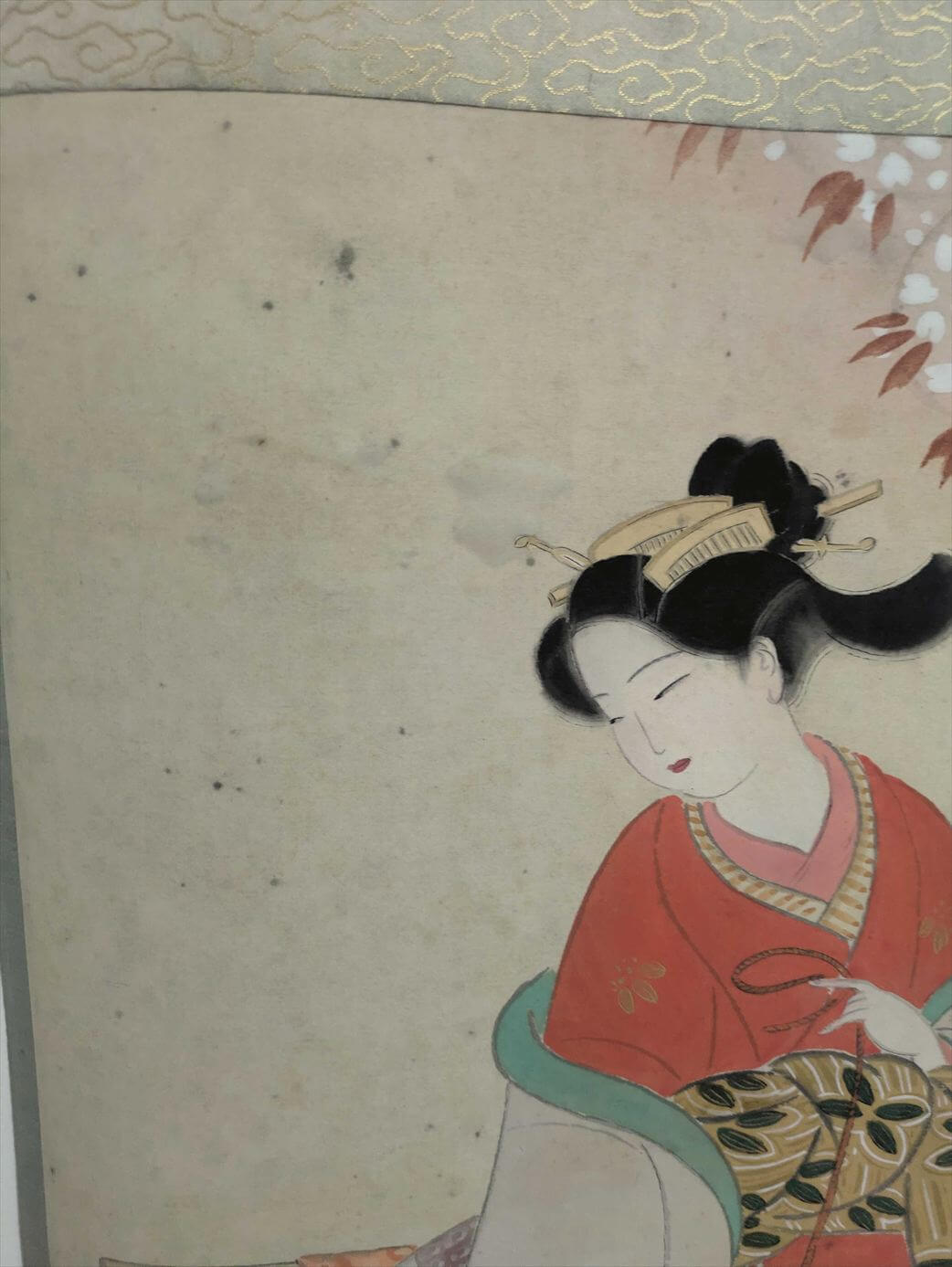
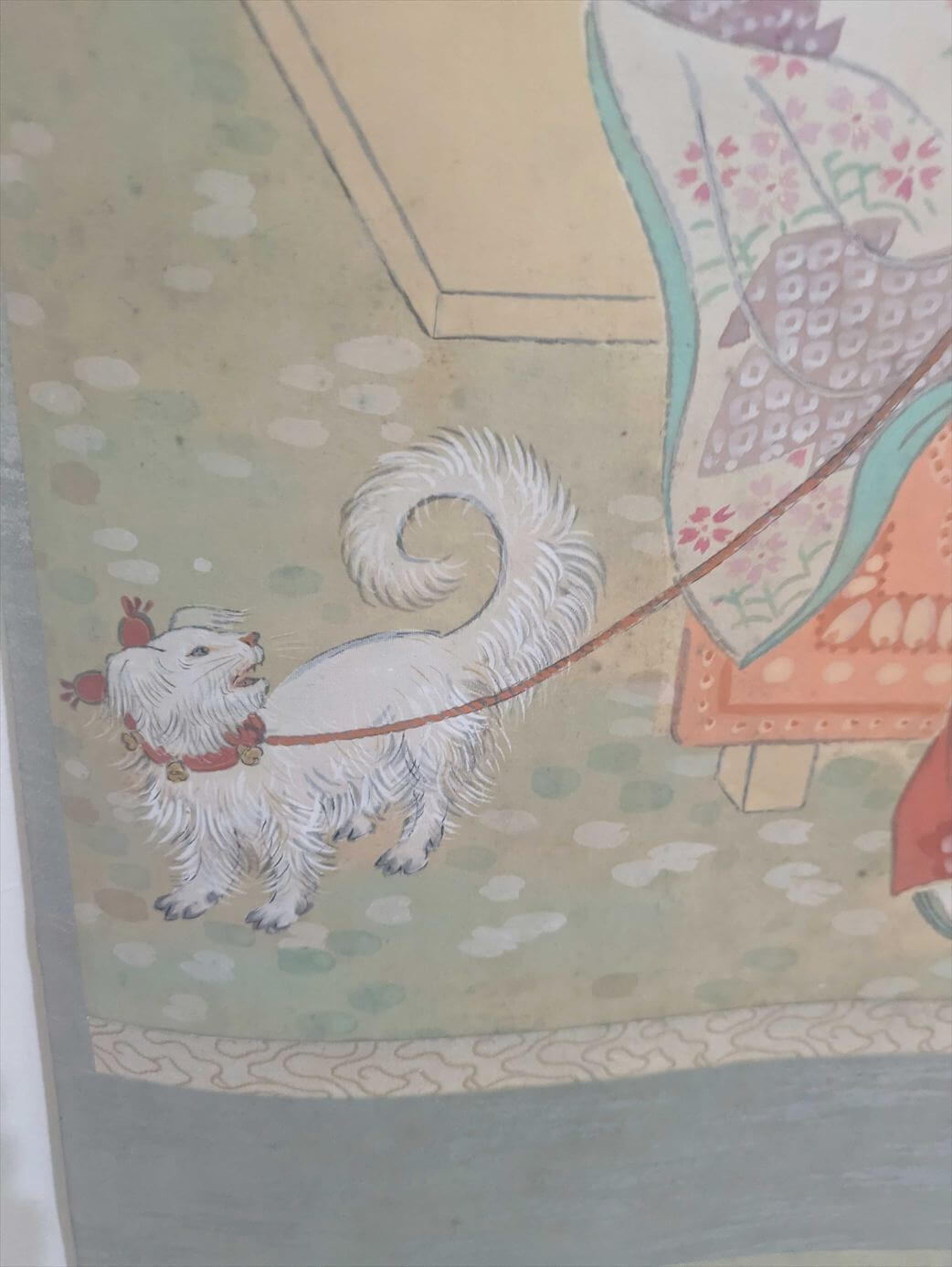
However, it is difficult to determine from photographs alone what the exact cause of the staining is, and whether our washing process can fully remove it.
For that reason, we first provided the customer with an approximate estimate for restoration, and explained that if they wished to proceed, we would need them to send the scroll to us for an in-person inspection.
The Artwork Arrived, And The Pigments Were More Vivid Than Expected
Once the artwork arrived, we first confirmed that it had reached us safely, and then examined its overall condition.
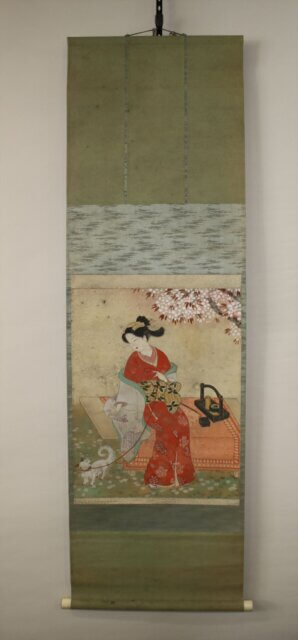
Compared with the photos the customer had originally sent, the actual scroll showed heavier staining than we had expected.
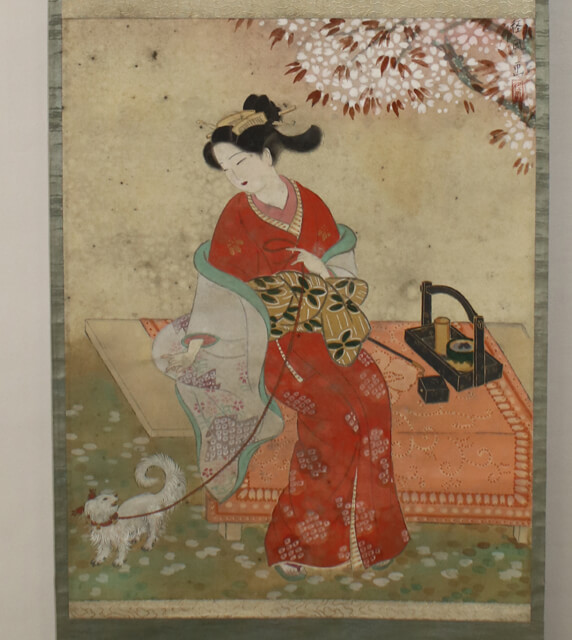
Another challenge was that the pigments used throughout the work were highly vivid. In particular, we could see that the cherry blossoms and the woman’s kimono were painted with very thick layers, built up repeatedly.
When the staining is severe, it is natural to want to remove it thoroughly.
However, the more vivid the pigments are, the higher the risk that overly aggressive stain removal can lead to color loss or even pigment flaking.
If the artwork is damaged in the process, it defeats the purpose, and this is a dilemma that can be extremely difficult even for professional mounters to judge.
Therefore, before beginning work, we shared with the customer a clear line of what we would aim for and where it would become dangerous.
We explained that stain removal would likely wash away a certain amount of grime, but complete removal might be difficult, and that protecting the artwork must come first, so we would proceed with a policy of achieving the maximum improvement within a safe range.
Discussion Of The Remounting Specifications
In a remounting project, fabric selection greatly affects the final appearance.
This customer had a clear preference for a simple and understated impression, and for deep green tones, so we searched for fabrics that matched that direction and proposed multiple candidates in a way that could be compared through mockups.
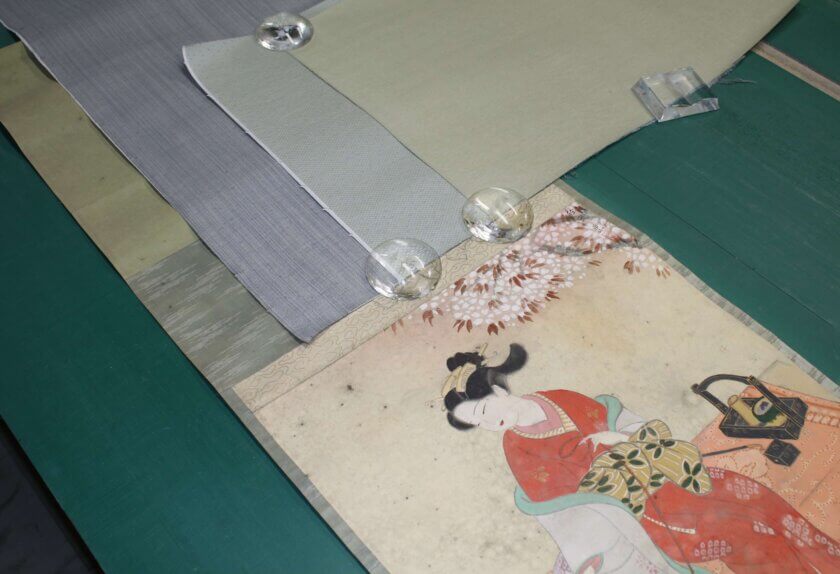
In overseas projects, because the customer cannot line up the actual fabrics and compare them in person, sharing a clear image of the final result is especially important, and mockups are a crucial step to reduce uncertainty one by one.
In the end, the customer selected a calm-toned fabric, and the overall composition came together with a clean, well-balanced finish.
With the fabric choice confirmed, we moved forward with the restoration and remounting work.
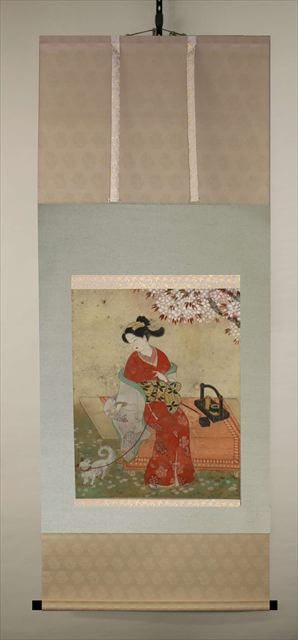
Details Of The Restoration Work And Process
For this restoration, we proceeded in the following sequence.
1. Color Fixing.
Because there were many areas with strong, vivid coloration, we carried out color fixing carefully, again and again.2. Dismantling the Scroll.
We carefully removed the old mounting fabric and roller components from the existing scroll, taking the utmost care to avoid placing any burden on the artwork.3. Removing The Old Backing Paper.
We gently removed the old backing paper adhered to the reverse side of the artwork.4. Washing And Stain Removal.
We carried out washing and stain removal while constantly checking the condition of the artwork.
Because there was a particular concern about color loss, we started with low concentration solutions, gradually increased the concentration little by little, and repeatedly took time to observe the results, which required an enormous amount of time.5. Remounting.
After safely completing washing and stain removal, we remounted the piece as a new hanging scroll using the fabric and specifications chosen by the customer.
Restoration Completed
The restoration and remounting of the hanging scroll has been completed. Here is the scroll after being newly remounted.
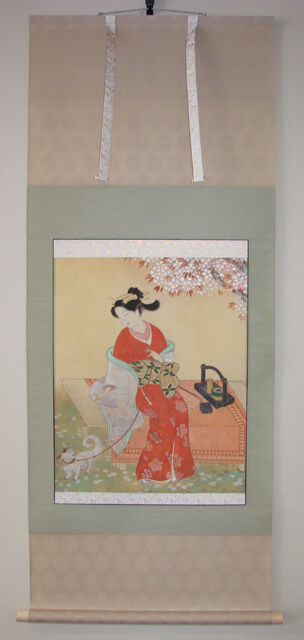
The staining has been removed, and the original vividness of the artwork now stands out more clearly.
Customer Review
We promptly shipped the completed scroll to the customer, and they were very pleased with how dramatically it had recovered, leaving us the following review.
My scroll was very badly stained by the terrible pollution here in Kaohsiung Taiwan. The scroll now looks like new and the stains are completely gone. I can’t recommend Art Nomura highly enough.
Their strong recommendation was truly encouraging for us. Even though this was an overseas request, they entrusted the project to us through to the very end, and we are sincerely grateful.
Storage in Humid Regions, Do You Need Plastic Wrapping
After delivery, the customer also asked, “Taiwan is very humid, so should I wrap the paulownia box in plastic.”
This point is often misunderstood, but because paulownia boxes have natural humidity-regulating properties, there is basically no need to seal them in plastic. In fact, sealing the box can trap moisture inside.
If you would like even stronger protection, there is also a method called double-boxing, where the paulownia box is placed inside a larger lacquered outer box, and we introduced this option as well.
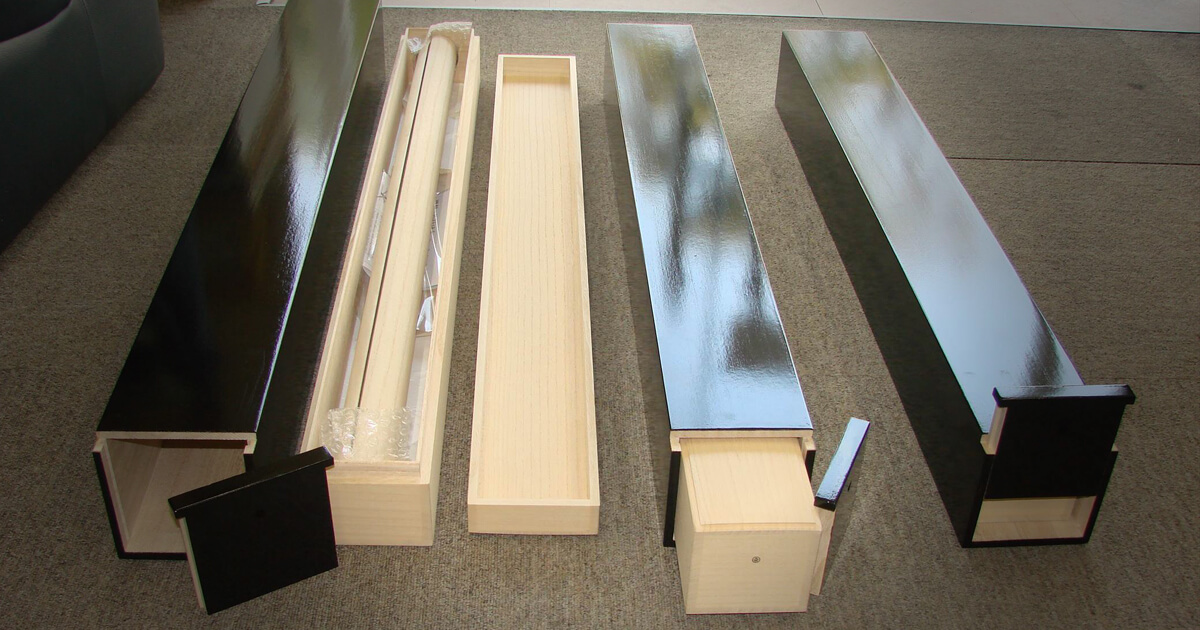
For everyday care, it is also helpful to hang the scroll on dry, sunny days a few times a year to let it air out, and then, again on a dry day, roll it and return it to the paulownia box to let it rest. Avoid leaving it permanently displayed or permanently stored, and keeping the storage area as dry as possible is important.
Summary
The best approach to stains and dirt on hanging scrolls depends on the cause, how firmly the staining has settled, and the condition of the pigments in the artwork.
At our studio, we first confirm the condition, explain the risks and limitations as well, and then proceed while continuously confirming the best solution that preserves the appeal of the artwork.
If you are troubled by stains, dirt, or the need for remounting, including overseas requests, please feel free to contact us.