A Kakejiku Hanging Scroll Restoration Request from Switzerland
From Online to In-Person
From time to time, clients who first contact us online later visit our shop when they travel to Japan.
When a visit follows an online exchange, it means that our work and attitude have been carefully evaluated beforehand, which we find deeply gratifying as kakejiku specialists. Meeting in person also allows us to better understand the artwork itself, as well as the client’s values and intentions, making future communication far more meaningful.
In this article, we would like to share the story of a client from Switzerland who visited us in person after initially working with us online.
A Visit from Switzerland
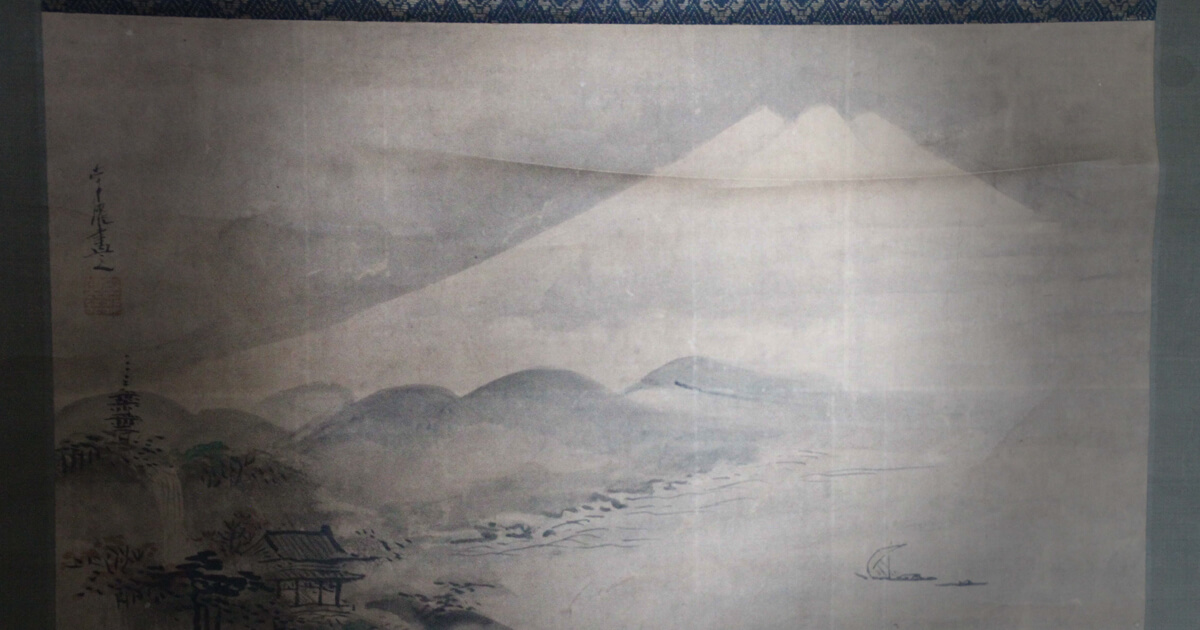
The client who visited us on this occasion is a collector from Switzerland for whom we previously carried out an online restoration of a Mount Fuji hanging scroll.
You can read about that restoration here:
After safely receiving the restored scroll in Geneva, we received the following message from him:
I have just received the remounted scroll in Geneva and I would like to thank You very much for this wonderful work. The scroll is now in a very nice state of conservation. I would like to notify my visit in Your shop the ● of ● ▲ at around 11 am. I will bring You about 6 old scrolls to be remounted. Would You please inform me if this date is appropriate? I am very glad to meet You soon in Kobe.
This message marked the beginning of his visit to our workshop.
Visiting as a Couple
Here is a photograph of the clients who visited us.
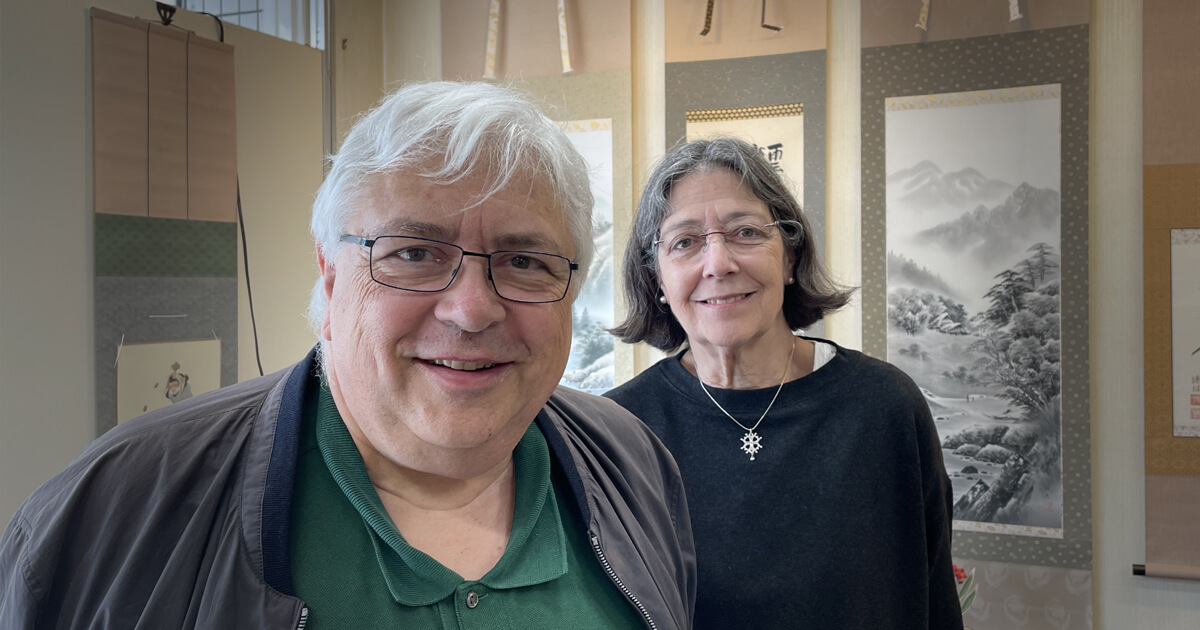
They came as a couple, and from our conversation it was immediately clear that both have a deep appreciation for Japanese art. The atmosphere throughout the meeting was warm and relaxed. His wife also spoke a little Japanese, which added to the sense of closeness.
They had visited Japan many times in the past. Previously, they had entrusted their scroll restorations to another mounting specialist, but as that person had retired due to age, they began searching for a new workshop. During that search, they found our company online.
To understand what kind of work we do, they first decided to commission a trial restoration—the Mount Fuji scroll. After seeing the result, they felt reassured that we work carefully and sincerely, which ultimately led to this visit to Japan and to our shop.
Once again, this experience reminded us how addressing each project with sincerity can open the door to long-lasting relationships.
From Six Scrolls to Eight
In advance, we had been informed by email that the client would bring six scrolls. However, during his travels in Japan before visiting us, he acquired two additional scrolls he wished to have restored.
As a result, the total number of restoration requests became eight.
With a smile, he mentioned that whenever he comes to Japan, it is difficult not to add a few more pieces along the way.
Discussing the Restoration Details
We carefully examined each of the eight scrolls one by one, assessing their condition and determining the necessary conservation treatments. Based on this assessment, we then discussed suitable mounting styles and fabrics.
The conditions varied greatly—some scrolls were severely damaged, while others had relatively minor issues. Because of this, none could be treated in a uniform manner. Each scroll required an individual diagnosis, followed by detailed proposals for mounting fabrics and specifications tailored to both the artwork and the client’s preferences.
As a result, the consultation took place continuously from 10:00 a.m. to 3:00 p.m. without interruption. It required both physical stamina and intense concentration. However, seeing how seriously the client cared about preserving his scrolls made the time feel entirely worthwhile.
Below are the eight scrolls after completing the consultation.
A Particularly Memorable Scroll
Among the eight pieces, one scroll left a particularly strong impression on us.
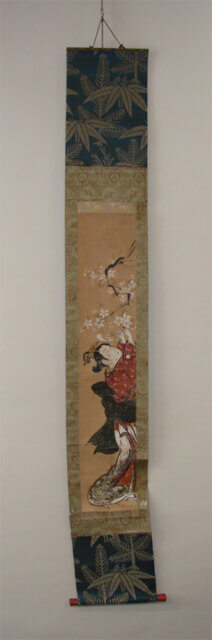
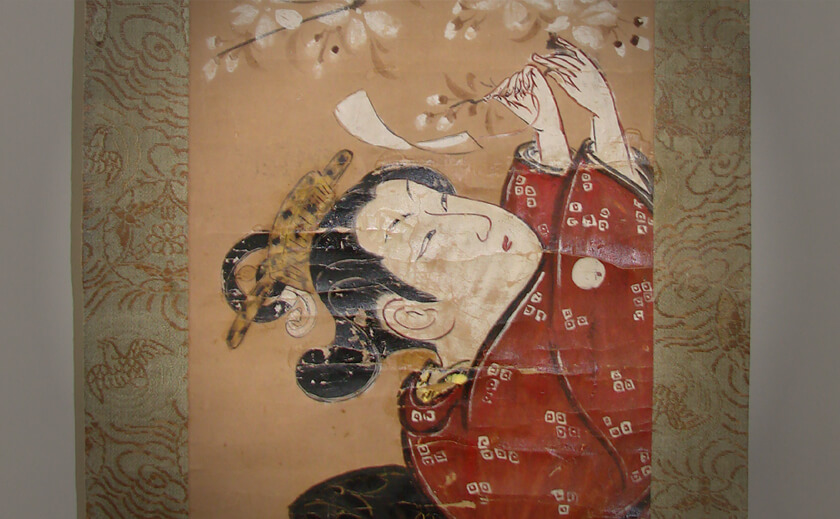
This scroll held special meaning for the couple, as it was the first hanging scroll they had ever purchased together. Due to its extremely poor condition, they had previously been told by another mounting specialist that restoration would not be possible. This time, they came to us “just in case,” without high expectations.
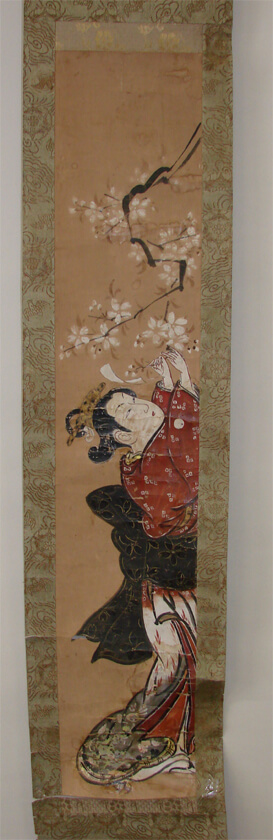
Indeed, the condition was among the worst we encounter. Even so, because of the emotional value attached to the piece, we could not simply say it was impossible. We therefore committed ourselves to doing everything we could to restore it to a condition suitable for display once again.
The Restoration Process
All eight scrolls showed significant deterioration and surface contamination, making the restoration work particularly demanding.
Several of the requests involved two separate ukiyo-e prints that were still unmounted. The client asked us to join each pair into a single composition and mount them as individual hanging scrolls. Because the final balance and continuity of the image depend heavily on how the sheets are connected, this work required careful planning and extremely precise alignment at the joins.
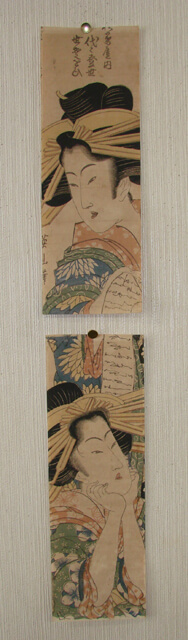
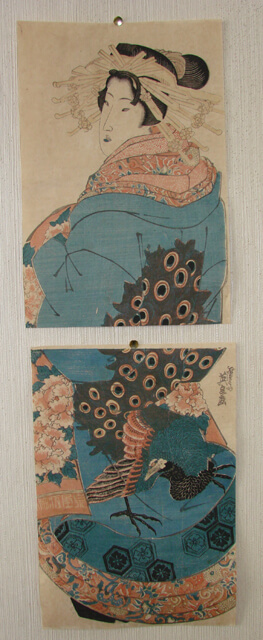
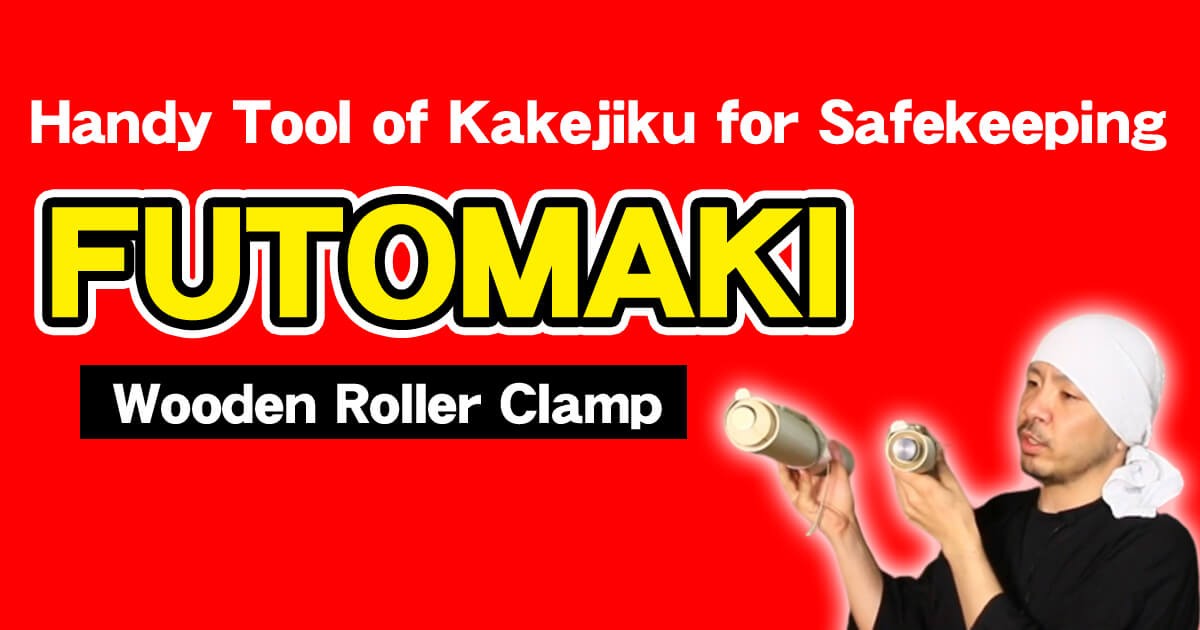
Given the fragile condition of many of the works, we recommended storing several of them with futomaki (roller clamp) to reduce stress during storage. The client agreed with this approach.
A futomaki is a tool that increases the diameter of the rolled scroll, helping to prevent damage over time.
You can learn more about futomaki here:
The most challenging work, however, was undoubtedly the couple’s cherished scroll mentioned earlier.
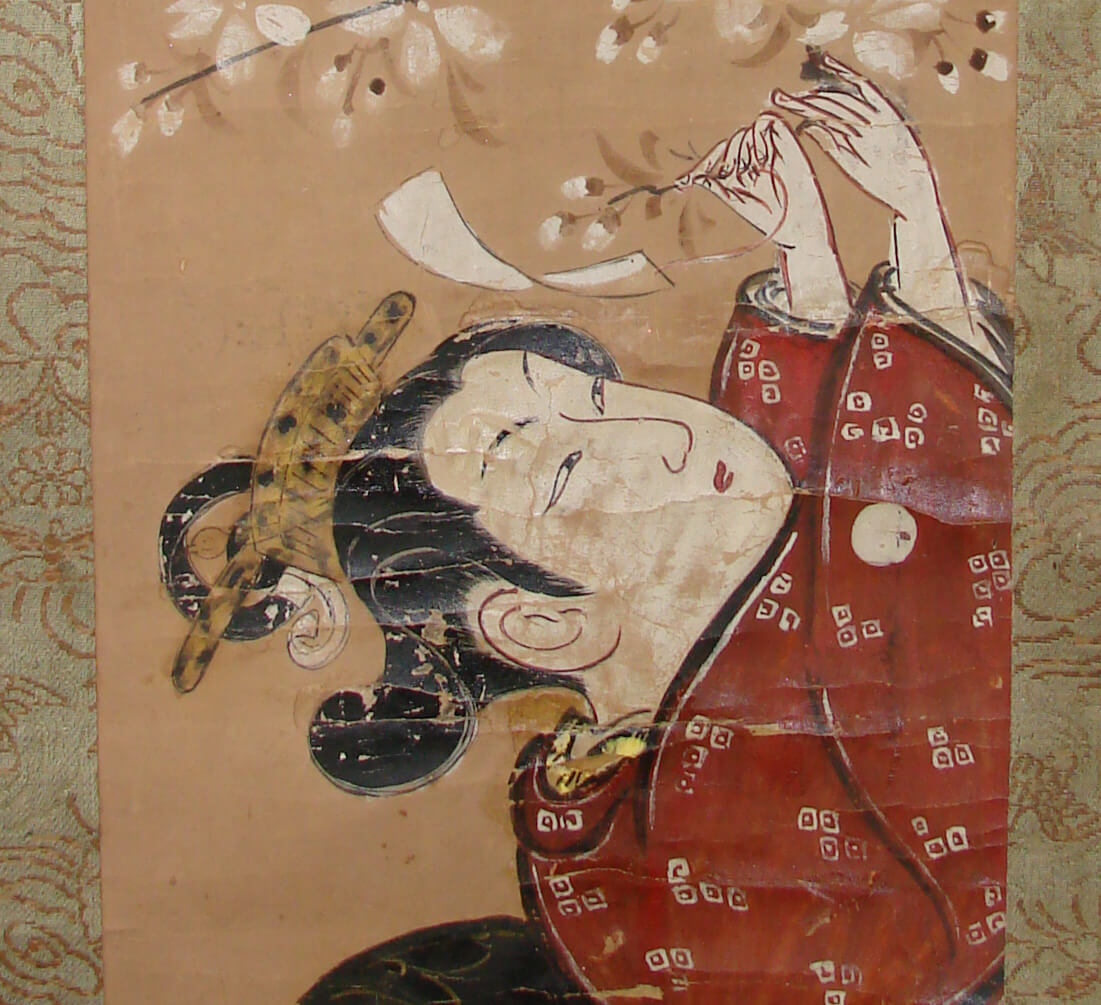
The surface showed cracks and flaking in areas of thick pigment, along with severe creasing, delamination, and staining throughout the piece. These complex and overlapping issues required careful, step-by-step treatment. We proceeded cautiously, confirming the condition at every stage, and carried out retouching where necessary.
Restoration Complete
After an extended period of careful work, the remounting of all eight scrolls was successfully completed.
Each piece presented a high level of difficulty, but seeing them regain their presence as hanging scrolls once again was deeply rewarding for us.
We are confident that the results will meet the client’s expectations when he visits us again, and we very much look forward to seeing him in the future.
Conclusion
At our company, we also accept in-person consultations and restoration requests, as in this case.
Compared to online communication, meeting in person allows us to select mounting fabrics directly alongside the artwork, making it easier to share a clear vision of the finished result.
We approach every scroll with care and sincerity, always seeking the most appropriate method of restoration for each individual piece.