
Mounting a Scroll for the Nationwide Ichinomiya Pilgrimage (Shokoku Ichinomiya Meguri)
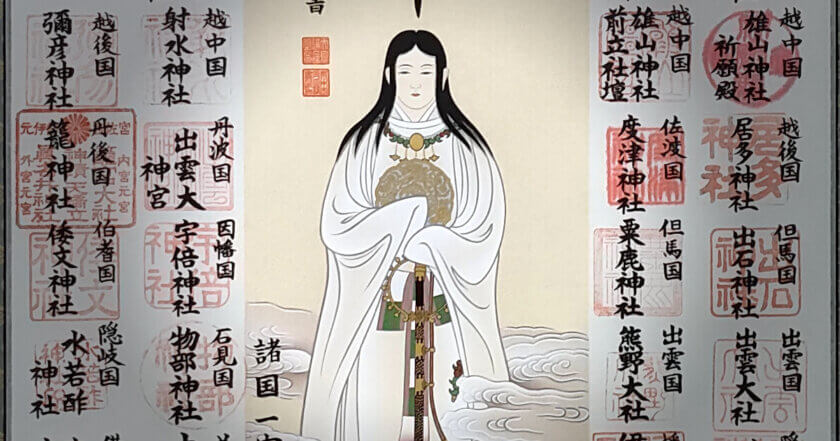
Across Japan, there are many types of pilgrimages and stamp-collecting journeys, but among them, the Nationwide Ichinomiya Pilgrimage stands out for its remarkable scale and has quietly gained popularity in recent years.

In each of the former provinces of Japan, the Shinto shrine that received the greatest devotion from the local people was designated as the “Ichinomiya” (the First Shrine of the province).

The Nationwide Ichinomiya Pilgrimage involves visiting these shrines throughout Japan and collecting their red seal stamps.

With 106 Ichinomiya shrines nationwide, it is an extensive pilgrimage that stretches across the entire Japanese archipelago.

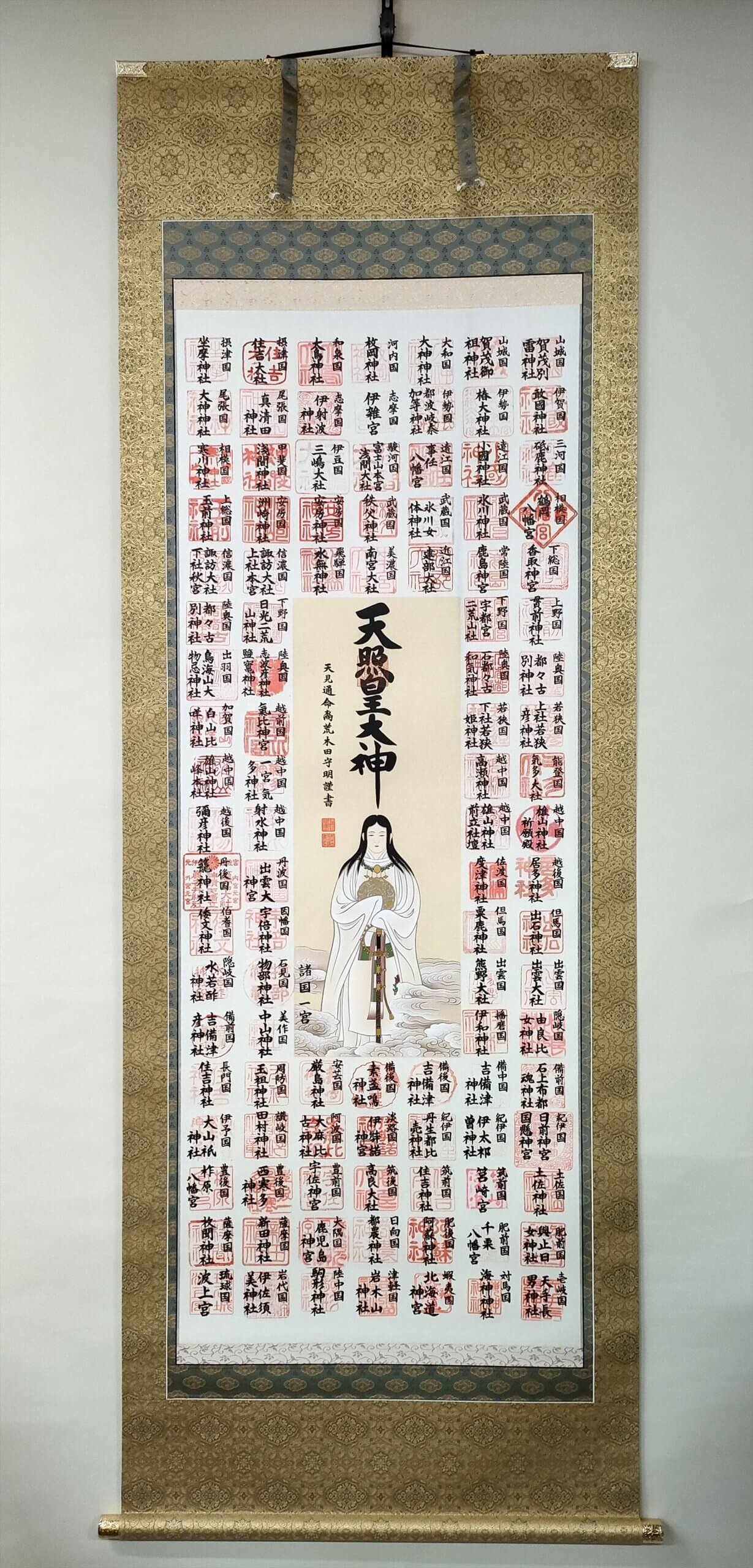
This time, we received a request from a customer in Osaka to mount their completed Ichinomiya pilgrimage stamp scroll into a traditional hanging scroll.

What Is a Shrine’s Rank?

It is said that between the Heian and Kamakura periods, the ranks of Shinto shrines were gradually formalized. Most shrines enshrined the indigenous kami of the region, and they were ranked based on the depth of local faith and importance. The shrines that held the strongest devotion were designated as Ichinomiya.

With the recent growth of tourism and the popularity of collecting shrine stamps (goshuin), more people have begun undertaking the Nationwide Ichinomiya Pilgrimage.

About the Nationwide Ichinomiya Pilgrimage

The origins of this pilgrimage go back to the early Edo period, when the Shinto scholar Tachibana Mitsuyoshi spent 23 years—from 1675 (Enpō 3) to 1697 (Genroku 10)—traveling throughout Japan to visit all the Ichinomiya shrines.

This journey gradually evolved into the current form of the Nationwide Ichinomiya Pilgrimage.

Today, silk base sheet specifically designed for this pilgrimage are available, with the names of each shrine pre-printed so that pilgrims only need to collect the red stamps.
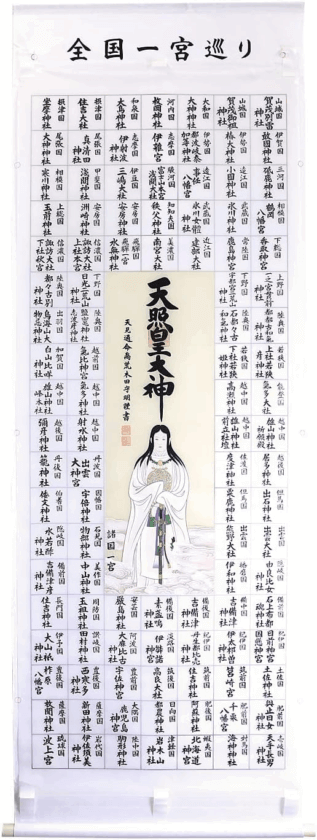
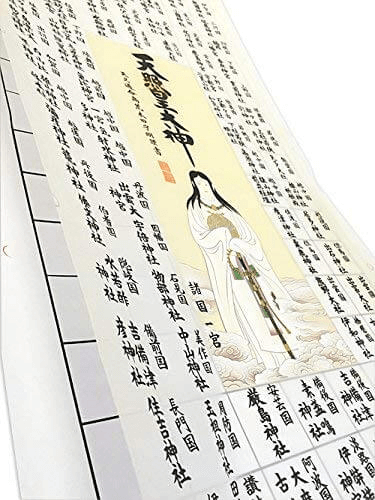
The pilgrimage spans Japan from Tōhoku to Kyūshū, and even includes Hokkaidō and Okinawa—making it an exceptionally wide-ranging collecting journey.

The Ichinomiya Pilgrimage Stamp Scroll

The mounting silk scroll for the Nationwide Ichinomiya Pilgrimage includes pre-allocated spaces for all 106 shrine stamps.

Once every space is filled, the sheet becomes a striking mosaic of red seals and shrine names—a truly impressive sight, even compared to other pilgrimage scrolls.

For comparison, one of the largest pilgrimage scrolls is that of the Hyakukannon (100 Kannon) pilgrimage. While its base sheet is larger, the Ichinomiya pilgrimage sheet is also a large-format scroll, especially distinguished by its exceptionally long vertical layout due to the 106 stamp fields.

Customer Request

Our customer in Osaka requested that we mount the silk scroll using our Buddhist-style mounting pattern No.19 “Reiga”(commonly used for Buddhist artworks and also suitable for sacred Shinto imagery)”.
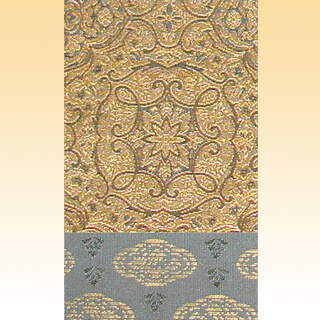
A scroll of this length would normally reach approximately 210 cm when mounted in the standard style.

However, the customer asked that we adjust the proportions to bring the finished scroll down to around 200 cm to suit their alcove space.

Elegant Mounting with Pattern No.19 “Reiga”

The Ichinomiya scroll features a central sacred image surrounded by numerous red stamps. Because the red ink has such a strong visual impact, choosing the right mounting cloth is essential to avoid making the scroll appear overly bright or, conversely, too subdued.
Pattern No.19 “Reiga”

Pattern No.19 “Reiga” offers refined elegance and a dignified presence suited to sacred imagery. It harmonizes beautifully with both the central deity and the surrounding stamps, bringing the entire piece together with balance and depth. The finished scroll conveys a sense of solidity and sacred grandeur.

To Those Who Have Completed the Nationwide Ichinomiya Pilgrimage

Many pilgrims undertake this journey over several years, visiting regions across Japan.

The completed sheet—filled with all 106 red stamps—holds memories, connections, and prayers gathered over a long period.

We encourage you to preserve this achievement in the form of a beautifully mounted hanging scroll.

We offer:

  • ・sizing adjustments to match your alcove or display area
  • ・recommendations for suitable mounting fabrics

Please feel free to consult us regarding the mounting of your Nationwide Ichinomiya Pilgrimage scroll.
 

Contact Us

Please fill out the form below and submit for your inquiry.

❈FirstName
❈LastName
Country
❈E-mail
(❈Confirm E-mail)
❈Inquiry category Question
Consultation
Impression
Request
Others
❈Comment

is the mark for required item.


Your privacy is important to us. We are committed to protecting your privacy.

(or press ESC or click the overlay)

CEO Message

Our Feelings For Kakejiku


 The Japanese people have long set a high value on aesthetic senses since ancient times. As a result, the
peculiar culture which is not seen in other countries blossomed and many aspects of the modern Japanese
culture come from it. Parts of Japanese culture has been introduced to people in other countries recently,
so the number of people from other countries who are interested in Japanese culture has been increasing.
However, the Japanese aesthetic senses, which are the bases of Japanese culture, have been nurtured
through a long history, intertwining various elements intricately, such as climate, geographical features,
religion, customs and so on. Therefore, they are very difficult to understand not only for people from other
countries, but even for the Japanese people. I think the best tool which conveys these difficult senses
understandably is a “kakejiku.”
 The kakejiku (a hanging scroll; a work of calligraphy or a painting which is mounted and hung in an
alcove or on a wall) is a traditional Japanese art. It's no exaggeration to say that paintings are what
express aesthetic senses at all times and places. The kakejiku is an art which expresses the Japanese
aesthetic senses. The kakejiku has long been used in traditional Japanese events, daily life and so on since
ancient times. As a result, there are various customs of kakejiku in Japan; kakejiku and the life of the
Japanese are closely related. We can see Japanese values through kakejiku.
 The kakejiku is a cultural tradition which the Japanese people should be proud of. However, many people
in other countries don't know much about it because it hasn't been showcased as much. This is why I
decided to try to introduce it. The kakejiku world is very interesting and beautiful. We want not only the
Japanese, but also many people from other countries to know and enjoy it. I hope that many people will
love kakejiku someday.

(or press ESC or click the overlay)
Company Profile
syaoku.jpg(120220 byte)

Name Art Nomura


President Tatsuji Nomura


Founded1973


Established1992


Address7-23 Babadori, Tarumi-ku, Kobe city,
Hyougo Prefecture, 655-0021, Japan


Capital10 million yen


URLhttp://nomurakakejiku.com


Our Business

 Art Nomura is an art dealer which produces kakejiku (hanging scrolls). We mount many paintings and calligraphic works in kakejiku in my factory. Kakejiku are our main product. We also remount and repair old or damaged kakejiku. We share the traditional Japanese art of kakejiku with people all over the world.


(or press ESC or click the overlay)
Access Map

Access Map


 The Japanese people have long set a high value on aesthetic senses since ancient times. As a result, the
peculiar culture which is not seen in other countries blossomed and many aspects of the modern Japanese
culture come from it. Parts of Japanese culture has been introduced to people in other countries recently,
so the number of people from other countries who are interested in Japanese culture has been increasing.
However, the Japanese aesthetic senses, which are the bases of Japanese culture, have been nurtured
through a long history, intertwining various elements intricately, such as climate, geographical features,
religion, customs and so on. Therefore, they are very difficult to understand not only for people from other
countries, but even for the Japanese people. I think the best tool which conveys these difficult senses
understandably is a “kakejiku.”
 The kakejiku (a hanging scroll; a work of calligraphy or a painting which is mounted and hung in an
alcove or on a wall) is a traditional Japanese art. It's no exaggeration to say that paintings are what
express aesthetic senses at all times and places. The kakejiku is an art which expresses the Japanese
aesthetic senses. The kakejiku has long been used in traditional Japanese events, daily life and so on since
ancient times. As a result, there are various customs of kakejiku in Japan; kakejiku and the life of the
Japanese are closely related. We can see Japanese values through kakejiku.
 The kakejiku is a cultural tradition which the Japanese people should be proud of. However, many people
in other countries don't know much about it because it hasn't been showcased as much. This is why I
decided to try to introduce it. The kakejiku world is very interesting and beautiful. We want not only the
Japanese, but also many people from other countries to know and enjoy it. I hope that many people will
love kakejiku someday.

(or press ESC or click the overlay)