Mounting a Shikoku 88 Pilgrimage Scroll from Australia
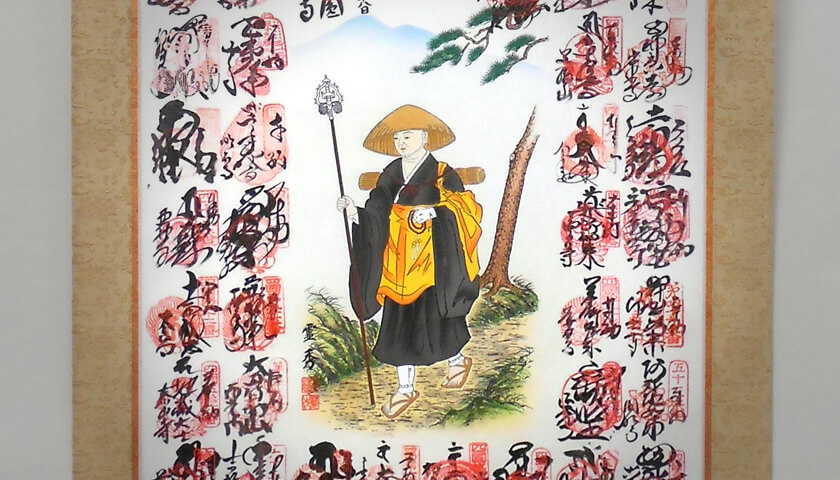
In recent years, we have been receiving an increasing number of requests from overseas pilgrims who wish to mount their nōkyōjiku (pilgrimage stamp scrolls) into traditional kakejiku hanging scrolls.

Even after completing the long Shikoku Pilgrimage, many travelers wish to preserve the memory and spirit of their journey in a tangible artistic form — a sentiment that transcends national borders.

Listening to each person’s pilgrimage story is always a joy for us.

Today, we would like to introduce the experience of Mr. James from Australia, who visited our shop after successfully completing his Shikoku 88 Pilgrimage.

Memories of the Shikoku Pilgrimage

Mr. James came from Cairns, Australia. One of our staff members also used to live in Australia, so we quickly found common ground and had a wonderful conversation about the country.

He completed most of his journey on foot, though in the later stages he switched to public transportation due to continuous bad weather. He said it was definitely the right choice, since walking the mountain paths in heavy rain would have been extremely difficult.

This flexible approach is valuable advice for anyone planning to undertake the pilgrimage in the future.

Mr. James also mentioned that he learned about returning to the first temple, Ryōzen-ji, for an offering of thanks — as well as visiting Kōyasan — through one of our blog articles.
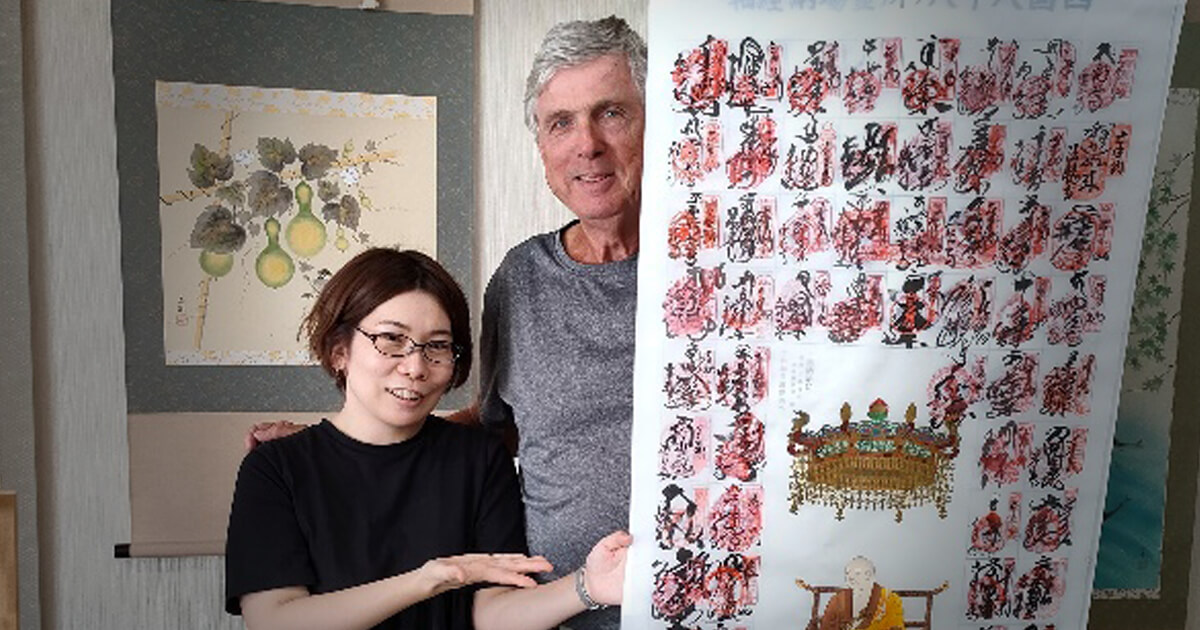
After reading it, he decided to return to Ryōzen-ji and then visit Kōyasan, completing his journey in the traditional way. We were truly pleased to hear that our articles could be of real help to our customers.

Choosing the Mounting Fabrics

Mr. James was cheerful and easygoing, yet he had a clear sense of aesthetic preference. The discussion about fabrics went very smoothly, and he quickly selected his ideal combination.
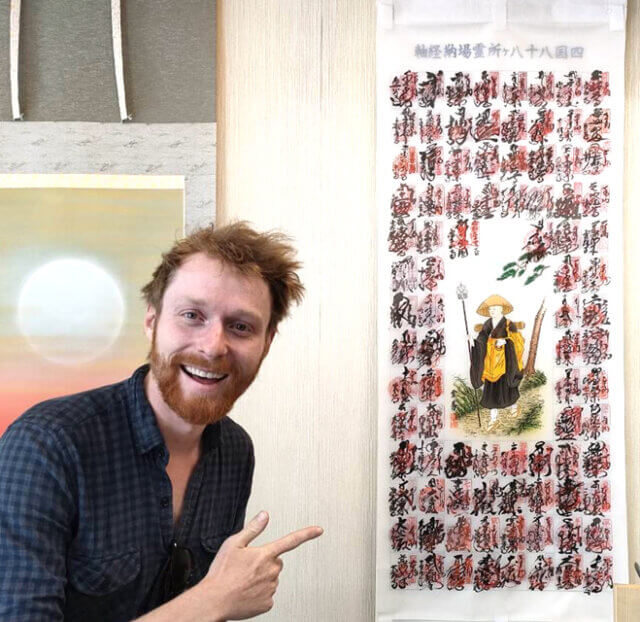
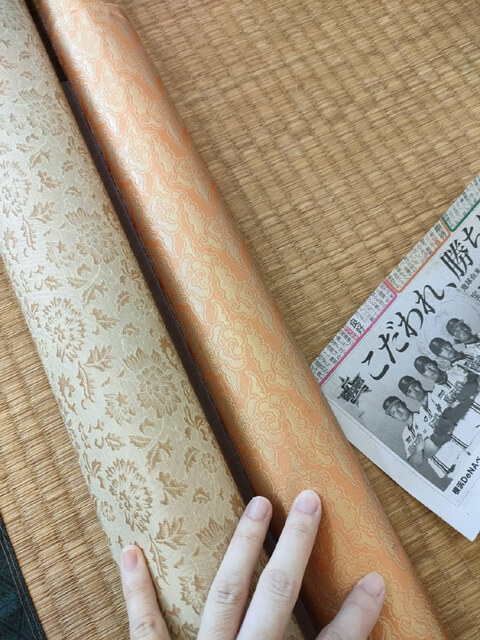
Here is the set of fabrics he chose.
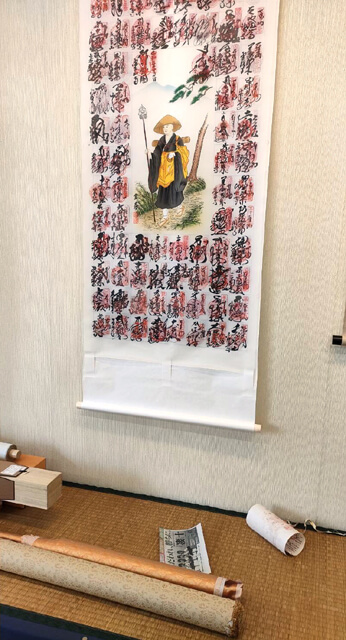
A refined combination that beautifully complements the bold red temple seals, adding harmony and sophistication to the overall design.
The Completed Shikoku 88 Pilgrimage Scroll

The finished kakejiku conveys the quiet dignity and emotional weight of a long journey completed.

The subdued tones of the chosen fabrics tighten the composition and lend an elegant frame to the 88 red temple stamps.
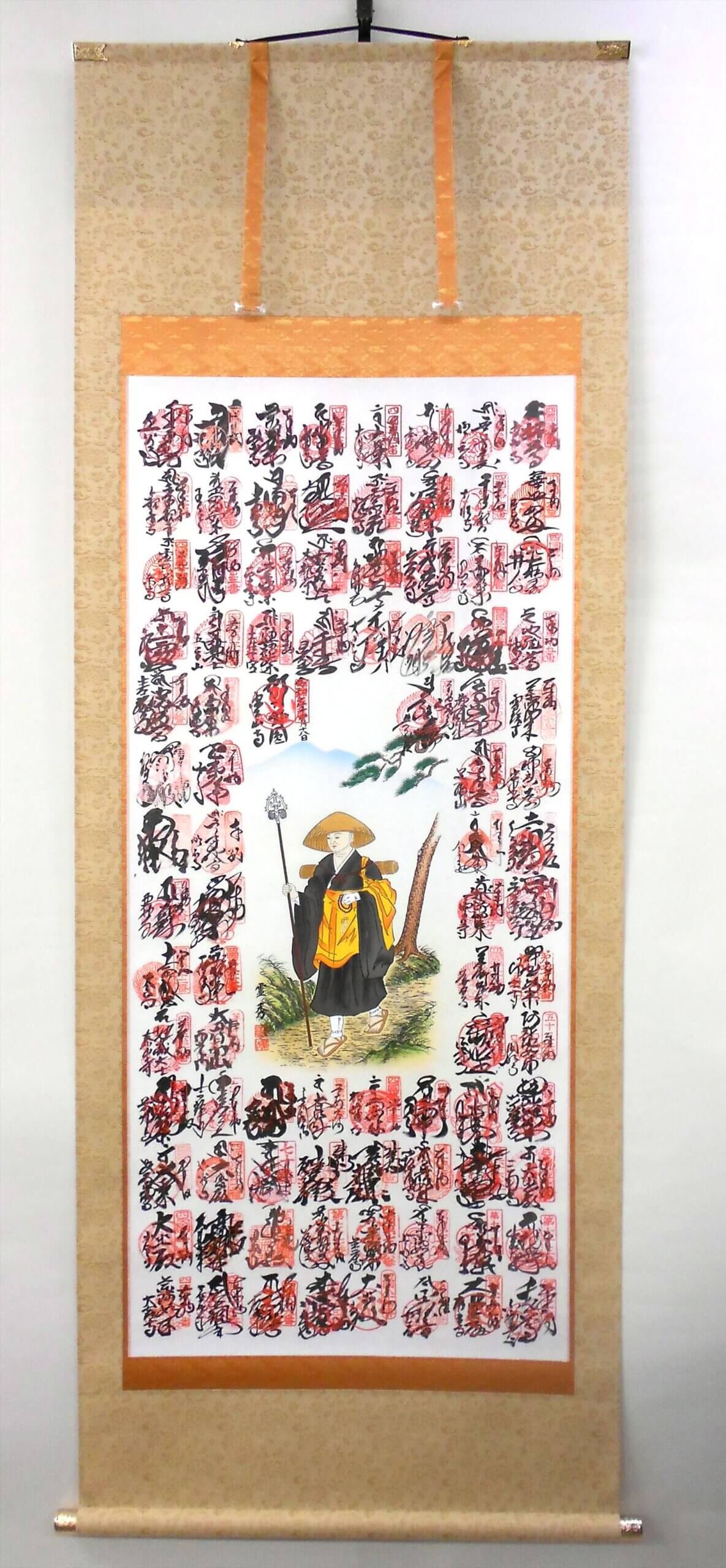
Since there wasn’t a suitable space to display it in his own home, Mr. James decided to have the scroll displayed at his parents’ house — a fitting way to let his family share in the story and spirit of his pilgrimage.

Customer Review

We were deeply touched to receive the following heartfelt message from Mr. James:

Brilliant Service

Tomoko was incredibly friendly and helpful, taking me through all of my options with perfect English. This was very important for me after completing the Shikoku Pilgrimage and safeguarding my scroll for months! It was on Tomoko’s blog that I learnt about the two final stamps which I otherwise would have missed so a big thank you to her and the team here.

Would highly recommend anyone looking to mount their scrolls after visiting Koyasan for the pilgrimage 👍

Hearing such kind words from our customers is the greatest encouragement for us, and we sincerely appreciate the trust placed in our work.

Preserving the Memory of Pilgrimage as a Work of Art

The Shikoku 88 Pilgrimage is a once-in-a-lifetime journey.

Transforming that experience into a kakejiku allows the memory, effort, and faith of the journey to take on a lasting artistic form.

Each nōkyōjiku scroll is a one-of-a-kind work of art — filled with the pilgrim’s personal history and devotion.

At ART NOMURA, we take great pride in helping travelers preserve these memories through careful and respectful craftsmanship.

To continue your pilgrimage in the form of beauty — we would be honored to assist you.
Please feel free to contact us anytime.


Contact Us

Please fill out the form below and submit for your inquiry.

❈FirstName
❈LastName
Country
❈E-mail
(❈Confirm E-mail)
❈Inquiry category Question
Consultation
Impression
Request
Others
❈Comment

is the mark for required item.


Your privacy is important to us. We are committed to protecting your privacy.

(or press ESC or click the overlay)

CEO Message

Our Feelings For Kakejiku


 The Japanese people have long set a high value on aesthetic senses since ancient times. As a result, the
peculiar culture which is not seen in other countries blossomed and many aspects of the modern Japanese
culture come from it. Parts of Japanese culture has been introduced to people in other countries recently,
so the number of people from other countries who are interested in Japanese culture has been increasing.
However, the Japanese aesthetic senses, which are the bases of Japanese culture, have been nurtured
through a long history, intertwining various elements intricately, such as climate, geographical features,
religion, customs and so on. Therefore, they are very difficult to understand not only for people from other
countries, but even for the Japanese people. I think the best tool which conveys these difficult senses
understandably is a “kakejiku.”
 The kakejiku (a hanging scroll; a work of calligraphy or a painting which is mounted and hung in an
alcove or on a wall) is a traditional Japanese art. It's no exaggeration to say that paintings are what
express aesthetic senses at all times and places. The kakejiku is an art which expresses the Japanese
aesthetic senses. The kakejiku has long been used in traditional Japanese events, daily life and so on since
ancient times. As a result, there are various customs of kakejiku in Japan; kakejiku and the life of the
Japanese are closely related. We can see Japanese values through kakejiku.
 The kakejiku is a cultural tradition which the Japanese people should be proud of. However, many people
in other countries don't know much about it because it hasn't been showcased as much. This is why I
decided to try to introduce it. The kakejiku world is very interesting and beautiful. We want not only the
Japanese, but also many people from other countries to know and enjoy it. I hope that many people will
love kakejiku someday.

(or press ESC or click the overlay)
Company Profile
syaoku.jpg(120220 byte)

Name Art Nomura


President Tatsuji Nomura


Founded1973


Established1992


Address7-23 Babadori, Tarumi-ku, Kobe city,
Hyougo Prefecture, 655-0021, Japan


Capital10 million yen


URLhttp://nomurakakejiku.com


Our Business

 Art Nomura is an art dealer which produces kakejiku (hanging scrolls). We mount many paintings and calligraphic works in kakejiku in my factory. Kakejiku are our main product. We also remount and repair old or damaged kakejiku. We share the traditional Japanese art of kakejiku with people all over the world.


(or press ESC or click the overlay)
Access Map

Access Map


 The Japanese people have long set a high value on aesthetic senses since ancient times. As a result, the
peculiar culture which is not seen in other countries blossomed and many aspects of the modern Japanese
culture come from it. Parts of Japanese culture has been introduced to people in other countries recently,
so the number of people from other countries who are interested in Japanese culture has been increasing.
However, the Japanese aesthetic senses, which are the bases of Japanese culture, have been nurtured
through a long history, intertwining various elements intricately, such as climate, geographical features,
religion, customs and so on. Therefore, they are very difficult to understand not only for people from other
countries, but even for the Japanese people. I think the best tool which conveys these difficult senses
understandably is a “kakejiku.”
 The kakejiku (a hanging scroll; a work of calligraphy or a painting which is mounted and hung in an
alcove or on a wall) is a traditional Japanese art. It's no exaggeration to say that paintings are what
express aesthetic senses at all times and places. The kakejiku is an art which expresses the Japanese
aesthetic senses. The kakejiku has long been used in traditional Japanese events, daily life and so on since
ancient times. As a result, there are various customs of kakejiku in Japan; kakejiku and the life of the
Japanese are closely related. We can see Japanese values through kakejiku.
 The kakejiku is a cultural tradition which the Japanese people should be proud of. However, many people
in other countries don't know much about it because it hasn't been showcased as much. This is why I
decided to try to introduce it. The kakejiku world is very interesting and beautiful. We want not only the
Japanese, but also many people from other countries to know and enjoy it. I hope that many people will
love kakejiku someday.

(or press ESC or click the overlay)