Shikoku Pilgrimage Temple: No. 41: Inari-zan Gokoku-in Ryūkō-ji
Remnants of Shinto-Buddhist Syncretism
- Name: Inari-zan Gokoku-in Ryūkō-ji
- Principal Image: Jūichimen Kanzeon Bosatsu (Eleven-Faced Kannon)
- Goeika (Pilgrimage Song):
- I hear that this deity has vowed to protect the Esoteric Buddhism
- that spread across the three lands of India, China, and Japan.
Access From Temple No. 39, Enkō-ji
- On foot: Walk along National Route 56. There are also some sections of the traditional pilgrimage trail along the way. Beyond Uwajima, follow Prefectural Route 57. Most of the route involves walking along paved roads with heavy traffic. Approx. 50 km, approx. 15 hours.
- By Car: Drive along National Route 56 and Prefectural Route 57. Approx. 50 km, approx. 1 hour 20 minutes.
- Public Transport: From Hirajō Fudasho-mae, the nearest bus stop to Kanjizai-ji, take the Uwajima Bus bound for Uwajima for 1 hour 12 minutes and get off at Uwajima Ekimae. Board the JR Yodo Line for 15 minutes, get off at Muden Station, and walk 15 minutes.
A Unique Temple Layout
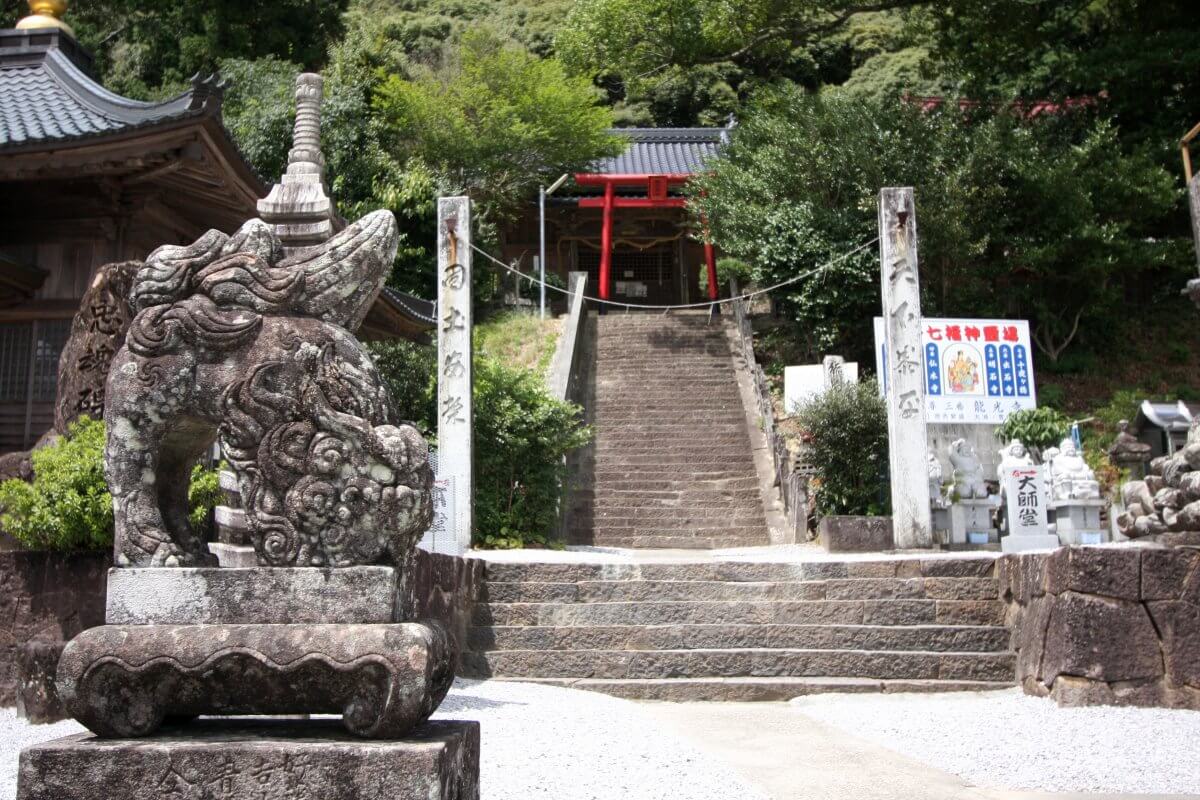
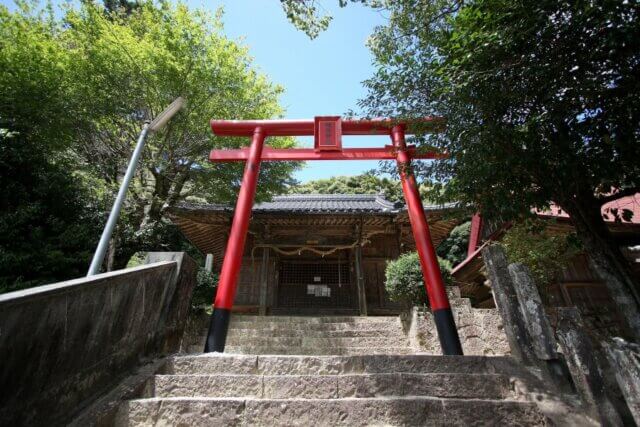
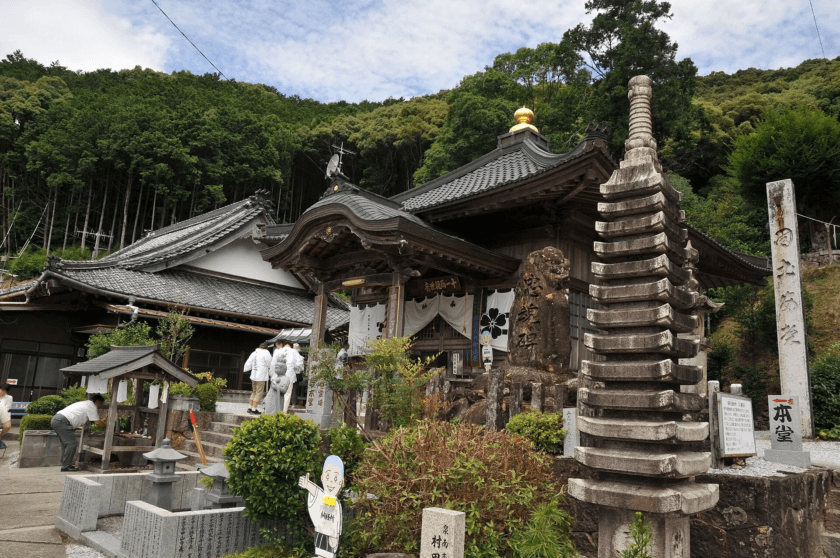
This pilgrimage temple stands on a small hill overlooking the Mima Plain. What comes into view at the top of the stone steps leading toward the halls is not a Buddhist temple gate (sanmon), but a Shinto torii gate. The stone steps of the approach stretch straight up toward that torii gate. At the very top of the steps stands the sanctuary of Inari Shrine. Halfway up the steps toward Inari Shrine lies a flat terrace, and the halls of Ryūkō-ji are built on this mid-stairway level. Flanking the central approach, the Hondō (Main Hall) and Nōkyōjo (temple stamp office) stand on the left, while the Daishi-dō Hall stands on the right. Thus, the layout places the Buddhist temple midway up the stone steps leading to the Shinto shrine.
Once Known as Inari-ji
As this arrangement of halls suggests, the temple was originally a place of worship centered on the Inari deity, where Shinto and Buddhist beliefs were closely intertwined. According to temple tradition, in Daidō 2 (807), Kōbō Daishi encountered an incarnation of the Inari deity carrying sheaves of rice on its back. He carved a sacred image of that figure and also enshrined Jūichimen Kannon Bosatsu as the honjibutsu (original Buddhist form) of the Inari deity. In this period, Shinto and Buddhist beliefs were closely intertwined, and the site was revered as “Inari-ji” (Inari Temple). Since then, the Inari deity has been revered as a god of abundant harvests and as a guardian deity of the Shikoku Pilgrimage.
However, due to the Meiji-era separation of Shinto and Buddhism (Shinbutsu Bunri), the former Hondō became the main sanctuary (honden) of Inari Shrine. Objects with Buddhist associations were removed from the shrine sanctuary, and a new Hondō was built to enshrine Jūichimen Kannon, along with a new Daishi-dō Hall dedicated to Kōbō Daishi.
The Inari Deity of Mima
The Hondō enshrines the principal image of Jūichimen Kannon, who is also the honjibutsu of the Inari deity. The concept of honjibutsu holds that Japanese kami—such as Hachiman, Inari, and the deities of Kumano—are manifestations of Buddhas such as Nyorai and Bosatsu appearing in altered forms. In this belief system, the Inari deity was understood to be a manifestation of Jūichimen Kannon.
Also scattered throughout the precincts are a stone pagoda where locks of Emperor Heizei’s hair are said to be buried, the Hōshū-den (Treasure Hall), enshrining Monju Bosatsu and Benzaiten, as well as the Owasure Jizō, believed to help relieve worries and suffering, and the Pokkuri Jizō, associated with prayers for a peaceful death without prolonged suffering.
DATA
Address: 173 Togari, Mima-chō, Uwajima City, Ehime Prefecture
Phone: 0895-58-2186
Access: 15-minute walk from Iyo-Miyanoshita Station on the JR Yodo Line
Parking: Available (Free)
Lodging: None
Your Pilgrimage, Your Art
Completing the Shikoku Pilgrimage is a once-in-a-lifetime journey—but what if you could preserve it in a form that lasts forever?
Many pilgrims collect red stamps and calligraphy from each temple on a special silk scroll called a nōkyōjiku.
This sacred record of your path can be transformed into a kakejiku—a traditional Japanese hanging scroll—not only preserving the memories, but turning them into a work of cultural and spiritual art.
It’s more than a souvenir—it’s a way to honor your journey, your prayers, and your growth.
To learn more about how a nōkyōjiku becomes a kakejiku, and what makes this transformation so meaningful, please refer the below link.