Shikoku Pilgrimage Temple: No. 40: Heijō-zan Yakushi-in Kanjizai-ji
The First Temple of Iyo, the “Dōjō of Enlightenment”
- Name: Heijō-zan Yakushi-in Kanjizai-ji
- Principal Image: Yakushi Nyorai (Medicine Buddha)
- Goeika (Pilgrimage Song):
- When heartfelt prayers blossom in a spring of boundless freedom,
- even the creatures of the wild dwell free from the troubles of the fleeting world.
Access From Temple No. 39, Enkō-ji
- On foot: Choose between walking along National Route 56 or taking the historic pilgrimage trail (an unpaved mountain path). Along the national highway, it is approx. 30 km and takes about 9 hours. Along the historic pilgrimage trail, it is approx. 28 km and takes about 9 hours 30 minutes.
- By Car: Drive along National Route 56. Approx. 30 km, approx. 50 minutes.
- Public Transport: Walk 20 minutes from Enkō-ji to the Terayamaguchi bus stop. Take the Kōchi Seinan Kōtsū Bus bound for Sukumo Station for 16 minutes and get off at Sukumo Station. Transfer to the Uwajima Bus bound for Uwajima Ekimae for 40 minutes, get off at Hirajō Fudasho-mae, and walk 5 minutes.
A Temple Associated with Emperor Heizei
From this temple, the Shikoku Pilgrimage enters Iyo Province (present-day Ehime Prefecture). Located farthest from Temple No. 1, Ryōzen-ji, it is also known as the “Back Checkpoint of the Pilgrimage” (Henro no Urasekisho). During the medieval period, this area formed part of a shōen (manorial estate) associated with temples on Mount Hiei. It later came under the administration of Shōren-in Monzeki in Kyoto. The local name “Mishō” is believed to derive from the estate’s honorific designation. The temple stands in the heart of the Mishō area. According to tradition, in Daidō 2 (807), Emperor Heizei had Kōbō Daishi found the temple to pray for the repose of his father, Emperor Kanmu, making it an imperial prayer temple of Emperor Heizei. At that time, the Daishi is said to have carved the principal image of Yakushi Nyorai along with its flanking attendant deities, Amida Nyorai and Jūichimen Kannon Bosatsu, from a single sacred tree and enshrined them here.
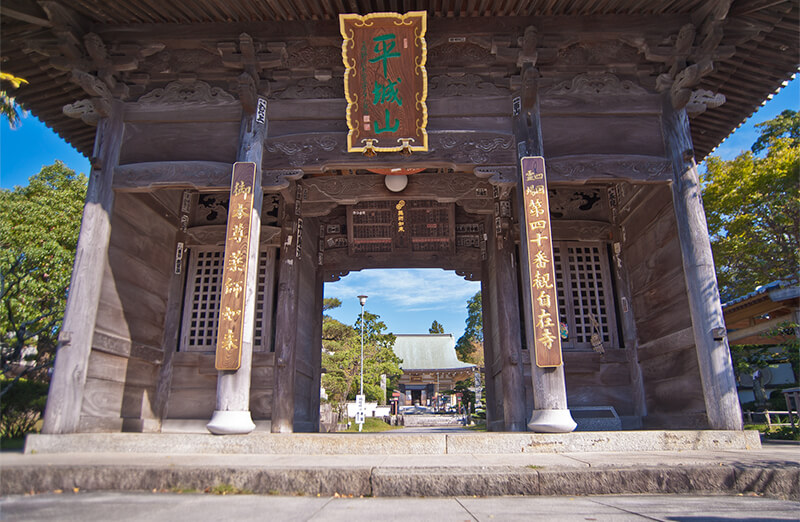
The weathered sanmon (temple gate), dating back approximately 200 years, has survived several fires. Its plaque bears the inscription “Heijō-zan.” According to the local tourism association, the present plaque was inscribed by the 401st head priest of Kōyasan.
Guardian Buddhas of the Twelve Zodiac Signs Lined Up in the Precincts
Damaged by fire in Enpō 3 (1675), the temple was rebuilt by Date Munetoshi, lord of the Uwajima Domain, and thereafter served as the prayer temple for the lords of Uwajima.
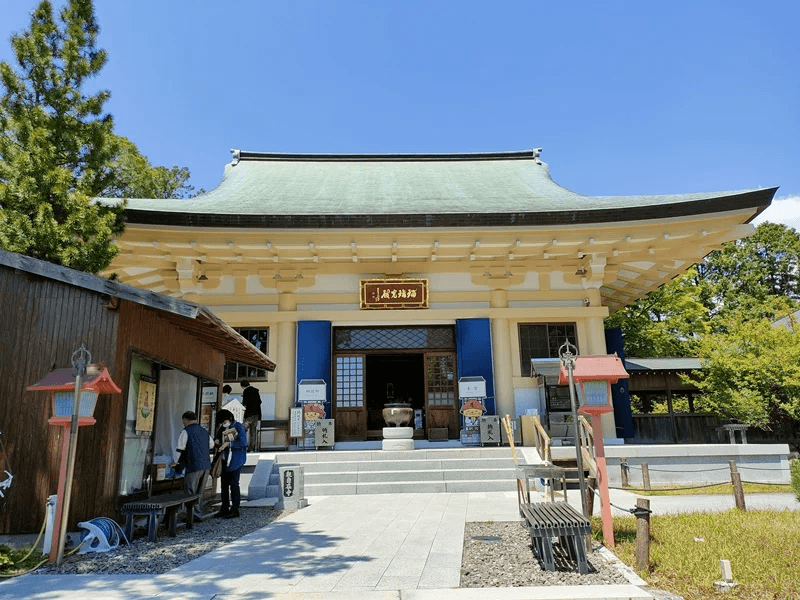
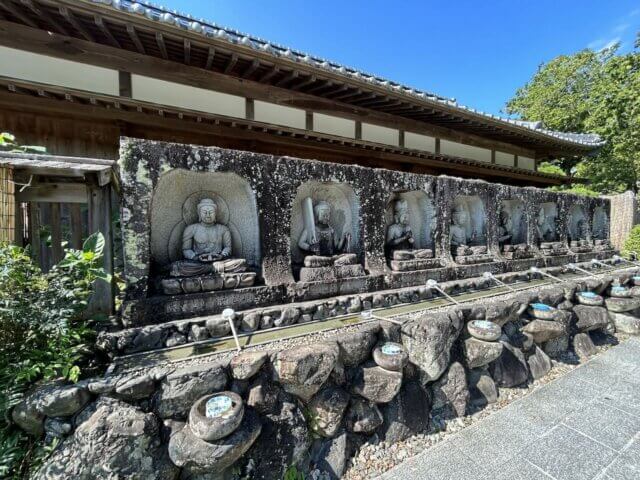
The precincts are spacious; passing through the Niō-mon Gate, you find the chōzuya (purification font) and shōrō (bell tower), with the Monju-dō Hall ahead, and climbing a few stone steps leads to a stone-pillar gate (sekichūmon). Beyond this gate on the left stand eight stone Buddhist statues representing the guardian deities of the twelve signs of the Chinese zodiac (Jūnishi Mamori-honzon), upon which worshippers pour water as they pray. The Hondō (Main Hall) is a concrete structure rebuilt in Shōwa 39 (1964), while the Daishi-dō Hall is an all-cypress wooden building reconstructed in Heisei 5 (1993).
An Amulet Printed from a Sacred Woodblock Attributed to Kōbō Daishi
Enshrined in the Hondō is the principal image of Yakushi Nyorai, a hidden Buddha (hibutsu) unveiled only once every 50 years, with the next unveiling scheduled for 2034. In front of the Hondō is a sign inviting visitors to receive the “Sacred Seal Amulet (Gohōin-mamori) carved by Kōbō Daishi himself.” When Kōbō Daishi founded this temple, he carved the six Chinese characters of the Buddhist invocation “Namu Amida Butsu” onto a leftover piece of wood from sculpting the Buddhist statues. Using this as a sacred woodblock stamp (hōban), he prayed to eradicate the root causes of human illness. This woodblock stamp has been handed down at the temple to this day, and upon making an offering, visitors are bestowed a piece of bleached cotton cloth printed with the sacred seal. This is Kōbō Daishi’s Sacred Seal Amulet, imbued with the Daishi’s spiritual power and believed to be especially efficacious for healing all illnesses and warding off misfortune.
Also scattered throughout the precincts are a stone pagoda where locks of Emperor Heizei’s hair are said to be buried, the Hōshū-den (Treasure Hall), enshrining Monju Bosatsu and Benzaiten, as well as the Owasure Jizō, believed to help relieve worries and suffering, and the Pokkuri Jizō, associated with prayers for a peaceful death without prolonged suffering.
DATA
Address: 2253-1 Mishō-hirajō, Ainan-chō, Minamiuwa-gun, Ehime Prefecture
Phone: 0895-72-0416
Access: From JR Uwajima Station, take the Uwajima Bus bound for Sukumo for 1 hour 15 minutes, get off at Hirajō Fudasho-mae, and walk 5 minutes.
Parking: Available (Free)
Lodging: Currently reported as unavailable. Please contact the temple directly to confirm.
Your Pilgrimage, Your Art
Completing the Shikoku Pilgrimage is a once-in-a-lifetime journey—but what if you could preserve it in a form that lasts forever?
Many pilgrims collect red stamps and calligraphy from each temple on a special silk scroll called a nōkyōjiku.
This sacred record of your path can be transformed into a kakejiku—a traditional Japanese hanging scroll—not only preserving the memories, but turning them into a work of cultural and spiritual art.
It’s more than a souvenir—it’s a way to honor your journey, your prayers, and your growth.
To learn more about how a nōkyōjiku becomes a kakejiku, and what makes this transformation so meaningful, please refer the below link.