Shikoku Pilgrimage Temple: No. 39: Shakki-zan Jisan-in Enkō-ji
Named After a Turtle Carrying a Temple Bell
- Name: Shakki-zan Jisan-in Enkō-ji
- Principal Image: Yakushi Nyorai (Medicine Buddha)
- Goeika (Pilgrimage Song):
- Hail Yakushi, with a prayer to dispel all illnesses,
- please save me as I come to worship.
Access From Temple No. 38, Kongōfuku-ji
- On foot: Via Prefectural Route 27, National Route 321, and National Route 56. The entire route is paved, with heavy traffic. Approx. 65 km, approx. 20 hours.
- By Car: Same route as on foot. Approx. 65 km, 2 hours.
- Public Transport: From the Ashizurimisaki bus stop, take the Kōchi Seinan Kōtsū Bus bound for Nakamura Station to the final stop (1 hour 52 minutes). Transfer to the Kōchi Seinan Kōtsū Bus bound for Sukumo Station for approximately 60 minutes, get off at Terayamaguchi, and walk 20 minutes.
A Stone Turtle Carrying a Temple Bell
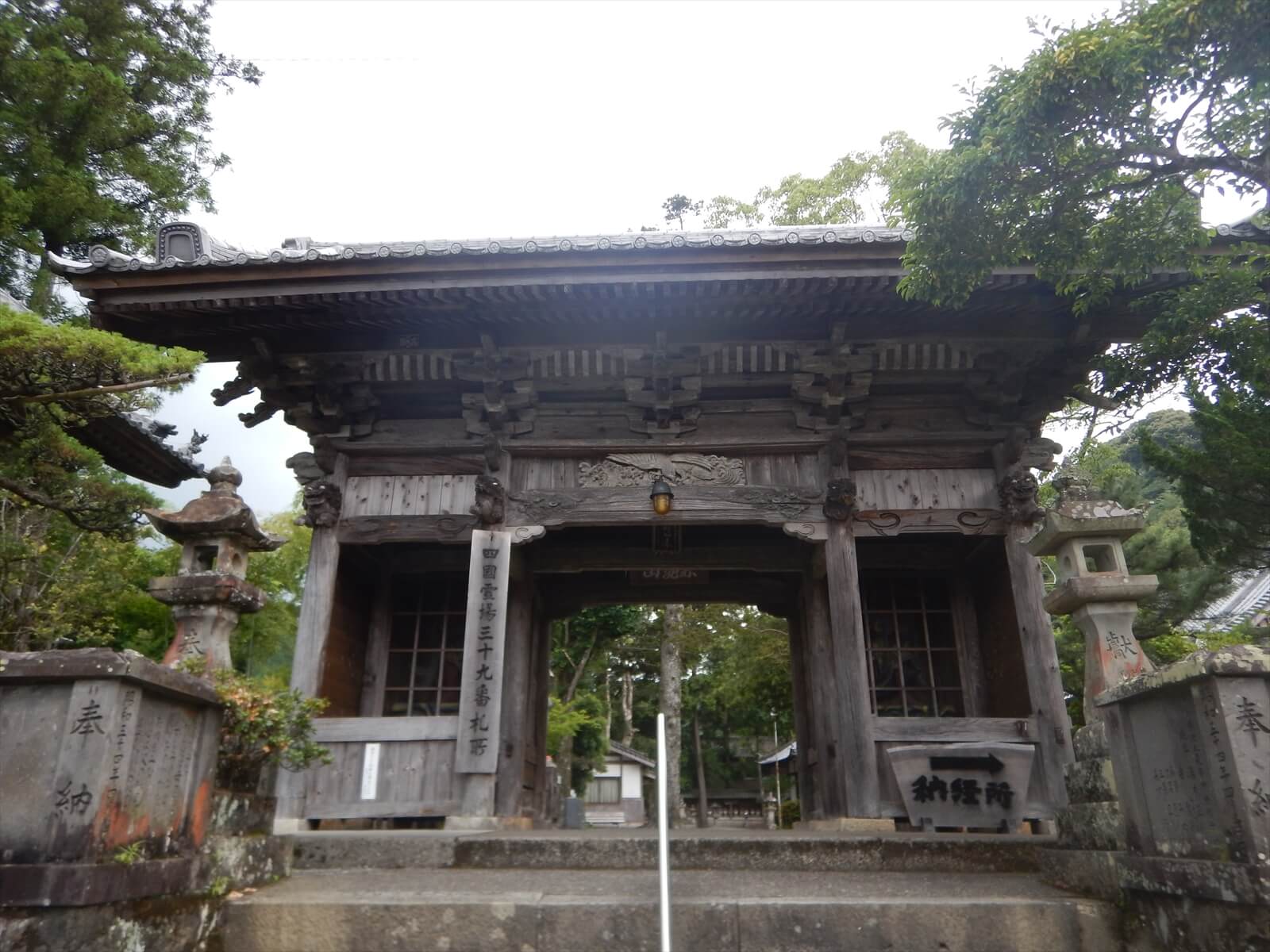
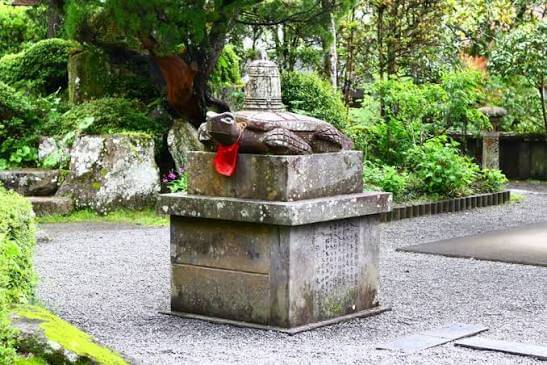
Heading north along the road from the Terayamaguchi bus stop on National Route 56 brings you directly to the Niō-mon Gate of Enkō-ji. Upon entering the precincts, a stone statue of a turtle carrying a temple bell (bonshō) on its back catches your eye on the right. The bell on the turtle’s back is modeled after a bronze bell that is a treasured heirloom of this temple. The original bell that served as the model bears an inscription from Engi 11 (911). It is the oldest temple bell in Kōchi Prefecture and is designated as an Important Cultural Property. According to legend, a red turtle came to Enkō-ji from Ryūgū-jō (the undersea Dragon Palace), carrying a temple bell on its back, which is the origin of the stone statue. The temple’s mountain name, Shakki-zan (“Red Turtle Mountain”), also derives from this legend.
Incidentally, this Important Cultural Property bell is a small piece measuring about 33 cm in height and 24 cm in diameter at the mouth. For a period during the Meiji era, it was taken to the Kōchi Prefectural Assembly Hall and used as the bell to signal the opening of assembly sessions. It is a bold and spirited episode truly characteristic of Tosa (Kōchi).
Founded in the Nara Period
According to temple tradition, Enkō-ji was founded in Jinki 1 (724) by Gyōki, who enshrined a statue of Yakushi Nyorai at the request of Emperor Shōmu. During the Enryaku era (782–806), Kōbō Daishi visited the temple and established it as an imperial prayer temple for Emperor Kanmu. At this time, the Daishi is said to have carved statues of Nikkō Bosatsu and Gakkō Bosatsu as attendant deities and restored and developed the temple complex.
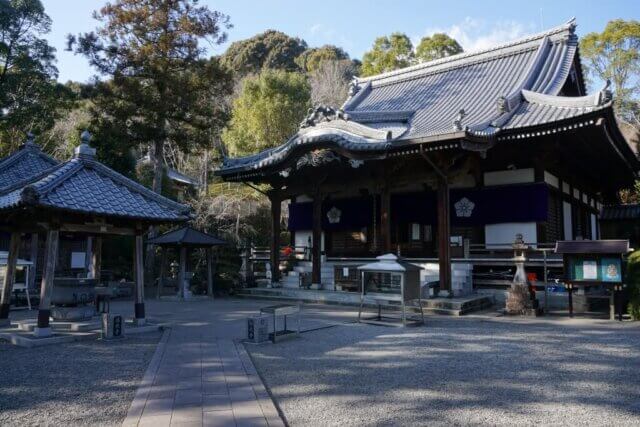
Beyond the red turtle statue, a stone-paved path stretches to the Hondō (Main Hall). Ahead to the right stands the Hondō, built in the irimoya-zukuri (hip-and-gable roof) style, while to the back left stands the Daishi-dō Hall, built in the hōgyō-zukuri (pyramidal roof) style.
Kōbō Daishi’s Well
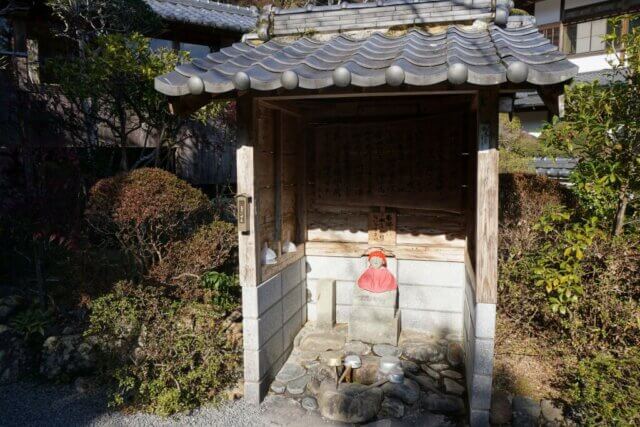
When Kōbō Daishi visited this area and learned that the villagers were suffering from a water shortage, he is said to have dug into the ground with his shakujō (ringed Buddhist staff), causing pure water to spring forth. This water remains today as the “Eye-Washing Well” (Mearai no Ido) beside the Hondō, and it is said that washing one’s eyes with water from this well cures eye diseases. A stone Jizō statue stands beside the well. The water is refreshingly cool and pleasant, and many pilgrims can be seen washing their eyes while earnestly pressing their palms together in prayer.
DATA
Address: 390 Nakayama, Hirata-chō, Sukumo City, Kōchi Prefecture
Phone: 0880-66-0225
Access: 40-minute walk from Hirata Station on the Tosa Kuroshio Railway
Parking: Available (Free)
Lodging: None
Your Pilgrimage, Your Art
Completing the Shikoku Pilgrimage is a once-in-a-lifetime journey—but what if you could preserve it in a form that lasts forever?
Many pilgrims collect red stamps and calligraphy from each temple on a special silk scroll called a nōkyōjiku.
This sacred record of your path can be transformed into a kakejiku—a traditional Japanese hanging scroll—not only preserving the memories, but turning them into a work of cultural and spiritual art.
It’s more than a souvenir—it’s a way to honor your journey, your prayers, and your growth.
To learn more about how a nōkyōjiku becomes a kakejiku, and what makes this transformation so meaningful, please refer the below link.