
Shikoku Pilgrimage Temple: No. 37: Fujii-san Gochi-in Iwamoto-ji
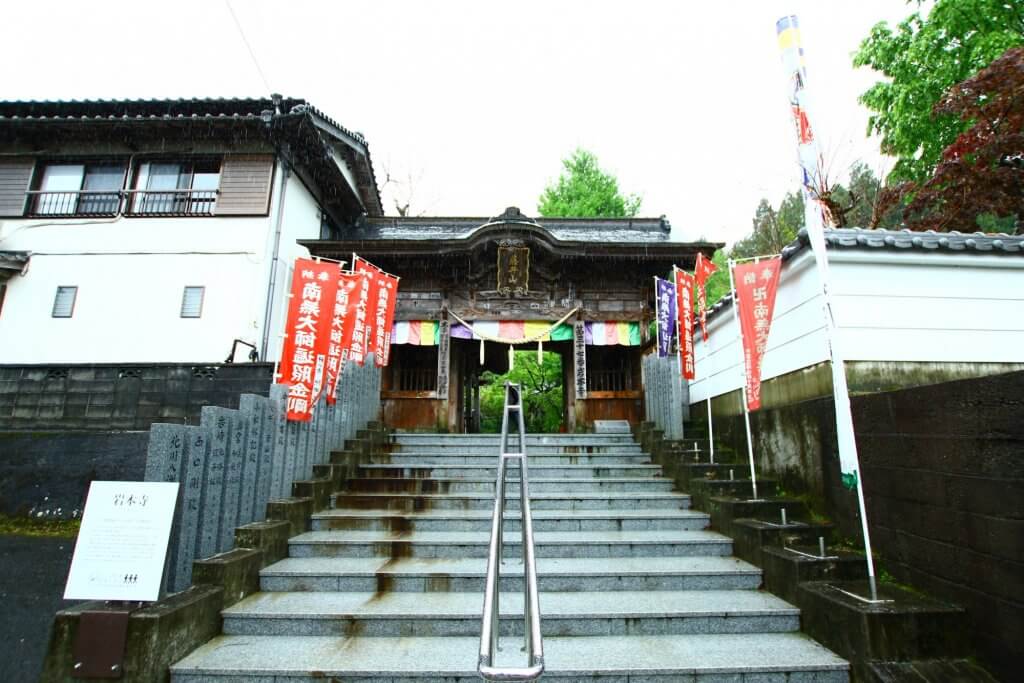
No. 37: Fujii-san Gochi-in Iwamoto-ji

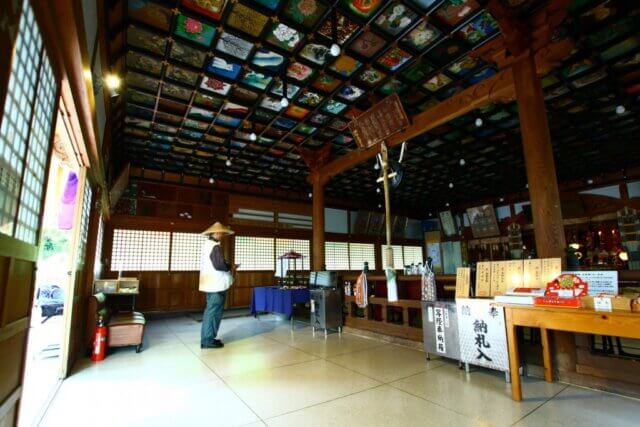
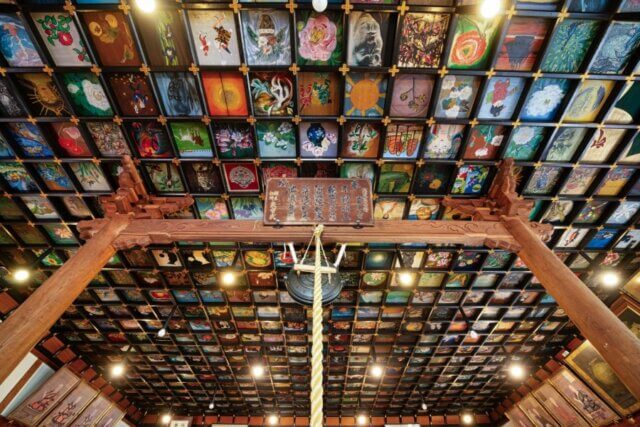
Impressive Ceiling Paintings in the Hondō

  • Name: Amida Nyorai, Kanzeon Bosatsu, Fudō Myōō, Yakushi Nyorai, Jizō Bosatsu
  • Principal Image: Yakushi Nyorai (Medicine Buddha)
  • Goeika (Pilgrimage Song):
  • Revealing the six impurities and the five shrines,
  • deep is the joy of the deities of Niida.

Access From Temple No. 36, Shōryū-ji

  • On foot: Follow the Tosa Yokonami Kuroshio Line to National Route 56. Approx. 60 km, 18 hours.
  •  
  • By Car: Same route as on foot. Approx. 60 km, 1 hour 30 minutes.
  •  
  • Public Transport: From the Miyamae Skyline Iriguchi bus stop, take the Tosaden Kōtsū Bus bound for Takaoka Eigyōsho for 20 minutes to Tosa Shiyakusho-mae. Transfer to the Tosaden Kōtsū Bus bound for the Susaki branch office, ride for 40 minutes, and get off at Susaki Station. From Susaki Station, take the JR Dosan Line for 40 minutes and get off at Kubokawa Station.

The Only Temple in the Shikoku Pilgrimage with Five Principal Images

The origins of Iwamoto-ji trace back to Fukuenman-ji, founded during the Nara period by Gyōki. Fukuenman-ji served as the bettō-ji (administrative Buddhist temple) of the nearby Niida Myōjin Shrine. During the Kōnin era (810–824), Kōbō Daishi visited the temple and erected five shrines, dividing and enshrining the sacred objects of Niida Myōjin among them. He placed Fudō Myōō, Kannon Bosatsu, Amida Nyorai, Yakushi Nyorai, and Jizō Bosatsu as their honjibutsu—the Buddhist deities regarded as the original forms of the kami. These are the Five Shrines of Niida—the very “five shrines” praised in the pilgrim hymn. Fukuenman-ji fell into ruin during the Sengoku period, and Iwamoto-bō, which oversaw the region’s shrines and temples, succeeded its spiritual lineage, eventually leading to present-day Iwamoto-ji.
Diverse Ceiling Paintings in Varied Styles

The Hondō is renowned for its splendid ceiling paintings. In 1978 (Shōwa 53), 575 paintings were selected through a nationwide open call, encompassing a wide variety of artistic styles and subjects. Alongside traditional motifs such as birds and flowers, Sanskrit seed syllables (bonji), and Buddhist images, there are landscapes, portraits, sailboats, and abstract compositions—creating a remarkably unconventional decorative ensemble for a Buddhist temple. It is likely the only temple in all of Japan whose ceiling features a portrait of actress Marilyn Monroe.
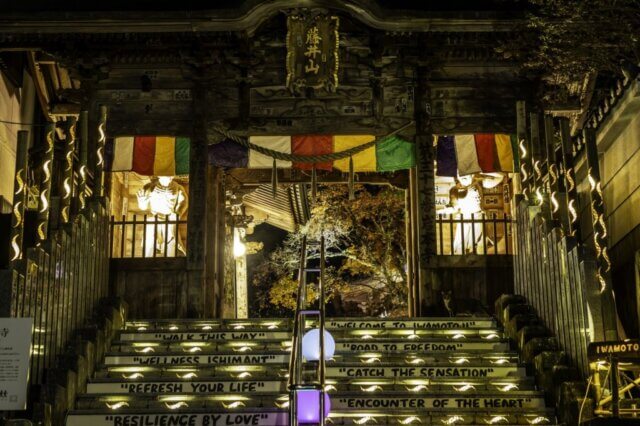
Although the precincts are not particularly spacious, they possess an air of dignity, featuring a stately Niō-mon Gate, the wooden circular Kangiten-dō, and the Daishi-dō.
A Journey That Is Itself Ascetic Training

Although Iwamoto-ji is located in the town center close to Kubokawa Station, the distances connecting it to neighboring temples are formidable. The journey from Temple 36, Shōryū-ji, is roughly 60 km—taking two full days on foot, or an hour and a half by car. The distance to the next temple, Temple 38 Kongōfuku-ji, exceeds 90 km, making it the longest inter-temple stretch on the entire Shikoku Pilgrimage. It requires three days of walking, or nearly three hours even by car. While the temples of Tosa (Kōchi) are traditionally referred to as the “Dōjō of Ascetic Practice,” traveling these vast distances makes one feel that the journey remains a true ascetic practice, even in modern times with well-developed transit networks.

DATA

Address: 3-13 Shigekushi-machi, Shimanto-chō, Takaoka-gun, Kōchi Prefecture
Phone: 0880-22-0376
Access: 10-minute walk from Kubokawa Station on the JR Dosan Line.
Parking: Available (Paid)
Lodging: Private rooms and shared rooms partitioned by fusuma sliding doors are available from 8,800 yen with two meals. A whole building is also available for rent, equipped with two Japanese-style rooms, a living/dining room, and a bathroom (30,000 yen per night for 1–2 guests; 50,000 yen per night for 3 to a maximum of 6 guests).

Your Pilgrimage, Your Art

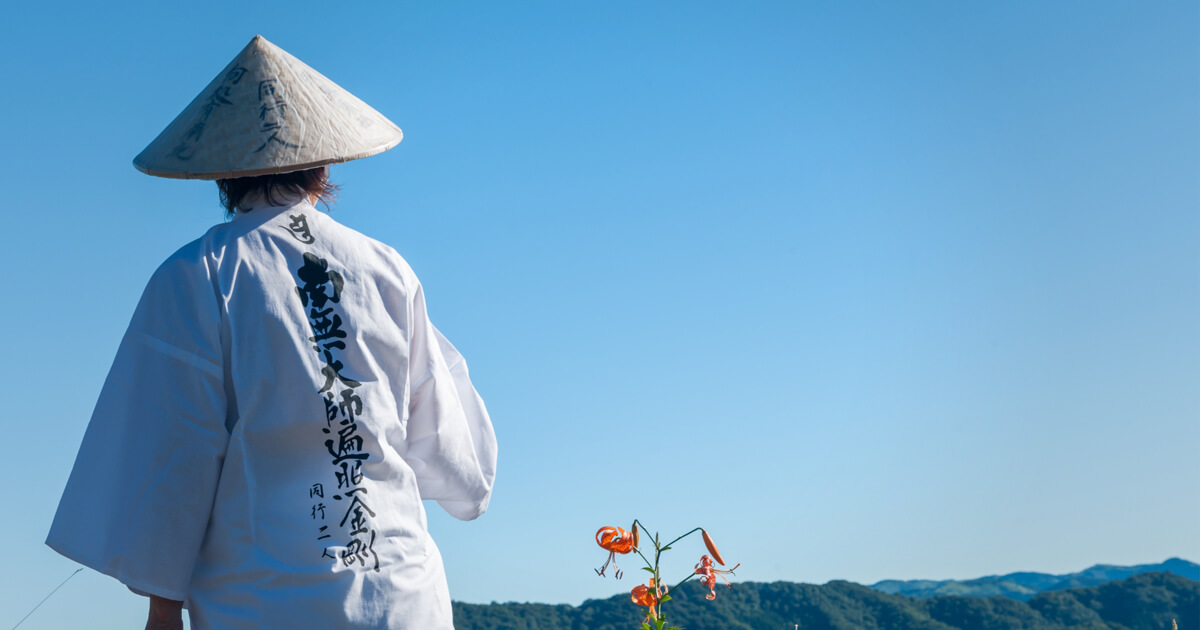
Completing the Shikoku Pilgrimage is a once-in-a-lifetime journey—but what if you could preserve it in a form that lasts forever?

Many pilgrims collect red stamps and calligraphy from each temple on a special silk scroll called a nōkyōjiku.

This sacred record of your path can be transformed into a kakejiku—a traditional Japanese hanging scroll—not only preserving the memories, but turning them into a work of cultural and spiritual art.

It’s more than a souvenir—it’s a way to honor your journey, your prayers, and your growth.

To learn more about how a nōkyōjiku becomes a kakejiku, and what makes this transformation so meaningful, please refer the below link.
 

    NameRequired

    SexRequired

    MaleFemale

    CountryRequired

    e-mailRequired

    CommentRequired

    Attached File
    ※Up to 5 MB for each file.


    ← ← "MUST CHECK" / Please confirm the above contents again and check this button.

    Contact Us

    Please fill out the form below and submit for your inquiry.

    ❈FirstName
    ❈LastName
    Country
    ❈E-mail
    (❈Confirm E-mail)
    ❈Inquiry category Question
    Consultation
    Impression
    Request
    Others
    ❈Comment

    ❈ is the mark for required item.


    Your privacy is important to us. We are committed to protecting your privacy.

    (or press ESC or click the overlay)

    CEO Message

    Our Feelings For Kakejiku


     The Japanese people have long set a high value on aesthetic senses since ancient times. As a result, the
    peculiar culture which is not seen in other countries blossomed and many aspects of the modern Japanese
    culture come from it. Parts of Japanese culture has been introduced to people in other countries recently,
    so the number of people from other countries who are interested in Japanese culture has been increasing.
    However, the Japanese aesthetic senses, which are the bases of Japanese culture, have been nurtured
    through a long history, intertwining various elements intricately, such as climate, geographical features,
    religion, customs and so on. Therefore, they are very difficult to understand not only for people from other
    countries, but even for the Japanese people. I think the best tool which conveys these difficult senses
    understandably is a “kakejiku.”
     The kakejiku (a hanging scroll; a work of calligraphy or a painting which is mounted and hung in an
    alcove or on a wall) is a traditional Japanese art. It's no exaggeration to say that paintings are what
    express aesthetic senses at all times and places. The kakejiku is an art which expresses the Japanese
    aesthetic senses. The kakejiku has long been used in traditional Japanese events, daily life and so on since
    ancient times. As a result, there are various customs of kakejiku in Japan; kakejiku and the life of the
    Japanese are closely related. We can see Japanese values through kakejiku.
     The kakejiku is a cultural tradition which the Japanese people should be proud of. However, many people
    in other countries don't know much about it because it hasn't been showcased as much. This is why I
    decided to try to introduce it. The kakejiku world is very interesting and beautiful. We want not only the
    Japanese, but also many people from other countries to know and enjoy it. I hope that many people will
    love kakejiku someday.

    (or press ESC or click the overlay)
    Company Profile
    syaoku.jpg(120220 byte)

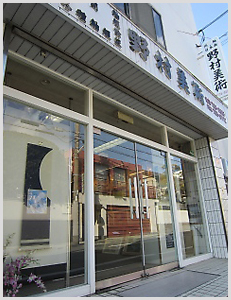
    Name Art Nomura


    President Tatsuji Nomura


    Founded1973


    Established1992


    Address7-23 Babadori, Tarumi-ku, Kobe city,
    Hyougo Prefecture, 655-0021, Japan


    Capital10 million yen


    URLhttp://nomurakakejiku.com


    Our Business

     Art Nomura is an art dealer which produces kakejiku (hanging scrolls). We mount many paintings and calligraphic works in kakejiku in my factory. Kakejiku are our main product. We also remount and repair old or damaged kakejiku. We share the traditional Japanese art of kakejiku with people all over the world.


    (or press ESC or click the overlay)
    Access Map

    Access Map


     The Japanese people have long set a high value on aesthetic senses since ancient times. As a result, the
    peculiar culture which is not seen in other countries blossomed and many aspects of the modern Japanese
    culture come from it. Parts of Japanese culture has been introduced to people in other countries recently,
    so the number of people from other countries who are interested in Japanese culture has been increasing.
    However, the Japanese aesthetic senses, which are the bases of Japanese culture, have been nurtured
    through a long history, intertwining various elements intricately, such as climate, geographical features,
    religion, customs and so on. Therefore, they are very difficult to understand not only for people from other
    countries, but even for the Japanese people. I think the best tool which conveys these difficult senses
    understandably is a “kakejiku.”
     The kakejiku (a hanging scroll; a work of calligraphy or a painting which is mounted and hung in an
    alcove or on a wall) is a traditional Japanese art. It's no exaggeration to say that paintings are what
    express aesthetic senses at all times and places. The kakejiku is an art which expresses the Japanese
    aesthetic senses. The kakejiku has long been used in traditional Japanese events, daily life and so on since
    ancient times. As a result, there are various customs of kakejiku in Japan; kakejiku and the life of the
    Japanese are closely related. We can see Japanese values through kakejiku.
     The kakejiku is a cultural tradition which the Japanese people should be proud of. However, many people
    in other countries don't know much about it because it hasn't been showcased as much. This is why I
    decided to try to introduce it. The kakejiku world is very interesting and beautiful. We want not only the
    Japanese, but also many people from other countries to know and enjoy it. I hope that many people will
    love kakejiku someday.

    (or press ESC or click the overlay)