Shikoku Pilgrimage Temple: No. 36: Dokko-zan Ishana-in Shōryū-ji
Standing on High Ground, the Namikiri Fudō for Safety at Sea
- Name: Namikiri Fudō Myōō (Wave-Cutting Fudō, a fierce Buddhist guardian deity)
- Principal Image: Yakushi Nyorai (Medicine Buddha)
- Goeika (Pilgrimage Song):
- I hear that the blue dragon dwelling in the modest spring
- has vowed to protect the Buddhist Dharma.
Access From Temple No. 35, Kiyotaki-ji
- On foot: Head south along Prefectural Route 39, walking along a mountain road. The long Tsukajizaka Tunnel is far from pleasant for pedestrians. To avoid the tunnel, take the mountain pass along the old road to the west. 13.9 km, approx. 4 hours.
- By Car: Same route as walking. 13.9 km, 25 minutes.
- Public Transport: From the Takaoka Eigyōsho bus stop, take the Tosaden Kōtsū Bus bound for Kōchi Station for 10 minutes, get off at Nakajima, transfer to the Tosaden Kōtsū Bus bound for Usa, ride for 20 minutes, and get off at Miyamae Skyline Iriguchi.
A Temple Associated with the Miracles of Kōbō Daishi
Shōryū-ji bears a historic name bestowed after Qinglong Temple in Tang China, known in Japanese as Shōryū-ji, where Kōbō Daishi studied under Master Huiguo (Keika Ajari). The following legend surrounds its founding:
After completing his training in Tang China, Kōbō Daishi cast a dokkosho (single-pronged vajra) toward the eastern sky prior to his departure, praying, “May it land in a place with which I have a karmic bond.” The Daishi then set sail for home, but the ship was caught in a violent storm. Fudō Myōō appeared, calmed the tempest, and guided him safely to Japan. Later, while journeying through Shikoku, the Daishi discovered his dokkosho at this site. In gratitude for the protection of the Buddhas and deities, he carved a statue of Fudō Myōō and built a small hall to enshrine it as the principal image.
A Temple for Safety at Sea
Owing to this episode, Shōryū-ji has long been revered by fishermen and many others as the Namikiri (“Wave-Cutting”) Fudō, believed to ward off rough seas and ensure maritime safety.
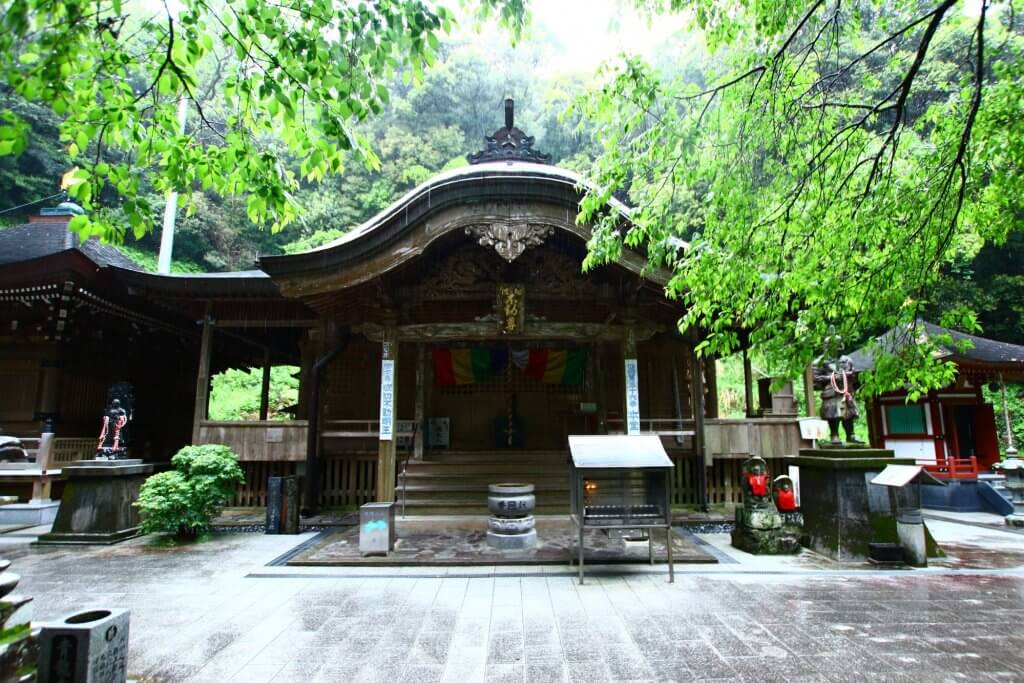
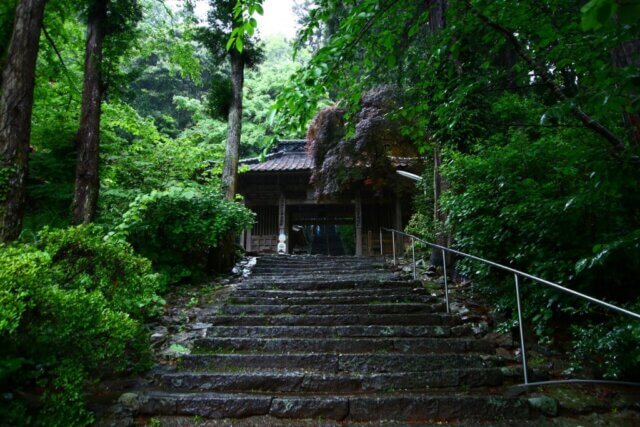
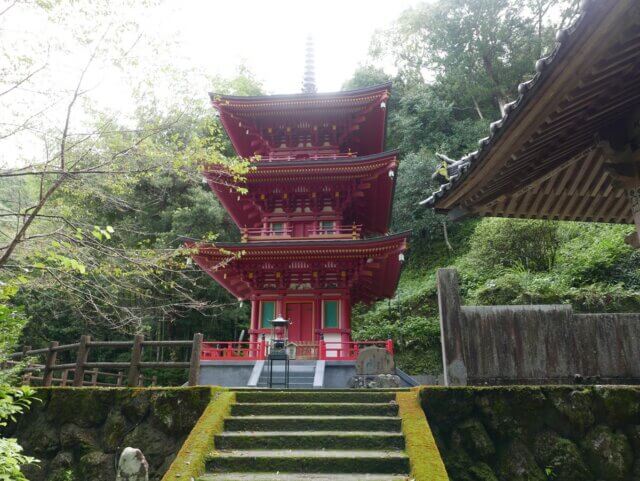
The temple approach is a narrow path winding along the mountain’s base before climbing a steep slope. Along the roadside, stone statues known as the Eighty-Eight Buddhas welcome pilgrims on their way to the temple. The approach eventually turns into stone steps, with the Niō-mon Gate coming into view halfway up. On the elevated ground to the left of the gate stands a three-storied pagoda. Passing through the gate brings you to a waterfall used as an ascetic training site. Ascending the long flight of stone steps leads directly to the weathered Hondō (Main Hall), with the Daishi-dō Hall standing to the left. Surrounded by groves of fan palms (birō) and graced with blooming hydrangeas in early summer, the grounds evoke the secluded atmosphere of a mountain sanctuary.
The nōkyōjo (temple stamp office) is located at the foot of the stone steps. Nearby stands the Ajari-dō Hall, enshrining Master Huiguo, the revered teacher of Kōbō Daishi.
DATA
Address: 163 Usa-chō Ryū, Tosa City, Kōchi Prefecture
Phone: 088-856-3010
Access: From JR Kōchi Station, take the Tosaden Kōtsū Bus bound for Usa for 1 hour, get off at Miyamae Skyline Iriguchi, and walk 45 minutes.
Parking: Available (Free)
Lodging: None
Your Pilgrimage, Your Art
Completing the Shikoku Pilgrimage is a once-in-a-lifetime journey—but what if you could preserve it in a form that lasts forever?
Many pilgrims collect red stamps and calligraphy from each temple on a special silk scroll called a nōkyōjiku.
This sacred record of your path can be transformed into a kakejiku—a traditional Japanese hanging scroll—not only preserving the memories, but turning them into a work of cultural and spiritual art.
It’s more than a souvenir—it’s a way to honor your journey, your prayers, and your growth.
To learn more about how a nōkyōjiku becomes a kakejiku, and what makes this transformation so meaningful, please refer the below link.