Framing a Shikoku 88-Temple Pilgrimage Nōkyō-jiku in Kobe
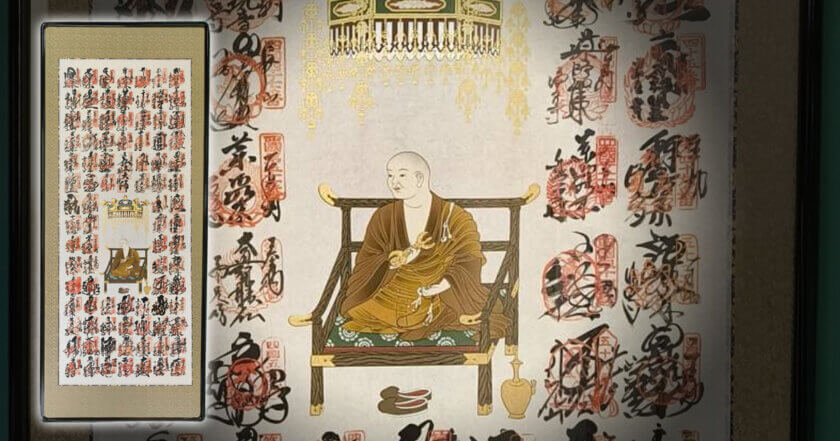
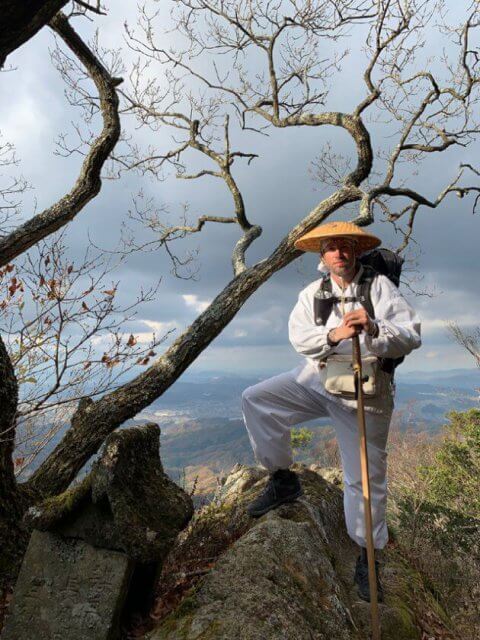
The Shikoku 88-Temple Pilgrimage, also known as Ohenro, is a circuit pilgrimage route of approximately 1,400 km that visits 88 temples associated with Kōbō Daishi, also known as Kūkai, across the four prefectures of Shikoku.
At each temple, pilgrims offer sutras and receive a temple seal and calligraphy as proof of their visit. These inscriptions and seals are recorded on a long sheet of silk called a nōkyō-jiku. The sheet is gradually filled as the pilgrimage progresses, creating a visual record of the temples visited. After visiting all 88 temples, the completed nōkyō-jiku is often entrusted to a traditional mounting studio such as ours to be finished as a kakejiku scroll or framed work.
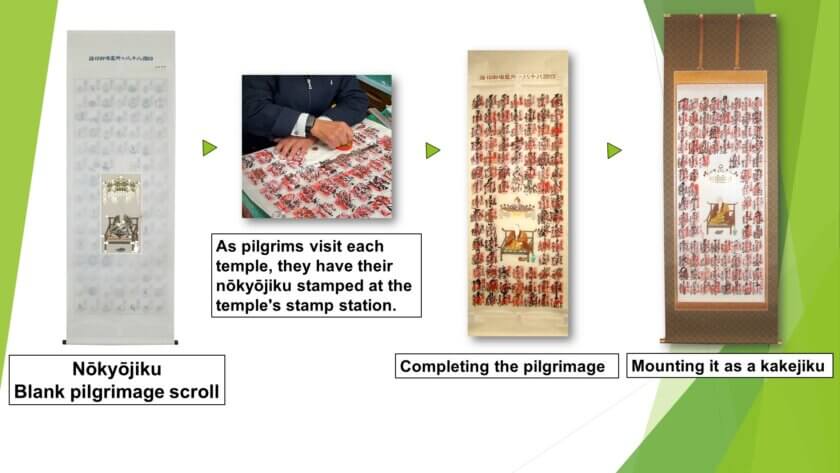
A Shikoku 88-Temple nōkyō-jiku is traditionally mounted and displayed as a kakejiku after the pilgrimage has been completed.
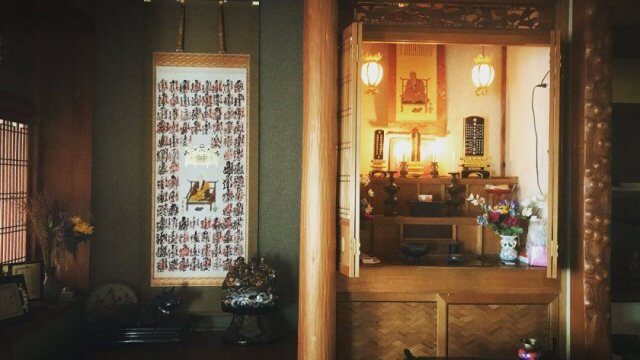
However, depending on the display environment, it may be difficult to secure enough height or wall space for a kakejiku.
In this case, a business client in Kobe, asked us to mount a Shikoku 88-Temple nōkyō-jiku that had been made for scroll mounting as a framed work instead.
This article explains whether a nōkyō-jiku designed for scroll mounting can also be framed and shows the finished result.
A Request from a Repeat Client in Kobe
The client who contacted us had previously commissioned work from our company.
We are always delighted when a client returns to us with another project. We believe that entrusting us with another important commission reflects the client’s appreciation of our previous work and satisfaction with the finished result.
Traditional mounting work does not simply end when the completed piece is handed over. We believe that consistently creating work that clients will continue to look back on and think, “We are glad we asked ART NOMURA,” is what leads to lasting relationships and future commissions.
Framing the Nōkyō-jiku Because There Was No Space for a Kakejiku
The piece entrusted to us was a Shikoku 88-Temple makuri designed for scroll mounting.
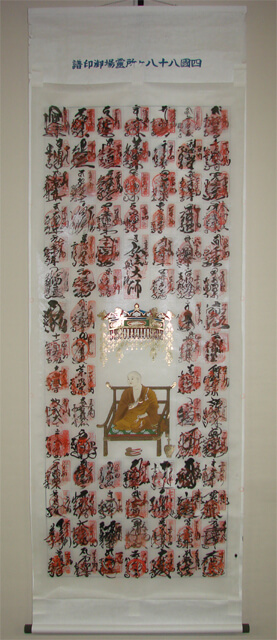
In traditional Japanese mounting, the term makuri refers to an artwork that has not yet been mounted as either a kakejiku or a framed work.
The client wanted to preserve the record of the Shikoku 88-Temple Pilgrimage as a finished artwork. However, because it was difficult to secure enough space to display a kakejiku, the client requested framed mounting instead.
A nōkyō-jiku is often assumed to require mounting as a kakejiku, but a hanging scroll is not the only option.
It would be a great shame if not having space for a kakejiku caused someone to give up on preserving a record of their pilgrimage on a nōkyō-jiku in the first place. Depending on the dimensions and condition of the makuri, it may be possible to mount it as a framed work instead.
What Is the Difference Between a Makuri for Framing and One for Scroll Mounting?
In a previous project for this client, we framed a nōkyō-jiku from the Saigoku 33-Temple Pilgrimage.

However, the makuri entrusted to us on that occasion had been designed from the outset for framed mounting.
This time, the makuri had been designed on the assumption that it would be mounted as a kakejiku.
Although both are nōkyō-jiku makuri, versions intended for framed mounting and scroll mounting differ in their overall dimensions and the arrangement of their margins. Creating a framed work from a scroll-format makuri therefore involves much more than simply using a ready-made frame.
The appearance of the artwork and the proportions of the surrounding mounting must be carefully considered so that the completed piece looks natural as a framed work. This was one of the most important aspects of this project.
Requests to frame a makuri originally intended for scroll mounting are not especially common, but we have completed several such projects in the past.。

Approximate Dimensions: A Large Framed Work Measuring 160 cm High and 65 cm Wide
Once framed, this nōkyō-jiku measured approximately 160 cm high and 65 cm wide.
This is considerably larger than a typical framed artwork.
At this scale, even small differences in the dimensions and margins can significantly alter the overall impression. We therefore had to achieve a balance that prevented the artwork from appearing cramped within the frame while preserving the dignity and solemn character appropriate for a nōkyō-jiku.
The main stages of the work were as follows.
- Inspect the condition and dimensions of the makuri.
- Consider the overall finished dimensions and the placement of the artwork.
- Determine the framing specifications with the client, including the frame moulding and mounting fabrics.
- Apply the necessary backing to stabilize the artwork.
- Trim the excess material around the artwork so that the edges are square, then apply a narrow fabric border.
- Adhere the artwork in its designated position within the frame.
- Secure the back of the frame firmly with metal fittings and complete the final adjustments.
When framing a makuri designed for scroll mounting, the dimensions and margins vary from one piece to another. It is therefore important to inspect the actual artwork and determine the most suitable mounting method accordingly.
A Dignified and Impressive Framed Nōkyō-jiku
Measuring approximately 160 cm in height, the completed framed work has a powerful presence.
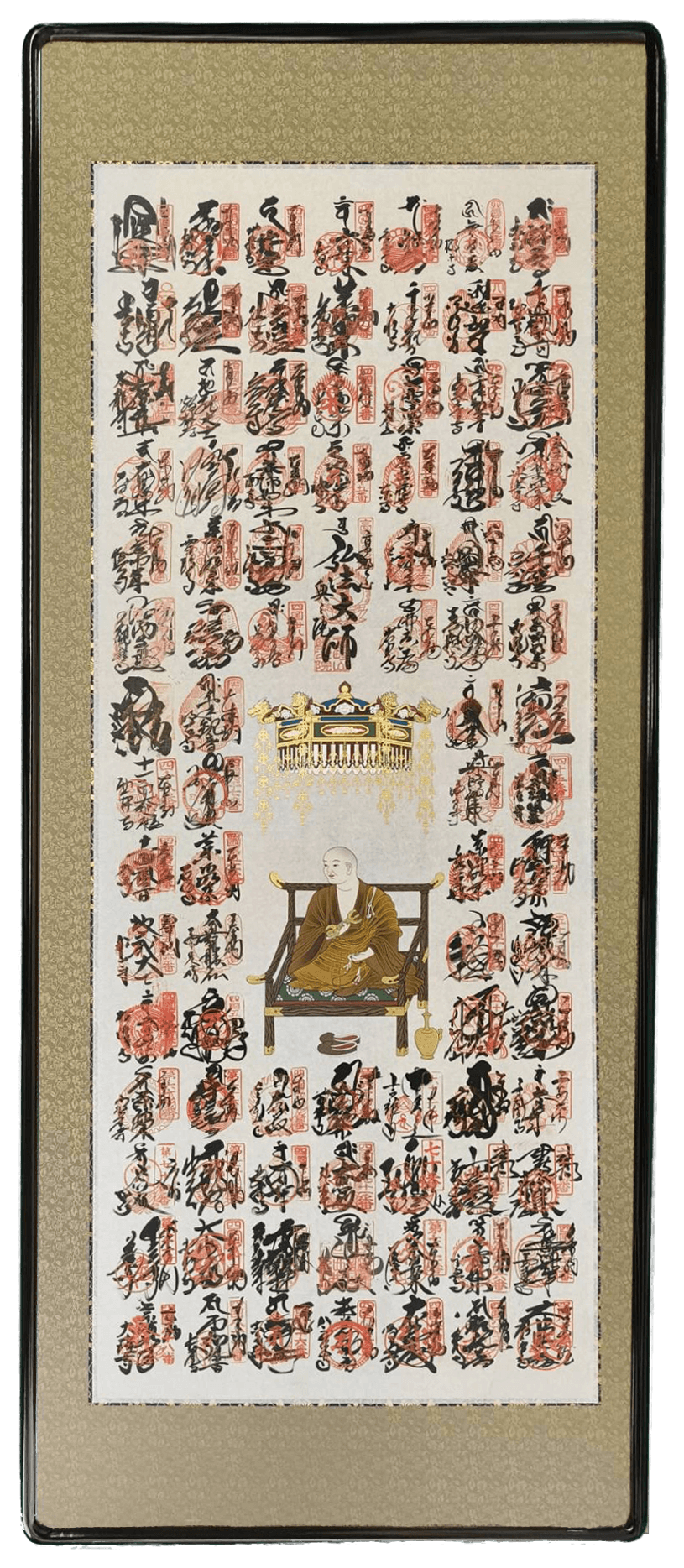
The inscriptions and seals recording the client’s journey around the Shikoku 88-Temple Pilgrimage spread across the surface of the work, creating a presence quite different from that of a kakejiku.
The finished piece is not merely large. It also has the solemn and dignified atmosphere appropriate for a framed nōkyō-jiku.

The client was very pleased with the completed work, which was also a great relief to us.
Having once again been entrusted with an important piece and knowing that the client was pleased with the result was especially gratifying for our company.
A Nōkyō-jiku Designed for Scroll Mounting May Also Be Framed
Nōkyō-jiku from the Shikoku 88-Temple and Saigoku 33-Temple pilgrimages are generally mounted as kakejiku. However, framed mounting may also be an option depending on the display space and the client’s preferences.
A makuri designed for scroll mounting has different dimensions and margins from one intended for framed mounting. The mounting must therefore be designed specifically for the individual piece.
At ART NOMURA, we examine the form and condition of each nōkyō-jiku, as well as the intended display location, before proposing a mounting method suited to the individual client.
If you would like to preserve the record of your pilgrimage as a finished artwork but do not have enough space to display a kakejiku, or if you would like to know whether a nōkyō-jiku intended for scroll mounting can be framed, please feel free to contact us.