Shikoku Pilgrimage Temple: No. 34: Motoo-zan Shuzaku-in Tanema-ji
The Temple of the Yakushi for Safe Childbirth and Kosodate Kannon (Child-rearing Kannon)
- Name: Yakushi Nyorai (Medicine Buddha)
- Principal Image: Yakushi Nyorai (Medicine Buddha)
- Goeika (Pilgrimage Song):
- Tanemaji-dera, where the seeds of the five grains sown in the world are planted;
- how deep is the great compassion of the Nyorai!
Access From Temple No. 33, Sekkei-ji
- On foot: Walk mainly along Prefectural Route 278, which stretches across hilly terrain. Approx. 7 km, 2 hours 40 minutes.
- By Car: Use Prefectural Route 278. Approx. 7 km, 15 minutes.
- Public Transport: From the Nagahama bus stop, take the Tosaden Kōtsū Bus bound for Kōchi Station for 21 minutes, and get off at Kōchi Ekimae. From here, see Access in the DATA section.
A Precinct with an Open Atmosphere
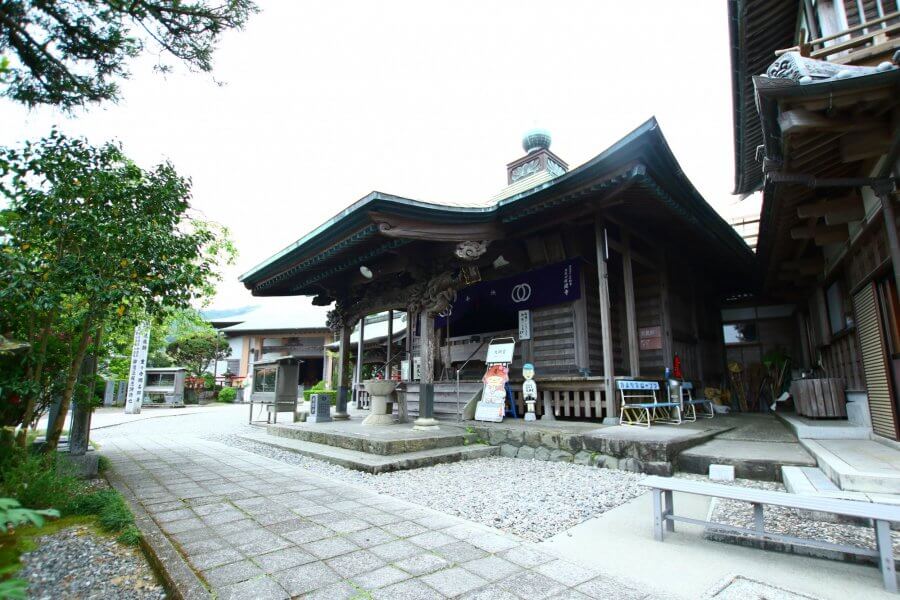
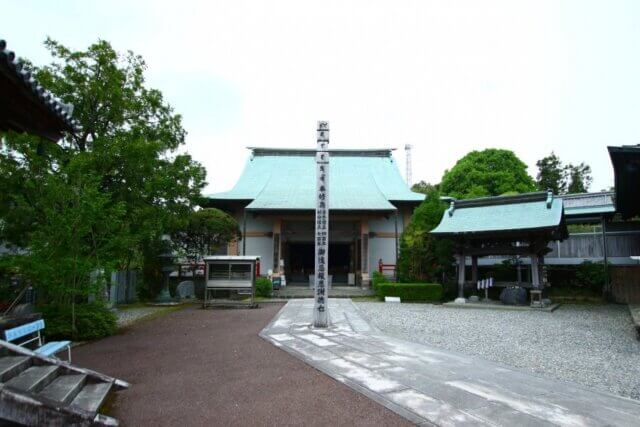
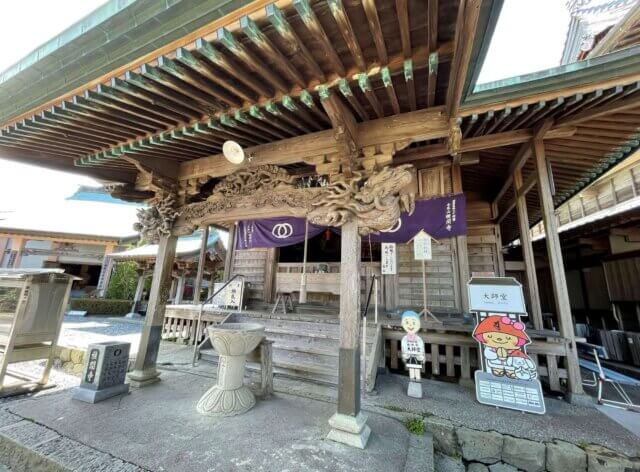
Tanema-ji was named after the legend that Kōbō Daishi sowed the seeds of five grains he brought back from Tang Dynasty China. Located in a rural landscape, following the pilgrimage path along an irrigation canal, the temple has an appearance well suited to such a legend. Entering the precincts from the stone pillar gate, there stand the Hondō (Main Hall), Daishi-dō Hall, Kannon-dō Hall, and Honbō (head priest’s quarters), which were rebuilt after being damaged by a typhoon in 1970 (Shōwa 45).
One of the Oldest Temples in Shikoku
The history of this temple is ancient. The origin of the temple dates back to the time when Buddhism had just arrived in Japan. Buddhist sculptors from Baekje (Korean Peninsula) encountered a storm, washed ashore here, and carved a statue of Yakushi Nyorai to pray for safe sea travel back home. Enshrining this statue is said to be the origin of the temple. It also appears in the Konjaku Monogatarishū, and during the Edo period, it flourished under the generous protection of the Yamauchi clan, lords of the Tosa Domain. However, even such a famous temple was swept by the storm of Haibutsu Kishaku (anti-Buddhist movement). The temple declined to the brink of abandonment before being restored in the 13th year of Meiji (1880). The current principal image is different from the statue in the foundation legend and was created in the late Heian period. However, it is a Buddhist statue of Fujiwara culture, which is rare in Shikoku, and is designated as an Important Cultural Property. It is usually a hidden Buddha (hibutsu) and is displayed to the public every year on March 8.
Bottomless Ladles and the Yakushi Nyorai for Safe Childbirth
This temple has long been worshipped for granting blessings for safe childbirth. Since the principal image, Yakushi Nyorai, is generally a Nyorai symbolizing medicine and the warding off of illness, it is not unnatural that it governs safe childbirth. Worth noting is the Kannon-dō Hall in the precincts, where the Kosodate Kannon is enshrined. Here, numerous bottomless ladles are dedicated. When a pregnant woman prays for safe childbirth at the temple, she receives this ladle from the temple. The custom has been handed down that the pregnant woman takes it home as a talisman, and after giving birth safely, she visits the temple again to dedicate this bottomless ladle.
The bottomless ladle serves as an amulet for safe childbirth to wish that “the bottom comes out, allowing smooth passage through the birth canal.”
DATA
Address: 72 Akiyama, Haruno-chō, Kōchi City, Kōchi Prefecture
Phone: 088-894-2234
Access: From JR Kōchi Station, take the Tosaden Kōtsū Bus bound for JA Haruno for 50 minutes, get off at Haruno Kōminkan-mae, and walk 10 minutes.
Parking: Available (Free)
Lodging: None
Your Pilgrimage, Your Art
Completing the Shikoku Pilgrimage is a once-in-a-lifetime journey—but what if you could preserve it in a form that lasts forever?
Many pilgrims collect red stamps and calligraphy from each temple on a special silk scroll called a nōkyōjiku.
This sacred record of your path can be transformed into a kakejiku—a traditional Japanese hanging scroll—not only preserving the memories, but turning them into a work of cultural and spiritual art.
It’s more than a souvenir—it’s a way to honor your journey, your prayers, and your growth.
To learn more about how a nōkyōjiku becomes a kakejiku, and what makes this transformation so meaningful, please refer the below link.