
Itō Jakuchū’s Paintings 001: Modern Times and Itō Jakuchū
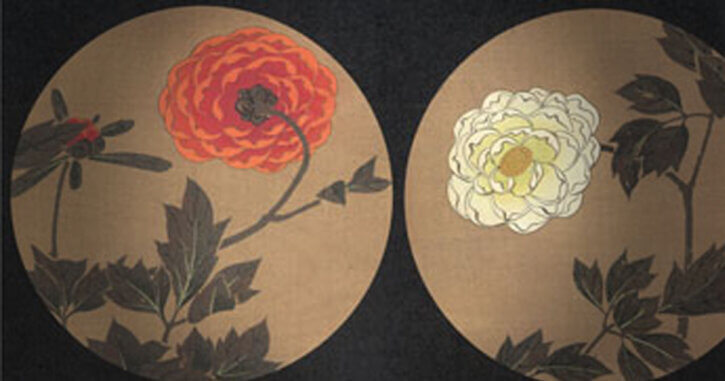
Itō Jakuchū is a popular 18th-century painter of the Edo period who is well known to everyone and is known as a painter of eccentricity with a unique style of expression.

Today, art is valued by placing emphasis on the individuality of the artist and the artist’s unique style of expression. For this reason, Jakuchū’s unparalleled style of painting is receiving attention, not only for appreciation but also as a subject of research. However, the popularity of such an eccentric painter has not just now suddenly emerged. He was highly acclaimed and in the spotlight from the time he was alive, and his popularity continued into the Meiji period, leading to the publication of many ‘illustrations album’. The Jakuchū Gafu (’illustrations album of Jakuchū)was first published in 1890, when there were few art books published, and about a dozen more were published until 1926. In addition, as precision photographic printing flourished and publication increased during the pre-war period of the Shōwa era, Jakuchū paintings became widely used for design designs for crafts. And they became well known to the public. Even after the war, Jakuchū’s painting style always attracted attention among art students.

From the mid to late Meiji era, when the Rimpa paintings began to be taken up as a design motif, the Japanese art and craft industry experienced a major period of transformation. Following the government’s policy to modernize by imitating Western styles, Western art gained an advantageous position and began to dominate new theories of art. The concept of Western art, which places decorative art supreme, was applied to the interpretation of Oriental art, treating all aesthetically pleasing objects as works of art without distinguishing between decorative art and practical art, which had been the traditional approach in Japan. Western interpretation and expression were also required in Japanese painting, and new techniques were employed while traditional Japanese techniques were abandoned as outdated. Japanese art that was easy for Westerners to understand was acclaimed overseas. However, foreign artists warned against the Japanese cultural situation that was complacent about this.

In the early Meiji era, craft production in traditional art forms such as yūzen dyeing, ceramics, and lacquerwork became an export industry, and new education and economic benefits began to emerge among the general public, leading to an increased interest in high-end arts and crafts. As a result, production of art and crafts increased, and searching for past works became frequent.

Production of single items, which had been the main focus in craft production until then, was replaced by mass production, and with it came the need to develop new design concepts that utilized high-level technology. In particular, the world of the textile industry grew to support part of the country’s economy through domestic demand, with the popularization of high-end clothing for the common people and ceremonial clothing modeled after the old samurai style, widely used in weddings and social events since the Meiji Restoration. Many reference design books were published to produce such a huge amount of clothing.

During this period, Jakuchū’s paintings, which had been highly valued from the Edo period to the modern era, were not only appreciated as fantastic paintings, but also recognized as a source of inspiration for new or modern designs. They were greatly copied and used in the craft industry, such as in the production of yūzen dyeing.

In the West, there was a period of searching in the dark for ways to utilize Japanese Eastern art, just as the European Japonism movement that began in the late 19th century later led to the popularity of Art Nouveau. This coincided with the Art Deco movement, which had gradually evolved from Art Nouveau and was seeking new materials from Japanese art once again.

Furthermore, the United States, which had been content with Japanese souvenirs that satisfied its Oriental taste, also desired higher quality art and crafts.

These factors can be said to have coincided with the trend of Japanese art and crafts participating in the World’s Fair from the mid to late Meiji period, and both domestically and internationally had the same objective.

At this time, Jakuchū painting was greatly accepted as the discovery of a new style of oriental art, in line with Japan’s eagerness to expand into the rest of the world.

Jakuchū’s unique paintings were among the works of art that were targeted as new Japonism designs for Europe and America.
    NameRequired

    SexRequired

    MaleFemale

    CountryRequired

    e-mailRequired

    CommentRequired

    Attached File
    ※Up to 3 MB for each file.


    ← ← "MUST CHECK" / Please confirm the above contents again and check this button.

    Contact Us

    Please fill out the form below and submit for your inquiry.

    ❈FirstName
    ❈LastName
    Country
    ❈E-mail
    (❈Confirm E-mail)
    ❈Inquiry category Question
    Consultation
    Impression
    Request
    Others
    ❈Comment

    is the mark for required item.


    Your privacy is important to us. We are committed to protecting your privacy.

    (or press ESC or click the overlay)

    CEO Message

    Our Feelings For Kakejiku


     The Japanese people have long set a high value on aesthetic senses since ancient times. As a result, the
    peculiar culture which is not seen in other countries blossomed and many aspects of the modern Japanese
    culture come from it. Parts of Japanese culture has been introduced to people in other countries recently,
    so the number of people from other countries who are interested in Japanese culture has been increasing.
    However, the Japanese aesthetic senses, which are the bases of Japanese culture, have been nurtured
    through a long history, intertwining various elements intricately, such as climate, geographical features,
    religion, customs and so on. Therefore, they are very difficult to understand not only for people from other
    countries, but even for the Japanese people. I think the best tool which conveys these difficult senses
    understandably is a “kakejiku.”
     The kakejiku (a hanging scroll; a work of calligraphy or a painting which is mounted and hung in an
    alcove or on a wall) is a traditional Japanese art. It's no exaggeration to say that paintings are what
    express aesthetic senses at all times and places. The kakejiku is an art which expresses the Japanese
    aesthetic senses. The kakejiku has long been used in traditional Japanese events, daily life and so on since
    ancient times. As a result, there are various customs of kakejiku in Japan; kakejiku and the life of the
    Japanese are closely related. We can see Japanese values through kakejiku.
     The kakejiku is a cultural tradition which the Japanese people should be proud of. However, many people
    in other countries don't know much about it because it hasn't been showcased as much. This is why I
    decided to try to introduce it. The kakejiku world is very interesting and beautiful. We want not only the
    Japanese, but also many people from other countries to know and enjoy it. I hope that many people will
    love kakejiku someday.

    (or press ESC or click the overlay)
    Company Profile
    syaoku.jpg(120220 byte)

    Name Art Nomura


    President Tatsuji Nomura


    Founded1973


    Established1992


    Address7-23 Babadori, Tarumi-ku, Kobe city,
    Hyougo Prefecture, 655-0021, Japan


    Capital10 million yen


    URLhttp://nomurakakejiku.com


    Our Business

     Art Nomura is an art dealer which produces kakejiku (hanging scrolls). We mount many paintings and calligraphic works in kakejiku in my factory. Kakejiku are our main product. We also remount and repair old or damaged kakejiku. We share the traditional Japanese art of kakejiku with people all over the world.


    (or press ESC or click the overlay)
    Access Map

    Access Map


     The Japanese people have long set a high value on aesthetic senses since ancient times. As a result, the
    peculiar culture which is not seen in other countries blossomed and many aspects of the modern Japanese
    culture come from it. Parts of Japanese culture has been introduced to people in other countries recently,
    so the number of people from other countries who are interested in Japanese culture has been increasing.
    However, the Japanese aesthetic senses, which are the bases of Japanese culture, have been nurtured
    through a long history, intertwining various elements intricately, such as climate, geographical features,
    religion, customs and so on. Therefore, they are very difficult to understand not only for people from other
    countries, but even for the Japanese people. I think the best tool which conveys these difficult senses
    understandably is a “kakejiku.”
     The kakejiku (a hanging scroll; a work of calligraphy or a painting which is mounted and hung in an
    alcove or on a wall) is a traditional Japanese art. It's no exaggeration to say that paintings are what
    express aesthetic senses at all times and places. The kakejiku is an art which expresses the Japanese
    aesthetic senses. The kakejiku has long been used in traditional Japanese events, daily life and so on since
    ancient times. As a result, there are various customs of kakejiku in Japan; kakejiku and the life of the
    Japanese are closely related. We can see Japanese values through kakejiku.
     The kakejiku is a cultural tradition which the Japanese people should be proud of. However, many people
    in other countries don't know much about it because it hasn't been showcased as much. This is why I
    decided to try to introduce it. The kakejiku world is very interesting and beautiful. We want not only the
    Japanese, but also many people from other countries to know and enjoy it. I hope that many people will
    love kakejiku someday.

    (or press ESC or click the overlay)