Various Arranged Painting with Nirvana Painting Motif
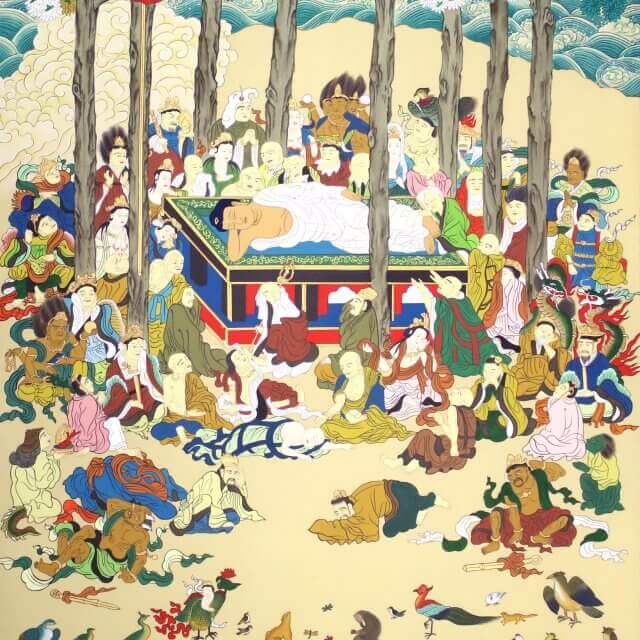
The painting ‘Nirvana’ is a traditional subject depicting the scene at the time of the Buddha’s death.
Around the Edo period (1603-1867), works depicting this ‘Nirvana’ arranged in various objects became popular.
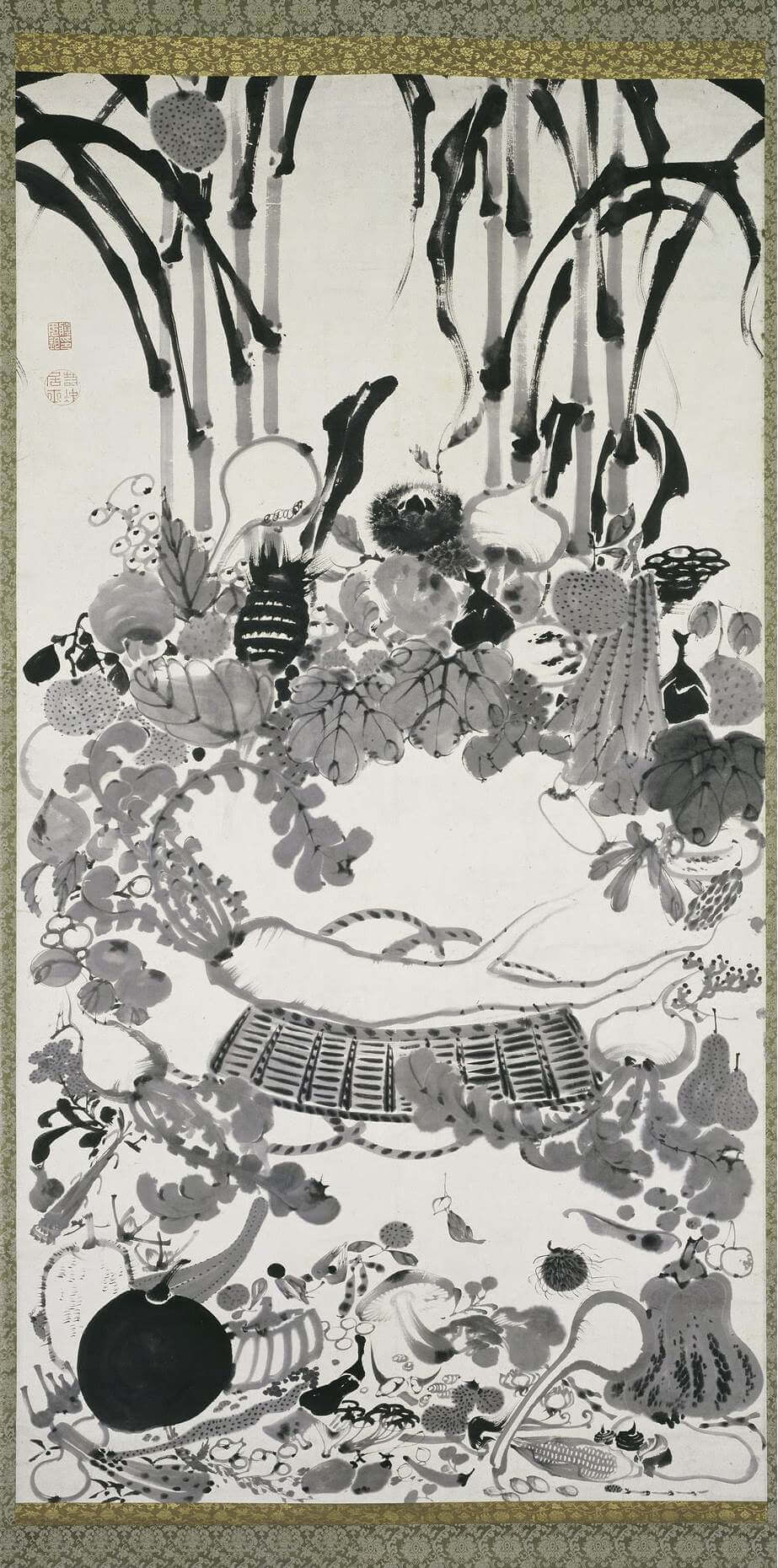
One of the most famous works is the Fruit and Vegetable Nirvana, painted with vegetables and fruits by the eccentric painter Itō Jakuchū, who was active in Kyoto in the Edo period.
In this article, we would like to introduce you to various arranged painting with Nirvana painting motif.
“Fish and Shellfish Nirvana Painting” by Utagawa Yoshikazu
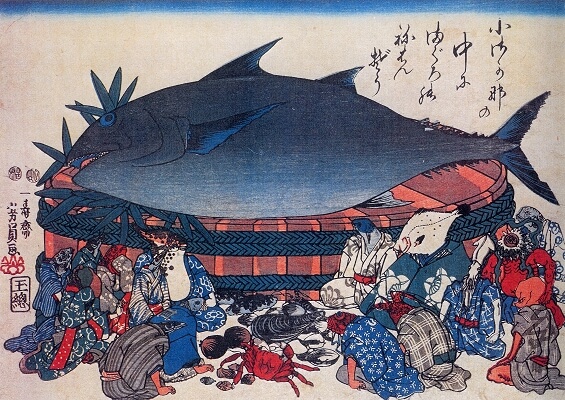
A large tuna lies on a wooden oval tub, with a puffer fish, venus clams, a crab, pen shells, a lobster, a squid, an octopus and other seafood gathered in the foreground, their heads leaning back.
The tuna, which in the above picture is likened to the Buddha, has long been eaten, but in the Edo period it was a low-class fish.
Fatty fish was not preferred, which is likely to be the reason why it was considered inferior, and even when it began to appear on the public table from the late Edo period, red meat was preferred and today’s super fatty ōtoro was disliked.
‘The Nirvana of Saigō Takamori’ by Nagashima Shungyō
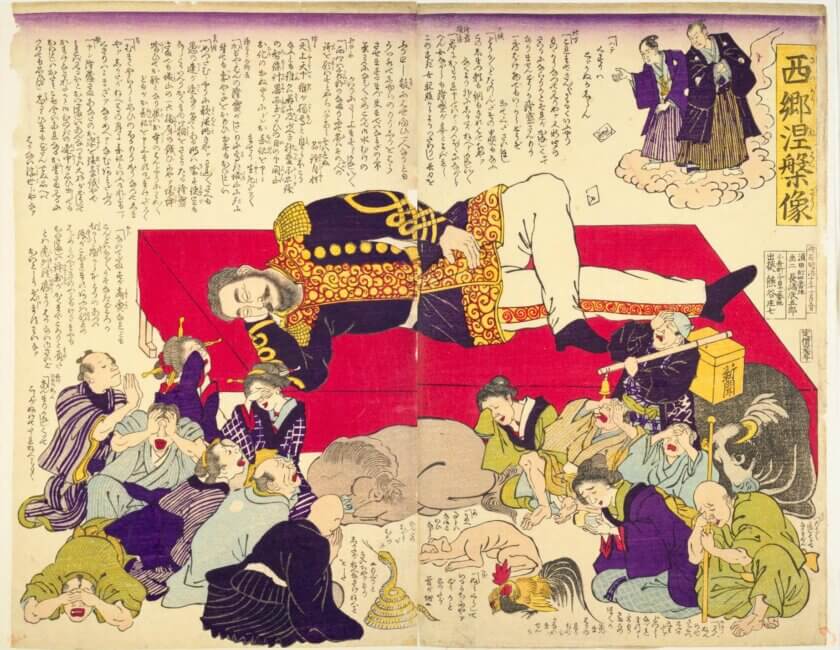
Saigō Takamori was a leader of the Meiji Restoration.
Together with Katsu Kaishū, he achieved the bloodless opening of the Edo Castle, and successfully staged a restoration of the monarchy coup d’état.
As a councillor in the new government, he decisively implemented the reforms of the Meiji Restoration, but was defeated in 1873 in the Seikanron (political debate on whether Korea should be conquered by military force) and resigned from his public post.
Urged by students at a private school in his home town, he raised his army (Seinan War), but was defeated by government forces and committed suicide.
He has been popular since that time as a man of character, and this work depicts his death as a nirvana.
The painter was Nagashima Shungyō, an ukiyo-e artist active in the Meiji era.
Death painting of Ichikawa Danjūrō VIII
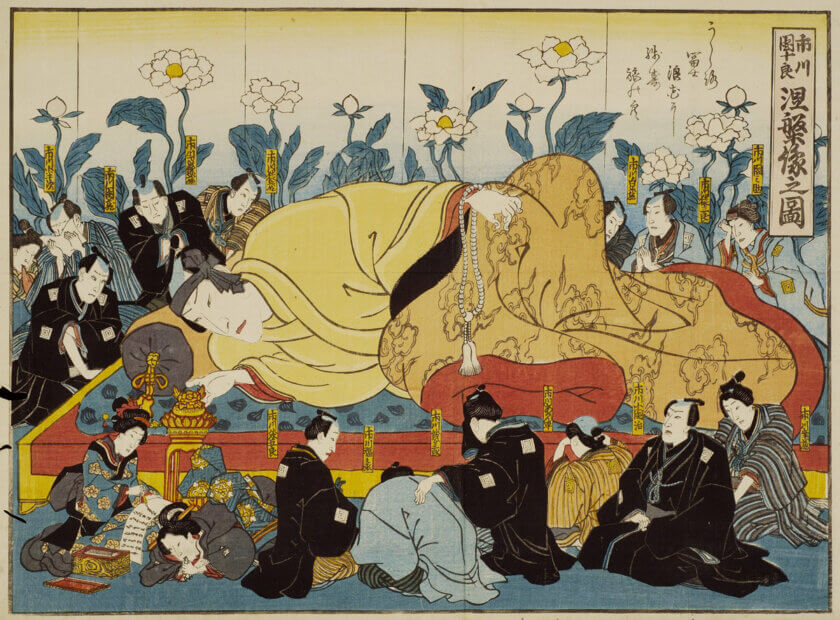
Shini-e (death paintings) are ukiyo-e prints produced mainly to announce the death of a kabuki actor and to hold a memorial service.
From the Bunsei (1818-1830) era onwards until the beginning of the Meiji era, a great number of them were published, especially the death picture of Ichikawa Danjūrō VIII, who committed suicide in Osaka in 1854, of which there were over 200 types published.
This work is a painting of the Nirvana with Ichikawa Danjūrō VIII as the Buddha.
Ukiyo-e Print of the Passing of Ichikawa Danjūrō VII ( Nirvana of the Gourd) by Shibata Zeshin
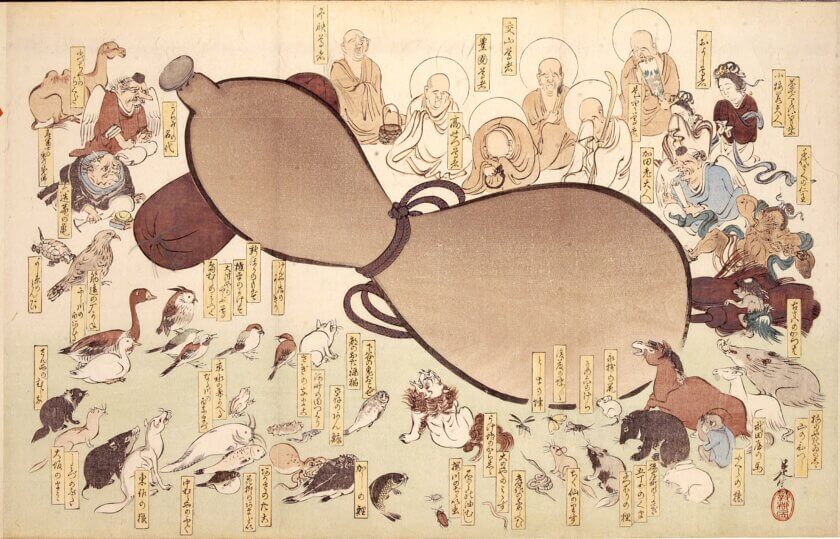
A painting of Nirvana, in which the gourds are likened to Ichikawa Danjūrō VII, and his favourites and friends are likened to animals and dignitaries.
1859, painted by Shibata Zeshin.
Oyoshi, a well-known Danjūrō-favourite from the time, Kawatake Shinshichi II (later Kawatake Mokuami), ukiyo-e artist Utagawa Kuniyoshi, abettors Sakuragawa Yoshitaka II and Kaneya Sennosuke.