Kyoto Sightseeing Recommendations! The Nijō Castle “Ninomaru Palace” – the Best Way to See the Castle
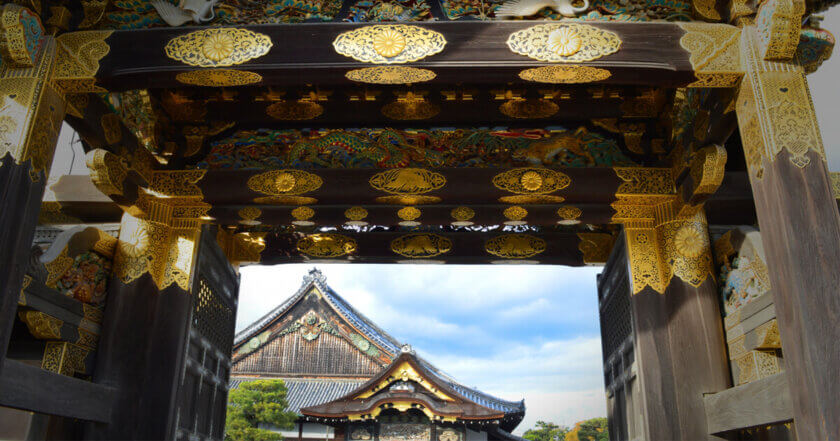
The Nijō Castle is a must-see tourist attraction in Kyoto. The Ninomaru Palace is decorated with more than 1,000 paintings by the Kanō School, the largest group of painters in Japan. The most notable feature of the paintings is the pine tree. It is clear that the Kanō School produced paintings that suited the role of each room!
The Ninomaru Palace at the Nijō Castle: the Main Attraction Is the Pine Tree Wall Paintings.
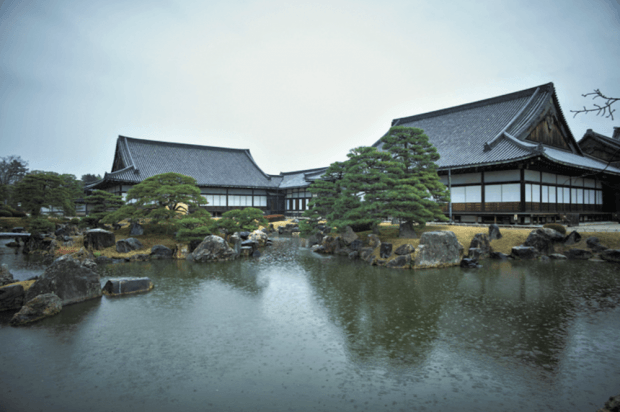
The first thing you see when you enter the first hall, the “Tōzamurai”, is tigers and panthers lurking in a bamboo grove (at the time, panthers were thought to be female tigers), painted from the first to third rooms. The paintings were intended to intimidate visitors, while at the same time showing the protective role of the tigers, which were revered as sacred animals. We can imagine that this heightened the tension about going to see the Shogun.
The second building, the “Shikidai”, leads to the main hall, the official meeting place. The pine tree was the most frequently painted subject in the Ninomaru Palace. It is said that by showing the pine tree, which has long been a symbol of longevity and prosperity, just before the Shogun’s meeting, the visitors were asked to behave in a manner and attitude appropriate for a person appearing before the Shogun.
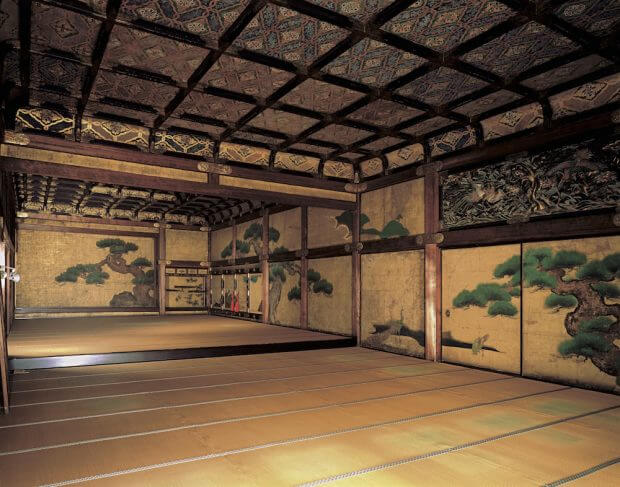
It is in the first and second rooms of the Grand Hall that the visitor finally meets the Shogun. These two rooms have a variety of architectural styles, such as an *oriage gōtenjō ceiling and a *shoin-zukuri tokonoma style, which deserve a closer look.
- *Oriage gōtenjō: Oriage gōtenjō is a ceiling style in which the centre of the gōtenjō, a latticework of wood, is recessed. The gōtenjō is considered the most prestigious traditional ceiling style and is often used in temples, shrines, and castles.
- *Shoin-zukuri: Shoin-zukuri is a style of Japanese residential architecture used in the mansions of the military, temple guest halls, and Zen abbot’s quarters of the Azuchi–Momoyama (1568–1600) and Edo periods (1600–1868). It forms the basis of today’s traditional-style Japanese house. Characteristics of the shoin-zukuri development were the incorporation of square posts and floors completely covered with tatami.
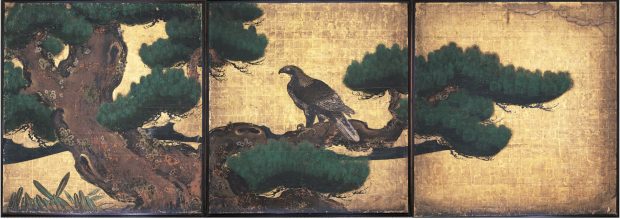
In the Great Hall, the official meeting place, all four rooms are decorated with panoramic paintings of majestic pine trees, representing the Tokugawa power. The architecture, along with the ornamental paintings on the magnificent ceilings, visually demonstrates to visitors the special character of the place and the authority of the Shogun, the owner of the palace.
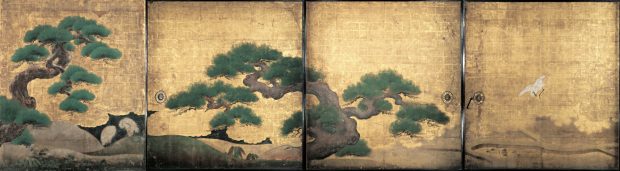
Then, from the “Great Hall”, a corridor called the “Sotetsu-no-ma” leads to the ” Kuroshoin” hall. The five rooms, from the first to the peony room, depict the four seasons in different ways. The rooms were used to meet imperial envoys, high-ranking court nobles, and feudal lords close to the shogunate, and the seasonal scenes, painted in the tradition of the Yamato-e style, were used to entertained visitors.
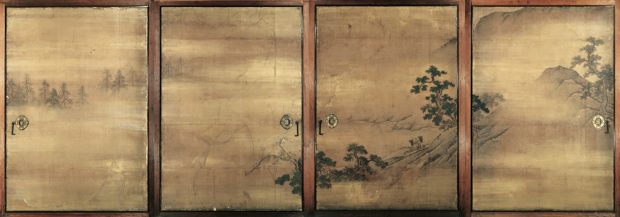
“Figures in a Landscape” in the third room, attributed to Kanō Kōi or Kanō Naganobu.
Finally, we come to the final hall, the “Shiroshoin”, where the gold and rich colours of the past have been replaced by ink and pale colours on a white background, depicting different scenes of mountains, buildings, and waterfront scenes with figures. After the Muromachi period (1336-1573), when ink and wash paintings became popular, they were painted in the living room to show the master’s culture. The change suggests that this was the Shogun’s room, his private space. It is a space for relaxation.
Knowing the role of each building and the meaning of the paintings, the Kanō School’s ability to produce space is impressive.
※Today, most of the paintings in the Nijo Castle walls have been replaced by reproductions of the original paintings in order to represent the original conditions.