
Tawaraya Sōtatsu, a Pioneering Designer. Dissecting His Genius for Composition and Expression!
A Beautiful Tension Created by a Free and Open Expression and a Skillfully Calculated Composition.
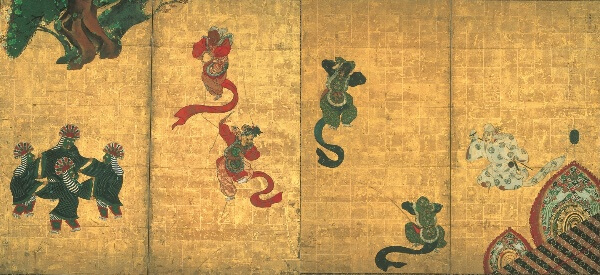
This is a masterpiece of Tawaraya Sōtatsu’s later years, the Bugaku-zu Byōbu, Dancing and Music Painting Folding Screens. The picture below is another example of Bugaku-zu Byōbu from the days of the Nikkō-san Rinnō-ji Temple. There are still many paintings depicting the repertoire of bugaku, like this one, and bugaku was a popular motif at the time. This is where Sotatsu’s ‘Bugaku-zu Byobu’ comes in. Do you notice anything?
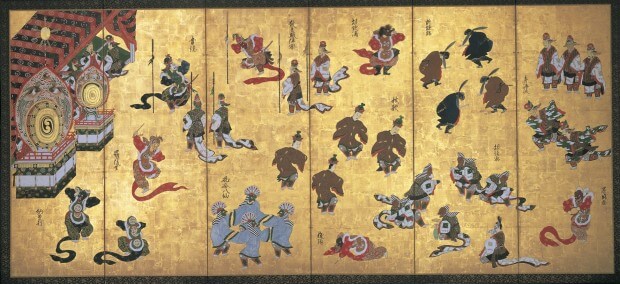
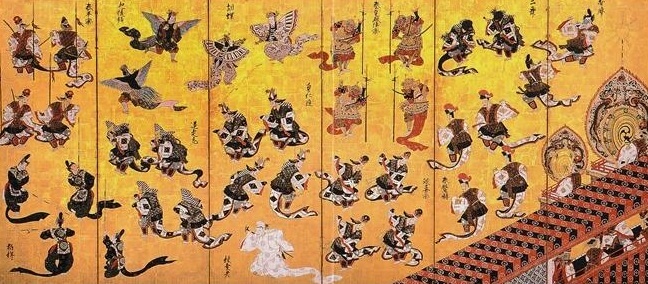
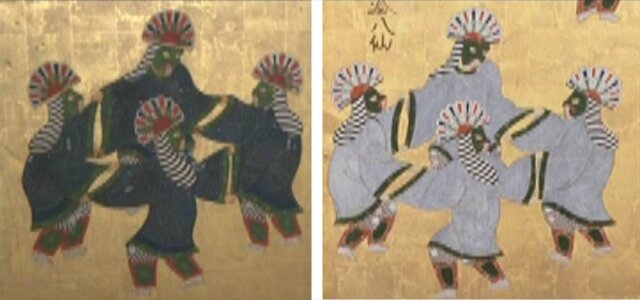
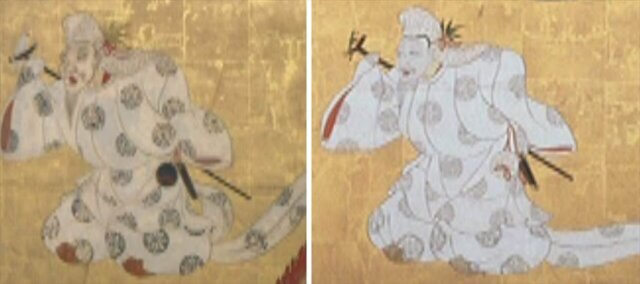
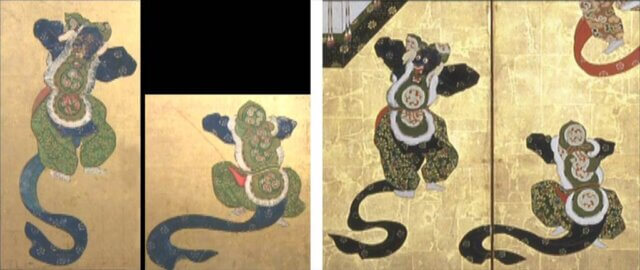
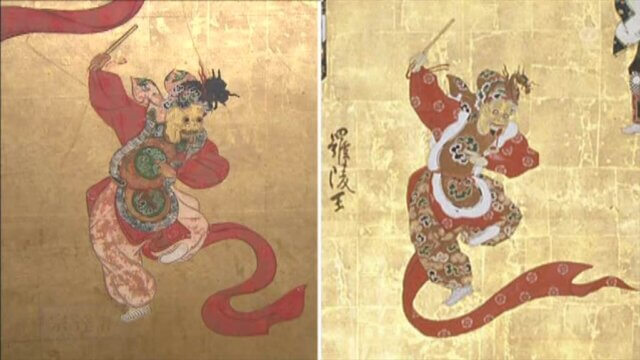
Yes, the characters in Sōtatsu’s “Bugaku-zu” were taken from the Bugaku-zu painted at the time and drawn in exactly the same way.
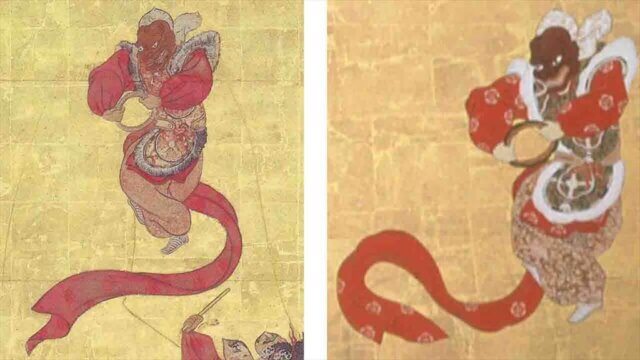
In the pictures below, the one on the left is by Sōtatsu and the one on the right is from the earlier version of Bugaku-zu.
Genius for Composition
However, the golden-foil surface of Statsuō’s bugaku-zu is filled with a kind of tension, a lively sense of movement of the dancers, which was not found in the previous bugaku-zu painting. It seems that Sotatsu’s intention with this screen was not to create a new form of bugaku but to create a unique worldview by reconfiguring existing motifs.
If you look closely, you will see that in the original drawing the Nasori are arranged horizontally, but in Sōtatsu’s drawing they are arranged vertically and the details are slightly different. In this way, Sotatsu created a kind of likeness within a pair of the two-folding screens, and positioned the figures so that their gazes and movements corresponded with each other, thus creating a connection that made it seem as if the whole piece was being performed. The bold and calculated placement of the pine tree trunks and taiko drums, deliberately hidden at either end of the painting. These two things succeed in creating a more pleasant tension in the piece.
Sōtatsu’s freely spirited design skills are fully on display in this fascinating work.