
Differences between the Maruyama School and the Shijō School
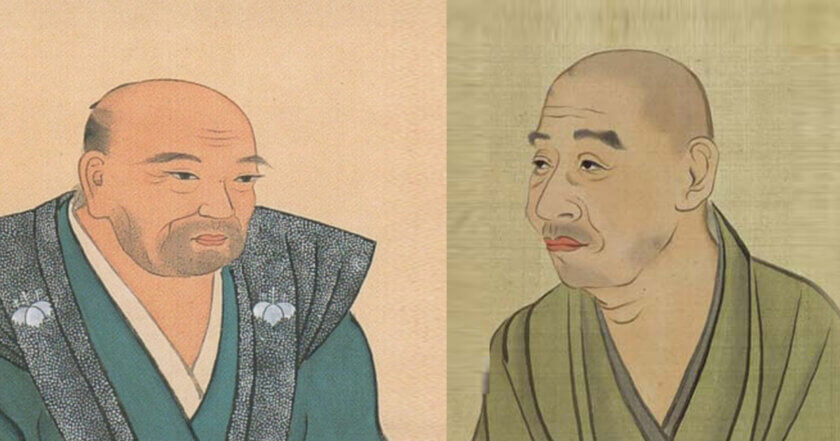
The words “Maruyama-ha school” and “Shijō-ha school” appear here and there when researching Japanese artists.
It’s like, “This artist is a member of the Shijō-ha.”
We often receive the following questions about this expression, which appears in artists of the late Edo period.
“I understand that the Maruyama school is a branch of the Maruyama Ōkyo school, but what is the Shijō school?”
or
“Why are the Maruyama-ha and the Shijō-ha sometimes used separately, and sometimes used together as the Maruyama-Shijō-ha?”
or
“What is the difference between the Maruyama-ha and the Shijō-ha?”
If you don’t know what it is, it won’t affect your understanding of the artist, but it may not be clear to you.
This explanation will help you to understand the concept of the Maruyama school and the Shijō school, and the differences between them, and will raise your level of Japanese art to a higher level.
Founder
The Maruyama School was founded by the artist Maruyama Ōkyo (1733-1795).
Next, let’s talk about the Shijō School, which was not created by Mr. Shijō. Although the story sounds like Mr. Shijō, the correct answer is Matsumura Goshun (1752-1811).
Matsumura Goshun and his pupils lived near Shijō in Kyoto, hence the name ‘Shijō School’.
Characteristics
I’d like to explain the characteristics of each school of art, but since it’s a conceptual part, I’d like to make it very clear by using a common axis of opposition in art.
The most common axis of conflict in art is the debate between “technique and spirit”.
There is an ideological difference between technical supremacy, which says that the best art is that which is created with great skill, and spiritual supremacy, which says that high spirituality is important in the creation of art.
In the world of rock music, for example, this debate often arises, especially with guitars.
The ideology of hard rock and heavy metal, with their emphasis on high playing techniques (fast guitar playing, etc.), is relatively incompatible with that of punk, with its emphasis on the message, even with simple guitar chords.
Of course, this is an extreme example: there is a message to be conveyed in the performance of a technical supremacist group, and there are also highly technical performances in a spiritual supremacist group. Please note that this is an extreme example to make the difference easier to understand.
This kind of confrontation between “technique and spirit” also existed in the world of painting.
In the world of painting, there are two schools of thought: the realistic “sketching” and the more spiritual “literati painting”.
Before the birth of Maruyama Ōkyo, the mainstream painting style was one that respected spirituality rather than the pursuit of realism.
Later, Maruyama Ōkyo created a style called “sketching” which focused on painting realistically and had a great influence on the art world.
The Maruyama School is therefore often described as “sketching”.
Sketches require a high level of skill, so please think of sketching as a form of technical supremacy.
The style of the Shijō School is characterized by the addition of elements of literati painting, which respects spirituality to the “sketch” style.
The question here is “Hmm? What does it mean to add the opposite element of spiritual supremacy to technical supremacy?”
Don’t worry. I’ll explain in the next section.
Causes of Mixing
I would like to look at the reasons why the Maruyama School and the Shijō School are sometimes referred to separately and sometimes together.
It is easy to understand this by looking at the painting career of Matsumura Goshun, the founder of the Shijō School.
Matsumura Koshun is a painter who originally started out as a literati painter.
His first teacher was a painter called Yosa Buson, who is considered to be a great master of literati painting. (There is a theory that Matsumura Goshun started out as an apprentice to a painter named Ōnishi Suigetsu, but the details of this theory are unclear and will not be discussed here.)
After Yosa Buson’s death, Goshun became an apprentice to Maruyama Ōkyo, with whom he had been in contact. (To be precise, Okyō did not treat him as a pupil, but as a friend, because he was so great.)
It was here that he developed a hybrid style of painting, mastering sketching but mixing a few elements of literati painting.
This is the style of the Shijō School. In short, the style of the Shijō School is like a development of the sketching of Maruyama Ōkyo in the style of Matsumura Goshun.
This is why the Maruyama School and the Shijō School are sometimes referred to as being connected, as they originally have the same roots.
Furthermore, in the Meiji period (1868-1912), a hybrid painter who studied both the Maruyama School and the Shijō School was born, and this painter opened an art school and trained many students. (A typical example is Kōno Bairei.)
When this happened, it became difficult to distinguish what was the Maruyama School style and what was the Shijō School style.
“We can’t understand the Maruyama school and the Shijō school anymore, so why don’t we just consider the Kyoto school together?”
This was the atmosphere that prevailed in the art world, which is another reason why the two schools are considered together. (Although there was a painter called Kawabata Gyokushō who kept saying “I am a Maruyama School painter” until the end and didn’t want to be confused with the Shijō School…)
After the death of Ōkyo, the Maruyama School was succeeded by his descendants, but no charismatic artist surpassed Ōkyo and the school gradually declined, while the Shijō School produced many talented students and prospered.
As time went on, the Shijō School became the main school of painting, and the name of the school became “Shijō School painter” or “Maruyama-Shijō School painter”.
The above is an explanation of the differences between the Maruyama and the Shijō schools.
The roots of the two schools were originally the same, but Matsumura Goshun, a pupil of Maruyama Ōkyo, added elements of literati painting to the style of sketch painting, and this led to the development of the Shijō School.
Later, there were people who studied both the Maruyama School and the Shijō School, and the barriers between the two schools began to disappear and they came to be considered as one.
I hope this has cleared up some of the confusion between the Maruyama School and the Shijō School.
I will continue to do this kind of art explanation from time to time, so please check my column on my website.