
Summary of Soga School of Japanese Painting
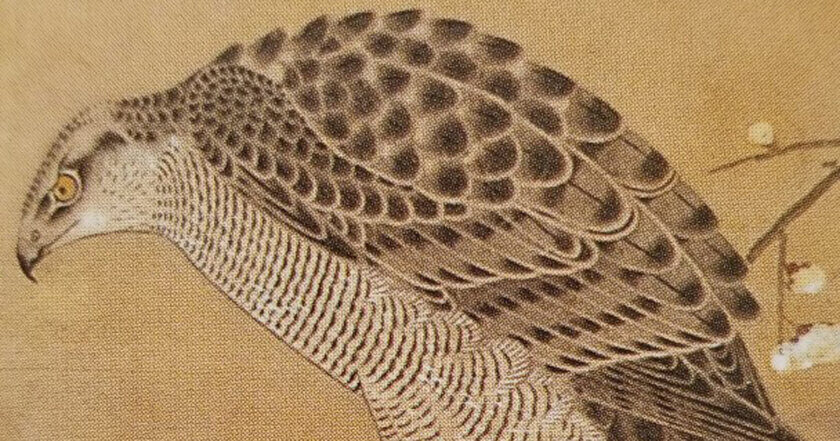
The Soga School was a school of Chinese-style painting that existed intermittently in Japan from the mid-Muromachi period to the early Edo period.

Although it was a local school of painting with many mysteries overall, Soga Chokuan, who was praised alongside the four great masters of the Momoyama school of painting, Kanō Eitoku (狩野永徳), Hasegawa Tōhaku, Kaihō Yūshō, and Unkoku Tōgan, existed in the Sengoku period.

In this article, we would like to briefly introduce the Soga School, which has various theories.

Soga Shūbun

曾我秀文. His exact date of birth and death is unknown, but he was active in the 15th and 16th centuries. He was originally from the Ming Dynasty in China. It is said that he came to Japan in 1424 to serve the Asakura clan in Echizen Province and took the surname Soga. He painted Southern Song paintings with dynamic brushwork, which became the basis for the later Soga School style of painting.

Soga Bokkei

曾我墨渓. Founder of the Soga school. His birth date is unknown, but his death date is said to be 1473. Some say he was a child of Soga Shūbun. The name of the painting was “Jasokuken/Dasokuken 蛇足軒” and the painters of the Soga School after him used the name “Jasoku/Dasoku 蛇足”. “He was better known as Soga Jasoku. He studied painting under Tenshō Shūbun and was active mainly at the Daitoku-ji temple.

Soga Sōjō

曾我宗丈. Fl. late 15c to early 16c. Son of Soga Bokkei. The second generation of the Soga school. Studied painting under his father and Tenshō Shūbun.

Soga Shōsen

曾我紹仙. Fl. early 16c. Son of Soga Sōjō, the third generation of the Soga school. In 1523 he painted Landscape, which is now in the collection of the Nezu Museum.

Soga Sōyo

曾我宗誉. Fl. mid-16th century. Child of Soga Shōsen, the fourth generation of the Soga school. In 1562, he composed a poem at the Kyokusui banquet organised by Asakura Yoshikage at Ichijōdani. In 1573, the Asakura clan was destroyed by Oda Nobunaga.

Soga Shōshō

曾我紹祥. Fl. late 16th century. There is a theory that he was the son of Soga Sōyo. According to the Honchōgashi (a biography of Japanese painters published by Kanō Einō in 1679, one of the fundamental sources of Japanese painting history), he was the master of Hasegawa Tōhaku (1539-1610). It is thought that he moved to Sakai, Ōsaka after the fall of the Asakura clan.

Soga Chokuan

曾我直庵 (Around 1550?-1620?). Active in the late sixteenth and early seventeenth centuries, he was said to be the son of Soga Shōshō, and as it is uncertain that Soga Shōshō was the fifth generation of the Soga school, there is no confirmation that Soga Chokuan was the sixth. However, he was active in Sakai under the name of “the 6th generation of Jasoku/Dasoku” and tried to rebuild the Soga school. Thought to have moved to Sakai, Osaka with Soga Shōshō after the fall of the Asakura clan. Along with Kanō Eitoku (狩野永徳), Hasegawa Tōhaku, Kaihō Yūshō, and Unkoku Tōgan, he is one of the most famous painters of the Momoyama period. He specialises in paintings of falcons.

Soga Nichokuan

曾我二直菴. 1590-1660? It is said that he was the son of Soga Chokuan, and if this is true then Soga Nichokuan would be the seventh generation of the Soga school, but there is no proof of this. He was active in Sakai. Like Soga Chokuan, he excelled in paintings of falcons.

The Soga school is said to have been followed by Soga Sanchokuan, the son of Soga Nichokuan, Soga Yoshishige, Gyokuō (a disciple of Soga Nichokuan), Tamura Chokuō (a disciple of Soga Chokuan), Soga Shōkō (8th generation), and Soga Shōshuku (9th generation) although little is known about any of them with certainty.

Soga Shōhaku

曾我蕭白. 1730-1781. Painter of the mid-Edo period. Soga Shōhaku himself claimed to belong to the Soga school of painting, and his signature shows that he was the tenth generation of Jasoku/Dasoku, but he was never related to the Soga school.
    NameRequired

    SexRequired

    MaleFemale

    CountryRequired

    e-mailRequired

    CommentRequired

    Attached File
    ※Up to 3 MB for each file.


    ← ← "MUST CHECK" / Please confirm the above contents again and check this button.

    Contact Us

    Please fill out the form below and submit for your inquiry.

    ❈FirstName
    ❈LastName
    Country
    ❈E-mail
    (❈Confirm E-mail)
    ❈Inquiry category Question
    Consultation
    Impression
    Request
    Others
    ❈Comment

    is the mark for required item.


    Your privacy is important to us. We are committed to protecting your privacy.

    (or press ESC or click the overlay)

    CEO Message

    Our Feelings For Kakejiku


     The Japanese people have long set a high value on aesthetic senses since ancient times. As a result, the
    peculiar culture which is not seen in other countries blossomed and many aspects of the modern Japanese
    culture come from it. Parts of Japanese culture has been introduced to people in other countries recently,
    so the number of people from other countries who are interested in Japanese culture has been increasing.
    However, the Japanese aesthetic senses, which are the bases of Japanese culture, have been nurtured
    through a long history, intertwining various elements intricately, such as climate, geographical features,
    religion, customs and so on. Therefore, they are very difficult to understand not only for people from other
    countries, but even for the Japanese people. I think the best tool which conveys these difficult senses
    understandably is a “kakejiku.”
     The kakejiku (a hanging scroll; a work of calligraphy or a painting which is mounted and hung in an
    alcove or on a wall) is a traditional Japanese art. It's no exaggeration to say that paintings are what
    express aesthetic senses at all times and places. The kakejiku is an art which expresses the Japanese
    aesthetic senses. The kakejiku has long been used in traditional Japanese events, daily life and so on since
    ancient times. As a result, there are various customs of kakejiku in Japan; kakejiku and the life of the
    Japanese are closely related. We can see Japanese values through kakejiku.
     The kakejiku is a cultural tradition which the Japanese people should be proud of. However, many people
    in other countries don't know much about it because it hasn't been showcased as much. This is why I
    decided to try to introduce it. The kakejiku world is very interesting and beautiful. We want not only the
    Japanese, but also many people from other countries to know and enjoy it. I hope that many people will
    love kakejiku someday.

    (or press ESC or click the overlay)
    Company Profile
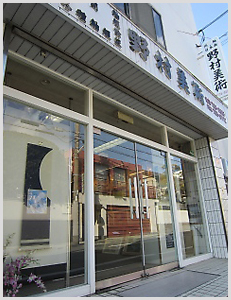
    syaoku.jpg(120220 byte)

    Name Art Nomura


    President Tatsuji Nomura


    Founded1973


    Established1992


    Address7-23 Babadori, Tarumi-ku, Kobe city,
    Hyougo Prefecture, 655-0021, Japan


    Capital10 million yen


    URLhttp://nomurakakejiku.com


    Our Business

     Art Nomura is an art dealer which produces kakejiku (hanging scrolls). We mount many paintings and calligraphic works in kakejiku in my factory. Kakejiku are our main product. We also remount and repair old or damaged kakejiku. We share the traditional Japanese art of kakejiku with people all over the world.


    (or press ESC or click the overlay)
    Access Map

    Access Map


     The Japanese people have long set a high value on aesthetic senses since ancient times. As a result, the
    peculiar culture which is not seen in other countries blossomed and many aspects of the modern Japanese
    culture come from it. Parts of Japanese culture has been introduced to people in other countries recently,
    so the number of people from other countries who are interested in Japanese culture has been increasing.
    However, the Japanese aesthetic senses, which are the bases of Japanese culture, have been nurtured
    through a long history, intertwining various elements intricately, such as climate, geographical features,
    religion, customs and so on. Therefore, they are very difficult to understand not only for people from other
    countries, but even for the Japanese people. I think the best tool which conveys these difficult senses
    understandably is a “kakejiku.”
     The kakejiku (a hanging scroll; a work of calligraphy or a painting which is mounted and hung in an
    alcove or on a wall) is a traditional Japanese art. It's no exaggeration to say that paintings are what
    express aesthetic senses at all times and places. The kakejiku is an art which expresses the Japanese
    aesthetic senses. The kakejiku has long been used in traditional Japanese events, daily life and so on since
    ancient times. As a result, there are various customs of kakejiku in Japan; kakejiku and the life of the
    Japanese are closely related. We can see Japanese values through kakejiku.
     The kakejiku is a cultural tradition which the Japanese people should be proud of. However, many people
    in other countries don't know much about it because it hasn't been showcased as much. This is why I
    decided to try to introduce it. The kakejiku world is very interesting and beautiful. We want not only the
    Japanese, but also many people from other countries to know and enjoy it. I hope that many people will
    love kakejiku someday.

    (or press ESC or click the overlay)