Shikoku Pilgrimage Temple: No. 33: Kōfuku-zan Sekkei-ji
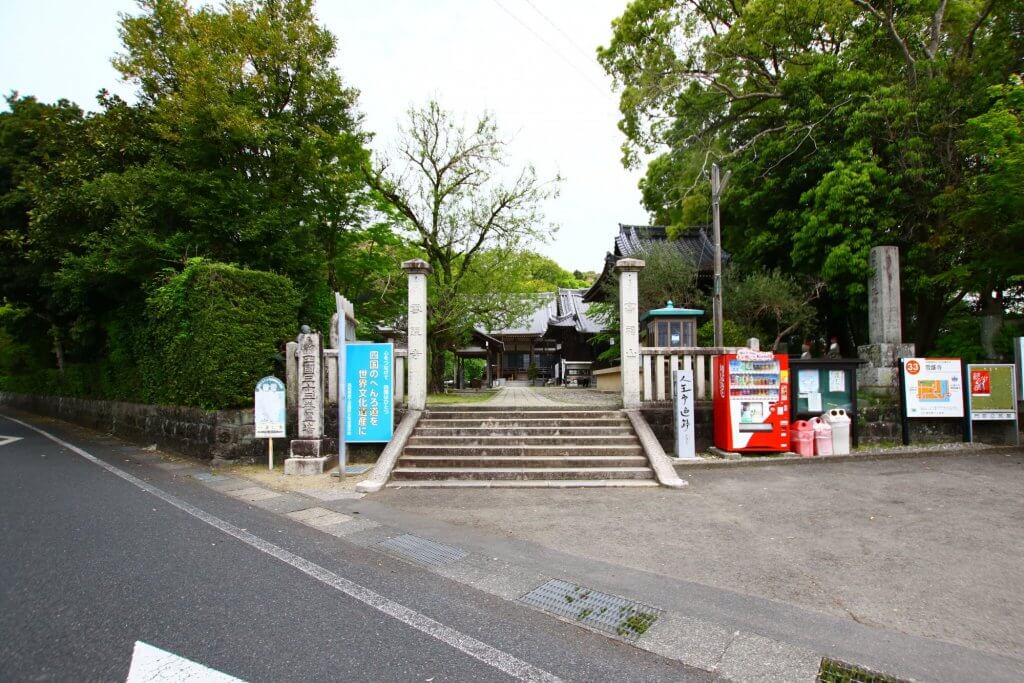
The Family Temple (Bodai-ji) of the Chōsokabe Clan, Sengoku Warriors
- Name: Kōfuku-zan Sekkei-ji
- Principal Image: Yakushi Nyorai (Medicine Buddha)
- Goeika (Pilgrimage Song):
- Whether on the journey up or down, now it is Kōfuku-ji;
- the future joy is the morning moon.
Access From Temple No. 32, Zenjibu-ji
- On foot: Walk through a rural landscape dotted with greenhouses and pass through a residential area. Take the prefectural ferry from Tenezaki Ferry Terminal (5 minutes) to the opposite shore at Kajigaura. From Zenjibu-ji to Tenezaki Ferry Terminal is 6 km, 1 hour 20 minutes. From Kajigaura Ferry Terminal to Sekkei-ji is 1.4 km, 25 minutes.
- By Car: Use Prefectural Route 14 and cross the Urado Ōhashi Bridge. Approx. 10.5 km, 20 minutes.
- Public Transport: From Zenjibu-ji, take a bus back to Harimayabashi, and transfer to a bus bound for Nagahama/Katsurahama from the Minami-Harimayabashi bus stop, which is about a 5-minute walk. After a 20-minute ride, get off at the Nagahama bus stop and walk 5 minutes.
A Temple Name That Changed Multiple Times
As mentioned in the go-eika pilgrim hymn, this temple was opened during the Enryaku era (782–806) by Kōbō Daishi, and at that time, it was called Kōfuku-ji and belonged to the Shingon sect. There is a legend that the Buddhist sculptor Unkei and his son Tankei visited during the Kamakura period, and for a time, it was also named Keiun-ji.
However, after that, the temple fell into ruin. During the Tenshō era (1573–1592), the ghost of an old monk was said to appear at the ruined temple. When Priest Geppō visited the temple during this time, he was able to help the ghost find peace. Chōsokabe Motochika, a warrior lord who ruled Tosa at the time, heard this story and restored the temple with Priest Geppō as the chief priest, and Motochika’s fourth son, Morichika, made it their family temple. The temple name Sekkei-ji, which is unusual for Shikoku, was renamed after Motochika’s posthumous Buddhist name, “Sekkei Josan Dai-Zenjōmon Koji.” The temple, which had belonged to the Shingon sect, converted at this time to the Rinzai sect, which Motochika followed. It is a Zen temple, which is rare among the 88 temples of the pilgrimage.
A Treasure House Filled with Important Cultural Property Buddhist Statues
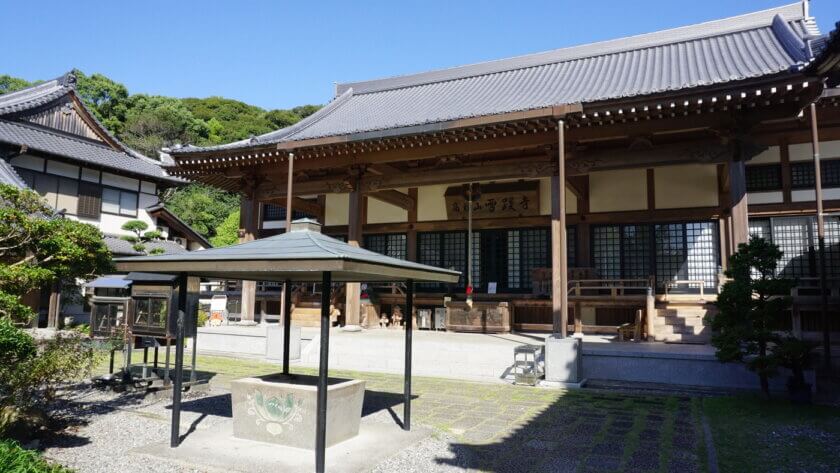
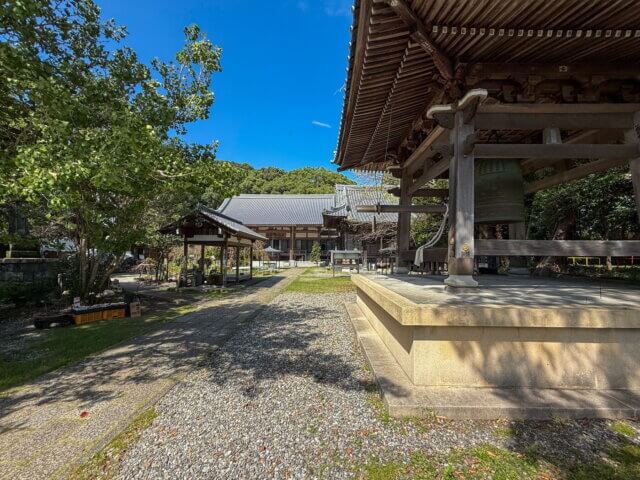
Entering the precincts from the Sanmon Gate, which consists merely of a stone pillar gate, the Shōrō (bell tower) is on the right, and the Daishi-dō Hall is behind it. Facing the Daishi-dō stands the Kannon-dō Hall, and in front is the Hondō (Main Hall) with a dignified atmosphere. Going to the back of the Hondō from between the Hondō and Daishi-dō, you will find the grave of Nobuchika, the eldest son of Chōsokabe Motochika. In front of the Hondō is O-Binzuru-sama (Pindola Bharadvaja). He was the chief disciple of Shaka Nyorai and possessed divine powers; it is said that if you have a painful part on your own body, rubbing the same part on O-Binzuru-sama will heal it, and he is affectionately worshipped as a rubbing Buddha (nade-botoke).
In the Reihō-den (Treasure House), 16 Buddhist statues designated as Important Cultural Properties are enshrined, including the principal image Yakushi Nyorai said to be the work of Unkei, its attendants Nikkō and Gakkō Bosatsu statues, and the Bishamonten statue created by Tankei.
DATA
Address: 857-3 Nagahama, Kōchi City, Kōchi Prefecture
Phone: 088-837-2233
Access: From JR Kōchi Station, walk 10 minutes to the Minami-Harimayabashi bus stop. Take the Tosaden Kōtsū Bus bound for Katsurahama for 25 minutes, get off at Nagahama, and walk 5 minutes.
Parking: Available (Free)
Lodging: None
Viewing the Treasure House requires an advance reservation. Same-day reservations are not accepted. Admission is by voluntary offering.
Your Pilgrimage, Your Art
Completing the Shikoku Pilgrimage is a once-in-a-lifetime journey—but what if you could preserve it in a form that lasts forever?
Many pilgrims collect red stamps and calligraphy from each temple on a special silk scroll called a nōkyōjiku.
This sacred record of your path can be transformed into a kakejiku—a traditional Japanese hanging scroll—not only preserving the memories, but turning them into a work of cultural and spiritual art.
It’s more than a souvenir—it’s a way to honor your journey, your prayers, and your growth.
To learn more about how a nōkyōjiku becomes a kakejiku, and what makes this transformation so meaningful, please refer the below link.