Imamura Shikō: A Revolutionary Who Broke down the Tradition of Japanese Painting

A Hawk
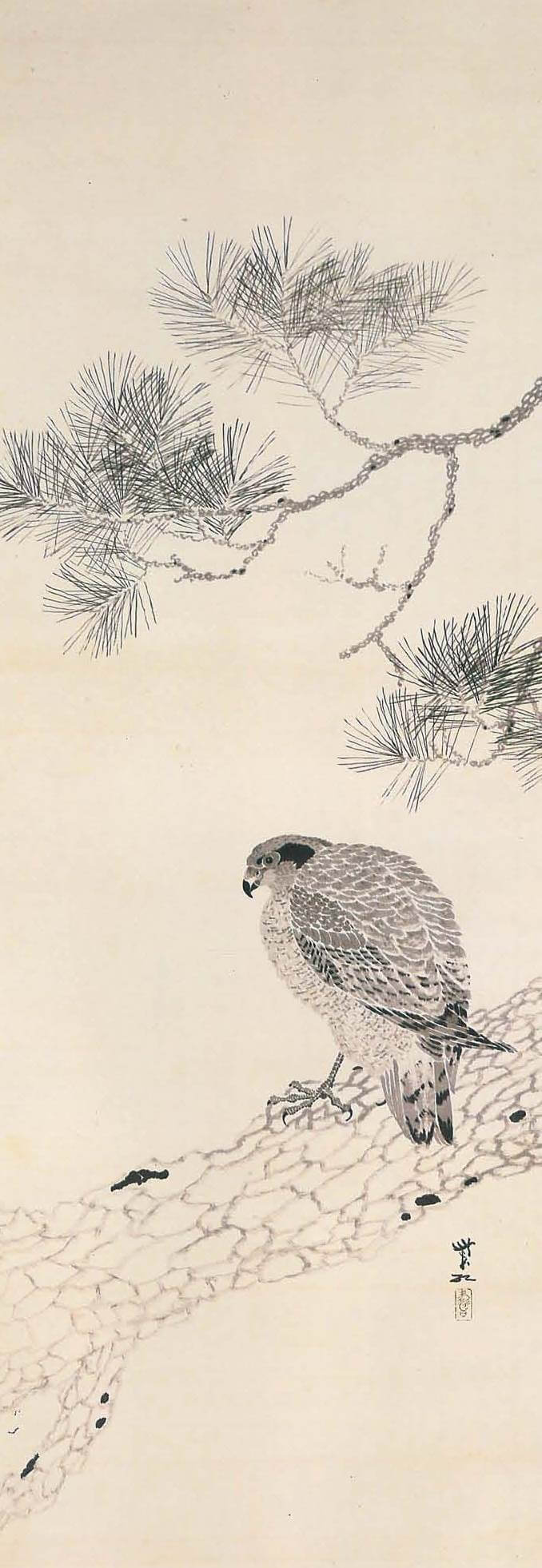
A Hawk by Imamura Shikō

Millet

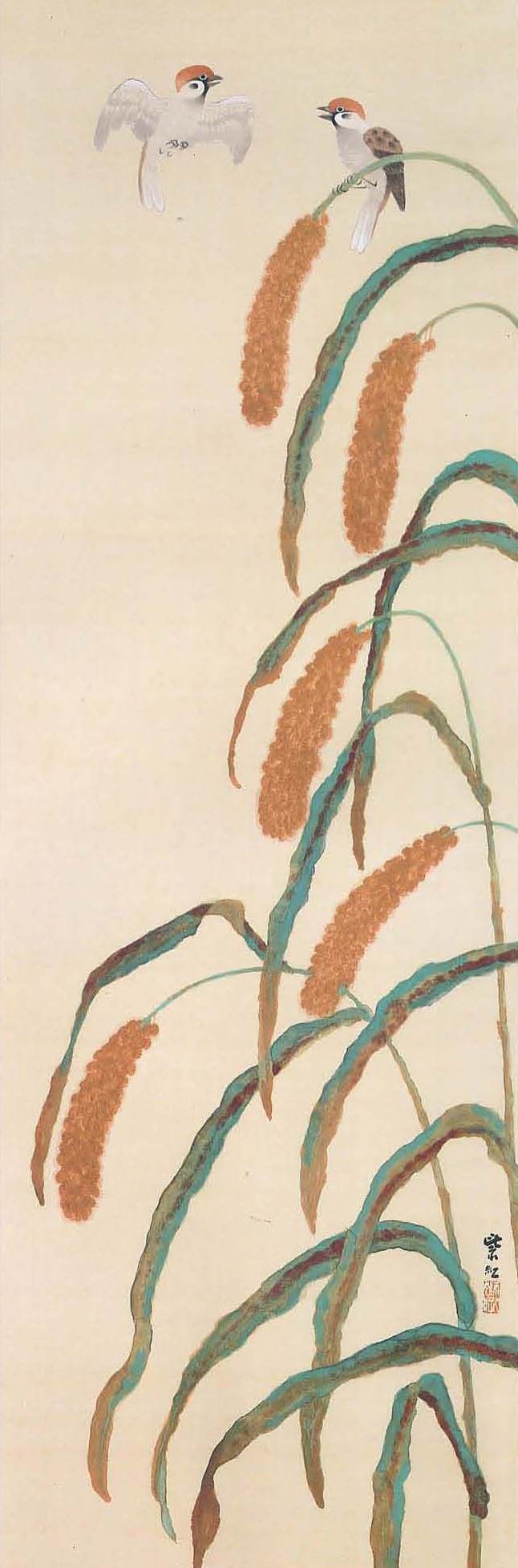
Millet by Imamura Shikō

In 1910, Shikō was creating his work, “Preaching Dharma”, which he exhibited at the 10th Tatsumi Painting Exhibition. Finishing the rough sketch, Shikō was about to work on its rendition. Then out of the blue, Shikō cut the tip of the brush with scissors to near the root. Shikō inked that brush and rubbed it on the canvas dotting lines. Shikō also applied this technique to the coloring of his pieces. His method prevented lines from standing out too much and gave a powerful and beautiful impression on his works.
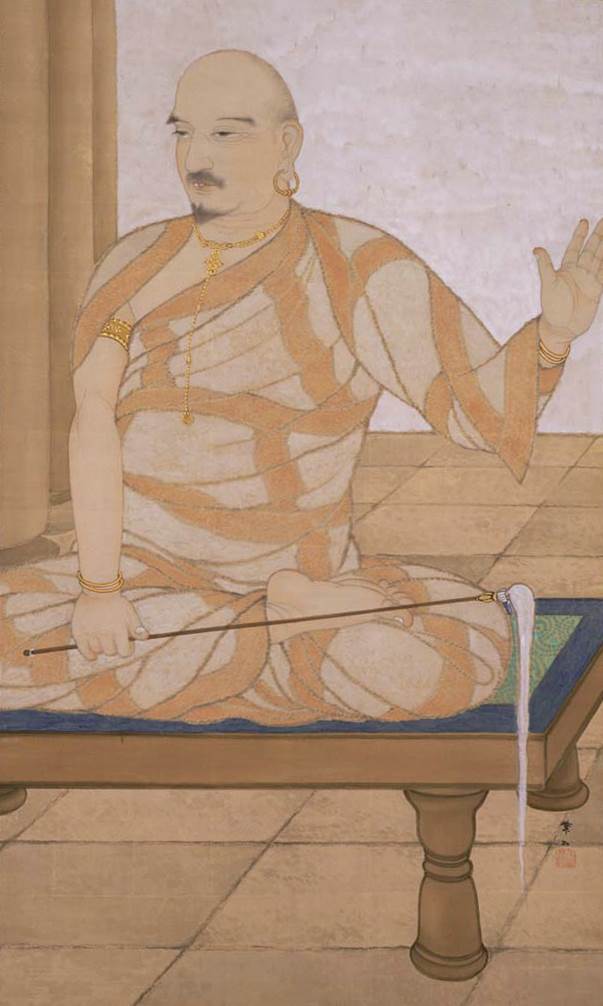
Preaching Dharma by Imamura Shikō

In his works after “Preaching Dharma”, Shikō often attempted at stippling and, in fact, this technique produced unique effects. One of its examples is his work, “A Hawk”. His work, “A Hawk”, was painted in black ink alone. Nonetheless, the gradation of shading applied to hawk’s feathers is beautiful.

From around the end of the Meiji era, Shikō was gradually attracted to the free style of Nanga painting. However, his interest costed him much. Shikō had to broke with one of his closest friends, Yasuda Yukihiko. Holding a strong trust mutually, Yasuda and Shikō had been working together in their creative activities. However, to master their own style, they dissolved Kōjikai, a research group of Japanese-style painters of the Yamato-e style. They, of course, reached this conclusion after understanding other’s opinion very well. In Shikō’s piece, “Millet”, there are some hints that suggest his devotion to Nanga style painting. Shikō freely and spontaneously painted a few stalks of millet laden with ears hanging down and two sparrows on top of them while boldly using colors.

Imamura Shikō was born in Yokohama and after graduating from elementary school, he learned watercolor painting from Yamada Basuke. In 1897, counting on his older brother, Shikō went to Tokyo and became a disciple of Matsumoto Fūko. There, Shikō studied Japanese painting. Shikō made a quick leap with his apprenticeship. In the fall of the following year, Shikō, for the first time, got his painting accepted for the exhibition hosted by the Japan Art Society. Later, Shikō continued exhibiting his pieces at various expositions. In 1900, Shikō came to know Yasuda Yukihiko and entered Shikōkai. This group, Shikōkai, was later renamed Kōjikai.

Kōjikai lasted until it celebrated its 19th exhibition in 1913. Meanwhile, its registered painters such as Yasuda Yukihiko, Ushida Keison, Hayami Gyoshū, Kobayashi Kokei, and Maeda Seison made ambitious productions while competing with each other. And Shikō strongly led them all. In 1912, at the 6th Bunten exhibition, Shikō, using bold color scheme and composition, created his own “Eight Views of Ōmi”. Scenic views of Ōmi Province was a popular subject matter for painting and there were traditional patterns already established for this theme. But in Shikō’s version, the Impressionism is brilliantly brought to life in Japanese painting. Back then, two leading figures of Japanese painting, Yokoyama Taikan, and Hishida Shunsō, were extremely influential in the evolution of the Japanese Painting technique. And Shikō’s “Eight Views of Ōmi” helped them promote the modernization of Japanese painting. From around that time, Shikō gradually became attracted to the free style of Nanga painting. By 1913, Kōjikai had cultivated its own tendency for painting, which Shikō could not follow. Therefore, Shikō dissolved it and in the following year, he traveled to India. Returning to Japan, Shikō exhibited his work, “Sceneries in the Tropical Land (Scroll of Morning/ Scroll of Evening), at the 1st exhibition of the Revived Japan Art Institute. And his work caught much attention. In this piece, Shikō’s unique painting independent of any other style is at play. At the end of that year, Hayami Gyoshū, Omoda Seiju, and Nakamura Gakuryō, led by Shikō, formed Sekiyōkai. And Shikō was more passionate about bringing innovation to Japanese art. But the painting style of Shikō began to take on a new aspect that can be called Shin-Nanga, an integration of Impressionism and Nanga. But, in 1916, the development of Shin-Nanga style was suddenly suspended due to Shikō’s death. Shikō died at the age of just 37.
    NameRequired

    SexRequired

    MaleFemale

    CountryRequired

    e-mailRequired

    CommentRequired

    Attached File
    ※Up to 3 MB for each file.


    ← ← "MUST CHECK" / Please confirm the above contents again and check this button.

    Contact Us

    Please fill out the form below and submit for your inquiry.

    ❈FirstName
    ❈LastName
    Country
    ❈E-mail
    (❈Confirm E-mail)
    ❈Inquiry category Question
    Consultation
    Impression
    Request
    Others
    ❈Comment

    is the mark for required item.


    Your privacy is important to us. We are committed to protecting your privacy.

    (or press ESC or click the overlay)

    CEO Message

    Our Feelings For Kakejiku


     The Japanese people have long set a high value on aesthetic senses since ancient times. As a result, the
    peculiar culture which is not seen in other countries blossomed and many aspects of the modern Japanese
    culture come from it. Parts of Japanese culture has been introduced to people in other countries recently,
    so the number of people from other countries who are interested in Japanese culture has been increasing.
    However, the Japanese aesthetic senses, which are the bases of Japanese culture, have been nurtured
    through a long history, intertwining various elements intricately, such as climate, geographical features,
    religion, customs and so on. Therefore, they are very difficult to understand not only for people from other
    countries, but even for the Japanese people. I think the best tool which conveys these difficult senses
    understandably is a “kakejiku.”
     The kakejiku (a hanging scroll; a work of calligraphy or a painting which is mounted and hung in an
    alcove or on a wall) is a traditional Japanese art. It's no exaggeration to say that paintings are what
    express aesthetic senses at all times and places. The kakejiku is an art which expresses the Japanese
    aesthetic senses. The kakejiku has long been used in traditional Japanese events, daily life and so on since
    ancient times. As a result, there are various customs of kakejiku in Japan; kakejiku and the life of the
    Japanese are closely related. We can see Japanese values through kakejiku.
     The kakejiku is a cultural tradition which the Japanese people should be proud of. However, many people
    in other countries don't know much about it because it hasn't been showcased as much. This is why I
    decided to try to introduce it. The kakejiku world is very interesting and beautiful. We want not only the
    Japanese, but also many people from other countries to know and enjoy it. I hope that many people will
    love kakejiku someday.

    (or press ESC or click the overlay)
    Company Profile
    syaoku.jpg(120220 byte)

    Name Art Nomura


    President Tatsuji Nomura


    Founded1973


    Established1992


    Address7-23 Babadori, Tarumi-ku, Kobe city,
    Hyougo Prefecture, 655-0021, Japan


    Capital10 million yen


    URLhttp://nomurakakejiku.com


    Our Business

     Art Nomura is an art dealer which produces kakejiku (hanging scrolls). We mount many paintings and calligraphic works in kakejiku in my factory. Kakejiku are our main product. We also remount and repair old or damaged kakejiku. We share the traditional Japanese art of kakejiku with people all over the world.


    (or press ESC or click the overlay)
    Access Map

    Access Map


     The Japanese people have long set a high value on aesthetic senses since ancient times. As a result, the
    peculiar culture which is not seen in other countries blossomed and many aspects of the modern Japanese
    culture come from it. Parts of Japanese culture has been introduced to people in other countries recently,
    so the number of people from other countries who are interested in Japanese culture has been increasing.
    However, the Japanese aesthetic senses, which are the bases of Japanese culture, have been nurtured
    through a long history, intertwining various elements intricately, such as climate, geographical features,
    religion, customs and so on. Therefore, they are very difficult to understand not only for people from other
    countries, but even for the Japanese people. I think the best tool which conveys these difficult senses
    understandably is a “kakejiku.”
     The kakejiku (a hanging scroll; a work of calligraphy or a painting which is mounted and hung in an
    alcove or on a wall) is a traditional Japanese art. It's no exaggeration to say that paintings are what
    express aesthetic senses at all times and places. The kakejiku is an art which expresses the Japanese
    aesthetic senses. The kakejiku has long been used in traditional Japanese events, daily life and so on since
    ancient times. As a result, there are various customs of kakejiku in Japan; kakejiku and the life of the
    Japanese are closely related. We can see Japanese values through kakejiku.
     The kakejiku is a cultural tradition which the Japanese people should be proud of. However, many people
    in other countries don't know much about it because it hasn't been showcased as much. This is why I
    decided to try to introduce it. The kakejiku world is very interesting and beautiful. We want not only the
    Japanese, but also many people from other countries to know and enjoy it. I hope that many people will
    love kakejiku someday.

    (or press ESC or click the overlay)