Murase Gyokuden: A Talented Japanese Painter Who Painted the Official Paintings of the Imperial Household

Cherry Blossom and Sparrows
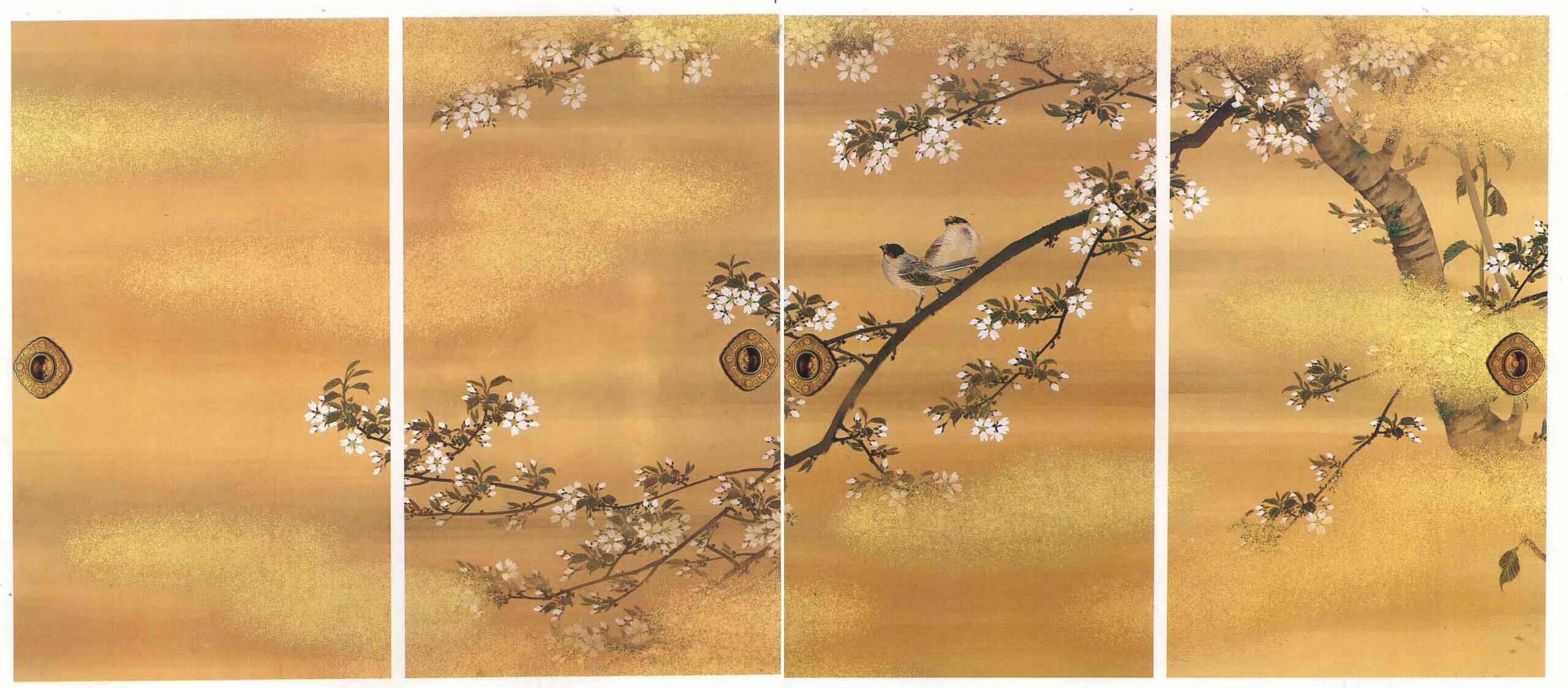
Cherry Blossom and Sparrows by Murase Gyokuden

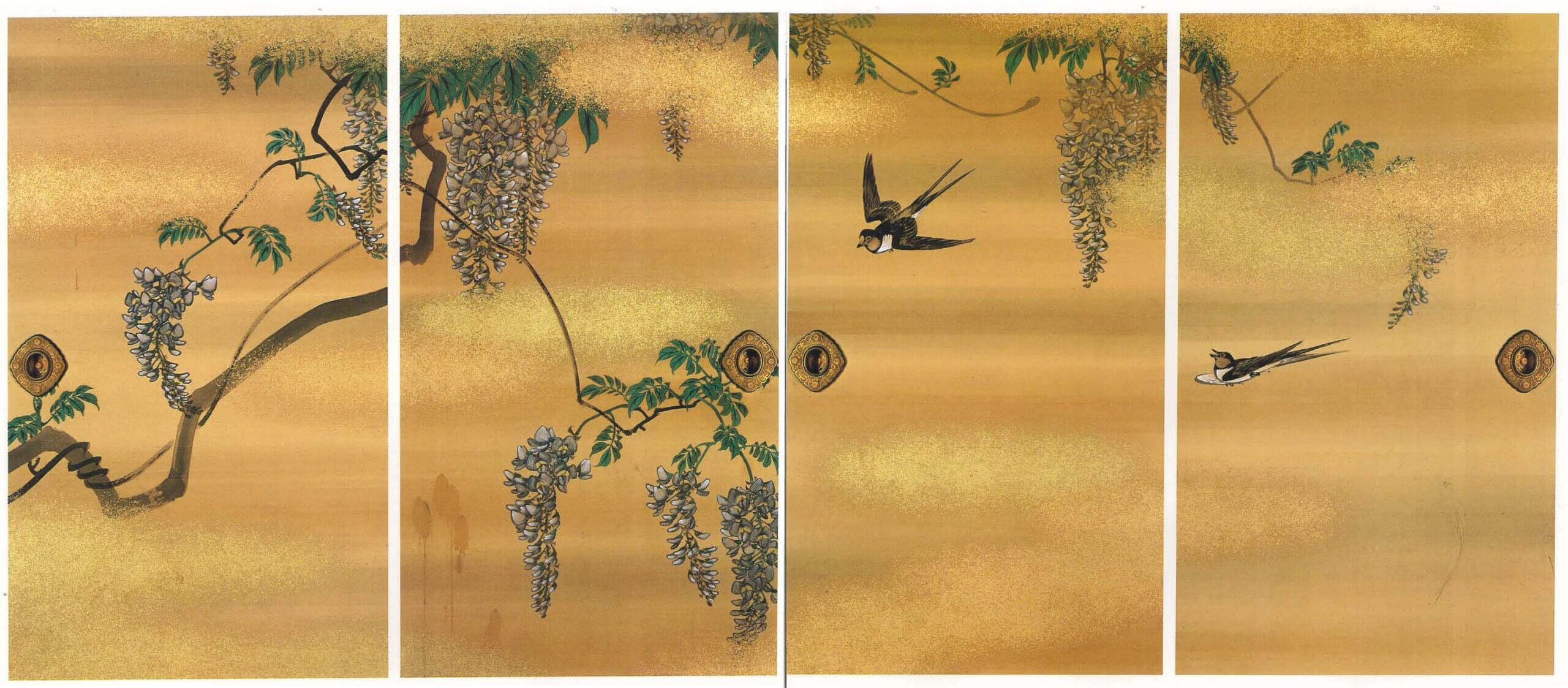
Wisteria and Swallows

Wisteria and Swallows by Murase Gyokuden

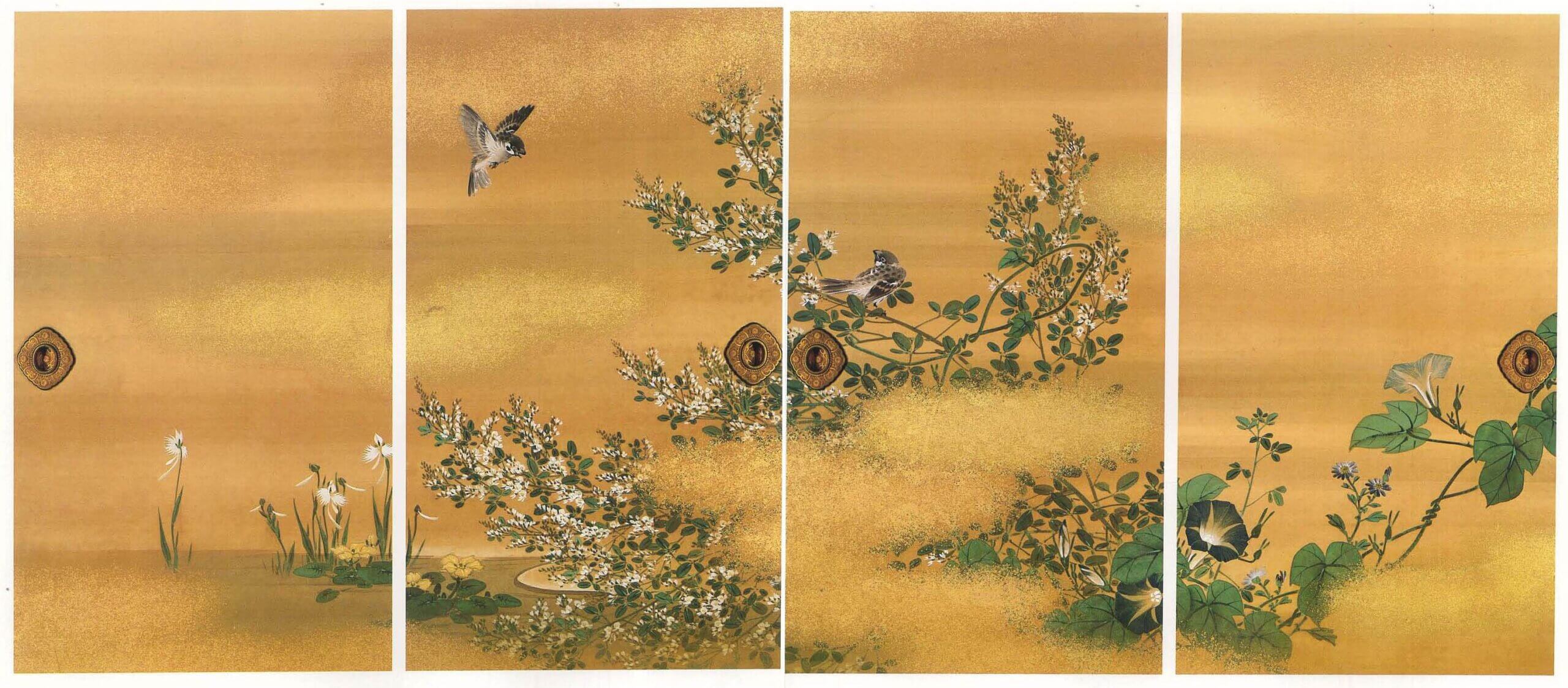
Japanese Clover and Sparrows

Japanese Clover and Sparrows by Murase Gyokuden

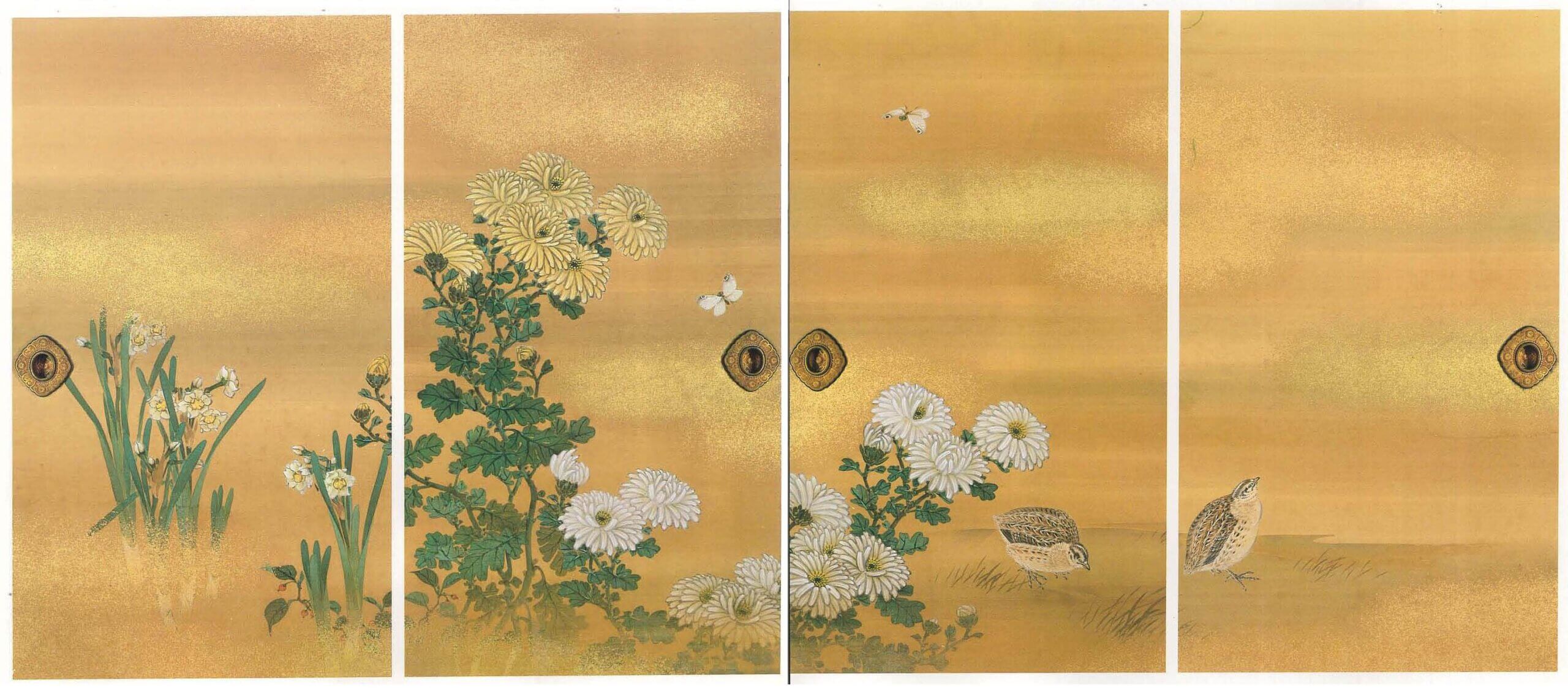
Chrysanthemum and Quails

Chrysanthemum and Quails by Murase Gyokuden

Murase Gyokuden was born in 1852, in Kyōto. His last name was Enoki. He studied under the Shijō school painter Murase Sōseki and, afterwards, he became his adoptive heir, taking ”Murase” as his last name. The work he submitted for the 1st Naikoku Kaiga Kyōshinkai exhibition in 1882 became an official painting for the Imperial Household. In 1889, he also earned the bronze medal for the Japanese Arts Association Exhibition. In 1894, in the Autumn Exhibition for the same Association, he earned the silver medal and in the Autumn Exhibition of the consecutive year, he also earned the silver medal. In that Japanese Arts Association Autumn Exhibition, together with Taki Katei and Kawabata Gyokushō, he was one of the judges. Ishii Hakutei (printmaker, Western-style painter, art critic) had described one of Gyokuden’s side as following: “Murase Gyokuden was someone who became a disciple of Matsumura Keibun’s disciples, Yokoyama Seiki, and Shiokawa Bunrin. He did show a careful technique in bird-and-flower paintings in the Shijō style, but according to my father, it seems he didn’t have a steady personality, and even during the Art Association judges meeting, he showed a vague attitude in every situation, troubling others.” Hakutei’s father Ishii Teiko was also a painter and had judged the Japanese Art Association exhibition together with Gyokuden, so probably he told Hakutei about part of the situation at that time.

Has Gyokuden moved very early to Tōkyo or has he come to Tōkyo from time to time because of the screening as a judge? It is not clear when he moved to Tōkyo, but it seems that it was relatively early. He died in 1917 at 66 years old.

These paintings are the sliding doors of the Meiji Palace of the Imperial Palace, which was completed in 1888. For the decoration of the palace, all of the famous Japanese painters of the time were mobilized to draw on the sliding doors, ceilings, Sugido (door made of cedar), etc. It must have looked like a major museum of Japanese painting of the Meiji era, but unfortunately, most of it was burned down by the war. Fortunately, a painting on Sugido that was rescued at that time was handed down to the present day, and you can take a glimpse of what that time was like. Fortunately, Gyokuden’s 16 small sliding door paintings were also rescued at that time. Spring, summer, autumn, and winter are drawn on each of the four sides, with cherry blossoms and sparrows in spring, wisteria and swallows in summer, sparrows and chrysanthemums, and quails in autumn, and daffodils slightly to the left of chrysanthemums in winter. The gorgeousness of the Meiji Palace is hidden in splendid paintings in which gold paint and gold dust are scattered all over them. It is a painting that incorporates a modern sense into the technique of the Shijō school and is decoratively drawn and can be said to be a big scale world. There are relatively few works by Gyokuden, making these paintings a valuable existence as his masterpiece.
    NameRequired

    SexRequired

    MaleFemale

    CountryRequired

    e-mailRequired

    CommentRequired

    Attached File
    ※Up to 3 MB for each file.


    ← ← "MUST CHECK" / Please confirm the above contents again and check this button.

    Contact Us

    Please fill out the form below and submit for your inquiry.

    ❈FirstName
    ❈LastName
    Country
    ❈E-mail
    (❈Confirm E-mail)
    ❈Inquiry category Question
    Consultation
    Impression
    Request
    Others
    ❈Comment

    is the mark for required item.


    Your privacy is important to us. We are committed to protecting your privacy.

    (or press ESC or click the overlay)

    CEO Message

    Our Feelings For Kakejiku


     The Japanese people have long set a high value on aesthetic senses since ancient times. As a result, the
    peculiar culture which is not seen in other countries blossomed and many aspects of the modern Japanese
    culture come from it. Parts of Japanese culture has been introduced to people in other countries recently,
    so the number of people from other countries who are interested in Japanese culture has been increasing.
    However, the Japanese aesthetic senses, which are the bases of Japanese culture, have been nurtured
    through a long history, intertwining various elements intricately, such as climate, geographical features,
    religion, customs and so on. Therefore, they are very difficult to understand not only for people from other
    countries, but even for the Japanese people. I think the best tool which conveys these difficult senses
    understandably is a “kakejiku.”
     The kakejiku (a hanging scroll; a work of calligraphy or a painting which is mounted and hung in an
    alcove or on a wall) is a traditional Japanese art. It's no exaggeration to say that paintings are what
    express aesthetic senses at all times and places. The kakejiku is an art which expresses the Japanese
    aesthetic senses. The kakejiku has long been used in traditional Japanese events, daily life and so on since
    ancient times. As a result, there are various customs of kakejiku in Japan; kakejiku and the life of the
    Japanese are closely related. We can see Japanese values through kakejiku.
     The kakejiku is a cultural tradition which the Japanese people should be proud of. However, many people
    in other countries don't know much about it because it hasn't been showcased as much. This is why I
    decided to try to introduce it. The kakejiku world is very interesting and beautiful. We want not only the
    Japanese, but also many people from other countries to know and enjoy it. I hope that many people will
    love kakejiku someday.

    (or press ESC or click the overlay)
    Company Profile
    syaoku.jpg(120220 byte)

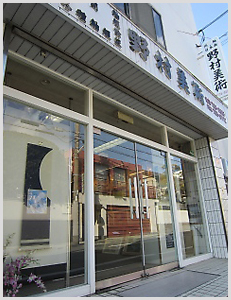
    Name Art Nomura


    President Tatsuji Nomura


    Founded1973


    Established1992


    Address7-23 Babadori, Tarumi-ku, Kobe city,
    Hyougo Prefecture, 655-0021, Japan


    Capital10 million yen


    URLhttp://nomurakakejiku.com


    Our Business

     Art Nomura is an art dealer which produces kakejiku (hanging scrolls). We mount many paintings and calligraphic works in kakejiku in my factory. Kakejiku are our main product. We also remount and repair old or damaged kakejiku. We share the traditional Japanese art of kakejiku with people all over the world.


    (or press ESC or click the overlay)
    Access Map

    Access Map


     The Japanese people have long set a high value on aesthetic senses since ancient times. As a result, the
    peculiar culture which is not seen in other countries blossomed and many aspects of the modern Japanese
    culture come from it. Parts of Japanese culture has been introduced to people in other countries recently,
    so the number of people from other countries who are interested in Japanese culture has been increasing.
    However, the Japanese aesthetic senses, which are the bases of Japanese culture, have been nurtured
    through a long history, intertwining various elements intricately, such as climate, geographical features,
    religion, customs and so on. Therefore, they are very difficult to understand not only for people from other
    countries, but even for the Japanese people. I think the best tool which conveys these difficult senses
    understandably is a “kakejiku.”
     The kakejiku (a hanging scroll; a work of calligraphy or a painting which is mounted and hung in an
    alcove or on a wall) is a traditional Japanese art. It's no exaggeration to say that paintings are what
    express aesthetic senses at all times and places. The kakejiku is an art which expresses the Japanese
    aesthetic senses. The kakejiku has long been used in traditional Japanese events, daily life and so on since
    ancient times. As a result, there are various customs of kakejiku in Japan; kakejiku and the life of the
    Japanese are closely related. We can see Japanese values through kakejiku.
     The kakejiku is a cultural tradition which the Japanese people should be proud of. However, many people
    in other countries don't know much about it because it hasn't been showcased as much. This is why I
    decided to try to introduce it. The kakejiku world is very interesting and beautiful. We want not only the
    Japanese, but also many people from other countries to know and enjoy it. I hope that many people will
    love kakejiku someday.

    (or press ESC or click the overlay)