A Sumi Ink Landscape Kakejiku as a Souvenir That Captures the Feeling of Japan
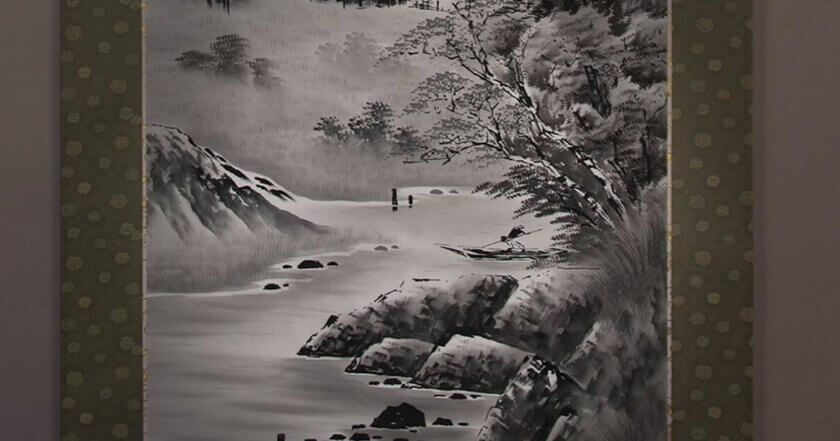
Suiboku-ga, often referred to as ink painting, is an art form created using only black ink and its many subtle tones. Among the various subjects depicted in suiboku-ga, landscape paintings known as sansui-ga (mountain and water landscapes) have long been one of the most popular and admired themes in Japan.
Suiboku-ga was originally introduced from China together with Zen Buddhism during the Kamakura period. Later, in the mid-Muromachi period, it was established as a distinctly Japanese form of ink painting by Sesshū. In the modern period, artists such as Kawai Gyokudō further developed the Japanese character of landscape painting, and kakejiku featuring Japanese landscapes in suiboku ink painting became one of the standard forms of Japanese hanging scrolls.
Recently, more and more overseas customers have been visiting us in search of suiboku landscape kakejiku that express the atmosphere and beauty of Japan.
This time, we would like to introduce an episode in which a customer traveling in Japan from Spain found a landscape kakejiku on our website and came all the way to our store in Tarumi, Kobe.
Finding Us Online and Coming from Spain to Tarumi, Kobe
The customer who visited us this time was a gentleman traveling in Japan from Spain.

He seemed to be enjoying his trip very much, visiting popular destinations such as Osaka and Kyōto.
Having found a kakejiku on our website that caught his interest, he made a point of visiting our company in Tarumi, Kobe, during his trip to Japan to purchase it.
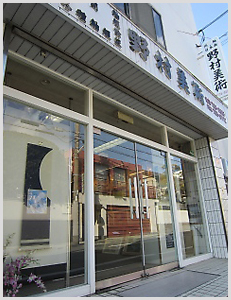
ART NOMURA is not a souvenir shop located in the middle of a tourist area. We are a company with our own workshop, handling the sale of kakejiku as well as mounting and restoration services.
The surrounding area is mainly residential, so for overseas customers visiting us for the first time, it may feel like a slightly unexpected place.
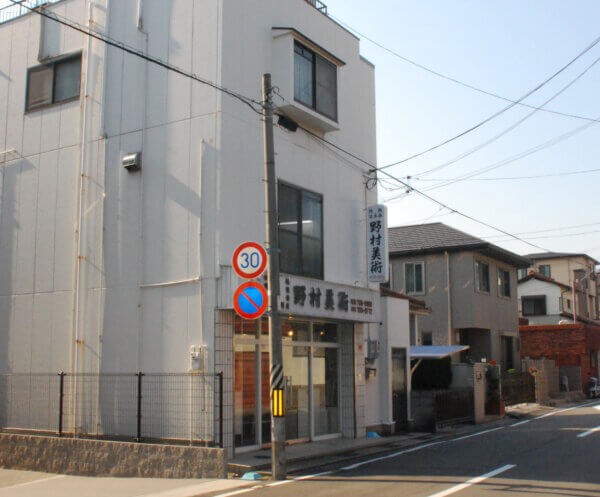
Because of that, we were very grateful that he came all the way to us specifically for the kakejiku he had found on our website.
A Suiboku Landscape Kakejiku for Himself and One for a Friend
The customer had saved an image of the kakejiku he wanted on his smartphone before visiting us.
He was looking for a suiboku landscape kakejiku, one for himself and one as a souvenir for his friend.
When overseas customers visit us, some are simply looking for “something Japanese” without a specific item in mind. In this case, however, the customer’s request was very clear from the beginning: he wanted a suiboku landscape kakejiku.
As soon as he showed us the image, we immediately understood that this was the kakejiku he had come to find.
After checking our stock, we were able to prepare the suiboku landscape kakejiku he wanted. Although these works share the same artist, subject, and composition, each one is hand-painted, so the finer details naturally vary slightly from piece to piece.
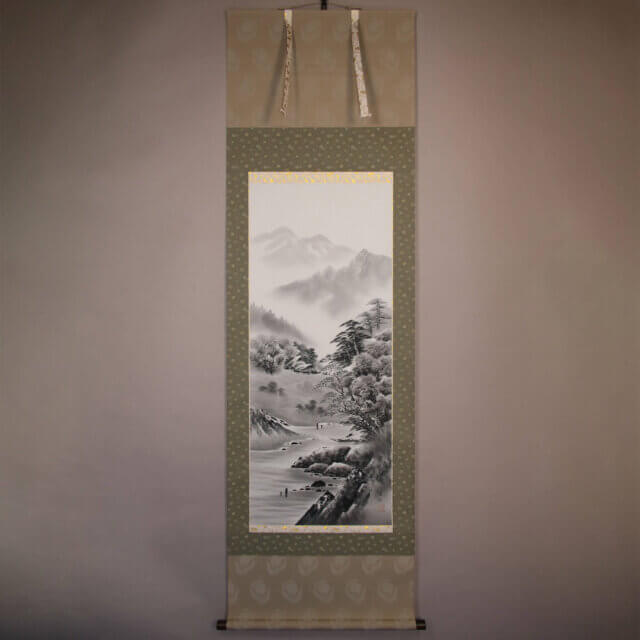
Once he saw the actual kakejiku, he seemed satisfied right away, and the purchase was decided very smoothly.

Packaging for Taking the Kakejiku Overseas
Kakejiku are usually handed over in a paulownia wood box, but they still require careful handling when being taken home.
For customers traveling from overseas, we need to consider not only their travel within Japan, but also air travel and storage in a suitcase.
Since the customer planned to take the kakejiku home himself, we carefully protected each piece and packed them in a way that would make them easier to carry.
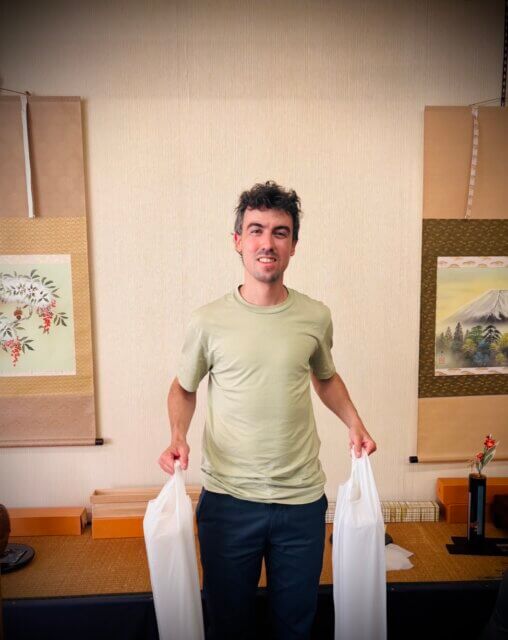
If a kakejiku is placed directly into a bag, the paulownia wood box may be scratched or damaged during travel.
For this reason, we wrapped the boxes using cardboard and cushioning materials so that the customer could carry them home with greater peace of mind.
We also gave him instruction sheets explaining how to roll a kakejiku.
The condition of a kakejiku can be affected by how it is hung, rolled, and stored.
For overseas customers, these points can be even more unfamiliar than they are for Japanese customers, so even small explanations like this are very important.
The customer was very pleased and thanked us many times.
Guiding the Customer Back to the Station After the Purchase
Our nearest station is Tarumi Station, but for overseas customers visiting for the first time, the way back can sometimes be a little difficult to understand.
Even when using Google Maps, it can be confusing to know which direction to start walking.
This customer also seemed a little unsure of the way as he was leaving.
Our staff noticed this, confirmed the direction of the station, and explained which way he should go.
Our service does not end the moment a customer purchases a kakejiku. We also try to pay attention to whether they can return to the station safely.
It may seem like a small thing, but for customers visiting from overseas, we believe that this kind of care can become an important source of reassurance.
The Importance of a Website That Reaches Overseas Customers
As in this case, we are seeing more and more overseas customers find products on our website and visit our physical store during their travels in Japan.
Kakejiku are especially attractive to overseas customers as a form of Japanese art.
At the same time, many people may feel unsure about where to buy one, whether the quality is reliable, and whether it can be safely taken home.
That is why it is important for us to introduce our products clearly on our website and, when customers visit us in person, to handle everything carefully from confirming the actual piece to packaging it for travel.
ART NOMURA is not a tourist souvenir shop.
However, because we specialize in kakejiku, we can guide customers not only in choosing a piece, but also in how to handle it and take it home safely.
Conclusion
This time, we introduced an episode in which a customer traveling in Japan from Spain found a suiboku landscape kakejiku on our website and came to purchase it from us.
For overseas customers, kakejiku are one of the most appealing forms of Japanese art.
At the same time, there may be concerns about where to purchase one, how to take it home, and how to handle it properly. That is why we do our best to provide careful support.
If you are looking for a kakejiku as a souvenir of your trip to Japan, or if you are considering a Japanese work of art as a gift for a friend overseas, please feel free to contact us.
Because we specialize in kakejiku, we can help you find a piece that you can choose with confidence.