Shikoku Pilgrimage Temple: No. 30 Tōmyō-in Zenraku-ji
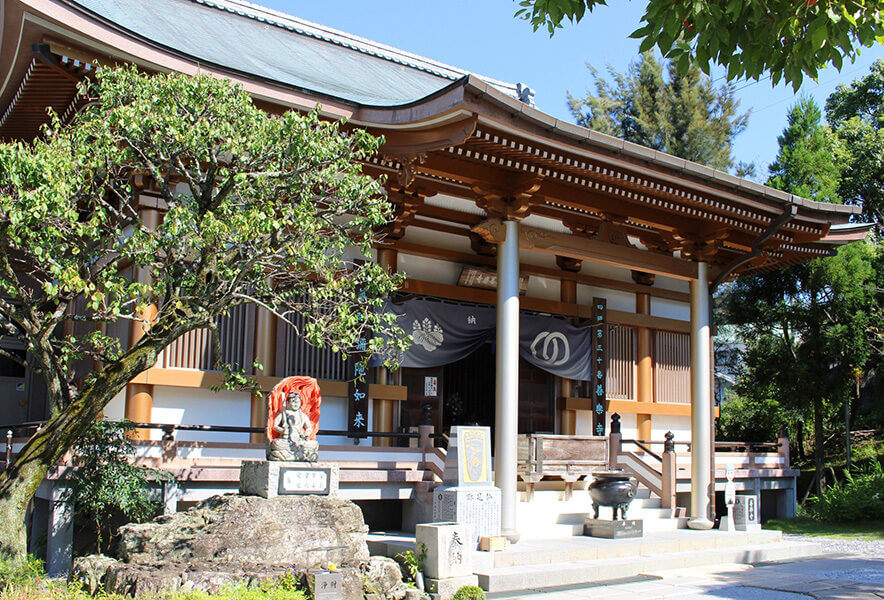
Retaining the vestiges of the Bettō-ji of Tosa Ichinomiya
- Name: Dodo-zan Tōmyō-in Zenraku-ji
- Principal Image: Amida Nyorai
- Goeika (Pilgrimage Song):
- Many people gather at the Ichinomiya; it prospers now as it did in the past.
Access From Temple No. 29, Kokubun-ji
- On foot: Follow the peaceful path along the Kokubu River, then move from the mountain road to Prefectural Route 384. Head toward the densely wooded forest of Tosa Shrine as a landmark. The temple is next to the shrine. Approx. 8 km, 2 hours 20 minutes.
- By Car: Use Prefectural Route 384. Approx. 8 km, 15 minutes.
- Public Transport: From the Kokubun-ji dōri bus stop, take the Tosaden Kōtsū Bus bound for Kōchi City for 12 minutes, and get off at Ichinomiya Jinja-mae.
The Jūichimen Kannon Welcoming Pilgrims
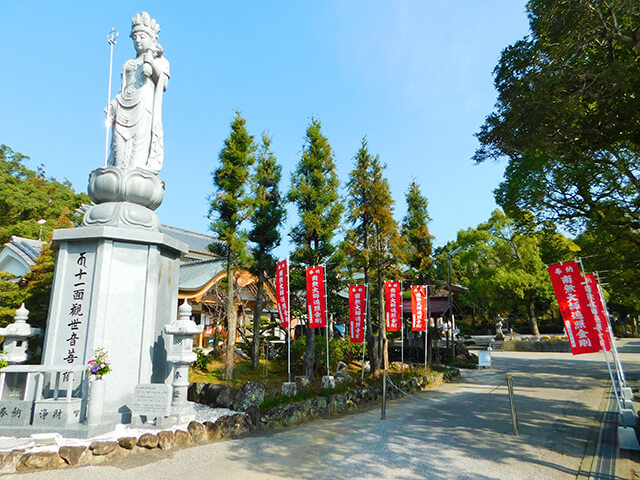
Entering the precincts of Zenraku-ji, the first thing that catches your eye is a giant statue of the Eleven-Faced Kannon. It has a unique appearance, holding a shakujō (pewter staff), which is originally an attribute of Jizō Bosatsu, in its right hand, and a water pitcher in its left. Called a Hase-dera-style Kannon, it is said to be modeled after the principal image of Hase-dera in Nara.
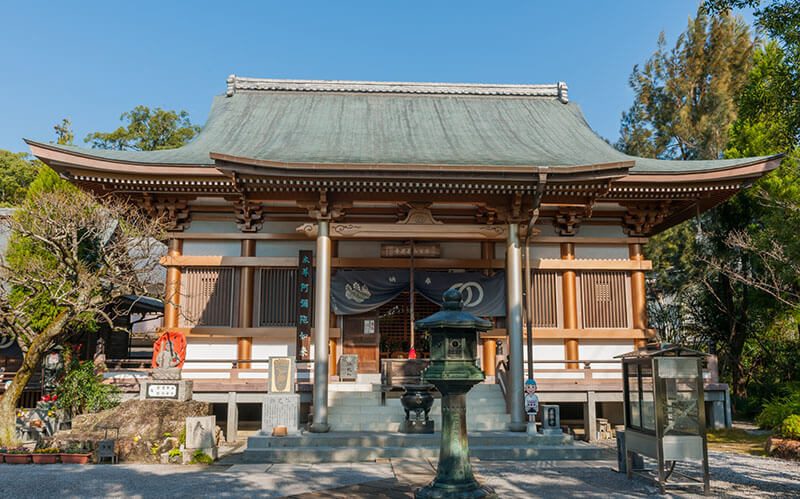
Proceeding further from the Kannon statue, the Daishi Hall and the Main Hall stand side by side on the left. The Main Hall was built in 1983 (Shōwa 58), and the golden statue of Amida Nyorai illuminated in the dimly lit hall is striking.
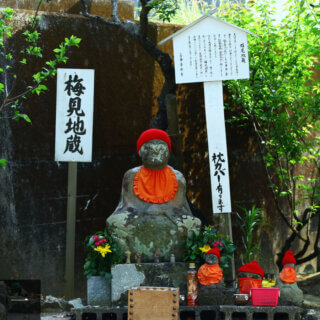
Underneath the plum tree opposite the Main Hall is the Umemi Jizō. It is said to be miraculous for illnesses above the neck, such as those affecting the eyes, nose, mouth, ears, and brain. There is also a Koyasu Jizō Hall within the grounds.
A Renowned Temple Tossed About by History
When heading toward Zenraku-ji, what catches your eye from quite a distance is a thick grove of trees. The forest belongs to Tosa Shrine, which is the Tosa Ichinomiya. Zenraku-ji shares its borders with the shrine. As this positional relationship suggests, Zenraku-ji has a long history as the bettō of Tosa Ichinomiya. Before the Edo period, Jingū-ji, which was located at the current Tosa Shrine, was the official pilgrimage temple, and this temple served as the nōkyōjo.
However, due to the Haibutsu Kishaku movement in the Meiji period, Jingū-ji was abolished, and its principal images of Amida Nyorai and Kōbō Daishi were entrusted to Temple No. 29, Kokubun-ji. Later, only the Amida Nyorai statue was moved to Anraku-ji, located west of Kōchi Station, and Anraku-ji became the new Temple No. 30. Meanwhile, in 1934 (Shōwa 9), the Daishi statue entrusted to Kokubun-ji was returned, and Zenraku-ji was restored. Because Zenraku-ji was originally the nōkyōjo for Temple No. 30, a situation arose where two Temples No. 30 existed: Anraku-ji and Zenraku-ji. This situation continued for a long time, but it was finally settled in 1994 (Heisei 6) with Zenraku-ji becoming Temple No. 30 and Anraku-ji becoming the inner sanctuary (Oku-no-in) of Temple No. 30, which remains the case today.
DATA
Address: 2-23-11 Ikku-shinane, Kōchi City, Kōchi Prefecture
Phone: 088-846-4141
Access: 20-minute walk from Tosa-Ikku Station on the JR Dosan Line
Parking: Available (Free)
Lodging: None
Your Pilgrimage, Your Art
Completing the Shikoku Pilgrimage is a once-in-a-lifetime journey—but what if you could preserve it in a form that lasts forever?
Many pilgrims collect red stamps and calligraphy from each temple on a special silk scroll called a nōkyōjiku.
This sacred record of your path can be transformed into a kakejiku—a traditional Japanese hanging scroll—not only preserving the memories, but turning them into a work of cultural and spiritual art.
It’s more than a souvenir—it’s a way to honor your journey, your prayers, and your growth.
To learn more about how a nōkyōjiku becomes a kakejiku, and what makes this transformation so meaningful, please refer the below link.