Mounting a Shikoku 88 Temple Pilgrimage Nōkyōjiku as a Kakejiku for a Walking Pilgrim from Poland
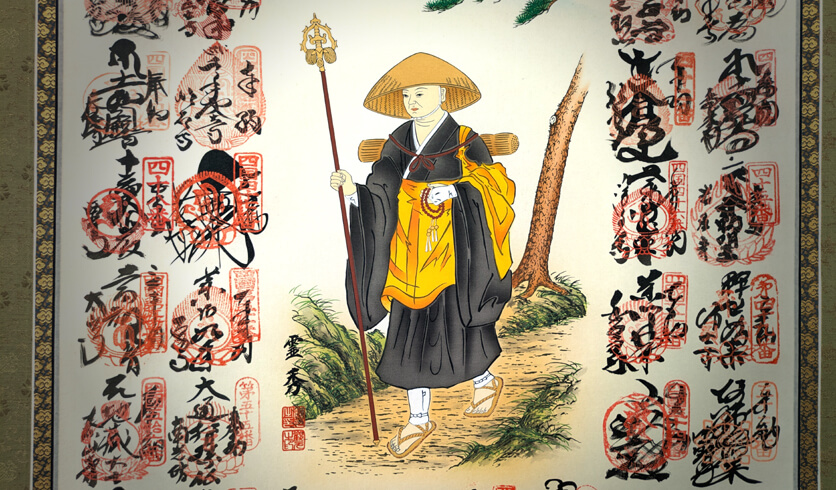
A nōkyōjiku completed during the Shikoku 88 Temple Pilgrimage is created by visiting each temple one by one and receiving the temple stamps and calligraphy.
In that sense, it can be described as a precious work of art filled with the time, prayers, and personal journey of the pilgrim.
This time, we received a request from a customer who came to Japan from Poland and completed the Shikoku 88 Temple Pilgrimage on foot.
He wanted us to mount his completed nōkyōjiku as a kakejiku hanging scroll.
We hope this article will be helpful for those who are considering having their precious nōkyōjiku from the Shikoku Pilgrimage mounted as a kakejiku.
A Request from Poland|Mounting a Completed Shikoku Pilgrimage Nōkyōjiku as a Kakejiku
Our customer came to Japan from Poland.
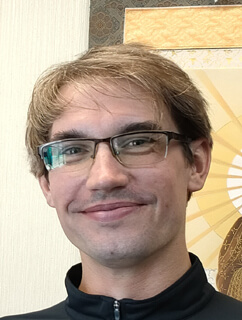
He contacted us by email in advance and visited our shop because he wanted to have his completed Shikoku Pilgrimage nōkyōjiku mounted as a kakejiku.
He had studied Japanese very well, but for important details such as the mounting specifications and overseas shipping, we also confirmed the details in English to avoid any misunderstanding.
56 Days of Walking Pilgrimage|The Journey Contained in the Nōkyōjiku
The customer told us that his interest in the thoughts of Kōbō Daishi Kūkai was what inspired him to take on the Shikoku Pilgrimage.
Moreover, he completed the pilgrimage entirely on foot without using public transportation, taking about 56 days to visit all 88 temples.
When he visited our shop, he was wearing pilgrimage items such as a sugegasa pilgrim hat, and we could feel the atmosphere of someone who had truly walked across Shikoku.
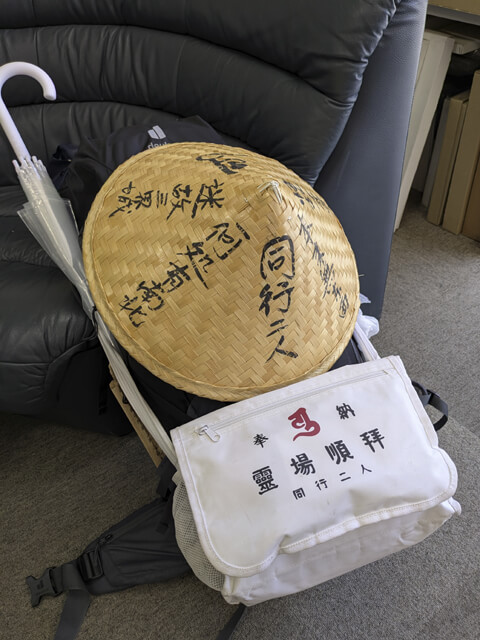
He also understood the meaning of the phrase “Dōgyō Ninin” very well.
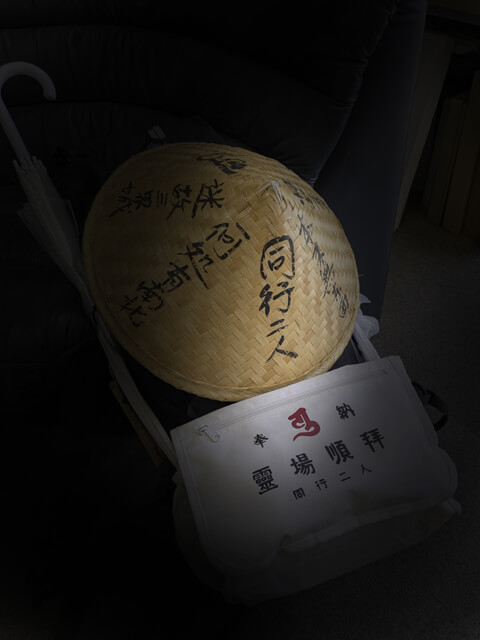
Dōgyō Ninin is an important concept in the Shikoku Pilgrimage. It means that even when a pilgrim appears to be walking alone, they are walking together with Kōbō Daishi Kūkai.
This is one of the symbolic phrases of the Shikoku Pilgrimage, and it is closely connected to the mindset of walking the pilgrimage route not merely as sightseeing, but as a spiritual journey.
Because he walked the pilgrimage with this understanding, we believe this nōkyōjiku was not simply a travel souvenir for him. It was a precious work that reflected the days he spent walking through Shikoku.
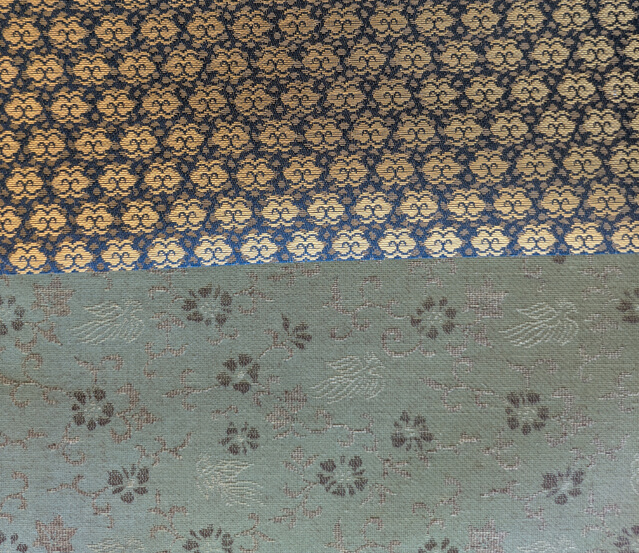
Choosing the Mounting Fabric|Green Fabrics Reminiscent of Shikoku’s Nature
During the consultation, the customer requested green-colored mounting fabrics.
For Shikoku Pilgrimage nōkyōjiku, many customers prefer green fabrics.
Shikoku has many beautiful mountains, trees, and natural landscapes. For those who have actually walked the pilgrimage route, green may be a color that brings back memories of Shikoku’s nature.
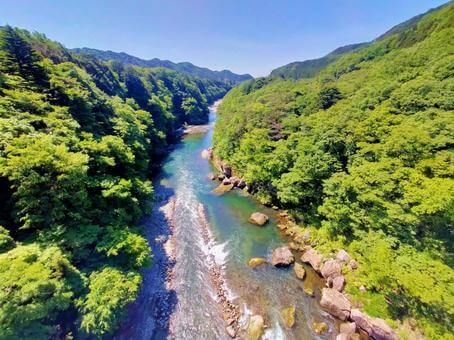
In this case as well, based on the customer’s request, we proposed a combination centered around green fabrics, separate from our standard course.
We keep various mounting fabrics in stock, so instead of being limited to standard combinations, we can respond flexibly according to each customer’s wishes and the atmosphere of the artwork.
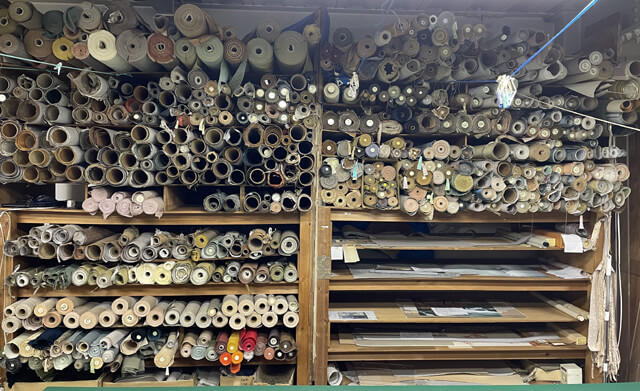
For this piece, we focused on calm green fabrics and aimed for a combination that would not be overly decorative, allowing the entire nōkyōjiku to come together naturally.
“I’ll miss it.”|The Customer’s Feelings Before Leaving the Scroll with Us
During the consultation, we hung the customer’s nōkyōjiku on the wall inside our shop so that he could check it.
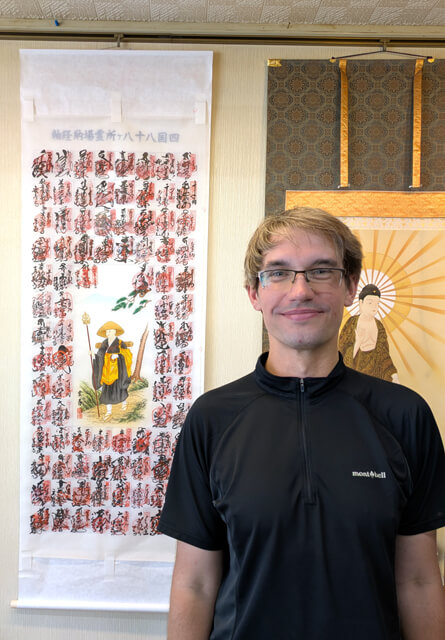
It seemed to be the first time for him to see his nōkyōjiku displayed in a hanging position, and he happily took many photos of it.
Then, as he was leaving, he quietly said, “I’ll miss it.”
“I will miss being apart from this nōkyōjiku for a while.”
From that one phrase, we could feel just how important this scroll was to him.
For the customer, this nōkyōjiku was not only a silk work filled with temple stamps and calligraphy. It was also the memory of his 56-day walking pilgrimage itself.
That is why we felt we had to proceed with the mounting work carefully, so that we could respond to the feelings he had entrusted to us.
The Mounting Process|Carefully Mounting the Silk Nōkyōjiku as a Kakejiku
When mounting a nōkyōjiku, we first carefully examine the condition of the silk honshi, which is the main body of the scroll.
We then proceed with the work while paying close attention to ensure that the ink calligraphy and red temple stamps do not bleed due to moisture.
Because many steps in traditional mounting involve the use of water, nōkyōjiku with numerous red stamps and ink inscriptions require especially careful handling.
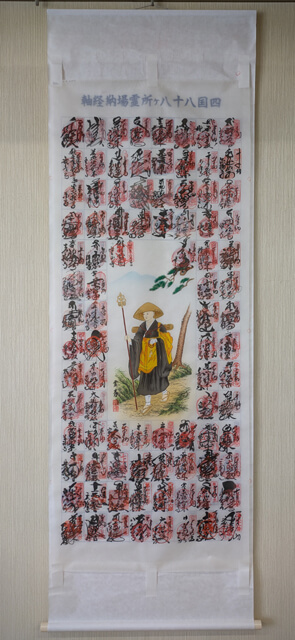
After that, we continue the mounting process while checking each stage carefully, including the condition of the honshi, the state of the ink and red stamps, the finished dimensions, and the compatibility with the mounting fabrics.
For this piece as well, we proceeded with great care so that the customer would be able to display and cherish the nōkyōjiku, which holds the memories of his walking pilgrimage, for many years to come.
The Completed Kakejiku|A Calm Green Mounting for a Beautiful Finished Scroll
The completed kakejiku had a calm green mounting that allowed the ink calligraphy and red temple stamps of the nōkyōjiku to appear clearly and beautifully.
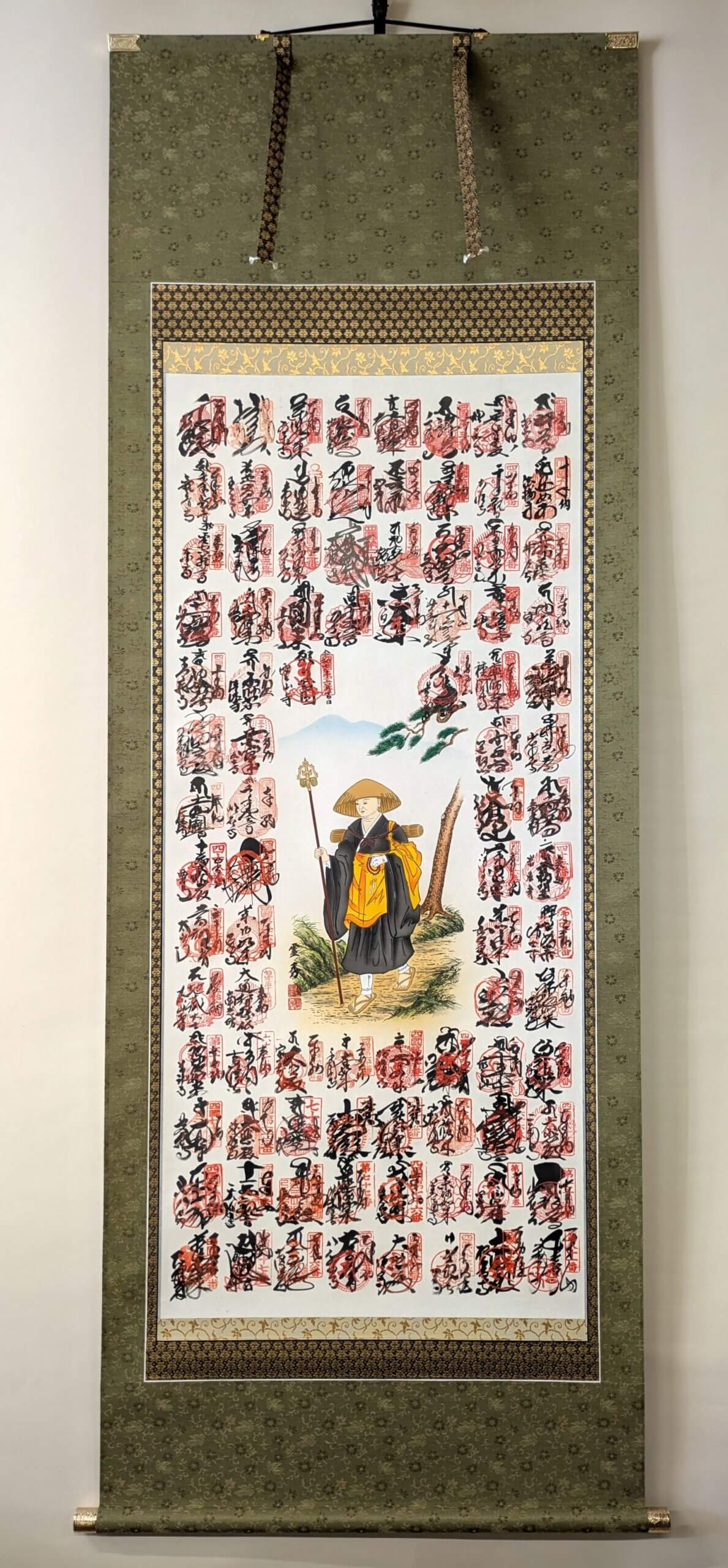
The silk nōkyōjiku itself is filled with powerful red stamps and calligraphy that serve as proof of the customer’s journey through all 88 temples. To avoid interfering with that presence, we used calm-colored fabrics around the main body.
By using green fabrics, the finished scroll also gained a gentle atmosphere reminiscent of the mountains and nature of Shikoku. We feel that the finished kakejiku became a piece that gently accompanies the customer’s memories of his walking pilgrimage.
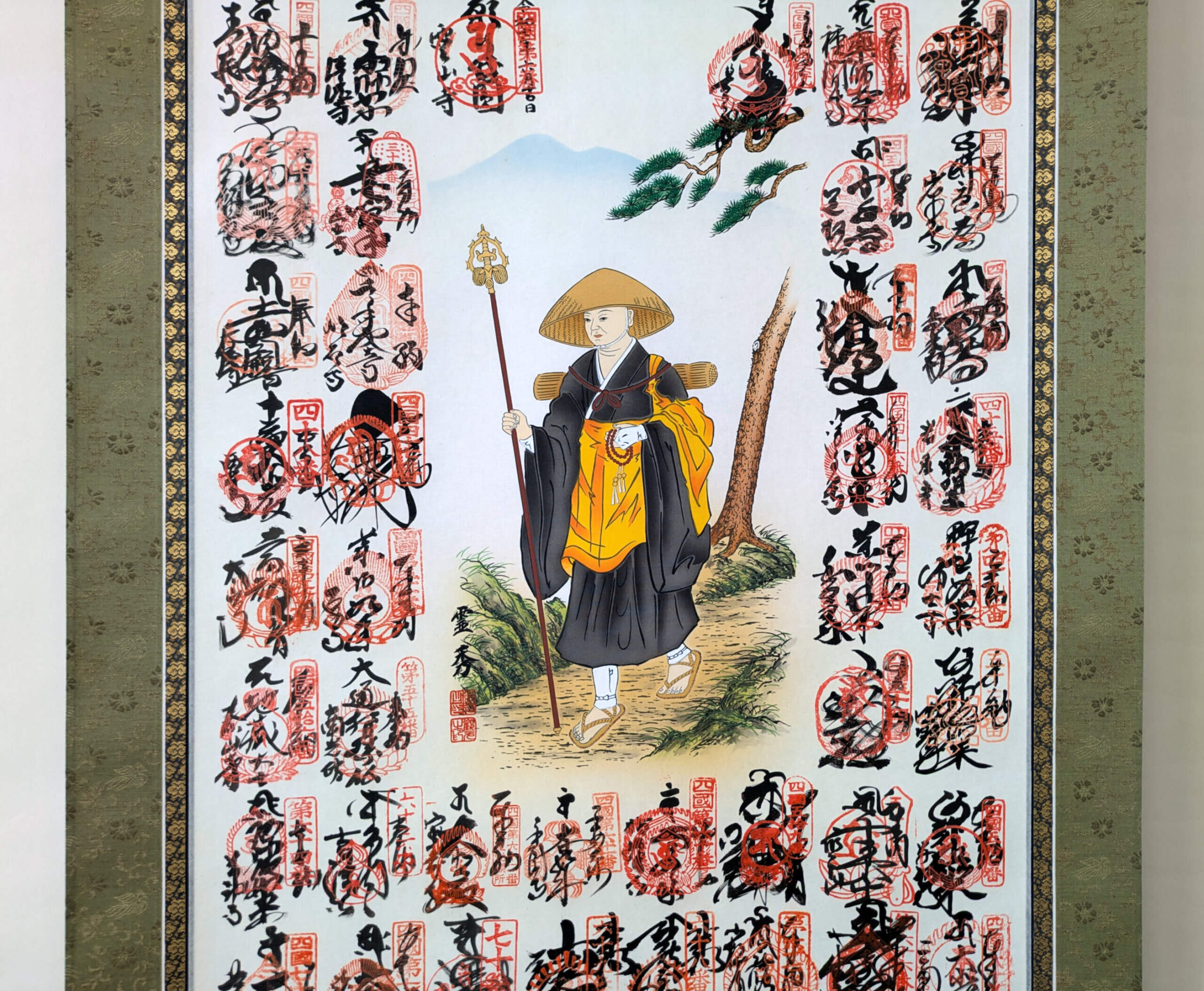
Once a nōkyōjiku is mounted, it becomes a finished scroll that can actually be displayed and appreciated as a kakejiku.
It gives form to the proof of one’s Shikoku 88 Temple Pilgrimage, allowing the owner to look back on the journey in daily life.
That is one of the great meanings of mounting a nōkyōjiku as a kakejiku.
The Customer’s Feedback|More Beautiful Than He Had Imagined
After the kakejiku was completed, we sent photos of the finished scroll to the customer.
We were very happy to receive a wonderful reply from him.
I was deeply moved to see the photos of the completed scroll. It looks truly magnificent, far more beautiful than I had ever imagined. I am very grateful for the care, skill, and dedication that you and everyone at Art Nomura have put into this work.
Once again, I feel very fortunate to have entrusted this precious project to you. Your craftsmanship and attention to detail are truly admirable, and I could not be happier with the result.
He told us that the finished scroll was far more beautiful than he had imagined.
He also expressed his gratitude for our careful work and attention to detail.
Because this was a nōkyōjiku he cared about so deeply that he said “I’ll miss it” before leaving it with us, receiving such kind words after completion meant a great deal to us as well.
Taking care of a customer’s precious proof of pilgrimage and preparing it as a kakejiku is a responsibility we take very seriously.
That is why hearing that the customer is pleased with the finished work is one of the greatest encouragements for us as craftsmen.
We Also Accept Nōkyōjiku Mounting Requests from Overseas
At ART NOMURA, we accept mounting requests for various pilgrimage nōkyōjiku, including the Shikoku 88 Temple Pilgrimage, the Saigoku 33 Kannon Pilgrimage, the Bandō 33 Kannon Pilgrimage, and the Chichibu 34 Kannon Pilgrimage.
We also work not only with customers in Japan, but with customers from overseas as well.
It is possible for customers to leave their nōkyōjiku with us while they are visiting Japan, and we can ship the completed kakejiku to their overseas address after the work is finished.
When mounting a nōkyōjiku, the choice of fabric can greatly change the final impression.
At ART NOMURA, we can propose not only standard mounting courses, but also new combinations from the fabrics we keep in stock, according to each customer’s wishes, as we did in this case.
We help turn a precious record of pilgrimage into a kakejiku that can be displayed with confidence for many years to come.
Please feel free to contact us if you are considering having your Shikoku 88 Temple Pilgrimage nōkyōjiku mounted as a kakejiku.
More Information About Shikoku 88 Temple Pilgrimage Kakejiku
If you would like to learn more about how a Shikoku 88 Temple Pilgrimage kakejiku is made, please watch this video.