
Shikoku Pilgrimage Temple: No. 29 Kokubun-ji
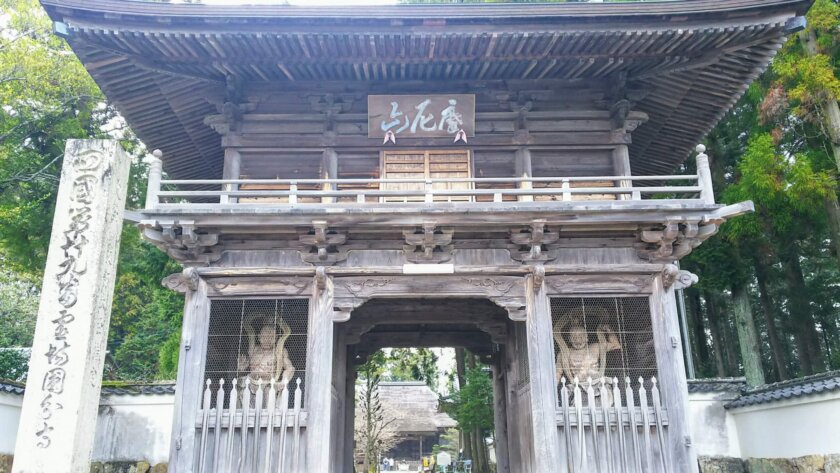
No. 29 Kokubun-ji

The Kondō (Golden Hall) Engraved with 500 Years of Wind and Snow

  • Name: Mani-zan Hōzō-in Kokubun-ji
  • Main Deity: Senju Kanzeon Bosatsu (Thousand-Armed Kannon)
  • Goeika (Pilgrimage Song):
  • This temple, built by dividing the country and amassing treasures,
  • leaves its blessings even to the last generations.

Access From Temple No. 28, Dainichi-ji

  • On foot: Walk along the road through the rural landscape. The road is flat and allows for a peaceful walk. Approx. 9.2 km, 2 hours 30 minutes.
  •  
  • By Car: Return to the front of Noichi Station and head west on the road along the Tosa Kuroshio Railway. Head north from the Gomen urban area. Approx. 12.5 km, 30 minutes.
  •  
  • Public Transport: Return to Noichi Station, take the Tosa Kuroshio Railway for 10 minutes to Gomen Station on the JR Dosan Line. Take a bus from here (see DATA section).

An ancient temple associated with Ki no Tsurayuki

The predecessor of this temple was Tosa Kokubun-ji, one of the provincial temples built in various provinces in 741 (Tenpyō 13) by an imperial edict of Emperor Shōmu to establish provincial temples. In other words, the area around this Kokubun-ji was once a flourishing center of politics and culture in Tosa Province. During the Heian period, when the poet Ki no Tsurayuki, known for the “Tosa Nikki” (Tosa Diary), was appointed as the governor of Tosa, it is said that he set up his residence near this temple and deepened his friendship with the chief priest.

Scattered Cultural Property Buildings

On the east side of the spacious precincts, an earthen platform about 2 meters high and 3 meters wide remains, which is thought to be the remnants of an earthen mound from the Tenpyō period. There is also a central foundation stone for a pagoda, and the entire temple grounds are designated as a National Historic Site as a cultural property.

Passing through the magnificent Niō-mon (Niō Gate) in the rōmon (two-story gate) style built in 1655 (Meireki 1), and advancing along the approach where an avenue of Japanese cypress trees creates a solemn atmosphere, the Kondō (Main Hall) stands right in front. Although large in scale, the Kondō is a simple building with a hipped, shingled roof. It was built in 1558 (Eiroku 1) by Chōsokabe Motochika, who unified Tosa during the Sengoku period, and is designated as a National Important Cultural Property. If you look closely, the front part of the hipped roof protrudes to form a kōhai (canopy), which is a unique style, but this is because it was renovated by the Yamauchi clan, the lords of the Tosa domain, during the Edo period. The Tosa Kashiwa (Tosa oak), the family crest of the Yamauchi clan, is carved into the kaerumata (frog-leg struts) of the kōhai.
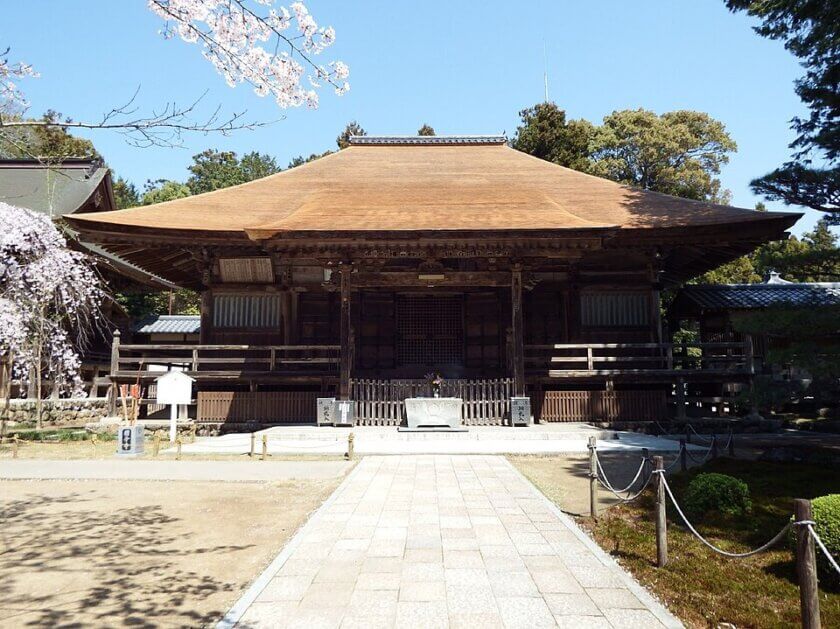
Kondō

The Daishi Hall, standing to the left of the Kondō, was built in 1634 (Kan’ei 11). This one has a copper-plate roof that was renovated in 1960 (Shōwa 35). To the left of the Daishi Hall, a Jizō Bosatsu is enshrined in a small hall. It is called the “Sakedachi Jizō” (Abstinence Jizō), and people who want to stop drinking or want someone to stop drinking visit here.

Passing through the Chūmon (Middle Gate) from the belfry near the Niō-mon, you come out into a garden planted with cycads and camellias, typical of southern countries. Peonies are beautiful in spring, and azaleas and hydrangeas in early summer.

DATA

Address: 546 Kokubu, Nankoku City, Kōchi Prefecture
Phone: 088-862-0055
Access: From Gomen Station on the JR Dosan Line, take the Nankoku City Community Bus Ueda-JA Kōchi Hospital Line for 10 minutes, get off at Kokubun-ji dōri, and walk for 5 minutes.
Parking: Available (Free)
Lodging: None

Your Pilgrimage, Your Art

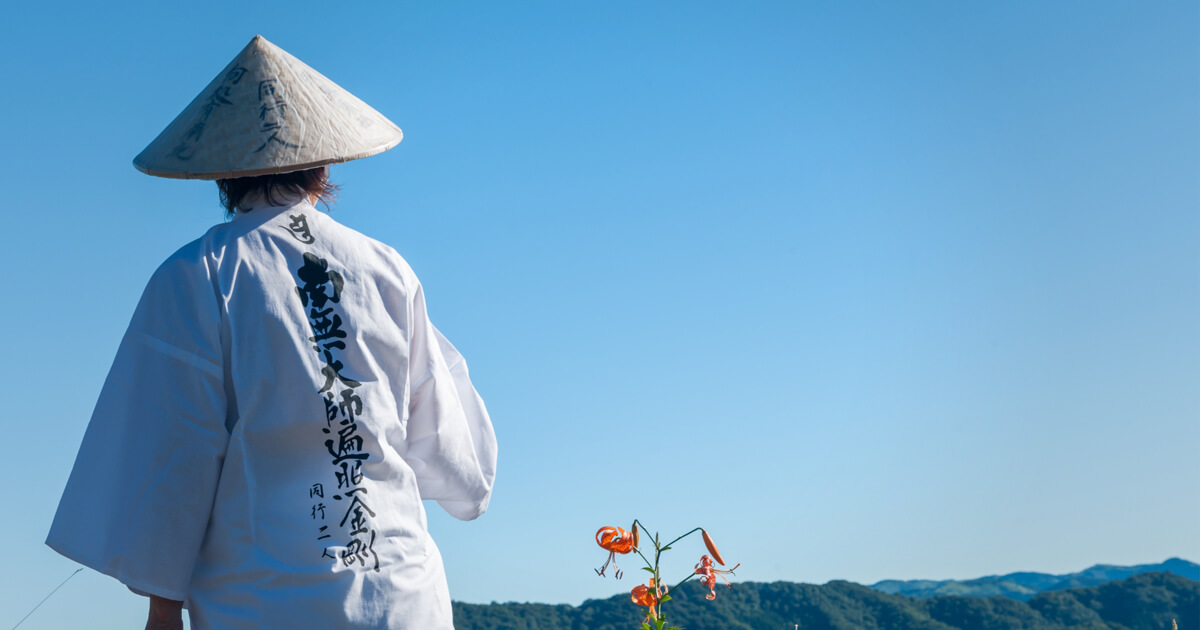
Completing the Shikoku Pilgrimage is a once-in-a-lifetime journey—but what if you could preserve it in a form that lasts forever?

Many pilgrims collect red stamps and calligraphy from each temple on a special silk scroll called a nōkyōjiku.

This sacred record of your path can be transformed into a kakejiku—a traditional Japanese hanging scroll—not only preserving the memories, but turning them into a work of cultural and spiritual art.

It’s more than a souvenir—it’s a way to honor your journey, your prayers, and your growth.

To learn more about how a nōkyōjiku becomes a kakejiku, and what makes this transformation so meaningful, please refer the below link.
 

    NameRequired

    SexRequired

    MaleFemale

    CountryRequired

    e-mailRequired

    CommentRequired

    Attached File
    ※Up to 3 MB for each file.


    ← ← "MUST CHECK" / Please confirm the above contents again and check this button.

    Contact Us

    Please fill out the form below and submit for your inquiry.

    ❈FirstName
    ❈LastName
    Country
    ❈E-mail
    (❈Confirm E-mail)
    ❈Inquiry category Question
    Consultation
    Impression
    Request
    Others
    ❈Comment

    is the mark for required item.


    Your privacy is important to us. We are committed to protecting your privacy.

    (or press ESC or click the overlay)

    CEO Message

    Our Feelings For Kakejiku


     The Japanese people have long set a high value on aesthetic senses since ancient times. As a result, the
    peculiar culture which is not seen in other countries blossomed and many aspects of the modern Japanese
    culture come from it. Parts of Japanese culture has been introduced to people in other countries recently,
    so the number of people from other countries who are interested in Japanese culture has been increasing.
    However, the Japanese aesthetic senses, which are the bases of Japanese culture, have been nurtured
    through a long history, intertwining various elements intricately, such as climate, geographical features,
    religion, customs and so on. Therefore, they are very difficult to understand not only for people from other
    countries, but even for the Japanese people. I think the best tool which conveys these difficult senses
    understandably is a “kakejiku.”
     The kakejiku (a hanging scroll; a work of calligraphy or a painting which is mounted and hung in an
    alcove or on a wall) is a traditional Japanese art. It's no exaggeration to say that paintings are what
    express aesthetic senses at all times and places. The kakejiku is an art which expresses the Japanese
    aesthetic senses. The kakejiku has long been used in traditional Japanese events, daily life and so on since
    ancient times. As a result, there are various customs of kakejiku in Japan; kakejiku and the life of the
    Japanese are closely related. We can see Japanese values through kakejiku.
     The kakejiku is a cultural tradition which the Japanese people should be proud of. However, many people
    in other countries don't know much about it because it hasn't been showcased as much. This is why I
    decided to try to introduce it. The kakejiku world is very interesting and beautiful. We want not only the
    Japanese, but also many people from other countries to know and enjoy it. I hope that many people will
    love kakejiku someday.

    (or press ESC or click the overlay)
    Company Profile
    syaoku.jpg(120220 byte)

    Name Art Nomura


    President Tatsuji Nomura


    Founded1973


    Established1992


    Address7-23 Babadori, Tarumi-ku, Kobe city,
    Hyougo Prefecture, 655-0021, Japan


    Capital10 million yen


    URLhttp://nomurakakejiku.com


    Our Business

     Art Nomura is an art dealer which produces kakejiku (hanging scrolls). We mount many paintings and calligraphic works in kakejiku in my factory. Kakejiku are our main product. We also remount and repair old or damaged kakejiku. We share the traditional Japanese art of kakejiku with people all over the world.


    (or press ESC or click the overlay)
    Access Map

    Access Map


     The Japanese people have long set a high value on aesthetic senses since ancient times. As a result, the
    peculiar culture which is not seen in other countries blossomed and many aspects of the modern Japanese
    culture come from it. Parts of Japanese culture has been introduced to people in other countries recently,
    so the number of people from other countries who are interested in Japanese culture has been increasing.
    However, the Japanese aesthetic senses, which are the bases of Japanese culture, have been nurtured
    through a long history, intertwining various elements intricately, such as climate, geographical features,
    religion, customs and so on. Therefore, they are very difficult to understand not only for people from other
    countries, but even for the Japanese people. I think the best tool which conveys these difficult senses
    understandably is a “kakejiku.”
     The kakejiku (a hanging scroll; a work of calligraphy or a painting which is mounted and hung in an
    alcove or on a wall) is a traditional Japanese art. It's no exaggeration to say that paintings are what
    express aesthetic senses at all times and places. The kakejiku is an art which expresses the Japanese
    aesthetic senses. The kakejiku has long been used in traditional Japanese events, daily life and so on since
    ancient times. As a result, there are various customs of kakejiku in Japan; kakejiku and the life of the
    Japanese are closely related. We can see Japanese values through kakejiku.
     The kakejiku is a cultural tradition which the Japanese people should be proud of. However, many people
    in other countries don't know much about it because it hasn't been showcased as much. This is why I
    decided to try to introduce it. The kakejiku world is very interesting and beautiful. We want not only the
    Japanese, but also many people from other countries to know and enjoy it. I hope that many people will
    love kakejiku someday.

    (or press ESC or click the overlay)