Ochiai Rōfū: “Eva”, Rōfū’s Unique Work Shook Yokoyama Taikan
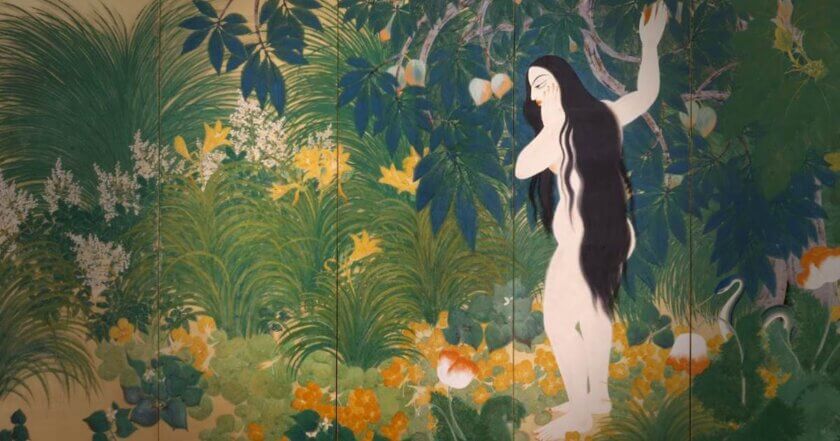
Ochiai Rōfū

Ochiai Rōfū (1896-1937) released “Eva”, which had incredibly unique theme for Japanese paintings, at the 6th Inten Exhibition in 1919. Yokoyama Taikan, a great Japanese painter, was moved by Rōfū’s work. During the early Shōwa period (around 1915-1940), Rōfū participated in Seiryūsha Exhibition, which was one of the associations of the Japanese paintings, he received a big acclaim along with Kawabata Ryūshi.

Rōfū founded Meirōbijutu-renmei, an association of art in 1934. That was almost his endeavor to establish his own art style; however, he died at the young age of 40.

Léonard Tsuguharu Foujita, a world famous Japanese French painter, mourned over the loss of Rōfū saying that, “We lost a person with the great talent”: Rōfū was expected to lead the Japanese paintings.

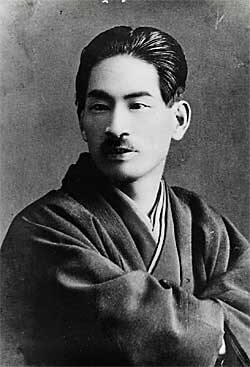
I would like to introduce “Eva”; his first entry of the Inten Exhibition, an exhibition of Nihon Bijutsuin (Japan Visual Arts Academy).
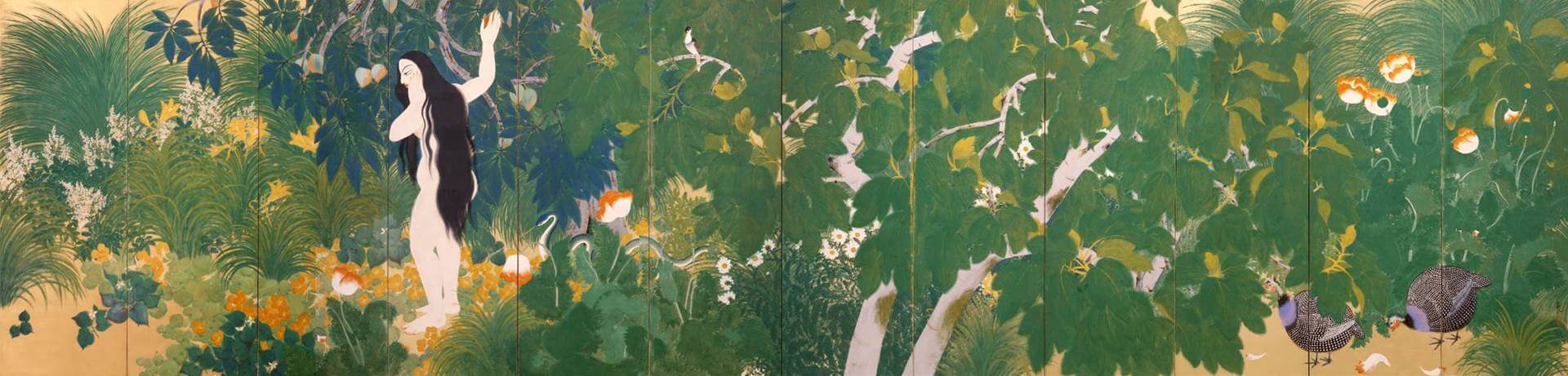
“Eva” by Ochiai Rōfū

The motif of this work is based on Genesis, the wester biblical story of the human creation. The entire screen is filled with verdigris, and Eva stands there. Rōfū’s father was a Christian. It is considered that he received an influence from his father. When he released his painting, various experimental and advanced works were also released by other artists to the Inten Exhibition, but among these, Rōfū’s work differed from others’, and exotic mood presented in this painting surprised people. It is because of not only the theme of his painting, but also uniqueness of colors, dynamic screen composition eliminating margins, the way of depicting of the person which were neither based on Japanese style nor Western style painting. This work earned a distinction from the Japanese painting scene. Starting with this work, Rōfū began to release experimental paintings.

Although his life as a painter was extremely short, his works represent his spirit: challenging to possibilities of the Japanese paintings. Also, his works are not apt to be influenced by fashion.
Contact Us

Please fill out the form below and submit for your inquiry.

❈FirstName
❈LastName
Country
❈E-mail
(❈Confirm E-mail)
❈Inquiry category Question
Consultation
Impression
Request
Others
❈Comment

is the mark for required item.


Your privacy is important to us. We are committed to protecting your privacy.

(or press ESC or click the overlay)

CEO Message

Our Feelings For Kakejiku


 The Japanese people have long set a high value on aesthetic senses since ancient times. As a result, the
peculiar culture which is not seen in other countries blossomed and many aspects of the modern Japanese
culture come from it. Parts of Japanese culture has been introduced to people in other countries recently,
so the number of people from other countries who are interested in Japanese culture has been increasing.
However, the Japanese aesthetic senses, which are the bases of Japanese culture, have been nurtured
through a long history, intertwining various elements intricately, such as climate, geographical features,
religion, customs and so on. Therefore, they are very difficult to understand not only for people from other
countries, but even for the Japanese people. I think the best tool which conveys these difficult senses
understandably is a “kakejiku.”
 The kakejiku (a hanging scroll; a work of calligraphy or a painting which is mounted and hung in an
alcove or on a wall) is a traditional Japanese art. It's no exaggeration to say that paintings are what
express aesthetic senses at all times and places. The kakejiku is an art which expresses the Japanese
aesthetic senses. The kakejiku has long been used in traditional Japanese events, daily life and so on since
ancient times. As a result, there are various customs of kakejiku in Japan; kakejiku and the life of the
Japanese are closely related. We can see Japanese values through kakejiku.
 The kakejiku is a cultural tradition which the Japanese people should be proud of. However, many people
in other countries don't know much about it because it hasn't been showcased as much. This is why I
decided to try to introduce it. The kakejiku world is very interesting and beautiful. We want not only the
Japanese, but also many people from other countries to know and enjoy it. I hope that many people will
love kakejiku someday.

(or press ESC or click the overlay)
Company Profile
syaoku.jpg(120220 byte)

Name Art Nomura


President Tatsuji Nomura


Founded1973


Established1992


Address7-23 Babadori, Tarumi-ku, Kobe city,
Hyougo Prefecture, 655-0021, Japan


Capital10 million yen


URLhttp://nomurakakejiku.com


Our Business

 Art Nomura is an art dealer which produces kakejiku (hanging scrolls). We mount many paintings and calligraphic works in kakejiku in my factory. Kakejiku are our main product. We also remount and repair old or damaged kakejiku. We share the traditional Japanese art of kakejiku with people all over the world.


(or press ESC or click the overlay)
Access Map

Access Map


 The Japanese people have long set a high value on aesthetic senses since ancient times. As a result, the
peculiar culture which is not seen in other countries blossomed and many aspects of the modern Japanese
culture come from it. Parts of Japanese culture has been introduced to people in other countries recently,
so the number of people from other countries who are interested in Japanese culture has been increasing.
However, the Japanese aesthetic senses, which are the bases of Japanese culture, have been nurtured
through a long history, intertwining various elements intricately, such as climate, geographical features,
religion, customs and so on. Therefore, they are very difficult to understand not only for people from other
countries, but even for the Japanese people. I think the best tool which conveys these difficult senses
understandably is a “kakejiku.”
 The kakejiku (a hanging scroll; a work of calligraphy or a painting which is mounted and hung in an
alcove or on a wall) is a traditional Japanese art. It's no exaggeration to say that paintings are what
express aesthetic senses at all times and places. The kakejiku is an art which expresses the Japanese
aesthetic senses. The kakejiku has long been used in traditional Japanese events, daily life and so on since
ancient times. As a result, there are various customs of kakejiku in Japan; kakejiku and the life of the
Japanese are closely related. We can see Japanese values through kakejiku.
 The kakejiku is a cultural tradition which the Japanese people should be proud of. However, many people
in other countries don't know much about it because it hasn't been showcased as much. This is why I
decided to try to introduce it. The kakejiku world is very interesting and beautiful. We want not only the
Japanese, but also many people from other countries to know and enjoy it. I hope that many people will
love kakejiku someday.

(or press ESC or click the overlay)