Kikkawa Reika:”Pursuer of Lines” Who Drew About Yūsoku-Kojitsu (Ancient Practices and Usages)
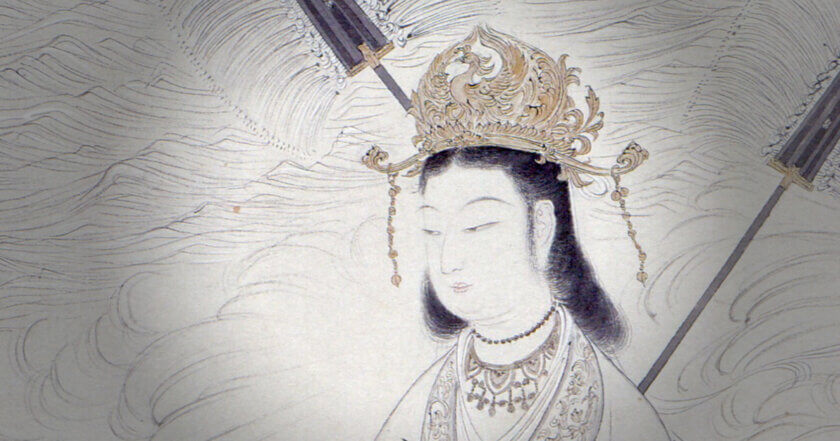
At the age of 17, Kikkawa Reika was deeply impressed by the work of the Fukko Yamato-e painter Reizei Tamechika who was active during the end of the Edo period, and deeply adored Tamechika. Kaburagi Kiyokata, a master of Bijinga paintings and also a friend of Reika, wrote in his essay about Reika saying Kikkawa Reika, adoring Reizei Temechika who lived in different generation, is like Sakai Hōitsu, who adored Ogata Kōrin of the Rinpa school style.” What Kikkawa Reika and Sakai Hōitsu had in common was that they were worshiping their pioneers based on their individual tastes, regardless of their painting circles. Of course, there may have studied Yamato-e studies such as Shimomura Kanzan. However, Reika wasn’t looking at Tamechika’s paintings as a mere research material. He tried to incorporate even the personality of Tamechika into himself. This excessiveness is also common with Tamechika because he incorporated dynasty hobby into his daily life. Reika’s greedy work based on studying classics shows deep intelligence and spirit. The work that is told to be the masterpiece of Kikkawa Reika by many people is “Risō”, which was exhibited in 1925 at the 7th Teiten Exhibition for the first time in 15 years.

“Risō”: The Masterpiece Kikkawa Reika’s Art
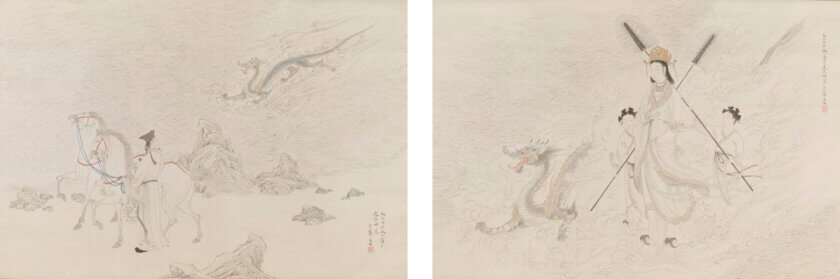
“Risō” is a work based on the long poem in “Soji”, which was the representative work of Kutsugen, who was a poet and a politician of Chu in Civil War period of China, and it was the most popular Japanese painting in the exhibition. At exhibitions sponsored by the government, which was stuck in a rut, such a large-scale *hakubyō-style masterpiece surprised the public and made the experts interested. Art historian Fujikake Shizuya praised this painting as “one of the most outstanding masterpieces that appeared in various exhibitions during the Meiji and Taishō period”. He said that each line was drawn with full strength and with the temperamental movement of lines, the interests of the poetry “Risō” is directly expressed as a picture.


Hakubyō: a plain painting depicted by only lines black ink without shadow or thick-and-thin lines.

What you should focus on the most is the beautiful and neat line drawing of Kikkawa Reika, who was called a “painter of lines”. Since Reika kept working hard every day, people who are watching the piece can feel the tense atmosphere from the well-controlled lines.
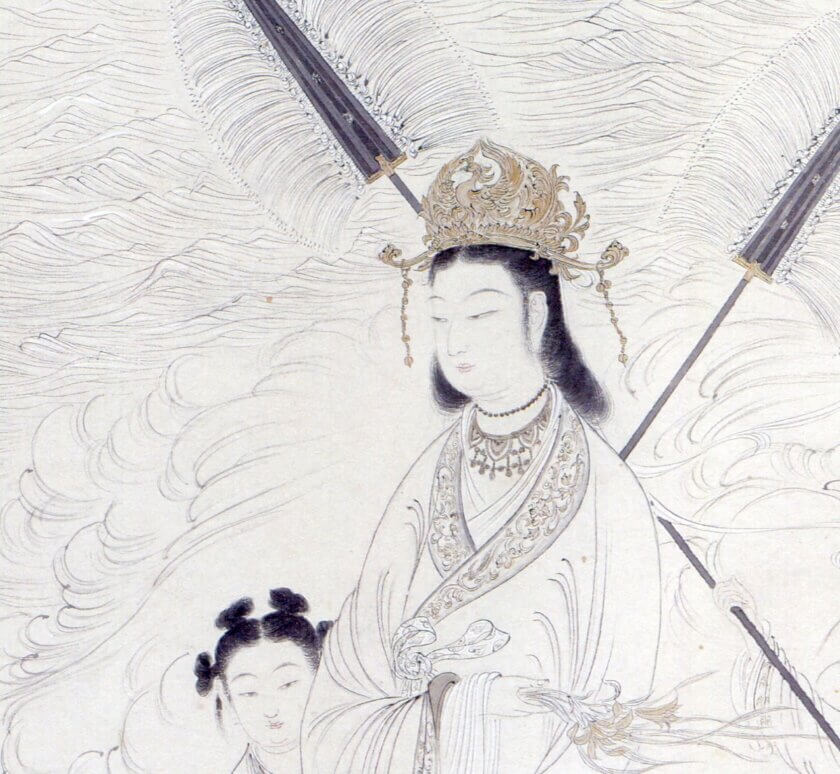
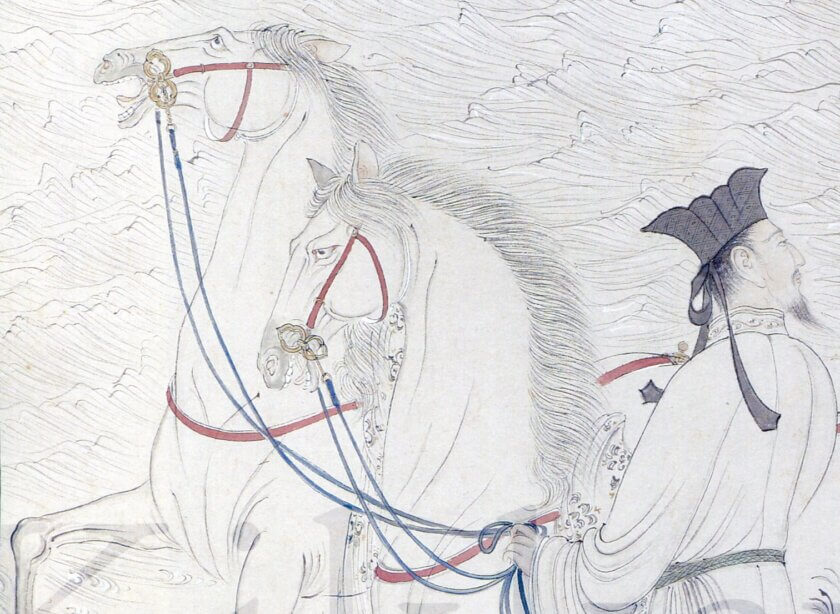
Later, according to Reika’s wife’s reminiscences, the production period of “Risō” was about a week. Reika, who usually has a chat for a long time when there are visitors, made his wife refuse visitors at the entrance during this time, and drew for five days without sleeping with only a memory of a little sketch. The lines were drawn with not only by the elbows and hands but with the whole body. When he drew a long line, he was full of sweat, and the wife needed to wipe his sweat off every stroke. By the time the work was completed, the face of Reika looked completely worn out, like a sick person. It can be said that this work, which Reika drew with his whole spirit, is the culmination of the Kikkawa Reika’s art which is based on the study of Yamato-e, including the Tosa school.
Contact Us

Please fill out the form below and submit for your inquiry.

❈FirstName
❈LastName
Country
❈E-mail
(❈Confirm E-mail)
❈Inquiry category Question
Consultation
Impression
Request
Others
❈Comment

is the mark for required item.


Your privacy is important to us. We are committed to protecting your privacy.

(or press ESC or click the overlay)

CEO Message

Our Feelings For Kakejiku


 The Japanese people have long set a high value on aesthetic senses since ancient times. As a result, the
peculiar culture which is not seen in other countries blossomed and many aspects of the modern Japanese
culture come from it. Parts of Japanese culture has been introduced to people in other countries recently,
so the number of people from other countries who are interested in Japanese culture has been increasing.
However, the Japanese aesthetic senses, which are the bases of Japanese culture, have been nurtured
through a long history, intertwining various elements intricately, such as climate, geographical features,
religion, customs and so on. Therefore, they are very difficult to understand not only for people from other
countries, but even for the Japanese people. I think the best tool which conveys these difficult senses
understandably is a “kakejiku.”
 The kakejiku (a hanging scroll; a work of calligraphy or a painting which is mounted and hung in an
alcove or on a wall) is a traditional Japanese art. It's no exaggeration to say that paintings are what
express aesthetic senses at all times and places. The kakejiku is an art which expresses the Japanese
aesthetic senses. The kakejiku has long been used in traditional Japanese events, daily life and so on since
ancient times. As a result, there are various customs of kakejiku in Japan; kakejiku and the life of the
Japanese are closely related. We can see Japanese values through kakejiku.
 The kakejiku is a cultural tradition which the Japanese people should be proud of. However, many people
in other countries don't know much about it because it hasn't been showcased as much. This is why I
decided to try to introduce it. The kakejiku world is very interesting and beautiful. We want not only the
Japanese, but also many people from other countries to know and enjoy it. I hope that many people will
love kakejiku someday.

(or press ESC or click the overlay)
Company Profile
syaoku.jpg(120220 byte)

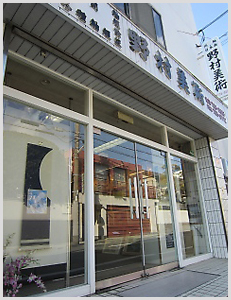
Name Art Nomura


President Tatsuji Nomura


Founded1973


Established1992


Address7-23 Babadori, Tarumi-ku, Kobe city,
Hyougo Prefecture, 655-0021, Japan


Capital10 million yen


URLhttp://nomurakakejiku.com


Our Business

 Art Nomura is an art dealer which produces kakejiku (hanging scrolls). We mount many paintings and calligraphic works in kakejiku in my factory. Kakejiku are our main product. We also remount and repair old or damaged kakejiku. We share the traditional Japanese art of kakejiku with people all over the world.


(or press ESC or click the overlay)
Access Map

Access Map


 The Japanese people have long set a high value on aesthetic senses since ancient times. As a result, the
peculiar culture which is not seen in other countries blossomed and many aspects of the modern Japanese
culture come from it. Parts of Japanese culture has been introduced to people in other countries recently,
so the number of people from other countries who are interested in Japanese culture has been increasing.
However, the Japanese aesthetic senses, which are the bases of Japanese culture, have been nurtured
through a long history, intertwining various elements intricately, such as climate, geographical features,
religion, customs and so on. Therefore, they are very difficult to understand not only for people from other
countries, but even for the Japanese people. I think the best tool which conveys these difficult senses
understandably is a “kakejiku.”
 The kakejiku (a hanging scroll; a work of calligraphy or a painting which is mounted and hung in an
alcove or on a wall) is a traditional Japanese art. It's no exaggeration to say that paintings are what
express aesthetic senses at all times and places. The kakejiku is an art which expresses the Japanese
aesthetic senses. The kakejiku has long been used in traditional Japanese events, daily life and so on since
ancient times. As a result, there are various customs of kakejiku in Japan; kakejiku and the life of the
Japanese are closely related. We can see Japanese values through kakejiku.
 The kakejiku is a cultural tradition which the Japanese people should be proud of. However, many people
in other countries don't know much about it because it hasn't been showcased as much. This is why I
decided to try to introduce it. The kakejiku world is very interesting and beautiful. We want not only the
Japanese, but also many people from other countries to know and enjoy it. I hope that many people will
love kakejiku someday.

(or press ESC or click the overlay)