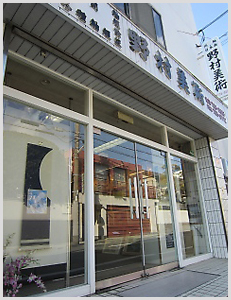
Jōtenkaku Museum, Where You Can Always See Masterpiece of Itō Jakuchū’s Ink Painting

Jōtenkaku Museum, Where You Can Always See Masterpiece of Itō Jakuchū’s Ink Painting
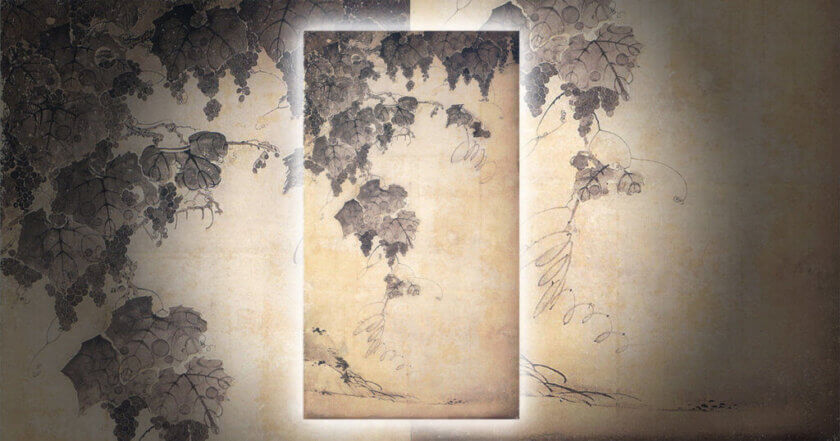
No one will deny the fact that Itō Jakuchū is one of the most popular artists in not only Edo period painting, but also in all Japanese arts.
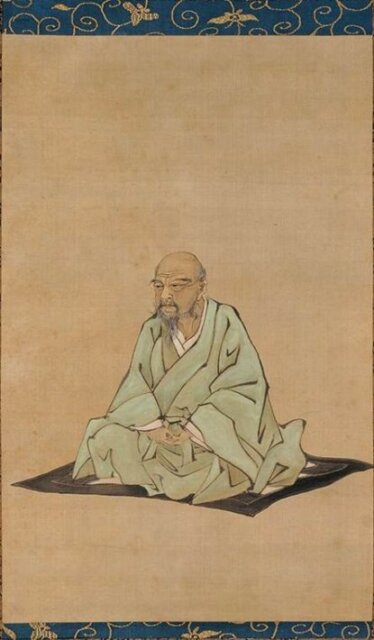
Itō Jakuchū by Kubota Beisen

It was in 1759, only four years after he became an artist, that he was entrusted with the wall painting of the Rinzaishū Shōkoku-ji group’s branch temple Rokuon-ji Daishoin, one of the high-class temple in Kyoto. The wall painting drawn at that time named “ Rokuon-ji Ōshoin Kyū(Old) Shōhekiga” was drawn in ink brush with a motif of grapes and bashō (Japanese banana), and the painting has been moved and kept here in Jōtenkaku Museum.
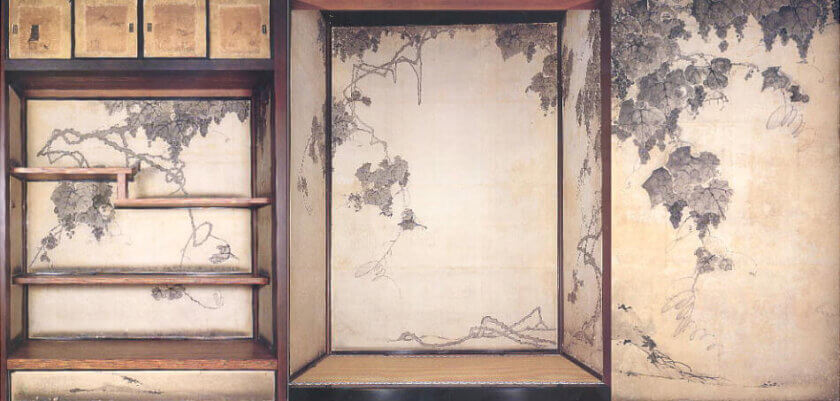
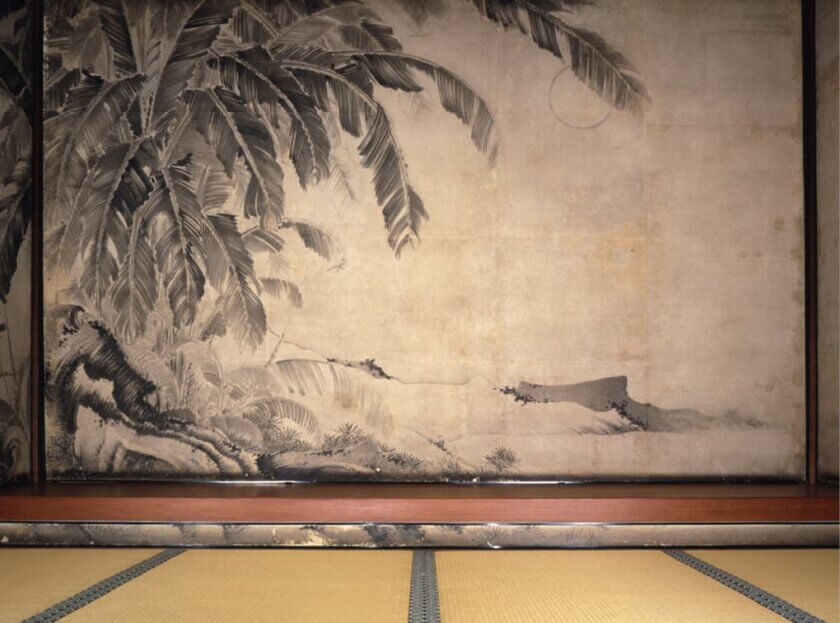
Grapes Wall Painting by Itō Jakuchū in Jōtenkaku Museum
Japanese Banana Wall Painting by Itō Jakuchū in Jōtenkaku Museum

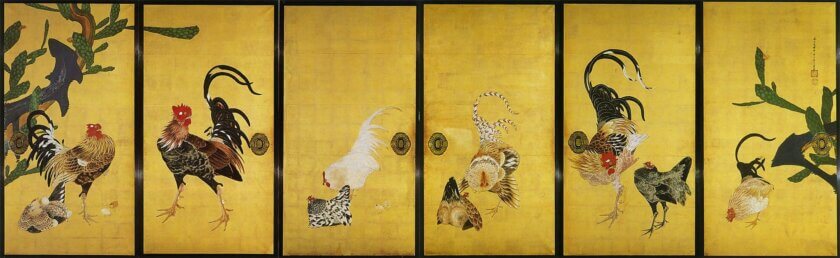
Most of Jakuchū’s art pieces are hanging scroll art, and there are not many masterpieces as big as this one except for “Hanamaru-zu” in Shikoku region’s Kotohiragū Okushoin and “Saboten Gunkei-zu Fusuma” in Osaka’s Saifuku-ji Temple. It is also valuable as a unique space that is permanently exhibited in the temple grounds famous to the artist. There is no doubt that it is one of the places that you should definitely visit even if you are not a fan of Jakuchū.
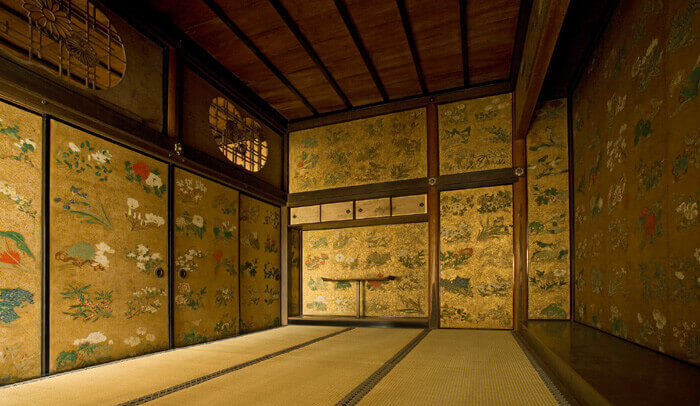
“Hanamaru-zu” in Shikoku region’s Kotohiragū Okushoin by Itō Jakuchū
“Saboten Gunkei-zu Fusuma” in Osaka’s Saifuku-ji Temple by Itō Jakuchū

If you look at the art piece in detail, you can immediately understand why Jakuchū, who was nothing more than an art member of Kanō and Tosa, was given a big work to draw wall painting of a big temple’s important space. An outstanding brushstroke definitely catches people’s hearts.

Also the museum houses national treasures and various important cultural properties, so this museum is a must-see for Japanese art fans.

NameJōtenkaku Museum
AddressImadegawa-dori, Karasuma Higashi-iru Kamigyo-ku, Kyoto 602-0898 Japan
Telephone075-241-0423 (Japanese only)
AccessBy train: Subway Karasuma Line
:Get off at Imadegawa Station.

By bus:
City Bus: Get off at Karasuma Imadegawa Stop.
City Bus: Get off at Doshisha-mae Stop.

From Kinkaku-ji
City Bus: Get on at Kinkakuji-michi Stop. Get off at Karasuma Imadegawa Stop.
City Bus: Get on at Kinkakuji-michi Stop. Get off at Dōshisha-mae Stop.

From Ginkaku-ji
City Bus: Get on at Ginkakuji-michi Stop. Get off at Karasuma Imadegawa Stop.
City Bus: Get one at Ginkakuji-michi Stop. Get off at Dōshisha-mae Stop.
FeeGeneral: JPY800 yen
Seniors (over 65) and University students: JPY600
High school and Middle School students: JPY300
Elementary School Students: JPY200

+For groups of 20 or more, there is a ¥100 discount on the admission fee.
+Admission is free for the disabled (must have certification) and one caretaker.
+Admission fee may change depending on the exhibition.
+This building is barrier-free.
Open10:00 a.m.-5:00 p.m.enter by 4:30 p.m.
Contact Us

Please fill out the form below and submit for your inquiry.

❈FirstName
❈LastName
Country
❈E-mail
(❈Confirm E-mail)
❈Inquiry category Question
Consultation
Impression
Request
Others
❈Comment

is the mark for required item.


Your privacy is important to us. We are committed to protecting your privacy.

(or press ESC or click the overlay)

CEO Message

Our Feelings For Kakejiku


 The Japanese people have long set a high value on aesthetic senses since ancient times. As a result, the
peculiar culture which is not seen in other countries blossomed and many aspects of the modern Japanese
culture come from it. Parts of Japanese culture has been introduced to people in other countries recently,
so the number of people from other countries who are interested in Japanese culture has been increasing.
However, the Japanese aesthetic senses, which are the bases of Japanese culture, have been nurtured
through a long history, intertwining various elements intricately, such as climate, geographical features,
religion, customs and so on. Therefore, they are very difficult to understand not only for people from other
countries, but even for the Japanese people. I think the best tool which conveys these difficult senses
understandably is a “kakejiku.”
 The kakejiku (a hanging scroll; a work of calligraphy or a painting which is mounted and hung in an
alcove or on a wall) is a traditional Japanese art. It's no exaggeration to say that paintings are what
express aesthetic senses at all times and places. The kakejiku is an art which expresses the Japanese
aesthetic senses. The kakejiku has long been used in traditional Japanese events, daily life and so on since
ancient times. As a result, there are various customs of kakejiku in Japan; kakejiku and the life of the
Japanese are closely related. We can see Japanese values through kakejiku.
 The kakejiku is a cultural tradition which the Japanese people should be proud of. However, many people
in other countries don't know much about it because it hasn't been showcased as much. This is why I
decided to try to introduce it. The kakejiku world is very interesting and beautiful. We want not only the
Japanese, but also many people from other countries to know and enjoy it. I hope that many people will
love kakejiku someday.

(or press ESC or click the overlay)
Company Profile
syaoku.jpg(120220 byte)

Name Art Nomura


President Tatsuji Nomura


Founded1973


Established1992


Address7-23 Babadori, Tarumi-ku, Kobe city,
Hyougo Prefecture, 655-0021, Japan


Capital10 million yen


URLhttp://nomurakakejiku.com


Our Business

 Art Nomura is an art dealer which produces kakejiku (hanging scrolls). We mount many paintings and calligraphic works in kakejiku in my factory. Kakejiku are our main product. We also remount and repair old or damaged kakejiku. We share the traditional Japanese art of kakejiku with people all over the world.


(or press ESC or click the overlay)
Access Map

Access Map


 The Japanese people have long set a high value on aesthetic senses since ancient times. As a result, the
peculiar culture which is not seen in other countries blossomed and many aspects of the modern Japanese
culture come from it. Parts of Japanese culture has been introduced to people in other countries recently,
so the number of people from other countries who are interested in Japanese culture has been increasing.
However, the Japanese aesthetic senses, which are the bases of Japanese culture, have been nurtured
through a long history, intertwining various elements intricately, such as climate, geographical features,
religion, customs and so on. Therefore, they are very difficult to understand not only for people from other
countries, but even for the Japanese people. I think the best tool which conveys these difficult senses
understandably is a “kakejiku.”
 The kakejiku (a hanging scroll; a work of calligraphy or a painting which is mounted and hung in an
alcove or on a wall) is a traditional Japanese art. It's no exaggeration to say that paintings are what
express aesthetic senses at all times and places. The kakejiku is an art which expresses the Japanese
aesthetic senses. The kakejiku has long been used in traditional Japanese events, daily life and so on since
ancient times. As a result, there are various customs of kakejiku in Japan; kakejiku and the life of the
Japanese are closely related. We can see Japanese values through kakejiku.
 The kakejiku is a cultural tradition which the Japanese people should be proud of. However, many people
in other countries don't know much about it because it hasn't been showcased as much. This is why I
decided to try to introduce it. The kakejiku world is very interesting and beautiful. We want not only the
Japanese, but also many people from other countries to know and enjoy it. I hope that many people will
love kakejiku someday.

(or press ESC or click the overlay)