A Kakejiku Chosen by Customers from America as a Memory of Their Trip to Japan
For customers visiting Japan for the first time, a kakejiku may feel like a slightly mysterious object.
- It is a painting, yet it can be rolled up and stored.
- It can be changed according to the season or occasion.
- And not only the artwork itself, but also the mounting has its own meaning and beauty.
In this article, we would like to share the story of customers from America who visited our shop during their stay in Kōbe while traveling through Japan by cruise ship, and chose Japanese kakejiku.
It was not simply a shopping experience.
It was a very memorable time in which they chose kakejiku both as a memory of their trip to Japan and as a gift for their beloved daughter.
Customers from America Who Stopped in Kōbe During Their Cruise Trip
The customers who visited us this time came from Florida, USA.
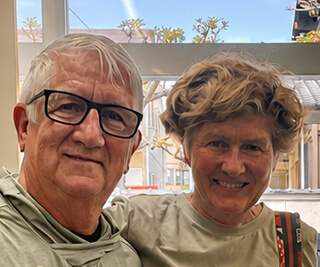
They started their journey in Tokyo, then traveled by cruise ship to Kōbe, Kōchi, Hiroshima, and Moji, before continuing on to Korea.
It was their first trip to Japan.
As we spoke with them in the shop, they told us how impressed they were by the beauty of Japan’s streets, parks, and public spaces.
“Japan is very clean, very organized, and the parks and gardens are beautiful.”
Hearing those words made us very happy as people who work in Japan.
They told us that, when they travel, they often buy art that lets them feel the culture of the places they visit.
This time as well, they came to our shop looking for something that would become a meaningful memory of their trip to Japan.
Looking for a Japanese Artwork as a Gift for Their Daughter
At first, the customers were looking for a Japanese-style artwork as a gift for their daughter.
They were interested in a relatively narrow kakejiku or a woodblock print, and the motifs they mentioned included cats, horses, cherry blossoms, and Mount Fuji.
The story about Mount Fuji was especially memorable.
Their daughter lives in Portland, Oregon, where there is a mountain called Mount Hood.
Since Mount Hood somehow resembles Mount Fuji, they were also interested in artwork featuring Mount Fuji.
We felt that they were not only looking for a memory of their trip, but also for an artwork that could connect Japan with the place where their daughter lives.
When we hear this kind of background, choosing an artwork is no longer simply a matter of choosing a beautiful picture.
It becomes a time of searching together for one piece where the customer’s travel memories, their feelings for the person receiving the gift, and a sense of Japan naturally come together.
Comparing Kakejiku by Actually Hanging Them
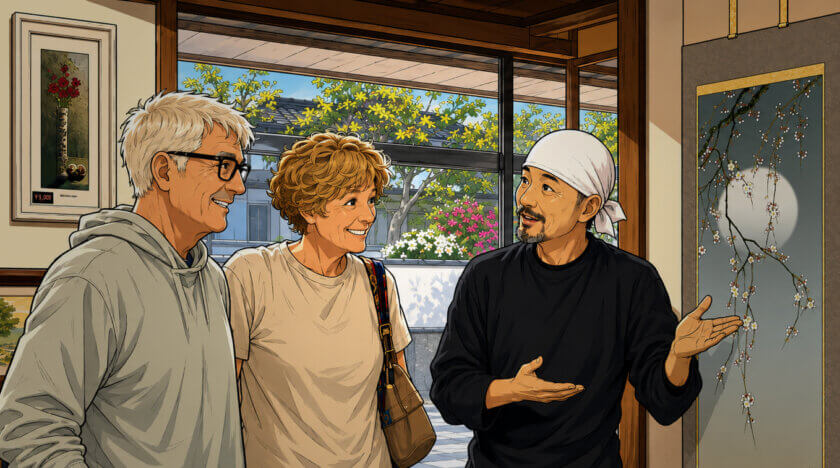
While listening to the customers’ preferences, we showed them several kakejiku by actually hanging them in the shop.
As they compared a cherry blossom kakejiku, Mount Fuji kakejiku, a plum-and-bush-warbler kakejiku, and a red Mount Fuji kakejiku, their preferences gradually became clearer.
In the end, they chose two pieces: a cherry blossom kakejiku and a red Mount Fuji kakejiku.
Cherry blossoms are one of the flowers that symbolize Japan.
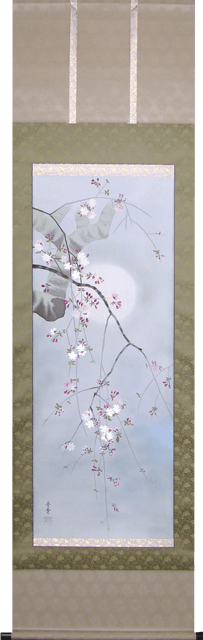
They have not only the gorgeous beauty of full bloom, but when combined with the moon in a night scene, they also create a quiet and poetic atmosphere.
Red Mount Fuji, on the other hand, is known as a highly auspicious subject.
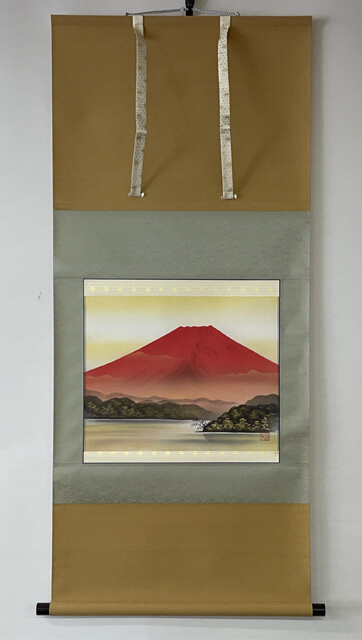
From summer into autumn, when certain conditions such as the morning light align, Mount Fuji can appear dyed red.
This rare sight has long been cherished in Japan as a symbol of good fortune.
The color red itself is also often regarded in Japan as an auspicious color that wards off evil.
For that reason, red Mount Fuji kakejiku are especially suitable for New Year displays and celebratory occasions.
The customers listened to this explanation with great interest.
Explaining the Meaning of Fūtai and Red Mount Fuji
When we introduce kakejiku to overseas customers, we try to explain not only the beauty of the artwork, but also the unique structure and meaning of kakejiku.
This time, the customers became interested in the two narrow fabric strips hanging from the upper part of the kakejiku.
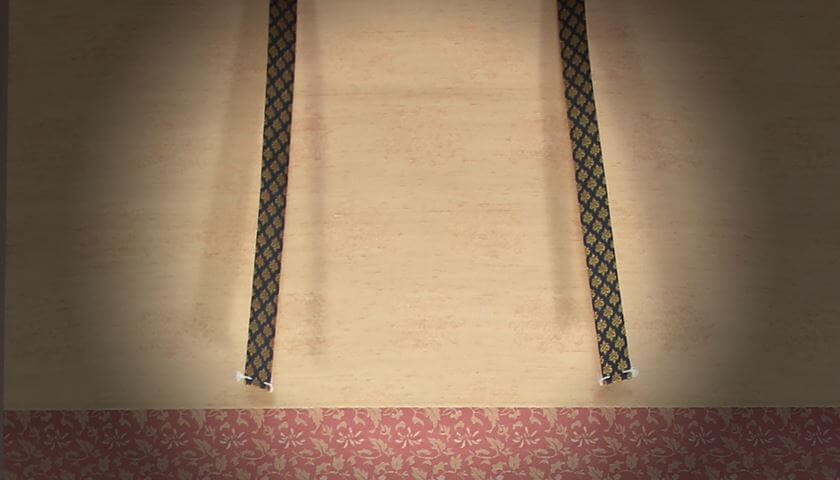
These are called fūtai.
Today, fūtai mainly serve a decorative role, but originally they were connected to the history and display environment of hanging scrolls.
Kakejiku are said to have been introduced from ancient China.
In those times, hanging scrolls were sometimes displayed outdoors in China.
It is said that fūtai were attached as a way to keep birds away from the scroll. When the fūtai moved in the wind, birds would be startled and fly away.
This structure is thought to remain today as a trace of that older function.
When we explain this, customers often become interested in the fact that a kakejiku is not merely a painting, but an art form shaped by a long history.
We also explained that red Mount Fuji has long been valued in Japan as an auspicious subject.
Although red Mount Fuji is a phenomenon generally associated with the end of summer into the beginning of autumn, in Japan this rare sight has been regarded as a symbol of good fortune.
For that reason, kakejiku depicting red Mount Fuji are sometimes displayed at New Year to wish for good fortune in the coming year, or hung on celebratory occasions.
Carefully Packing the Kakejiku So They Would Be Easy to Carry Home
The kakejiku were stored in paulownia boxes, but since the customers were traveling by cruise ship, we carefully packed them to help prevent the boxes from being damaged during their journey.
When customers purchase artwork while traveling, the ease of carrying it home is also very important.
We packed the kakejiku carefully, hoping they would arrive safely at the customers’ home and eventually be displayed for their daughter.
At the end, we also had the pleasure of taking a commemorative photo.
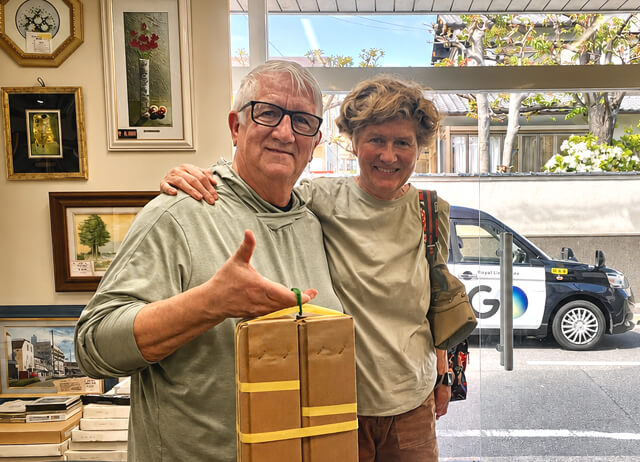
It was very memorable to see them smiling while holding the packed kakejiku.
A Google Review from the Customers
After their visit, the customers kindly left us a very nice Google review.
We had a wonderful time looking through and choosing some Japanese scroll artwork. The owner was very helpful and gave us a lot of information about the art. The assistants were also very professional in hanging different options for us to view. Highly recommended.
What made us especially happy about this review was not only that they were pleased with the artworks they purchased, but also that they enjoyed the process of choosing them.
For customers who are seeing kakejiku for the first time, there are often many things that are unfamiliar.
That is why we value the process of actually hanging different pieces, comparing them together, and explaining their meanings and backgrounds so that customers can choose with confidence.
It was very encouraging for us to know that the customers felt this during their visit.
Helping Overseas Customers Enjoy Japanese Kakejiku
This visit was a very happy experience for us as well.
Customers visiting Japan for the first time encountered kakejiku in Kōbe and chose two pieces, cherry blossoms and red Mount Fuji, as memories of their trip.
Furthermore, one of those pieces was chosen as a gift for their daughter.
This reminded us once again that a kakejiku is not simply an interior decoration, but an artwork that can carry memories and feelings.
At ART NOMURA, we do our best to help overseas customers choose Japanese kakejiku with confidence by explaining the meaning of the artwork, how to display it, how to store it, and how to carry it home.
- As a memory of a trip to Japan.
- As a gift for someone important.
- Or as one piece through which to enjoy Japanese culture at home.
If you are interested in kakejiku, please feel free to contact us.
We will listen to your preferences and purpose, and propose a piece that suits you.