Restoration Request For Two Kakejiku Scrolls Long Kept In A Family Home (USA)
One of the most common inquiries we receive is about restoring kakejiku.
Many families have cherished their scrolls for a long time, but after many years, the scrolls may develop damage or stains and can no longer be displayed.
This article shares a restoration story from a customer living in the United States.
Two Kakejiku Scrolls Sent For Restoration
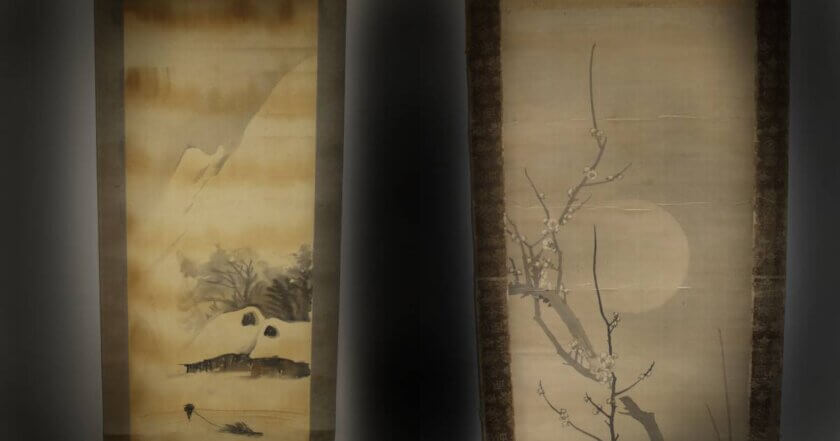
The two scrolls in this inquiry have been in the customer’s home since the customer’s family lived in Yokohama in the 1970s. Due to long-term environmental effects over the years, the scrolls developed damage and stains, and the customer began considering professional restoration.
Along with the inquiry, the customer kindly sent us photos of both scrolls.
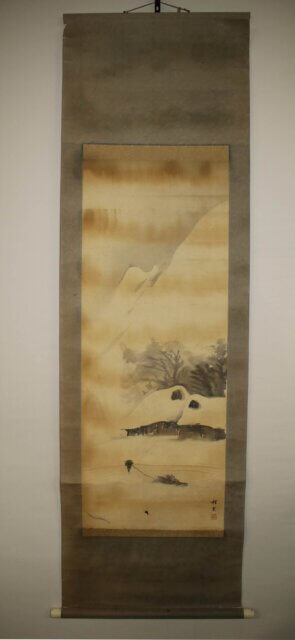
First, the snowy landscape scroll.
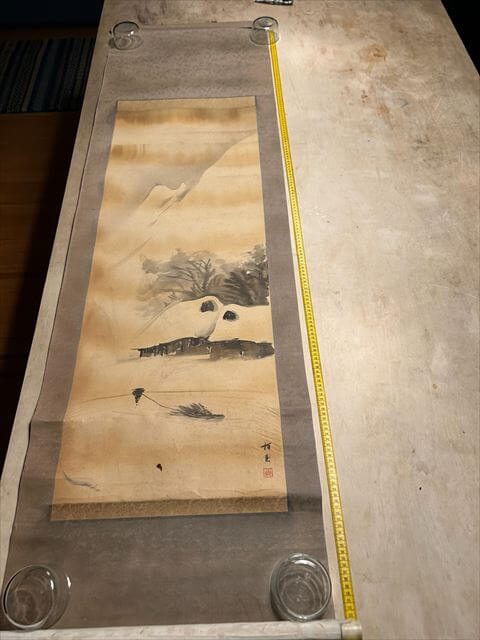
From the photos, it was clear that the overall staining was quite severe.
We explained that a single round of cleaning and stain removal might not be enough, and that multiple rounds could be necessary.
At the same time, depending on the durability and condition of the artwork, we may need to prioritize protecting the piece and conclude the cleaning and stain-removal process within a safe range.
Next is the “Moon And Plum Blossoms” scroll.
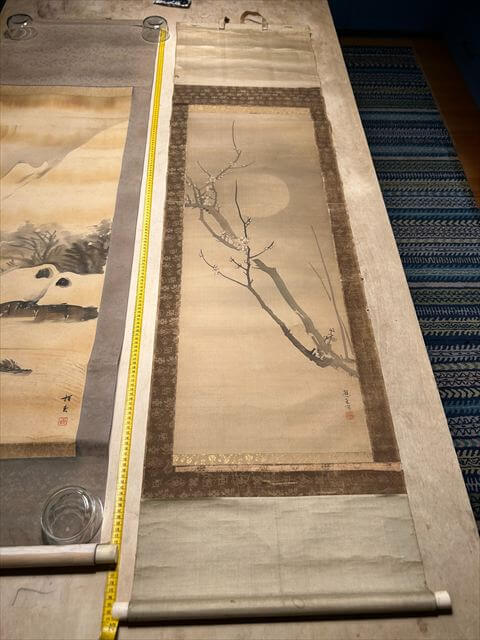
At first glance, the photos did not show obvious staining, but there were visible tears in the artwork.
Therefore, we recommended retouching and reinforcement.
After providing provisional estimates for both scrolls, the customer agreed to proceed, and the two scrolls were shipped to us.
The Scrolls Arrived: They Were In Worse Condition Than Expected
After the scrolls arrived and we inspected them in person, we found that both were in significantly worse condition than what we had initially understood from the photos.
First, the snowy landscape scroll. In addition to stain-related soiling, we observed symptoms that appeared to be discoloration from sun exposure.
We explained to the customer that it might be very difficult to completely remove this type of discoloration and restore the piece to a perfectly clean state.
Next, the “Moon And Plum Blossoms” scroll.
Here, we found staining that had not been noticeable in the photos, and the tears in the artwork were far more extensive than expected, indicating a very severe condition.
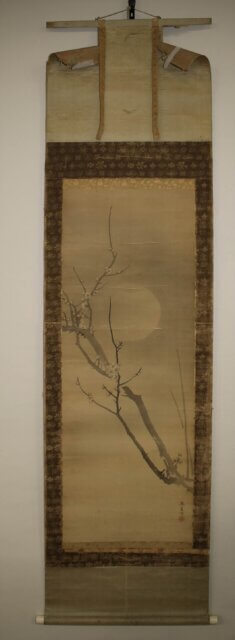
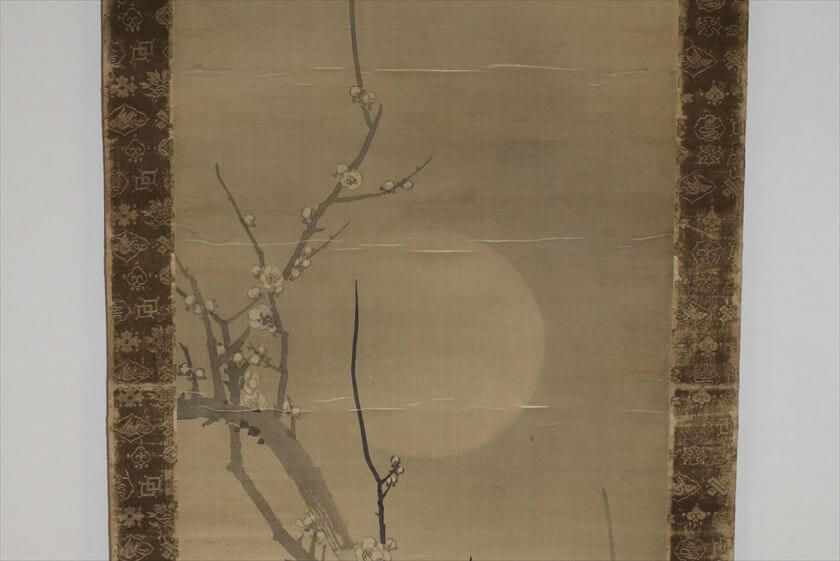
Because the staining on this scroll was relatively light, and because the overall condition was worse than anticipated, we decided to prioritize protecting the artwork and not perform cleaning in this case.
We also explained that retouching would be required over a wider area than originally expected, which would add additional cost, and the customer understood and accepted this.
We then received a positive reply from the customer indicating that they had accepted our in-person assessment and would like to wait for our professional judgement on whether restoration was possible, along with the more detailed estimate.
Detailed Discussion And Planning
After we shared our in-person assessment, we were ready to move into confirming the final specifications for the remounting of both scrolls.
However, before that, the customer expressed a very understandable concern:
Because both scrolls were significantly damaged, the customer wondered whether either might be “too far gone,” meaning restoration might not be worthwhile, and asked whether we could share before-and-after photos of scrolls in similar condition.
In response, we clearly explained our professional judgement:
While it is unfortunately not possible to restore the scrolls to a “like-new” condition, we expect a significant improvement compared to their current state. Our goal is to restore them to a condition where they can be properly enjoyed without the damage interfering with appreciation.
At the same time, we will not perform risky procedures that could place excessive strain on the artwork.
We also shared photos of similar restoration examples as a reference.
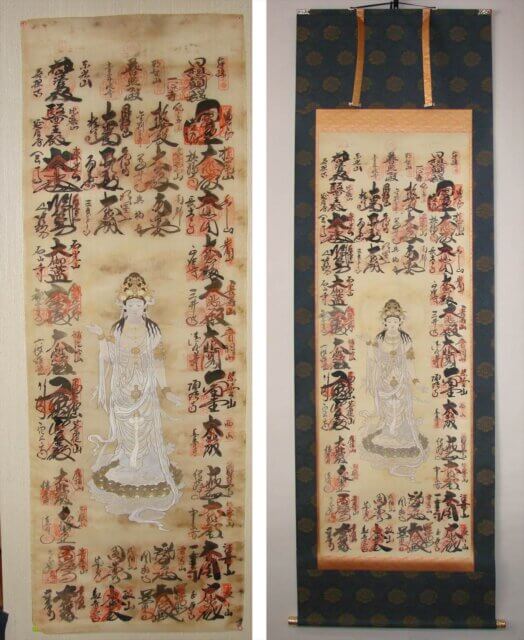
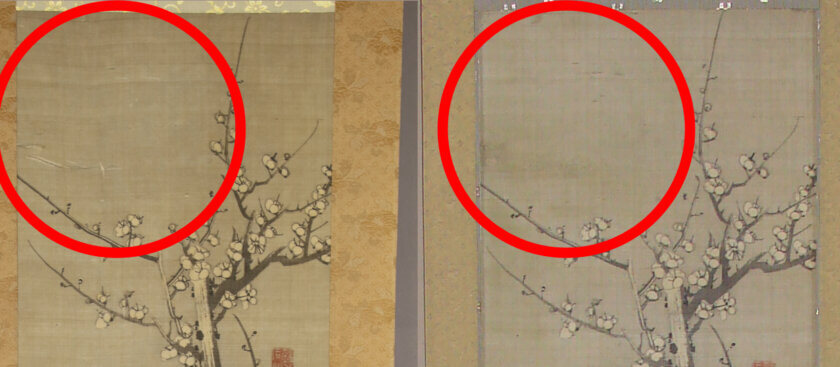
We then received another reply from the customer saying that the past restoration examples were helpful, and we proceeded to more specific discussions about mounting fabrics and detailed specifications.
For the “Moon And Plum Blossoms” scroll, the customer requested a subdued, brown-toned fabric, so we prepared and proposed suitable options.
For the snowy landscape scroll, the customer selected a fabric with colors and patterns that would highlight the coldness and quiet atmosphere of the winter scene.
After confirming additional details, we were ready to begin the remounting work.
The Most Challenging Parts: Retouching And Stain Removal
As we had anticipated, the most challenging part of the “Moon And Plum Blossoms” scroll was the retouching work, and the most challenging part of the snowy landscape scroll was stain removal.
The “Moon And Plum Blossoms” scroll is painted on silk.
When the silk fibers themselves are torn, retouching becomes far more difficult than retouching paper-based artworks.
This is because it requires repeating an extremely delicate process: using a very fine brush, reducing moisture as much as possible, and layering thin, light pigments little by little, again and again, to gradually fill and blend the damaged area. Compared with paper, it is much more difficult to make retouching colors blend naturally on silk.
For the snowy landscape scroll, the staining was so severe that a single round of stain removal was not enough to achieve the desired improvement. However, it is not as simple as increasing the chemical concentration to remove stains faster. If the concentration is raised too aggressively, it can cause damage or unwanted effects to the artwork itself. In some cases, it is safer and more effective to repeat stain removal patiently using low-to-medium concentrations several times.
Determining the correct approach is case-by-case and relies heavily on experience.
Restoration Completed: Two Scrolls Brought Back To Life
After a long restoration period, the remounting and restoration of both scrolls were completed.
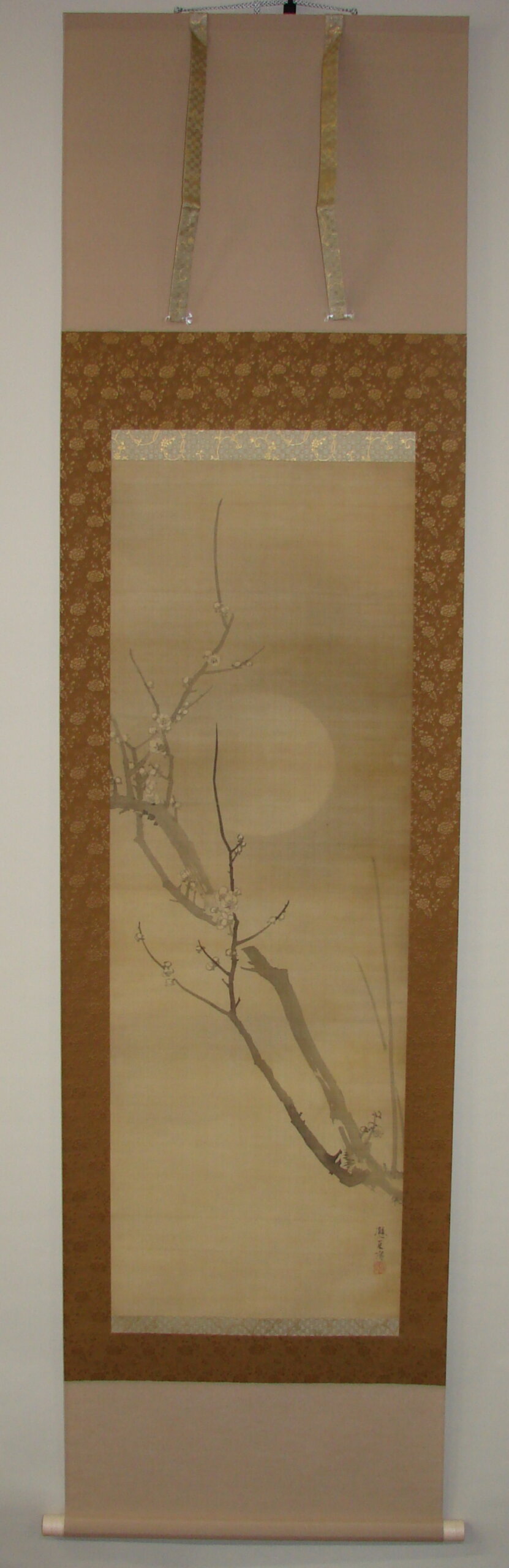
On the “Moon And Plum Blossoms” scroll, the torn areas were carefully retouched, allowing the scroll to be enjoyed without the damage interfering with appreciation.
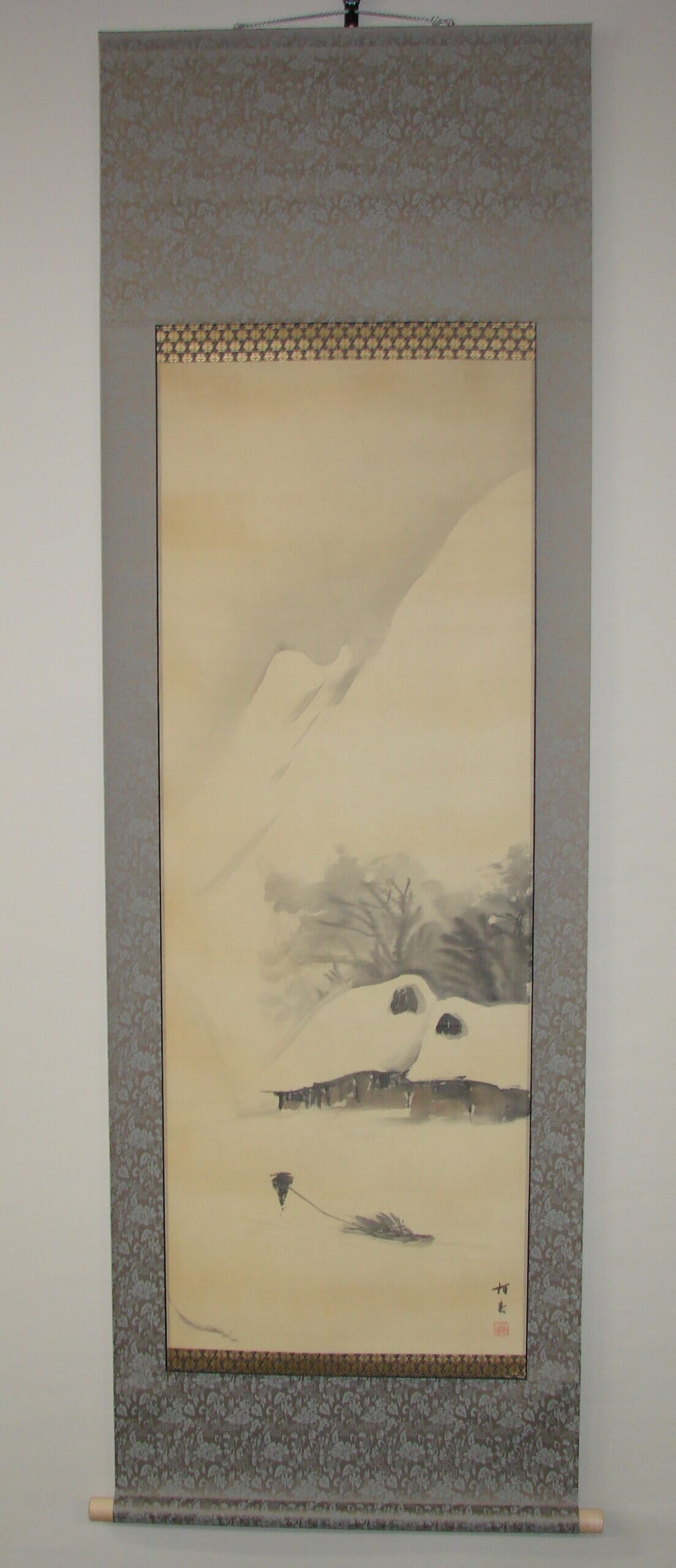
On the snowy landscape scroll, the stains and sun-related discoloration improved greatly, and the winter scene was beautifully revived.
We then shipped the scrolls to the customer. After the package arrived, we received the following message of gratitude:
We have received the scrolls and are so pleased! Thank you for your careful restoration of these beloved family pieces.
Conclusion: If You Are Concerned About Stains Or Restoration
We at ART NOMURA restore damaged and stained kakejiku scrolls like the ones in this story.
If you have a scroll that has been cherished in your home for many years and is now difficult to display due to stains, discoloration, or damage, please feel free to consult us.
We will do our best to bring your scroll back to life with the highest level of care and skill we can provide.