Shikoku Pilgrimage Temple: No. 27 Kōnomine-ji
The Checkpoint Temple of Tosa with Continuous Steep Slopes
- Name: Chikurinzan Jizō-in Kōnomine-ji
- Main Deity: Jūichimen Kanzeon Bosatsu (Eleven-Faced Bodhisattva Avalokitesvara)
- Goeika (Pilgrimage Song):
- The Buddha’s heart of grace at Kōnomine;
- both the mountain and the vow are high, like the sound of water.
Access From Temple No. 26, Kongōchō-ji:
- On foot: Exit the grounds of Temple No. 26 to the west and descend the mountain path. After that, walk along National Route 55, and head inland from around Tōnohama Station on the Tosa Kuroshio Railway. Climb a very tough, steep slope. Approx. 33 km, 12 hours.
- By Car: Return along the path you came from the grounds of Temple No. 26, and once on National Route 55, head towards Kōchi. After heading inland, it becomes a quite steep slope. Approx. 34 km, 1 hour 20 minutes.
- Public Transport: A 1-hour and 20-minute walk from Temple No. 26 brings you to the Kiramesse Muroto bus stop near the Kiramesse Muroto Roadside Station. From here, take the Kōchi Tōbu Kōtsū Bus for 40 minutes, get off at Higashidani-iriguchi, and walk for 1 hour 30 minutes.
The Steep Slope that Makes Pilgrims Cry
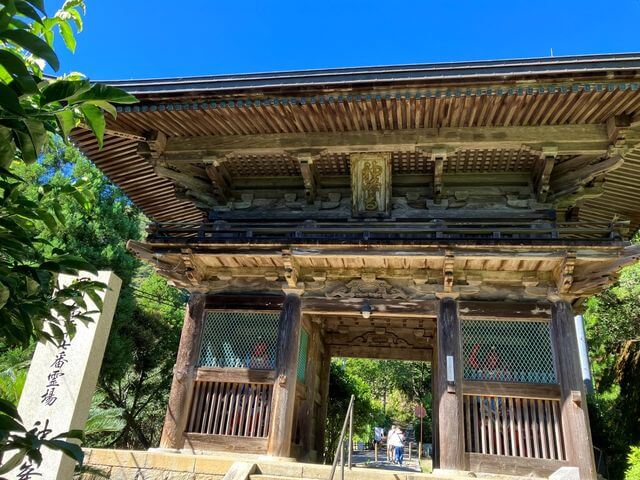
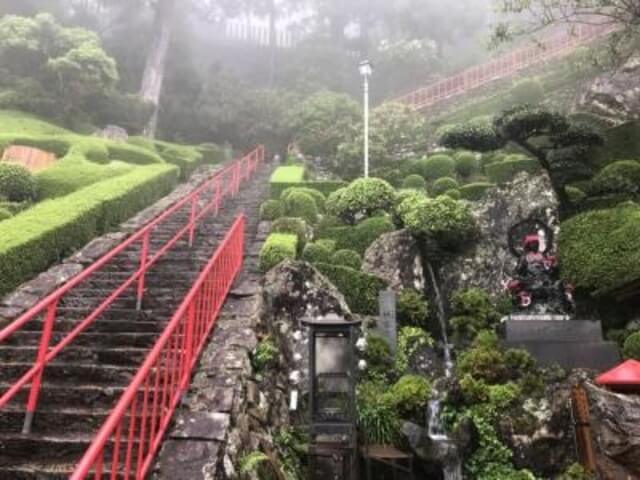
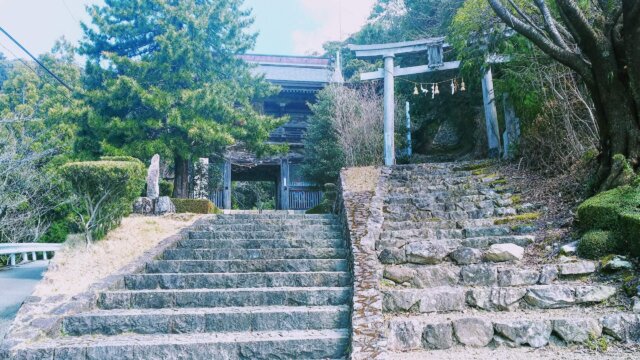
Due to the severe steepness of the road leading to the temple, Kōnomine-ji is known as the “Checkpoint Temple of Tosa” (Tosa no Sekisho-dera). The distance from the previous temple, Kongōchō-ji, is approximately 33 km. Even after walking this distance and climbing to Kōnomine-ji at an elevation of 450 meters, considering there is no shukubō (temple lodging) there and one must descend to the town at the foot of the mountain, the walking pilgrimage from No. 26 takes a full day. Especially harsh is the steep slope called “Mattate” (Straight Up). It is a path that makes pilgrims cry, where every step feels like severe ascetic practice, and a steep incline reaching up to 45 degrees continues for 1.3 km. Even beyond the Niō-mon Gate that finally comes into view, about 150 stone steps stretch up to the Main Hall, making one sigh involuntarily.
Miraculous Water that Quenches Thirst
Welcoming the pilgrims who have climbed up sweating profusely is the “Kōnomine Water,” which holds the miraculous power of Kōbō Daishi. It is a legendary water said to have saved the life of a bedridden woman who was given it to drink, and for a body gasping for breath after climbing the steep slope, it can truly be called the water of life.
The area around the pure water is a garden with impressive, well-tended Satsuki azalea bushes, and in early spring, plum blossoms give off a fragrant, sweet scent.
Preserving the History of Shinto-Buddhist Syncretism
The temple’s history dates back to the age of myths, beginning when Empress Jingū prayed here for victory in battle. In other words, this was originally a Shinto shrine built long before the introduction of Buddhism. In that sacred precinct, Gyōki enshrined a statue of the Eleven-Faced Kannon, and since then it became a sacred site of Shinto-Buddhist syncretism. Although it fell into ruin temporarily due to the Haibutsu Kishaku (anti-Buddhist movement) in the Meiji era, it was later restored. The torii gate of Kōnomine Shrine, standing beside the Niō-mon Gate, seems to tell this very history.
DATA
Address: 2594 Tōnohama, Yasuda-chō, Aki-gun, Kōchi Prefecture
Phone: 0887-38-5495
Access: 1 hour 20 minutes on foot from Tōnohama Station on the Tosa Kuroshio Railway
Parking: Available (Paid)
Lodging: None
Your Pilgrimage, Your Art
Completing the Shikoku Pilgrimage is a once-in-a-lifetime journey—but what if you could preserve it in a form that lasts forever?
Many pilgrims collect red stamps and calligraphy from each temple on a special silk scroll called a nōkyōjiku.
This sacred record of your path can be transformed into a kakejiku—a traditional Japanese hanging scroll—not only preserving the memories, but turning them into a work of cultural and spiritual art.
It’s more than a souvenir—it’s a way to honor your journey, your prayers, and your growth.
To learn more about how a nōkyōjiku becomes a kakejiku, and what makes this transformation so meaningful, please refer the below link.