Shikoku Pilgrimage Temple: No. 26 Kongōchō-ji
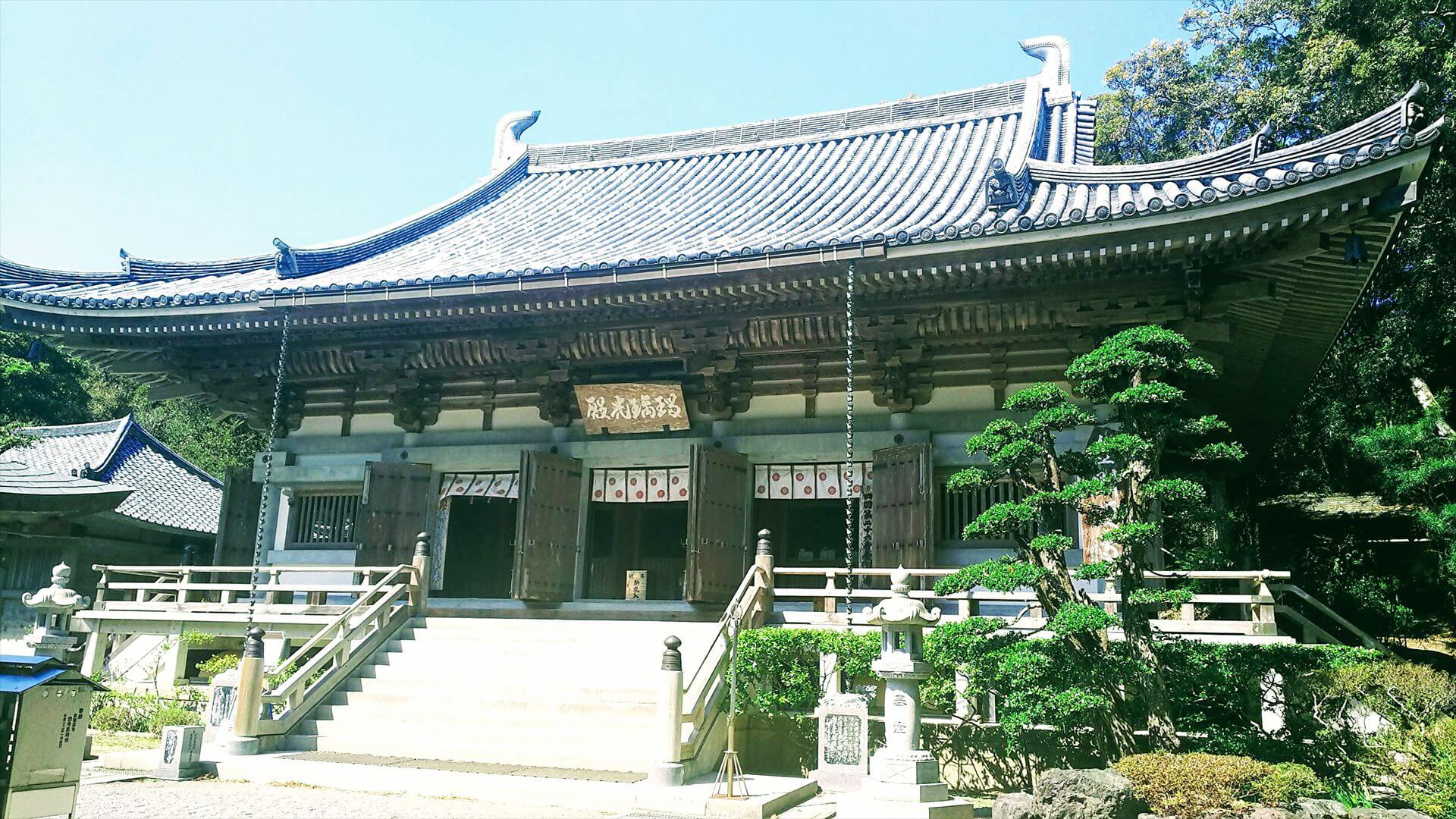
Founded by Kōbō Daishi, known as “Tosa Nishidera” (The West Temple of Tosa)
- Name: Ryūzuzan Kōmyō-in Kongōchō-ji
- Main Deity: Yakushi Nyorai (Bhaisajyaguru)
- Goeika (Pilgrimage Song):
- The pure land where one places their hope for rebirth
- lies in the sky of Nishidera where the moon sets.
Access From Temple No. 25, Shinshō-ji:
- On foot: Walk along National Route 55 along the coast, cross Moto-bashi Bridge over the Moto River, and turn right using Minshuku Urashima (which also serves as a drive-in) as a landmark. As you go up the slope, it turns into a mountain trail exclusively for walking pilgrims midway. Approx. 5 km, 1 hour 40 minutes.
- By Car: The same route as walking up to Moto-bashi Bridge. After turning right from the national route, follow the winding road up to the mountaintop temple. Approx. 6 km, 10 minutes.
- Public Transport: Walk to the Muroto bus stop, take the Kōchi Tobu Kotsu Bus bound for Kōchi for 15 minutes, and get off at Moto-bashi.
The Training Ground of the Young Kōbō Daishi
In the Goeika, this temple is referred to as “Nishidera” (West Temple). Since ancient times, it has been familiar as one of the “Three Mountains of Muroto” under the name “Nishidera.”
The founding of Kongōchō-ji dates back to the 2nd year of Daidō (807). By imperial decree of Emperor Saga, the Daishi carved a statue of Yakushi Nyorai at the place where he trained in his youth, and enshrining this Yakushi Nyorai as the main deity marked the beginning of this temple. Since then, the temple received deep faith from the Imperial family and prospered, becoming an imperially commissioned temple (chokugan-sho) by Emperor Junna. It is said that during the Heian period, the temple grounds of Kongōchō-ji covered most of present-day Muroto City. In the Middle Ages, it was protected by the Chōsokabe clan, and in the Edo period by the Yamauchi lords of the Tosa Domain, experiencing great prosperity. However, entering the Meiji era, it gradually declined due to the Haibutsu Kishaku (anti-Buddhist movement). In the 32nd year of Meiji (1899), the temple buildings were lost in a fire. The current buildings were reconstructed after that.
Stone Steps for Warding Off Evil
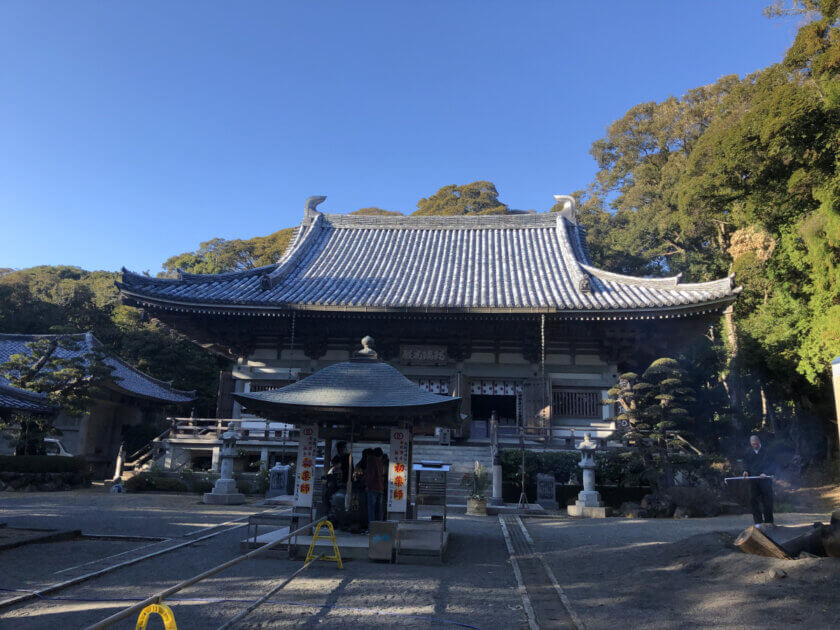
You climb the stone steps for warding off evil (yakuyoke), the number of which matches the calamitous years (yakudoshi) for men and women. Passing through the Sanmon Gate and climbing further, you will find the Shōrō (Bell Tower) on your right and the Daishi-dō Hall on your left. Climbing the stairs continuing straight ahead leads to the Main Hall. The main deity, Yakushi Nyorai, is a hidden Buddha (Hibutsu) but is unveiled every New Year (until January 8th). Also, the Daishi-dō stands facing west, with its back to the Main Hall. This is based on a legend that Kōbō Daishi chased away a tengu (goblin) that was causing mischief in this area towards the west, and the hall is positioned to keep watch so it doesn’t return.
Numerous Cultural Properties
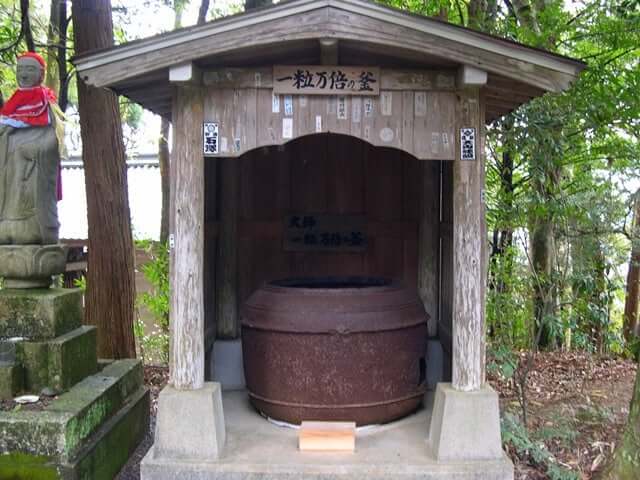
Beside the Daishi-dō is the “Ichiryū Manbai no Kama” (The Cauldron of One Grain Becoming Ten Thousand). According to legend, when Kōbō Daishi cooked 3 gō and 3 shaku of rice, it multiplied ten thousand times. This cauldron is enshrined in a small hall near the Daishi-dō. The Reihō-den (Treasure Hall) preserves numerous cultural properties, such as Buddhist statues from the Heian period and esoteric Buddhist implements said to have belonged to Kōbō Daishi. You can view them if you contact the temple in advance (viewing fee by donation).
DATA
Address: 523 Moto Otsu, Muroto City, Kōchi Prefecture
Phone: 0887-23-0026
Access: From Nahari Station on the Tosa Kuroshio Railway Gomen-Nahari Line, take the Kōchi Tōbu Kōtsu Bus bound for Cape Muroto for 30 minutes, get off at Moto-bashi, and walk 20 minutes.
Parking: Available (Free)
Lodging: Available. However, the operation of the shukubō is irregular. If you wish to use it, please confirm in advance.
Your Pilgrimage, Your Art
Completing the Shikoku Pilgrimage is a once-in-a-lifetime journey—but what if you could preserve it in a form that lasts forever?
Many pilgrims collect red stamps and calligraphy from each temple on a special silk scroll called a nōkyōjiku.
This sacred record of your path can be transformed into a kakejiku—a traditional Japanese hanging scroll—not only preserving the memories, but turning them into a work of cultural and spiritual art.
It’s more than a souvenir—it’s a way to honor your journey, your prayers, and your growth.
To learn more about how a nōkyōjiku becomes a kakejiku, and what makes this transformation so meaningful, please refer the below link.