Shikoku Pilgrimage Temple: No. 25 Shinshō-ji
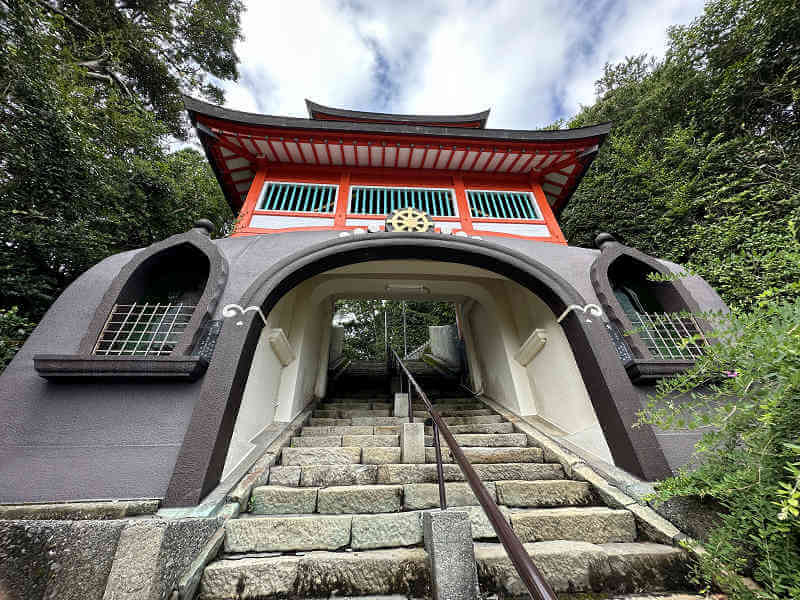
No. 25 Shinshō-ji

The “Kajitori Jizō” (Steersman Jizō) for Safety at Sea

  • Name: Hōshu-zan Shingon-in Shinshō-ji
  • Main Deity: Kajitori Enmei Jizō Bosatsu (Kṣitigarbha)
  • Goeika (Pilgrimage Song):
  • Will the ship of the Dharma enter or depart this port temple?
  • Please let my wandering self board it.

Access From Temple No. 24, Hotsumisaki-ji:

  • On foot: Follow National Route 55 along the coast. Approx. 7 km, 2 hours.
  •  
  • By Car: Same route as walking. Approx. 15 minutes.
  •  
  • Public Transport: From Murotomisaki Bus Stop, take the Kōchi Tōbu Kōtsū Bus bound for Kōchi (25 min) and get off at Muroto.

A Temple on a Hillock Overlooking the Sea and Port

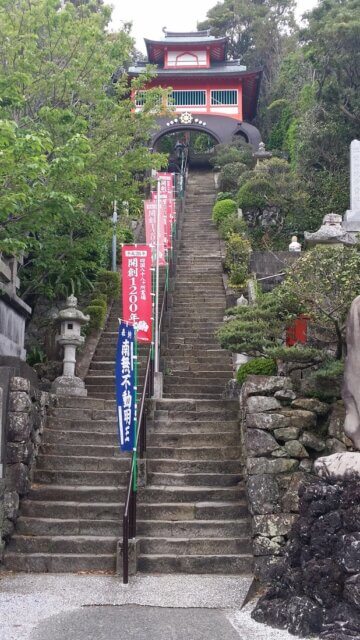
Located in the center of Muroto City, about 6 km along the coastal road from Cape Muroto, this temple stands on a hill overlooking Murotsu Port (Muroto Port). Built on an elevated hill, it is highly visible from the sea. Because of this, it has a history of being deeply revered as the “Lighthouse of Buddha” in Muroto, serving as a landmark for sailors who called it “Tsudera” (Port Temple). Passing through the vermilion-lacquered gate at the foot of the hill, you will find the Daishi-dō and the Nōkyōjo (temple stamp office) on the right, and a long flight of stone steps continuing straight ahead. Halfway up the steps is the Ryūgū-mon (Dragon Palace Gate), and climbing further leads to the Hondō (Main Hall). From the Hondō built atop the hill, you have a sweeping view of the port town of Murotsu and the sea. The distinctively tropical sunlight reflects sparklingly on the waves, dazzling the eyes.
The Jizō That Saved Yamauchi Katsutoyo

Looking into the Hondō, your eyes will be drawn to the Mantai Jizō-son (Ten Thousand Jizō Statues) tightly lined up across the entire wall. The principal image, Enmei Jizō Bosatsu, is a hidden Buddha (hibutsu). However, a mysterious episode has been passed down concerning this principal image, featuring Yamauchi Katsutoyo, the lord of the Tosa domain known for the success story supported by his wife’s devotion. While Yamauchi Katsutoyo was sailing off the coast of Muroto, he was struck by a severe storm and nearly shipwrecked. Suddenly, a single monk appeared, took the helm, and brilliantly steered the ship, guiding it safely to port. But as soon as they arrived at the port, the monk vanished. Wondering about this, Katsutoyo visited this temple at the port, only to find the principal image of Jizō Bosatsu completely drenched in seawater. Since then, this Jizō has come to be called the “Kajitori Jizō” (Steersman Jizō) and has been deeply worshipped as a guardian Buddha for the safe voyage of seafarers traversing the ocean. Originally, it is said to be a Jizō carved by Kōbō Daishi to pray for safety at sea and a bountiful catch. The term “Kajitori” (steering) implies not only steering a ship but also “taking away fires” (kaji o toru), and it is believed to bring the blessing of warding off fire disasters.

DATA

Address: 2652-i Murotsu, Muroto City, Kōchi Prefecture, Japan
Phone: 0887-23-0025
Access: From Nahari Station on the Tosa Kuroshio Railway Gomen-Nahari Line, take the Kōchi Tōbu Kōtsū Bus bound for Murotomisaki (25 min), get off at Muroto, then walk 10 min.
Parking: None (Parking available at the plaza in front of the port, a 5-minute walk away)
Lodging: None

Your Pilgrimage, Your Art

Completing the Shikoku Pilgrimage is a once-in-a-lifetime journey—but what if you could preserve it in a form that lasts forever?

Many pilgrims collect red stamps and calligraphy from each temple on a special silk scroll called a nōkyōjiku.

This sacred record of your path can be transformed into a kakejiku—a traditional Japanese hanging scroll—not only preserving the memories, but turning them into a work of cultural and spiritual art.

It’s more than a souvenir—it’s a way to honor your journey, your prayers, and your growth.

To learn more about how a nōkyōjiku becomes a kakejiku, and what makes this transformation so meaningful, please refer the below link.
 

    NameRequired

    SexRequired

    MaleFemale

    CountryRequired

    e-mailRequired

    CommentRequired

    Attached File
    ※Up to 3 MB for each file.


    ← ← "MUST CHECK" / Please confirm the above contents again and check this button.

    Contact Us

    Please fill out the form below and submit for your inquiry.

    ❈FirstName
    ❈LastName
    Country
    ❈E-mail
    (❈Confirm E-mail)
    ❈Inquiry category Question
    Consultation
    Impression
    Request
    Others
    ❈Comment

    is the mark for required item.


    Your privacy is important to us. We are committed to protecting your privacy.

    (or press ESC or click the overlay)

    CEO Message

    Our Feelings For Kakejiku


     The Japanese people have long set a high value on aesthetic senses since ancient times. As a result, the
    peculiar culture which is not seen in other countries blossomed and many aspects of the modern Japanese
    culture come from it. Parts of Japanese culture has been introduced to people in other countries recently,
    so the number of people from other countries who are interested in Japanese culture has been increasing.
    However, the Japanese aesthetic senses, which are the bases of Japanese culture, have been nurtured
    through a long history, intertwining various elements intricately, such as climate, geographical features,
    religion, customs and so on. Therefore, they are very difficult to understand not only for people from other
    countries, but even for the Japanese people. I think the best tool which conveys these difficult senses
    understandably is a “kakejiku.”
     The kakejiku (a hanging scroll; a work of calligraphy or a painting which is mounted and hung in an
    alcove or on a wall) is a traditional Japanese art. It's no exaggeration to say that paintings are what
    express aesthetic senses at all times and places. The kakejiku is an art which expresses the Japanese
    aesthetic senses. The kakejiku has long been used in traditional Japanese events, daily life and so on since
    ancient times. As a result, there are various customs of kakejiku in Japan; kakejiku and the life of the
    Japanese are closely related. We can see Japanese values through kakejiku.
     The kakejiku is a cultural tradition which the Japanese people should be proud of. However, many people
    in other countries don't know much about it because it hasn't been showcased as much. This is why I
    decided to try to introduce it. The kakejiku world is very interesting and beautiful. We want not only the
    Japanese, but also many people from other countries to know and enjoy it. I hope that many people will
    love kakejiku someday.

    (or press ESC or click the overlay)
    Company Profile
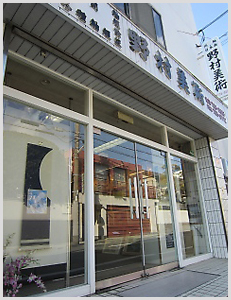
    syaoku.jpg(120220 byte)

    Name Art Nomura


    President Tatsuji Nomura


    Founded1973


    Established1992


    Address7-23 Babadori, Tarumi-ku, Kobe city,
    Hyougo Prefecture, 655-0021, Japan


    Capital10 million yen


    URLhttp://nomurakakejiku.com


    Our Business

     Art Nomura is an art dealer which produces kakejiku (hanging scrolls). We mount many paintings and calligraphic works in kakejiku in my factory. Kakejiku are our main product. We also remount and repair old or damaged kakejiku. We share the traditional Japanese art of kakejiku with people all over the world.


    (or press ESC or click the overlay)
    Access Map

    Access Map


     The Japanese people have long set a high value on aesthetic senses since ancient times. As a result, the
    peculiar culture which is not seen in other countries blossomed and many aspects of the modern Japanese
    culture come from it. Parts of Japanese culture has been introduced to people in other countries recently,
    so the number of people from other countries who are interested in Japanese culture has been increasing.
    However, the Japanese aesthetic senses, which are the bases of Japanese culture, have been nurtured
    through a long history, intertwining various elements intricately, such as climate, geographical features,
    religion, customs and so on. Therefore, they are very difficult to understand not only for people from other
    countries, but even for the Japanese people. I think the best tool which conveys these difficult senses
    understandably is a “kakejiku.”
     The kakejiku (a hanging scroll; a work of calligraphy or a painting which is mounted and hung in an
    alcove or on a wall) is a traditional Japanese art. It's no exaggeration to say that paintings are what
    express aesthetic senses at all times and places. The kakejiku is an art which expresses the Japanese
    aesthetic senses. The kakejiku has long been used in traditional Japanese events, daily life and so on since
    ancient times. As a result, there are various customs of kakejiku in Japan; kakejiku and the life of the
    Japanese are closely related. We can see Japanese values through kakejiku.
     The kakejiku is a cultural tradition which the Japanese people should be proud of. However, many people
    in other countries don't know much about it because it hasn't been showcased as much. This is why I
    decided to try to introduce it. The kakejiku world is very interesting and beautiful. We want not only the
    Japanese, but also many people from other countries to know and enjoy it. I hope that many people will
    love kakejiku someday.

    (or press ESC or click the overlay)