A Severely Torn Ranma Frame and a Stained Chagake Hanging Scroll Restoration for a Temple in Akō City, Hyōgo
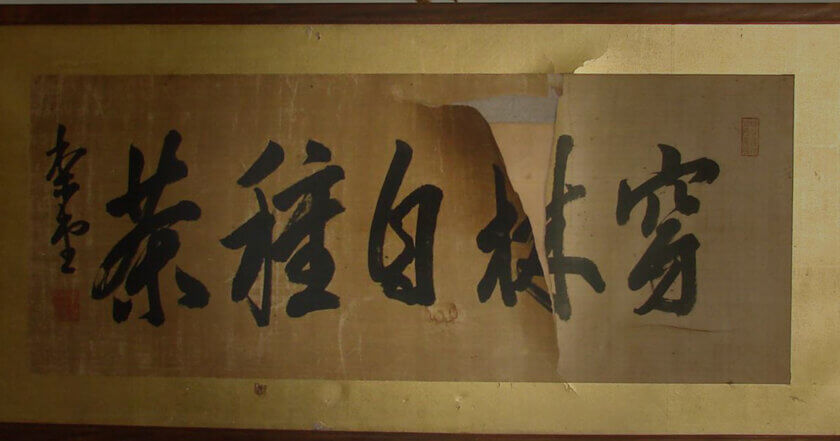
We were entrusted by a temple in Akō City, Hyōgo Prefecture, with the restoration of a ranma frame and a chagake hanging scroll.
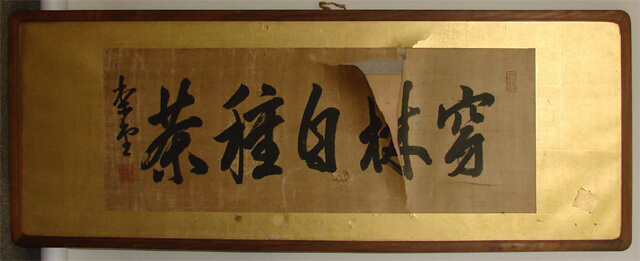
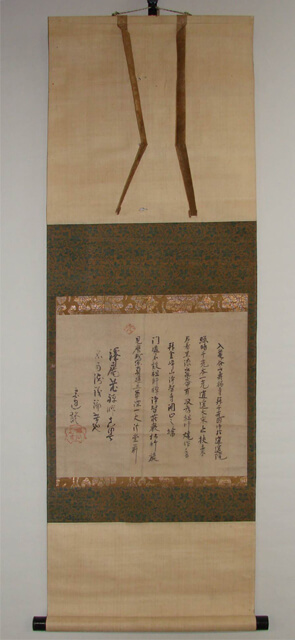
Both pieces had been carefully passed down over many years, but age had caused noticeable dirt, stains, and overall deterioration.
The ranma frame in particular was in extremely poor condition, with the artwork itself badly torn and in a very fragile state.
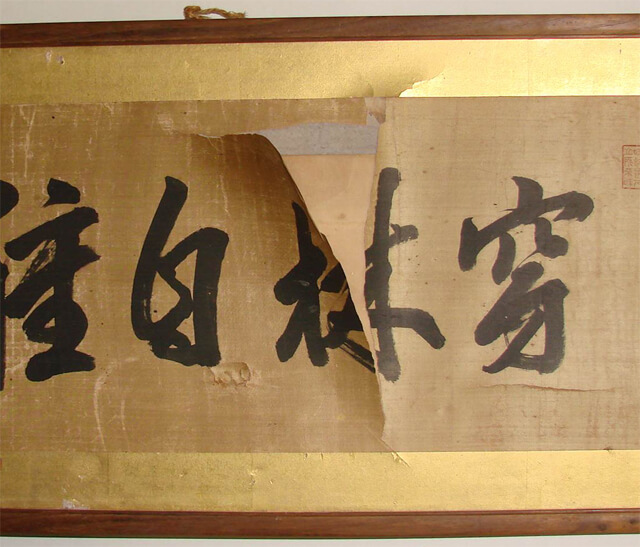
It could no longer be displayed safely as it was and required urgent restoration.
In this article, we would like to introduce this case, in which we restored both the ranma frame and the chagake hanging scroll as beautifully as possible so they could once again be appreciated with peace of mind.
The Most Serious Issue Was the Large Tear in the Ranma Frame
Of the two pieces we received, the ranma frame was by far the most seriously damaged.
The main artwork had been badly torn, and some areas had even suffered loss.
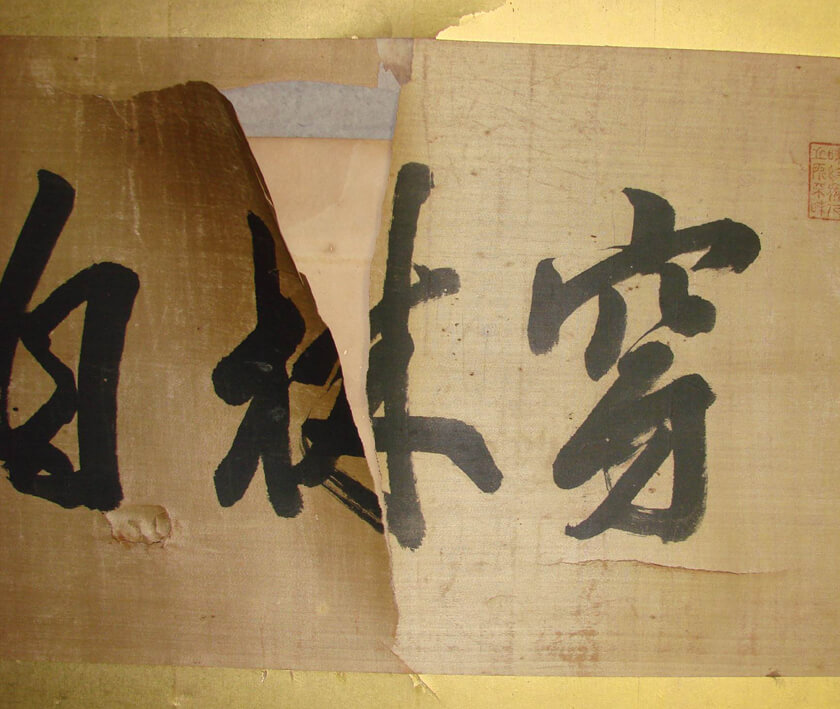
At this stage, the problem was not simply that it looked damaged. The piece had also lost its structural safety as a work of art.
Naturally, it could not be displayed in that condition. Even a slight vibration or small amount of pressure could have caused the tear to spread further, making it extremely dangerous to handle.
In a case like this, it is not enough to simply close the tear. The torn areas must be reconnected as naturally as possible, and the missing sections must also be visually integrated so the work can once again be appreciated without distraction.
The Hanging Scroll Also Had Heavy Dirt and Staining
The chagake hanging scroll was not as dramatically damaged as the ranma frame, but it too showed extensive dirt and staining, which gave it a heavily aged appearance.
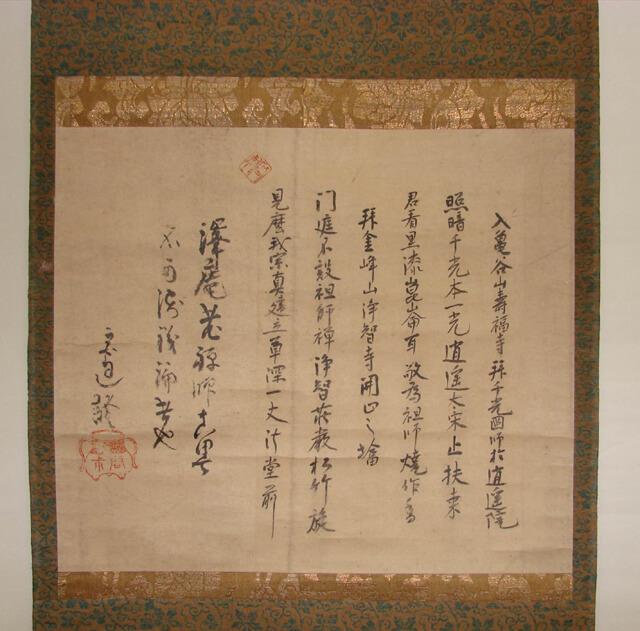
Even when a hanging scroll still seems to hold its overall shape, the artwork and mounting often suffer widespread deterioration over time. For that reason, it is important to examine the entire scroll carefully and proceed with restoration in an appropriate way.
In this project, one of our main goals for both the ranma frame and the hanging scroll was to remove the dirt and stains and return them to a condition in which they could once again be displayed comfortably.
We Reconnected the Tear as Much as Possible and Retouched the Missing Areas So the Result Would Look Natural
The most important part of this restoration was dealing with the large tear in the ranma frame. When a work is torn this badly, even a small mistake in treatment can cause the tear to spread further or place new stress on weakened surrounding areas. For that reason, we carefully assessed the condition of the piece and reconnected the torn sections as much as possible.
Areas of loss also required special attention. If left untreated, they would have remained visually disruptive when viewing the work. We therefore carried out careful retouching while considering harmony with the surrounding areas, so that the overall result would appear natural. What matters in restoration is not merely making something look “fixed.” Our aim is to return the work to a state where it can be appreciated naturally, without compromising its original character.
Removing the Dirt and Stains Greatly Improved the Overall Impression of Both Works
We also carried out cleaning and stain removal on both the ranma frame and the chagake hanging scroll.
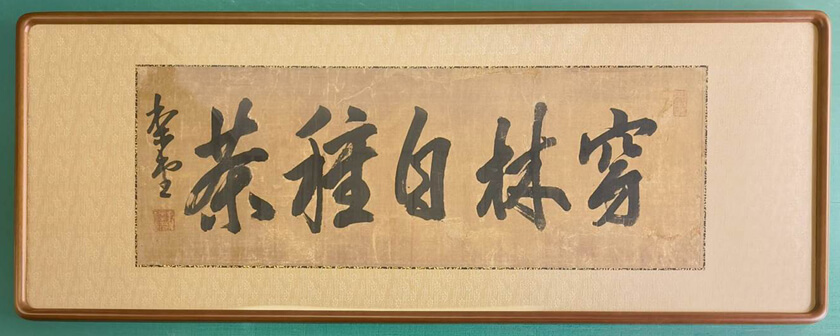
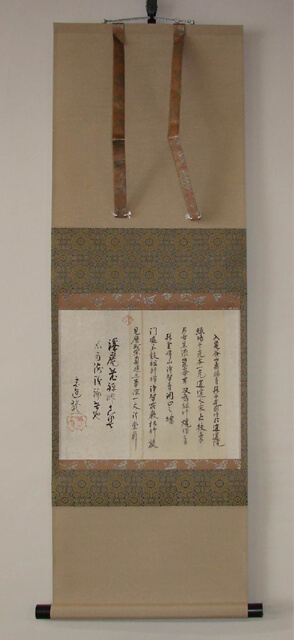
Dirt and stains that accumulate over many years can make an artwork feel visually heavy and dull. By carefully addressing that buildup, the expression of the calligraphy and the original atmosphere of the work become much easier to appreciate again.
In the case of the ranma frame, the impression changed dramatically not only because the tear was repaired, but also because the overall dirt was reduced.
The chagake hanging scroll also regained a much cleaner appearance, and its presentation when displayed improved significantly.
The Ranma Frame, Once in a Dangerous Condition, Was Restored to the Point That the Original Tear Is No Longer Noticeable
After restoration, the ranma frame regained a calm and dignified appearance, almost making it hard to believe how severely damaged it had once been.
The large tear was reconnected as fully as possible, and the missing areas were visually integrated through retouching so they would not stand out unnaturally. As a result, we were able to restore the work to a level where the original tear is no longer strongly noticeable.
The chagake hanging scroll also improved greatly. Its previously heavy and tired appearance, caused by dirt and staining, was refreshed, and it once again became something that could be displayed with confidence.
We believe both pieces were returned to a condition in which they can now be carefully passed on once more into the future.
The Customer Was Delighted to See These Heirlooms Beautifully Restored
Once the restoration was complete, we delivered the works to the customer’s home.
We were told that these pieces had been handed down from their ancestors and were deeply important to them. For that reason, the customer was truly delighted to see them restored so beautifully.
Objects that have been passed down through generations are not merely old tools or decorations. They are precious things that carry the history of a family or a temple. We were very grateful to be able to help return these works to a state in which they can once again be displayed and appreciated in the years to come.
Please Feel Free to Consult Us About Severely Damaged Hanging Scrolls and Framed Works
The more damage a hanging scroll or framed work has suffered, the more difficult restoration becomes. Even so, as in this case, works that are badly torn or heavily stained can sometimes be returned to a displayable condition depending on their state.
We always examine each work carefully and propose a restoration plan that is both appropriate and respectful of the piece itself.
If you have temple pieces, family heirlooms, hanging scrolls, or framed works that have been passed down through generations and are now suffering from damage, please feel free to contact us.