Restoration of 3 Severely Damaged Tiger Hanging Scrolls Requested by a Customer in Germany
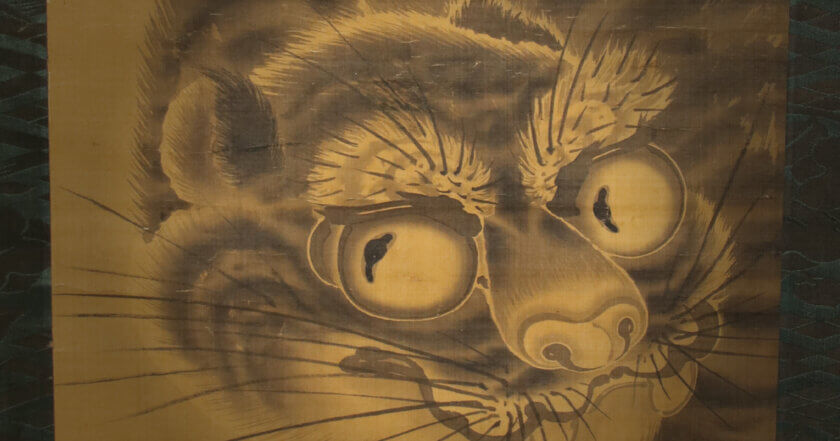
Tigers have long been a popular subject in Japanese art.
In the past, because tigers did not inhabit Japan, they were often depicted more like large cats.
Many people are fascinated by the unique charm of these “cat-like tigers,” and we have many enthusiastic fans of this style among our overseas customers as well.
This time, we would like to introduce a hanging scroll restoration project requested by a customer in Germany who loves tiger paintings.
Request for the restoration of 3 New Tiger Hanging Scrolls
The customer who requested 3 hanging scroll repairs operates a gallery of Japanese art in Germany, and had previously asked us to restore another tiger hanging scroll as well.
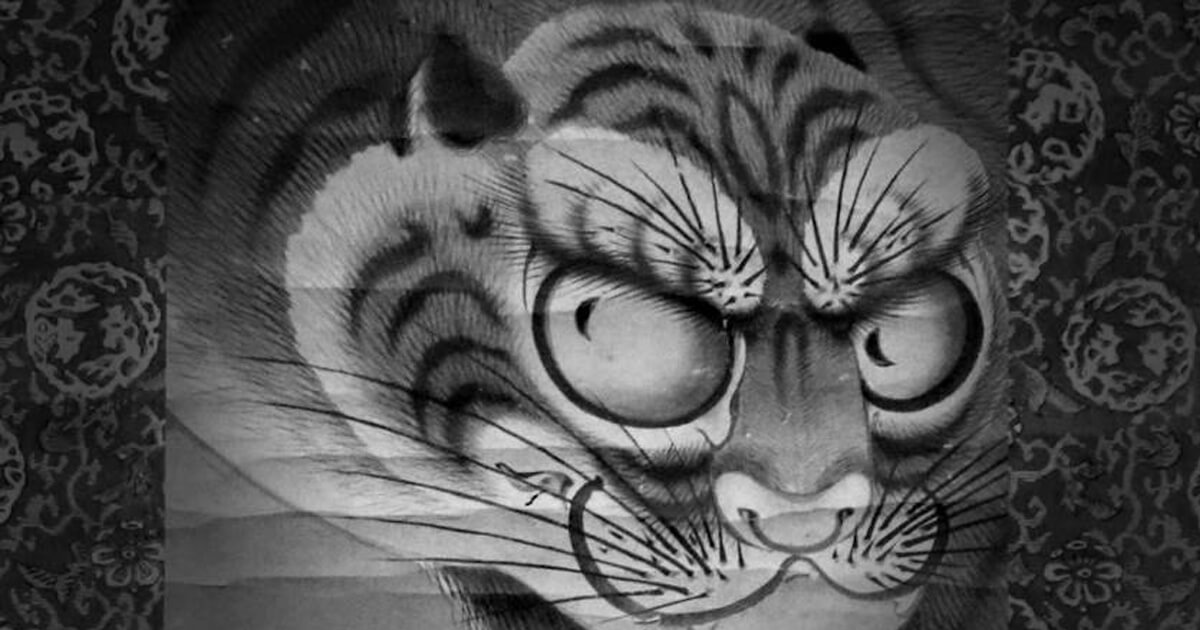
This time, we received a new request to restore 3 tiger hanging scrolls.
Here is the first tiger hanging scroll. Its composition and stylized expression are very similar to the tiger scroll that had previously been entrusted to us for restoration.
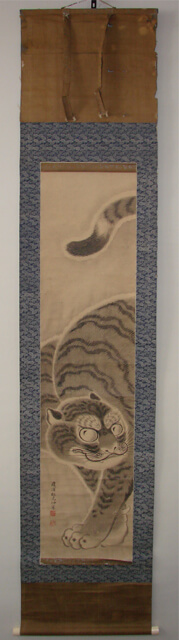
The mounting of this scroll showed signs of deterioration, but the damage to the painting itself was relatively minor.
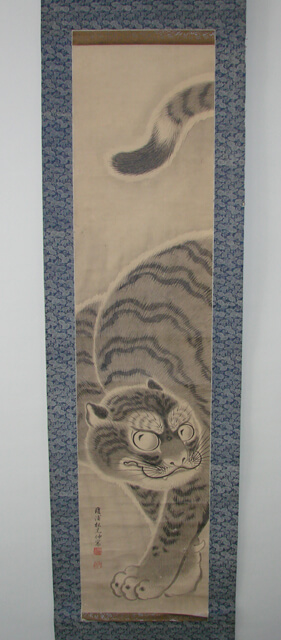
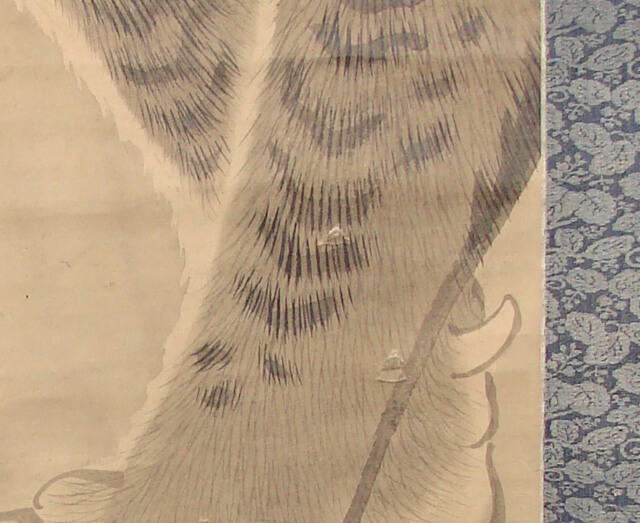
There are a few slightly torn areas, but damage at this level can be restored beautifully through remounting.
Here is the second tiger hanging scroll. This one also shows a tiger in a similar pose and style to the other tiger paintings. Its mounting is rather unusual, especially because the two fūtai, the hanging strips descending from the top of the scroll, are exceptionally long.
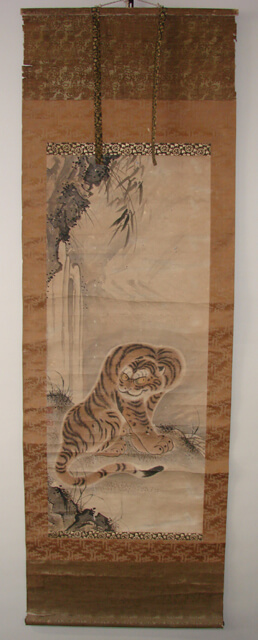
This scroll had strong creases throughout, and many areas of loss could also be seen. It was a heavily damaged hanging scroll that required restoration work including supplementary color repair.
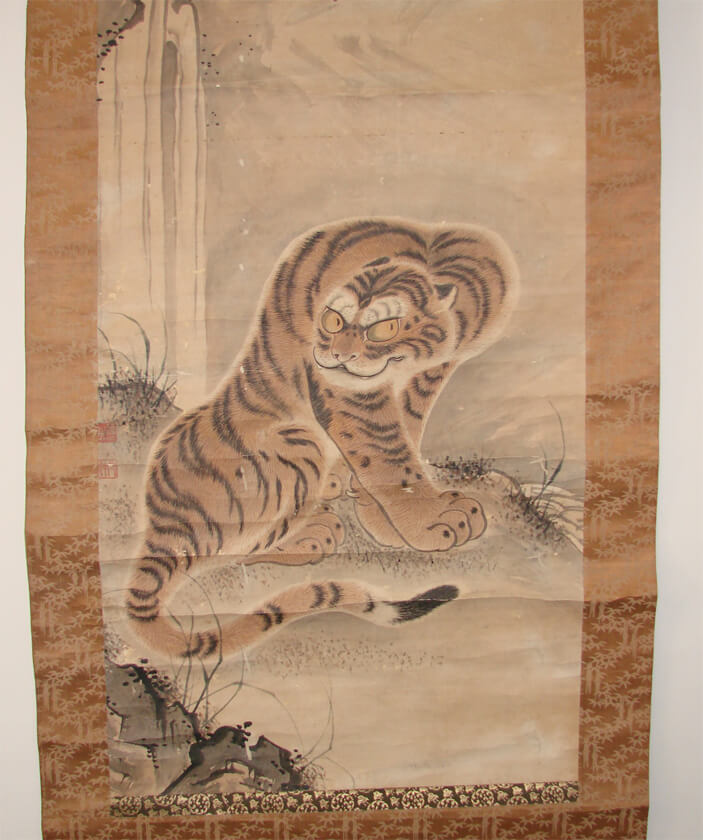
Here is the third tiger hanging scroll. This one also has a similar pose and atmosphere. It was likely a type of tiger painting that particularly appealed to the customer. It seems to reflect the style of tiger imagery that became popular in Nagasaki during the Edo period.
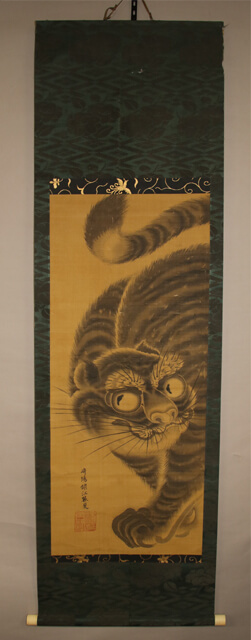
In fact, among the 3 tiger hanging scrolls, this one was the most severely damaged.
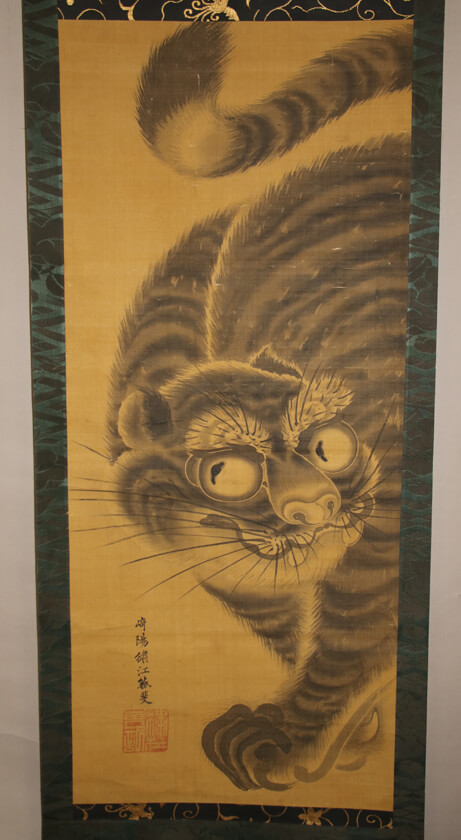
There were tears throughout the work, and traces of previous restoration could also be seen.
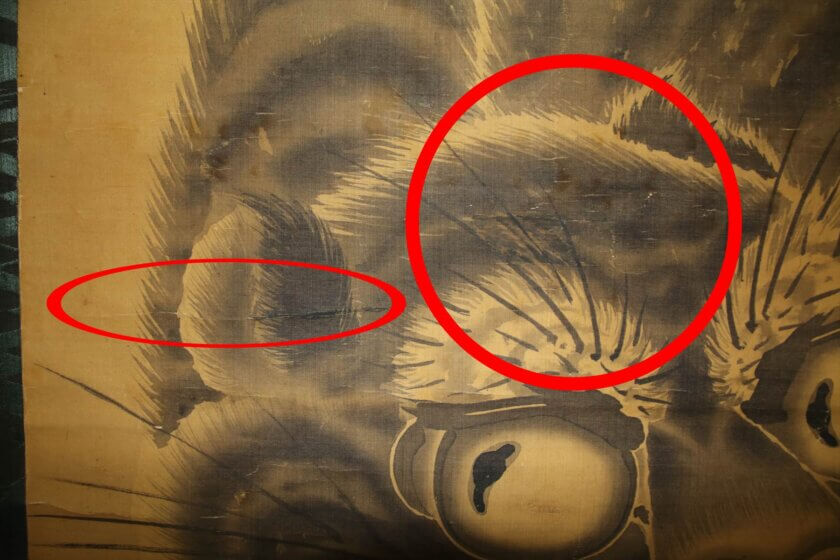
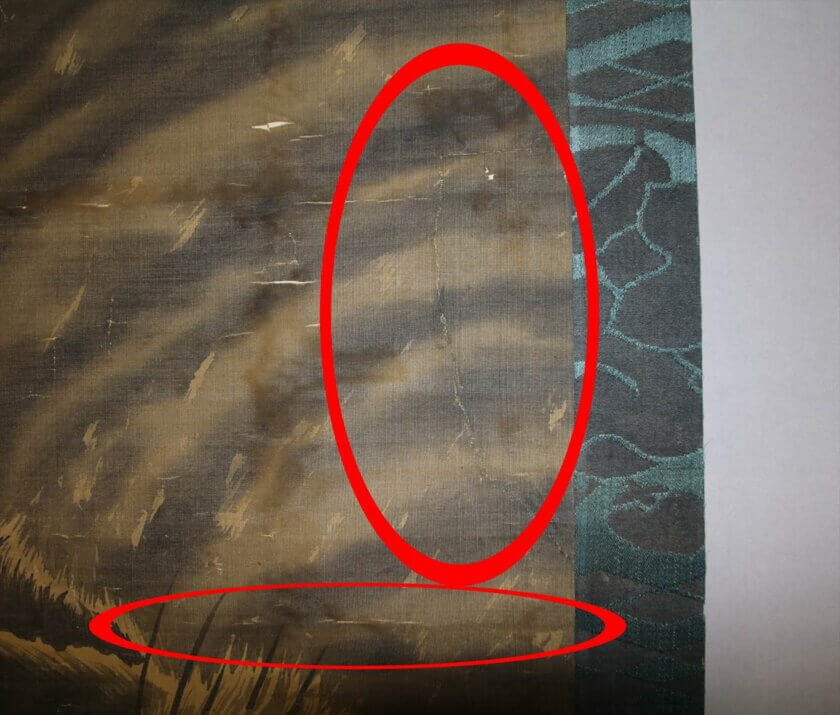
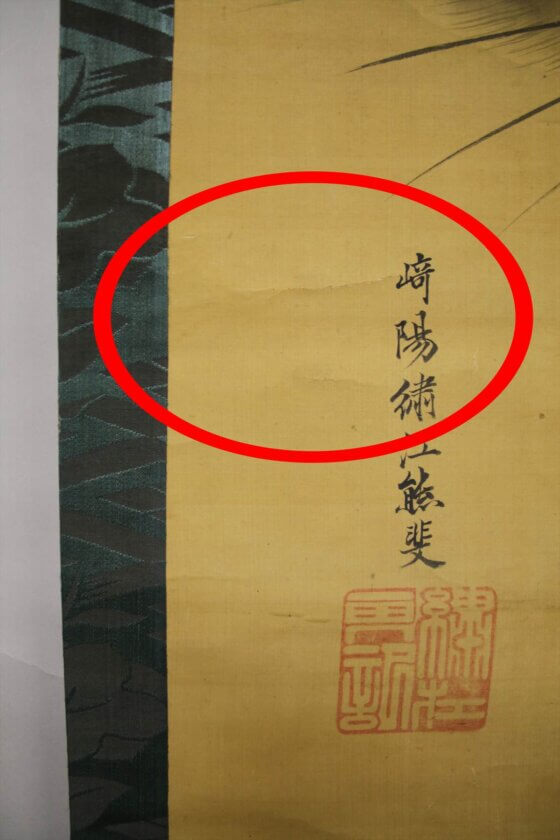
When a hanging scroll that has previously undergone supplementary color repair is remounted, those restored areas are lost. For that reason, new supplementary color repair must be carried out again. This made it a very large-scale restoration project. The customer fully understood this point, and still wished for the work to be restored.
Remounting Consultation
For each of the three works, we proposed multiple fabric options and adjusted details through repeated discussion in order to determine the final specifications, including optional features.
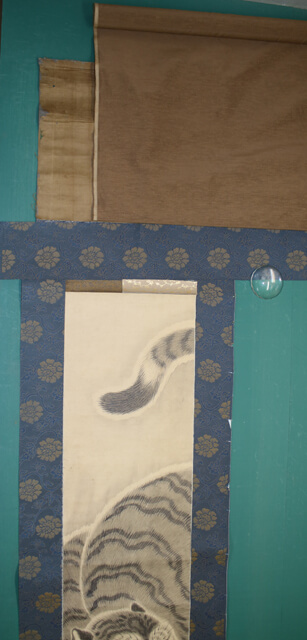
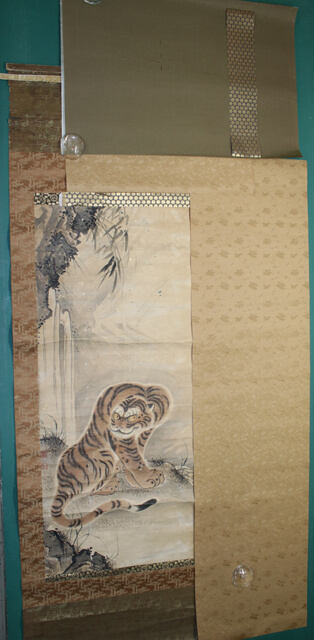
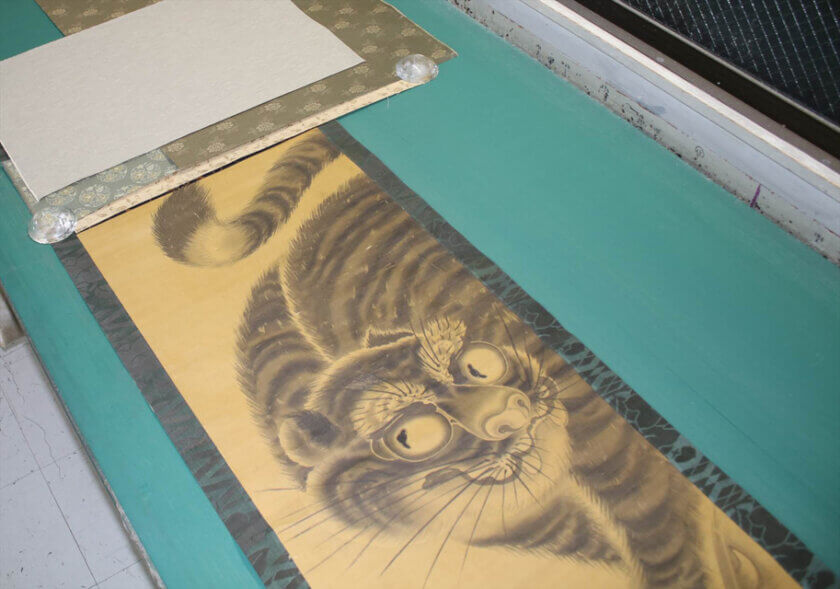
This was already the customer’s severalth time requesting hanging scroll restoration from us, and through past experience they had become much more accustomed to clearly communicating their own preferences and opinions regarding the choice of mounting fabrics.
We were very pleased that, this time as well, we were able to propose fabrics that matched the customer’s wishes.
Restoration Completed
This restoration project for the three damaged hanging scrolls became quite a long-term project, but we were able to complete the restoration of each scroll successfully. We are very pleased that each hanging scroll was revived and returned to a condition in which it can once again be displayed and appreciated.
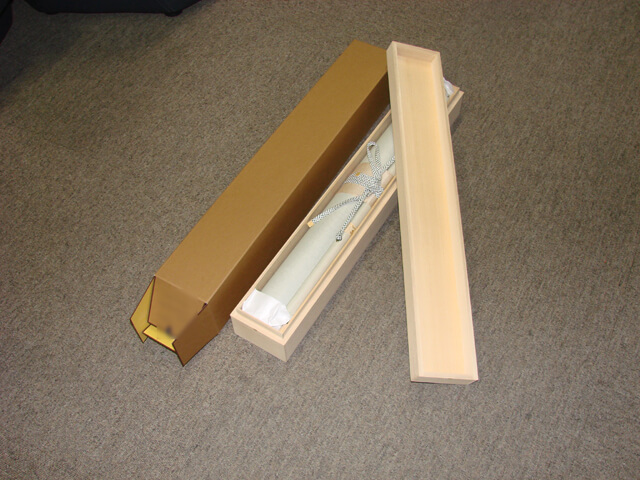
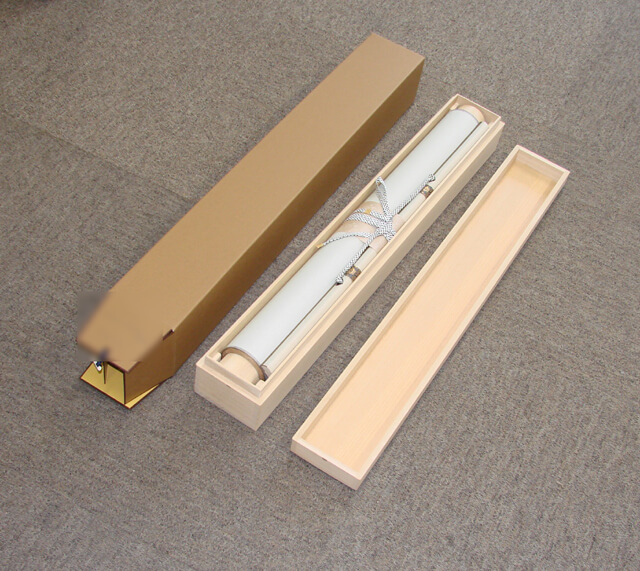
For two of the three scrolls, considering their condition and long-term preservation, we recommended storing them with futomaki.
Feedback from the Customer
The hanging scrolls were shipped in two separate batches according to the timing of completion, and we were grateful to receive the following comments from the customer.
This was the customer’s comment after the first shipment.
Thank you for sending out the repaired tiger scroll. I received the package today and was very pleased to see this majestic creature’s glory restored. I think that the chosen fabrics match the ink painting and the color of the aged silken painting surface very well. Thanks for another great job well done!
Next is the customer’s feedback after receiving the second shipment.
I am writing to express my deepest gratitude for the incredible restoration work you performed on my two Japanese tiger paintings. Despite the significant damage these works had sustained, you managed to bring them back to life with such skill and dedication. The photos can be misleading, but your choice of color and fabric patterns was spot on. They complement the artwork perfectly without taking away from it. I couldn’t be happier with the restoration.
Because the works had suffered such severe damage, we were truly delighted that the restoration was completed successfully and that the customer was so pleased with the results. It was also a great encouragement for us that not only the finished restoration, but also our selection of mounting fabrics, was so highly appreciated.
Conclusion
We are very pleased that the three tiger hanging scrolls, which had suffered severe damage, were able to regain their individual charm. Above all, it was the greatest encouragement for us that the customer was pleased with the final results.
We will continue to carefully examine the individuality and condition of each piece while helping to pass treasured hanging scrolls on to the next generation.
In addition to domestic requests, we also handle consultations from overseas for hanging scroll repair and remounting, so if you have any concerns, please feel free to contact us.