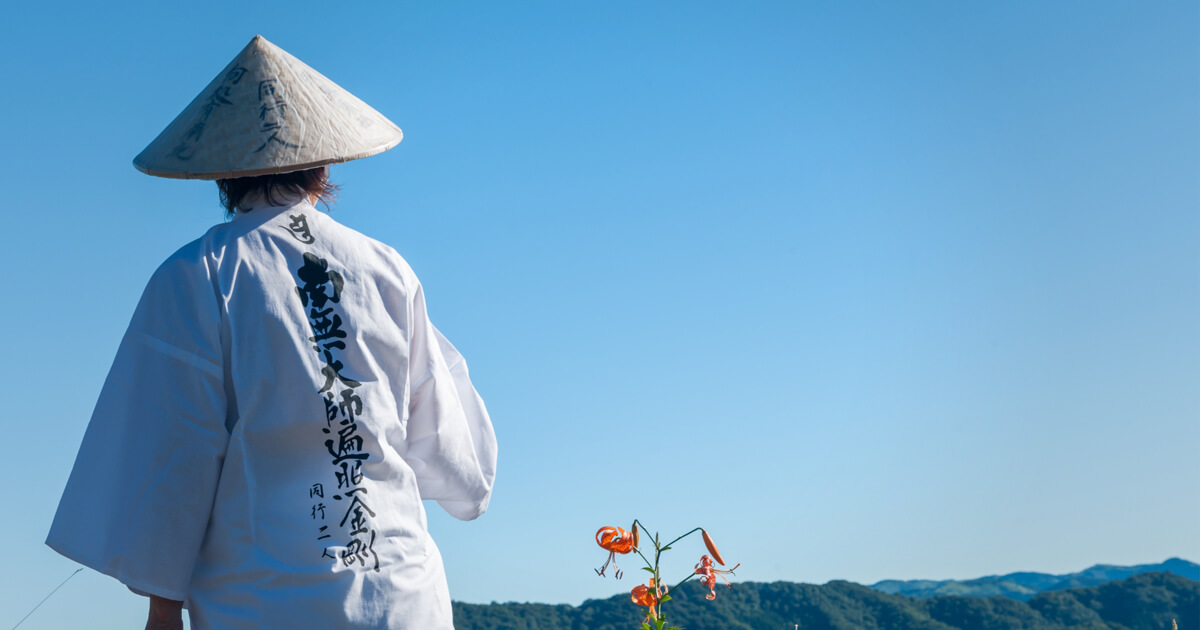
Shikoku Pilgrimage Temple: No. 18 Onzan-ji
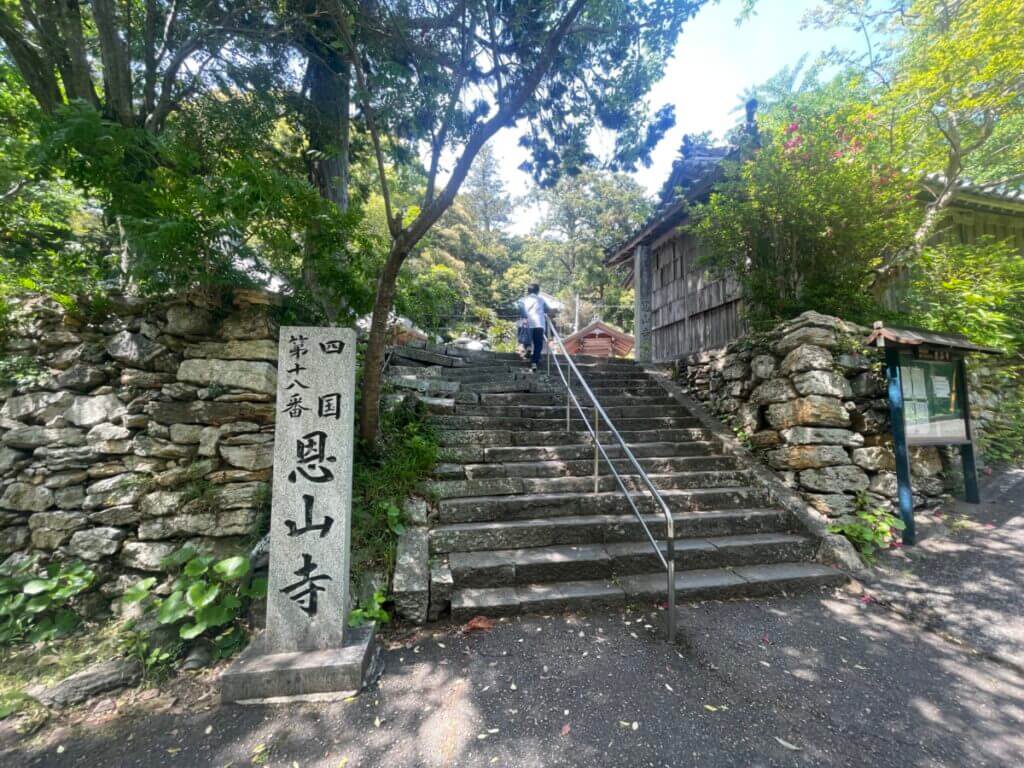
Onzan-ji: A Renowned Temple Associated with Kōbō Daishi’s Mother
- Name: Boyōzan Hōjuin Onzan-ji
- Main Deity: Yakushi Nyorai (Medicine Buddha)
- Goeika (Pilgrimage Song):
- Onzan-ji, the temple of parental grace, Where those who bore and raised their child are honored—
- There is no reason this place should ever be difficult to visit.
Access From Temple No. 17, Ido-ji:
- On foot: The route passes through urban areas of Tokushima City. While mostly flat, traffic is heavy throughout, and in the latter half pilgrims must walk for a long stretch along a national highway. Unlike the old mountain passes, this route is challenging in a different way.
- Distance: approx. 18 km Time: about 5 hours 30 minutes
- By Car: Take National Route 192 toward central Tokushima City, then continue south on National Route 55. Distance: approx. 19.5 km Time: about 45 minutes
- Public Transport: From the Ido-ji-guchi bus stop, take a Tokushima Bus bound for Tokushima Station (approx. 20 minutes). From Tokushima Station, transfer to the bus listed in the Data section to reach Onzan-ji.
- Alternatively, from Kō Station (about a 25-minute walk from Ido-ji), take the JR Tokushima Line and JR Mugi Line (approx. 40 minutes at the shortest) to Minami-Komatsushima Station, then walk about 40 minutes to the temple.
The Legend of Kōbō Daishi and His Mother
Bōyō-zan Onzan-ji—its name expresses Kōbō Daishi’s deep devotion to his mother.
Long ago, while Kōbō Daishi was practicing ascetic training at this temple, his mother, Tamayori Gozen, traveled all the way from Sanuki to visit him. At that time, however, the temple grounds were closed to women. In response, Kōbō Daishi performed a secret ritual over seven days to lift the prohibition. He then welcomed his mother into the temple precincts and devoted himself to filial service. It is said that Tamayori Gozen shaved her head here and entered the Buddhist order.
The Bilanjū Tree Planted by Kōbō Daishi
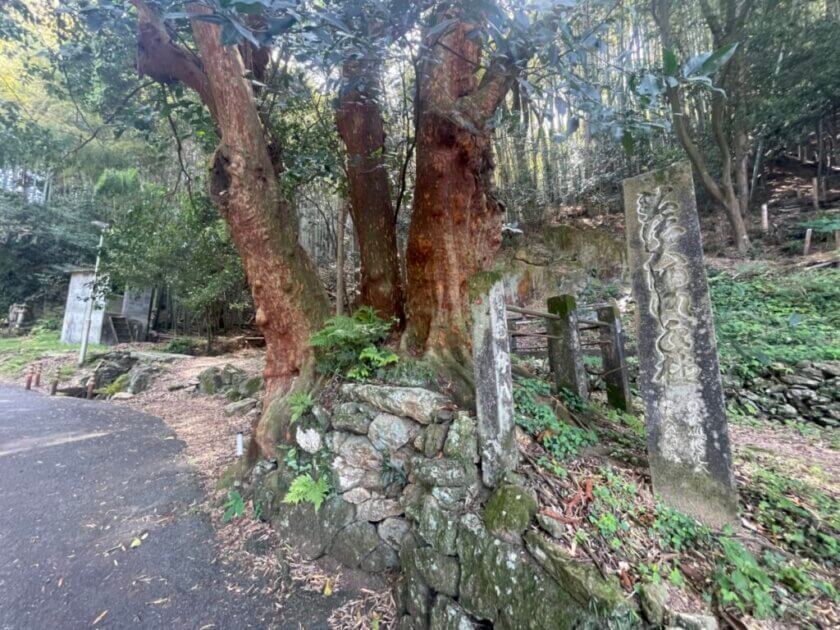
Onzan-ji stands halfway up a gentle hill overlooking Komatsushima Bay. Walking up the gradual slope from the Onzan-ji-mae bus stop, one finds a large bilanjū tree beside a vermilion-lacquered drum bridge. Tradition holds that Kōbō Daishi himself planted this tree to commemorate welcoming his mother into the temple grounds. It is designated a Natural Monument of Tokushima Prefecture.
The Hall of Tamayori Gozen
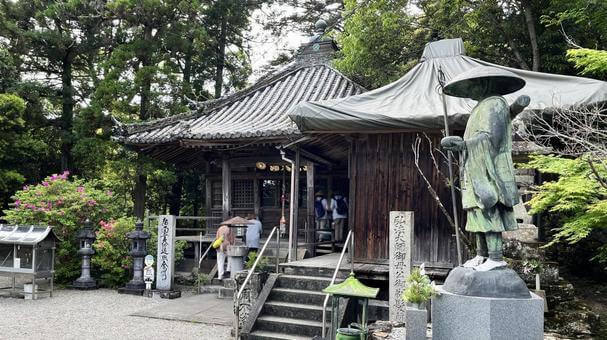
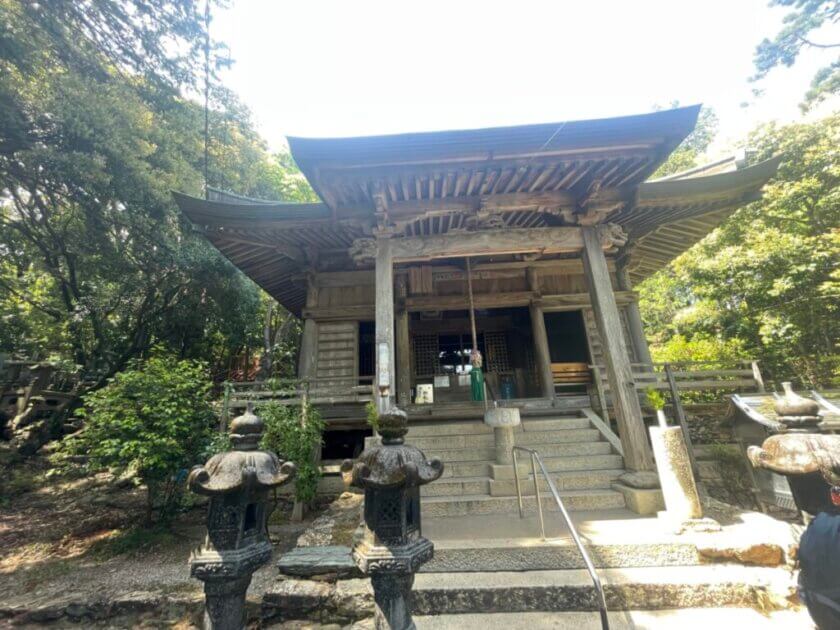
Proceeding along the approach and ascending the stone steps into the temple grounds, one finds the Jizō Hall on the right and the Daishi Hall on the left. Beside the Daishi Hall stands the Gobōkō-dō, a hall dedicated to Tamayori Gozen. This hall is believed to mark the site where she shaved her head, and her hair is said to be enshrined here. A hall devoted to the mother of Kōbō Daishi is rare even among the Shikoku Eighty-Eight Temples.
The precincts are surrounded by dense forests of shii and oak trees, and feature a massive ginkgo tree said to be over 300 years old, as well as cycads that lend a distinctly southern atmosphere. In early summer, hydrangeas bloom across the slopes.
Ascending further while enjoying these surroundings, one reaches the Main Hall on higher ground. The principal image of Yakushi Nyorai is a secret Buddha, traditionally attributed to Gyōki, and is revered for its powerful blessings against misfortune.
DATA
Address: 40 Onzanji-dani, Tano-chō, Komatsushima City, Tokushima Prefecture, Japan
Phone: 0885-33-1218
Access: From JR Tokushima Station, take a Tokushima Bus on the Tatee Line (approx. 45 minutes), get off at Onzan-ji-mae, then walk about 10 minutes.
Parking: Available (Free)
Lodging: None
Your Pilgrimage, Your Art
Completing the Shikoku Pilgrimage is a once-in-a-lifetime journey—but what if you could preserve it in a form that lasts forever?
Many pilgrims collect red stamps and calligraphy from each temple on a special silk scroll called a nōkyōjiku.
This sacred record of your path can be transformed into a kakejiku—a traditional Japanese hanging scroll—not only preserving the memories, but turning them into a work of cultural and spiritual art.
It’s more than a souvenir—it’s a way to honor your journey, your prayers, and your growth.
To learn more about how a nōkyōjiku becomes a kakejiku, and what makes this transformation so meaningful, please refer the below link.