
Restoration Request from the U.S. for a Hanging Scroll Inherited from a Father
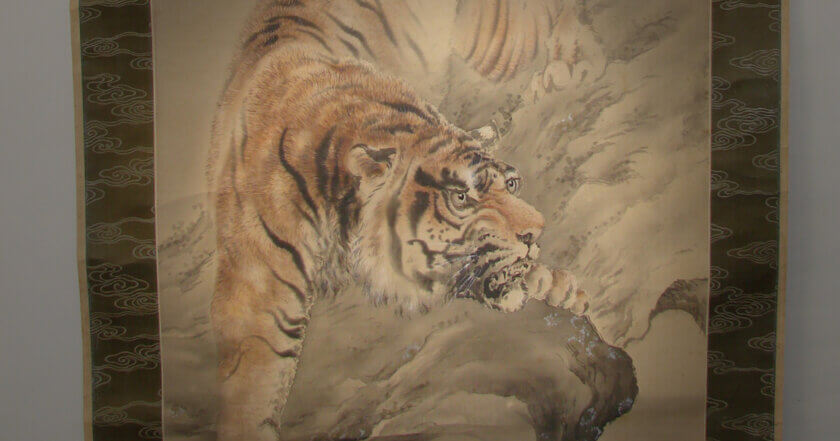
A very common reason people contact us about kakejiku restoration is that they have inherited a hanging scroll that a family member treasured, and they would like to have it repaired and refreshed at that turning point.

This is not limited to Japanese customers—many of our inquiries from overseas follow the same story.

In this article, we share an episode of a restoration request we received from a customer in the United States.

A Tiger Kakejiku Treasured by a Father

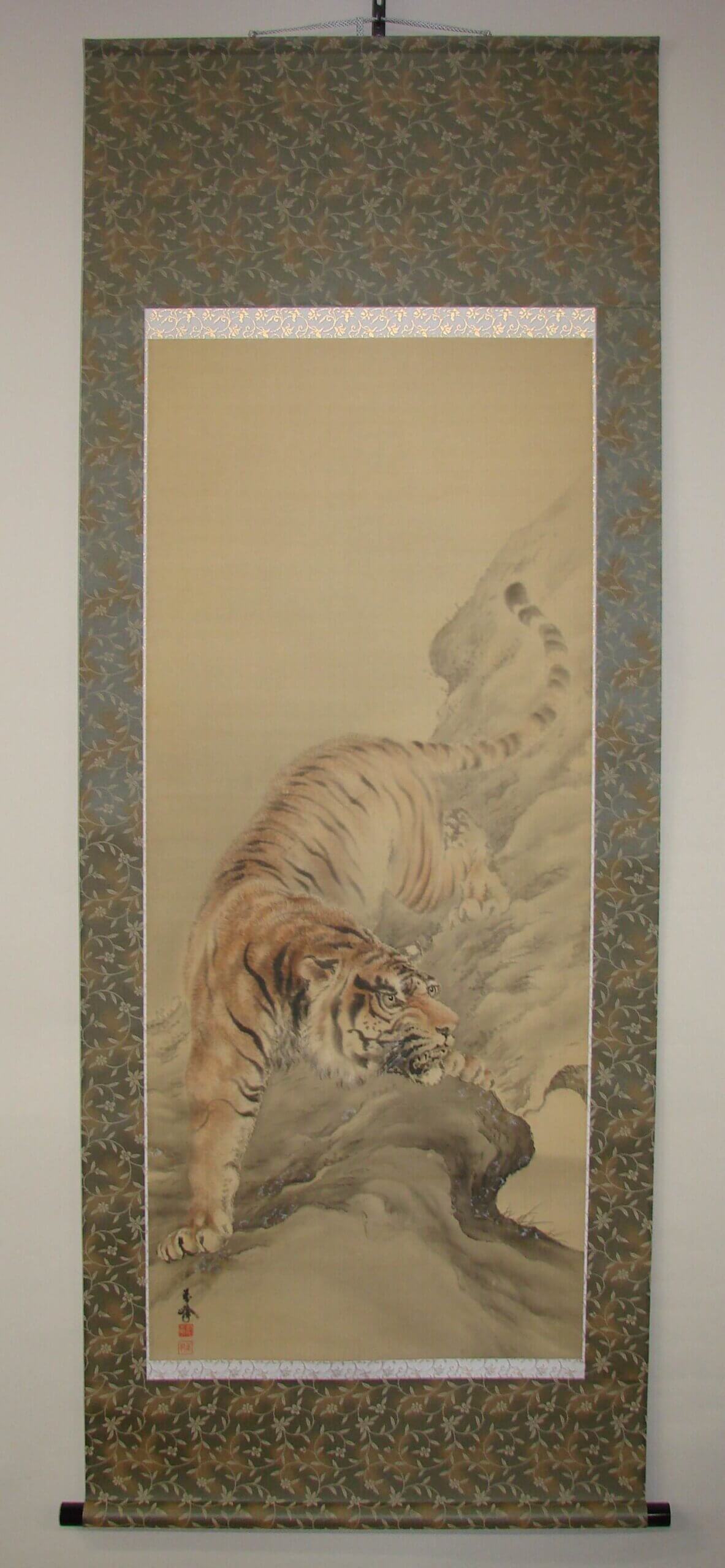
Here is the hanging scroll we were asked to restore. It is a powerful work depicting a tiger striking a pose on rugged rocks.
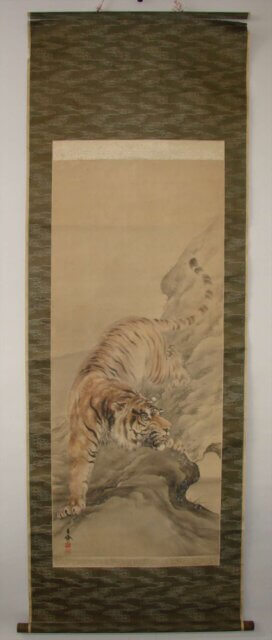
According to the customer, this kakejiku has been in their home since 1957. At that time, the family was living in Kanagawa Prefecture in Japan. The customer told us that his father visited a collector and, during that visit, immediately fell in love with this scroll and was able to acquire it.

In 2022, the customer officially inherited the kakejiku, which led to this consultation for restoration.

Discussion and Planning for the Restoration

Because the artwork had many stains and areas of discoloration, we decided to perform stain removal for this project.
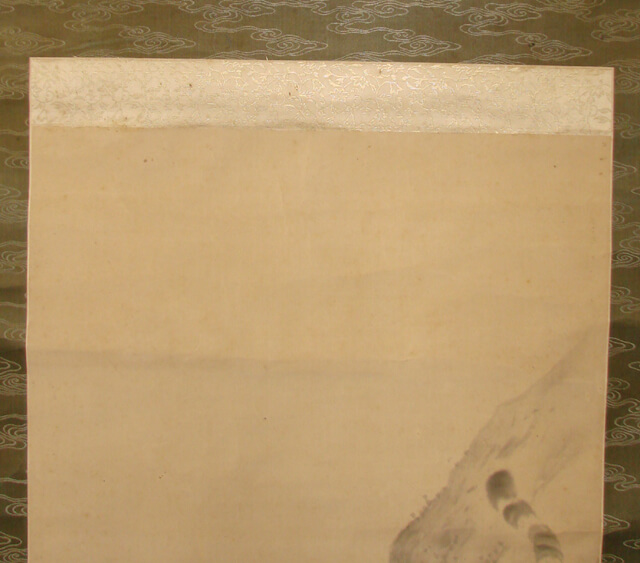
As for the mounting fabrics, after reviewing several candidates, we proceeded with the following fabric combination for the new mounting.
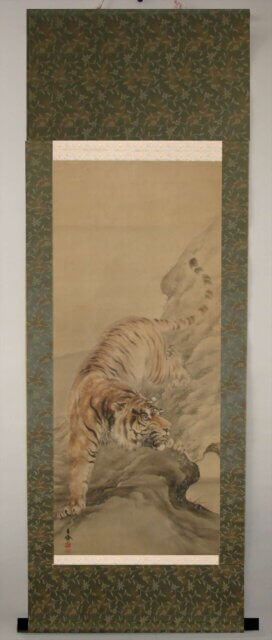
Mock-up

The customer also chose the options of Ichimonji-otoshi and a paulownia-wood box.

Ichimonji-otoshi is a mounting option in which the main artwork of a hanging scroll is bordered with ichimonji fabric, adding a refined, dignified impression to the overall presentation.

Restoration Process

For this restoration, we proceeded with the work in the following steps:

1. Dismantling the scroll
First, we carefully removed the old mounting fabrics and roller rod from the current scroll. We dismantled it gently so as not to put stress on the artwork.

2. Removing the old backing paper
We removed the old backing paper on the reverse side of the scroll.

3. Washing & stain removal
We washed the artwork to reduce dirt and carried out stain removal as appropriate.

4. Re-mounting
Finally, we remounted the scroll using the fabrics selected by the customer, completing it as a newly finished kakejiku. We also applied the optional ichimonji-otoshi in this process.

Completion

Here is the completed kakejiku.
スライドショーには JavaScript が必要です。

The creases and stains were improved, and the tiger appears lively again—as if the piece has been given new life.

スライドショーには JavaScript が必要です。

The customer told us, “I was missing it like an old relative,” and he was very pleased to hear that the restoration was complete.

Summary

Many people hesitate for years, wondering what to do with a kakejiku that a family member cherished. If you have inherited a hanging scroll and are considering restoration and remounting, we handle projects like the one introduced in this article.

Please feel free to contact us anytime for a consultation.
 

Contact Us

Please fill out the form below and submit for your inquiry.

❈FirstName
❈LastName
Country
❈E-mail
(❈Confirm E-mail)
❈Inquiry category Question
Consultation
Impression
Request
Others
❈Comment

is the mark for required item.


Your privacy is important to us. We are committed to protecting your privacy.

(or press ESC or click the overlay)

CEO Message

Our Feelings For Kakejiku


 The Japanese people have long set a high value on aesthetic senses since ancient times. As a result, the
peculiar culture which is not seen in other countries blossomed and many aspects of the modern Japanese
culture come from it. Parts of Japanese culture has been introduced to people in other countries recently,
so the number of people from other countries who are interested in Japanese culture has been increasing.
However, the Japanese aesthetic senses, which are the bases of Japanese culture, have been nurtured
through a long history, intertwining various elements intricately, such as climate, geographical features,
religion, customs and so on. Therefore, they are very difficult to understand not only for people from other
countries, but even for the Japanese people. I think the best tool which conveys these difficult senses
understandably is a “kakejiku.”
 The kakejiku (a hanging scroll; a work of calligraphy or a painting which is mounted and hung in an
alcove or on a wall) is a traditional Japanese art. It's no exaggeration to say that paintings are what
express aesthetic senses at all times and places. The kakejiku is an art which expresses the Japanese
aesthetic senses. The kakejiku has long been used in traditional Japanese events, daily life and so on since
ancient times. As a result, there are various customs of kakejiku in Japan; kakejiku and the life of the
Japanese are closely related. We can see Japanese values through kakejiku.
 The kakejiku is a cultural tradition which the Japanese people should be proud of. However, many people
in other countries don't know much about it because it hasn't been showcased as much. This is why I
decided to try to introduce it. The kakejiku world is very interesting and beautiful. We want not only the
Japanese, but also many people from other countries to know and enjoy it. I hope that many people will
love kakejiku someday.

(or press ESC or click the overlay)
Company Profile
syaoku.jpg(120220 byte)

Name Art Nomura


President Tatsuji Nomura


Founded1973


Established1992


Address7-23 Babadori, Tarumi-ku, Kobe city,
Hyougo Prefecture, 655-0021, Japan


Capital10 million yen


URLhttp://nomurakakejiku.com


Our Business

 Art Nomura is an art dealer which produces kakejiku (hanging scrolls). We mount many paintings and calligraphic works in kakejiku in my factory. Kakejiku are our main product. We also remount and repair old or damaged kakejiku. We share the traditional Japanese art of kakejiku with people all over the world.


(or press ESC or click the overlay)
Access Map

Access Map


 The Japanese people have long set a high value on aesthetic senses since ancient times. As a result, the
peculiar culture which is not seen in other countries blossomed and many aspects of the modern Japanese
culture come from it. Parts of Japanese culture has been introduced to people in other countries recently,
so the number of people from other countries who are interested in Japanese culture has been increasing.
However, the Japanese aesthetic senses, which are the bases of Japanese culture, have been nurtured
through a long history, intertwining various elements intricately, such as climate, geographical features,
religion, customs and so on. Therefore, they are very difficult to understand not only for people from other
countries, but even for the Japanese people. I think the best tool which conveys these difficult senses
understandably is a “kakejiku.”
 The kakejiku (a hanging scroll; a work of calligraphy or a painting which is mounted and hung in an
alcove or on a wall) is a traditional Japanese art. It's no exaggeration to say that paintings are what
express aesthetic senses at all times and places. The kakejiku is an art which expresses the Japanese
aesthetic senses. The kakejiku has long been used in traditional Japanese events, daily life and so on since
ancient times. As a result, there are various customs of kakejiku in Japan; kakejiku and the life of the
Japanese are closely related. We can see Japanese values through kakejiku.
 The kakejiku is a cultural tradition which the Japanese people should be proud of. However, many people
in other countries don't know much about it because it hasn't been showcased as much. This is why I
decided to try to introduce it. The kakejiku world is very interesting and beautiful. We want not only the
Japanese, but also many people from other countries to know and enjoy it. I hope that many people will
love kakejiku someday.

(or press ESC or click the overlay)