
Shikoku Pilgrimage Temple: No. 17 Ido-ji
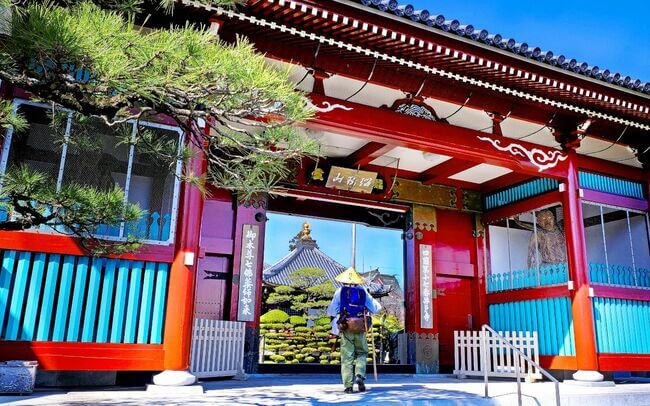
Ido-ji

Ido-ji: The temple whose name originates from the well dug by Kōbō Daishi

  • Name: Rurizan Shinpuku-in Idō-ji
  • Main Deity: Shichibutsu Yakushi Nyorai
  • Goeika (Pilgrimage Song):
  • When I look into the water of the well, my reflection appears;
  • If I join my hands, the dust upon my heart will fall away.

Access From Temple No. 16, Kannon-ji:

  • On foot: Walk east through the settlement in front of Kannon-ji Gate, turn left past Ōmiwa Shrine, cross the national highway, and proceed near Fuchū Station. Cross the Tokushima Line railroad crossing, continue through rural scenery, and follow the signs into a narrow road. It is a paved road, and although not extremely busy, there is some vehicle traffic.
  • 2.8 km, about 45 minutes
  •  
  • By Car: The same route as on foot. About 5 minutes.
  •  
  • Public Transport: It is technically possible to reach the temple by transferring between local buses, but the route is quite circuitous, so walking is much faster.

Vermilion-Lacquered Niō Gate
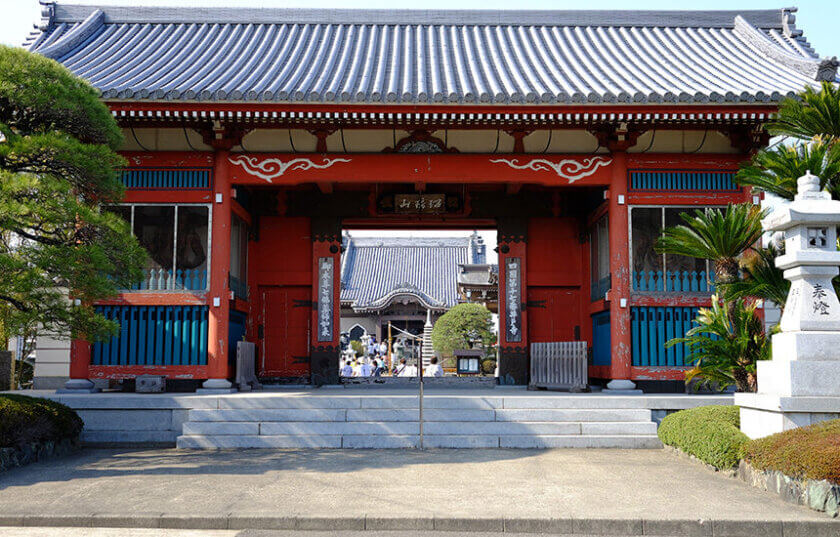
Standing with a dignified presence in the rural outskirts of Tokushima City, the temple impresses visitors with its massive vermilion Niō Gate. A gate with such a wide span is extremely rare even among the Shikoku pilgrimage temples. This gate is said to have been remodeled and relocated from the nagaya-mon (longhouse gate) of the Hachisuka clan’s villa, the feudal lords of the Tokushima Domain. Its grandeur is fitting for a daimyō residence. The two Niō guardian statues, each 2 meters tall, are designated as Important Cultural Properties of Japan.

The Well Dug by Kōbō Daishi — Still Flowing Today

The predecessor of this temple was Myōshō-ji, founded in Hakuhō 2 (674) by Emperor Tenmu.
When Kōbō Daishi later visited the temple, he heard local residents lamenting the poor quality of water in the area. Moved by their concern, he struck the ground with his staff, and fresh water sprang forth.
This legend is the origin of the temple’s name, Ido-ji — “Temple of the Well.”
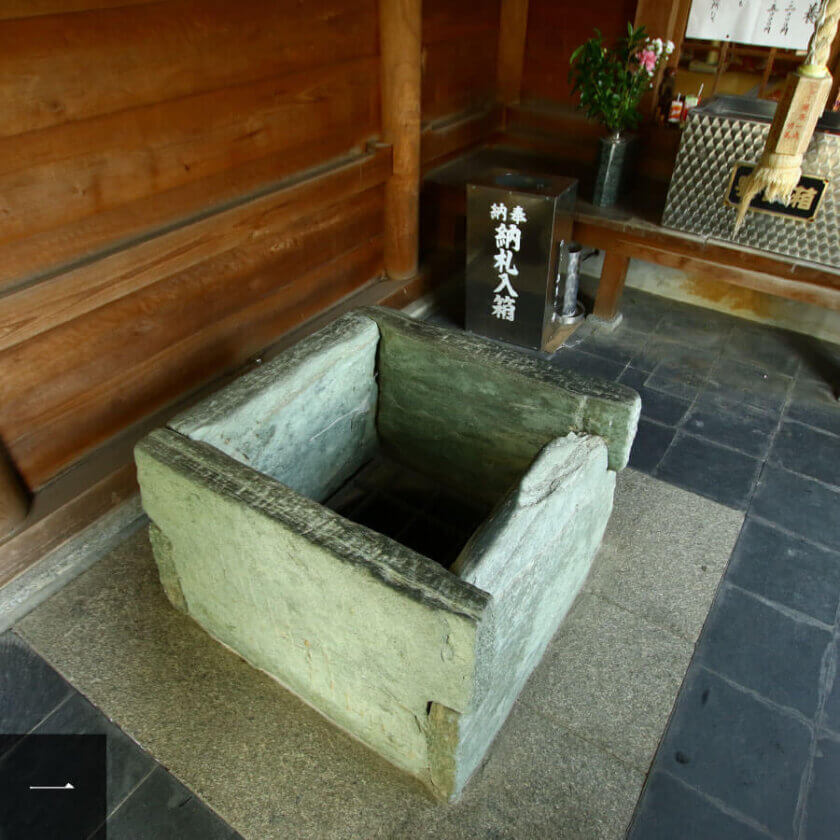
There is still a well on the grounds that preserves this story. It is located beside the main hall, inside the Higiri Daishi Hall. Even today, the well produces clear, pure water, and visitors may take home this sacred water associated with Kōbō Daishi. Local residents are often seen drawing water here. In the Higiri Daishi Hall, it is believed that wishes made “with a specified date” will certainly be fulfilled, so many people come to pray.

There are various traditions surrounding the well:

  • If you look into the well and your reflection appears, your wish will be granted.
  • If it does not appear, the wish will not be fulfilled, or misfortune may come.

These stories vary, and none are certain.

The Main Deity: Shichibutsu Yakushi Nyorai

The current reinforced-concrete main hall was rebuilt after a fire in 1968. Among the statues that survived the fire is an Eleven-Headed Kannon said to have been carved by Kōbō Daishi, dating from the Heian period, holding a pilgrim’s staff — an Important Cultural Property. The principal deity, Shichibutsu Yakushi Nyorai, depicts Yakushi Nyorai as the central figure surrounded by seven Buddhas on its aureole. This deity belongs to the Tendai tradition, and it is unusual for a Shingon temple to enshrine it as its main deity.

DATA

Address: 80-1 Idokita-yashiki, Kokufu-chō, Tokushima City, Tokushima Prefecture
Phone: 088-642-1324
Access: From JR Tokushima Station: Tokushima Bus via Hibi → Ryūō Danchi Line, 20 minutes.
Get off at Idō-ji-guchi, immediately nearby. Or: 25 minutes on foot from JR Tokushima Line Fuchū Station.
Parking: Available (Free)
Lodging: None

Your Pilgrimage, Your Art

Completing the Shikoku Pilgrimage is a once-in-a-lifetime journey—but what if you could preserve it in a form that lasts forever?

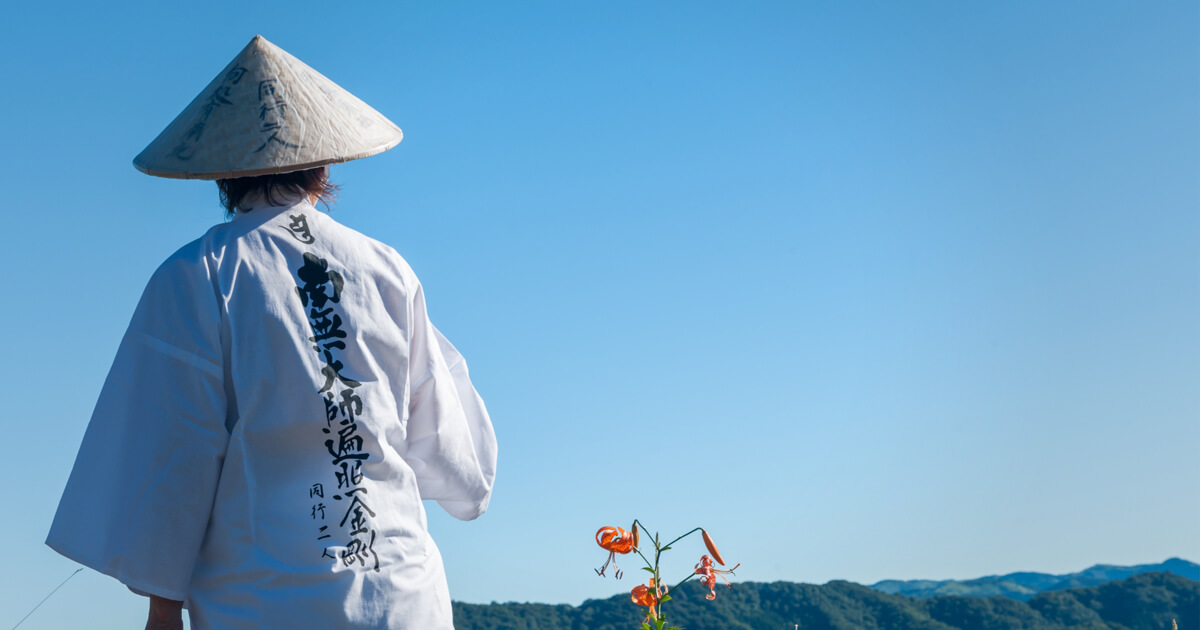
Many pilgrims collect red stamps and calligraphy from each temple on a special silk scroll called a nōkyōjiku.

This sacred record of your path can be transformed into a kakejiku—a traditional Japanese hanging scroll—not only preserving the memories, but turning them into a work of cultural and spiritual art.

It’s more than a souvenir—it’s a way to honor your journey, your prayers, and your growth.

To learn more about how a nōkyōjiku becomes a kakejiku, and what makes this transformation so meaningful, please refer the below link.


Contact Us

Please fill out the form below and submit for your inquiry.

❈FirstName
❈LastName
Country
❈E-mail
(❈Confirm E-mail)
❈Inquiry category Question
Consultation
Impression
Request
Others
❈Comment

is the mark for required item.


Your privacy is important to us. We are committed to protecting your privacy.

(or press ESC or click the overlay)

CEO Message

Our Feelings For Kakejiku


 The Japanese people have long set a high value on aesthetic senses since ancient times. As a result, the
peculiar culture which is not seen in other countries blossomed and many aspects of the modern Japanese
culture come from it. Parts of Japanese culture has been introduced to people in other countries recently,
so the number of people from other countries who are interested in Japanese culture has been increasing.
However, the Japanese aesthetic senses, which are the bases of Japanese culture, have been nurtured
through a long history, intertwining various elements intricately, such as climate, geographical features,
religion, customs and so on. Therefore, they are very difficult to understand not only for people from other
countries, but even for the Japanese people. I think the best tool which conveys these difficult senses
understandably is a “kakejiku.”
 The kakejiku (a hanging scroll; a work of calligraphy or a painting which is mounted and hung in an
alcove or on a wall) is a traditional Japanese art. It's no exaggeration to say that paintings are what
express aesthetic senses at all times and places. The kakejiku is an art which expresses the Japanese
aesthetic senses. The kakejiku has long been used in traditional Japanese events, daily life and so on since
ancient times. As a result, there are various customs of kakejiku in Japan; kakejiku and the life of the
Japanese are closely related. We can see Japanese values through kakejiku.
 The kakejiku is a cultural tradition which the Japanese people should be proud of. However, many people
in other countries don't know much about it because it hasn't been showcased as much. This is why I
decided to try to introduce it. The kakejiku world is very interesting and beautiful. We want not only the
Japanese, but also many people from other countries to know and enjoy it. I hope that many people will
love kakejiku someday.

(or press ESC or click the overlay)
Company Profile
syaoku.jpg(120220 byte)

Name Art Nomura


President Tatsuji Nomura


Founded1973


Established1992


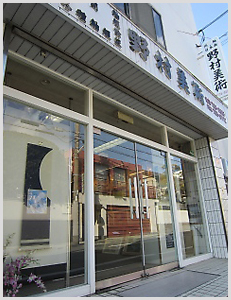
Address7-23 Babadori, Tarumi-ku, Kobe city,
Hyougo Prefecture, 655-0021, Japan


Capital10 million yen


URLhttp://nomurakakejiku.com


Our Business

 Art Nomura is an art dealer which produces kakejiku (hanging scrolls). We mount many paintings and calligraphic works in kakejiku in my factory. Kakejiku are our main product. We also remount and repair old or damaged kakejiku. We share the traditional Japanese art of kakejiku with people all over the world.


(or press ESC or click the overlay)
Access Map

Access Map


 The Japanese people have long set a high value on aesthetic senses since ancient times. As a result, the
peculiar culture which is not seen in other countries blossomed and many aspects of the modern Japanese
culture come from it. Parts of Japanese culture has been introduced to people in other countries recently,
so the number of people from other countries who are interested in Japanese culture has been increasing.
However, the Japanese aesthetic senses, which are the bases of Japanese culture, have been nurtured
through a long history, intertwining various elements intricately, such as climate, geographical features,
religion, customs and so on. Therefore, they are very difficult to understand not only for people from other
countries, but even for the Japanese people. I think the best tool which conveys these difficult senses
understandably is a “kakejiku.”
 The kakejiku (a hanging scroll; a work of calligraphy or a painting which is mounted and hung in an
alcove or on a wall) is a traditional Japanese art. It's no exaggeration to say that paintings are what
express aesthetic senses at all times and places. The kakejiku is an art which expresses the Japanese
aesthetic senses. The kakejiku has long been used in traditional Japanese events, daily life and so on since
ancient times. As a result, there are various customs of kakejiku in Japan; kakejiku and the life of the
Japanese are closely related. We can see Japanese values through kakejiku.
 The kakejiku is a cultural tradition which the Japanese people should be proud of. However, many people
in other countries don't know much about it because it hasn't been showcased as much. This is why I
decided to try to introduce it. The kakejiku world is very interesting and beautiful. We want not only the
Japanese, but also many people from other countries to know and enjoy it. I hope that many people will
love kakejiku someday.

(or press ESC or click the overlay)