
Shikoku Pilgrimage Temple: No. 16 Kannon-ji
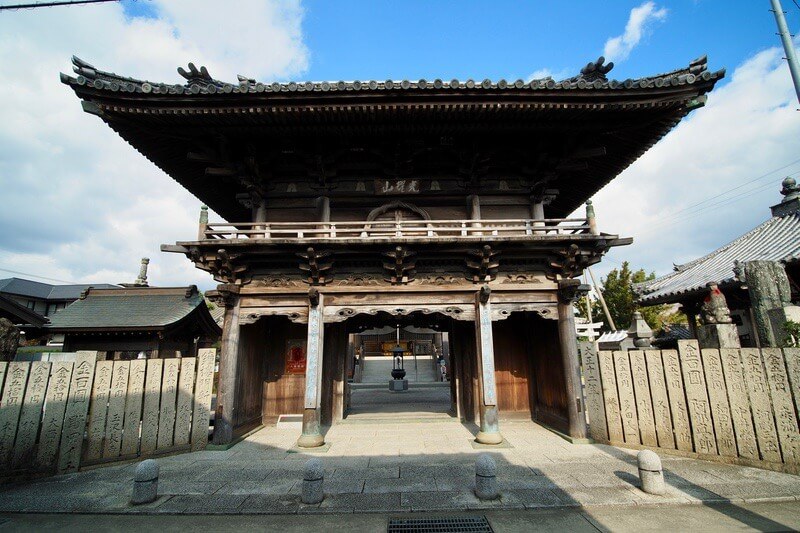
Kannon-ji

Kannon-ji: An Ancient Temple Standing in a Town That Tells Tales of Old.

  • Name: Kōyōzan Senju-in Kannon-ji
  • Main Deity: Senju Kannon Bosatsu (Thousand-Armed Kannon)
  • Goeika (Pilgrimage Song):
  • Never forget to guide us, Kannon-ji,
  • to the Pure Land of Amida in the Western Paradise.

Access From Temple No. 15, Kokubun-ji:

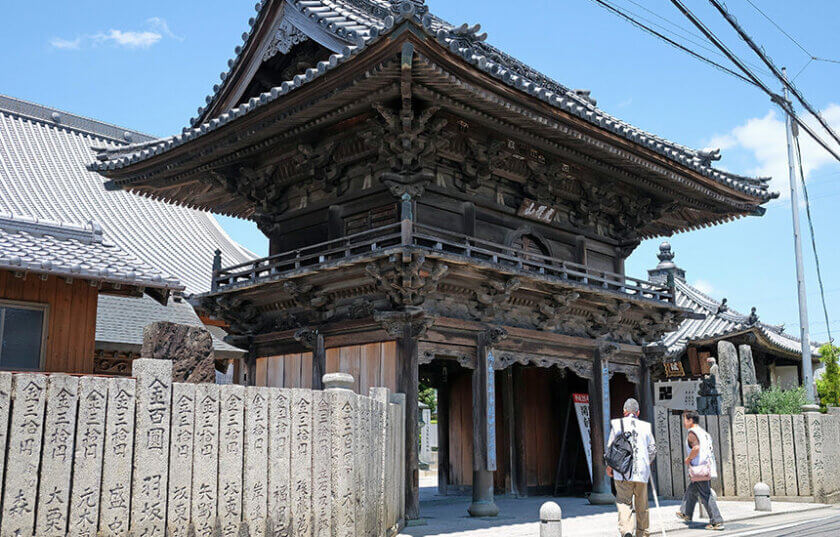
  • On Foot: Walk for a while on a path through a pastoral landscape, and as you enter the old townscape, you will see Kannon-ji’s magnificent two-story gate (Rōmon) towering over the town. 1.8 km, 25 minutes.
  •  
  • By Car: Same route as walking. 5 minutes.
  •  
  • Public Transport: Walk 10 minutes to the Kokubunji-mae bus stop, take the Tokushima Bus bound for Tokushima Station, get off at Nakamura after 3 minutes, then walk 10 minutes. Depending on the bus schedule, walking may be faster.

Conveying the Vestiges of History
Kannon-ji is located in Kokufu-chō, Tokushima City. As the place name suggests, this entire area was where the provincial office (Kokufu) was located during the Nara period, flourishing as the political and cultural center of Awa Province. Kokubun-ji (Temple No. 15) was also built against this historical background. It is said that this temple, like Kokubun-ji, was founded in Tenpyō 13 (741) as an Imperial Votive Temple (Chokugan-sho) by Emperor Shōmu. It is a temple that conveys a long history, likely having proudly raised its roof ridges (iraka) alongside Kokubun-ji in the provincial office of Awa.

The Mountain Gate Towering Over the Old Townscape

Kannon-ji’s precincts are compact. However, the main gate (Sanmon) facing the prefectural road is a dignified two-story tower gate (Rōmon) that draws attention in the quiet residential area, recalling its flourishing past. Most of the current temple buildings, including this tower gate, were rebuilt in 1659 after being destroyed by war fire during the Sengoku (Warring States) period.

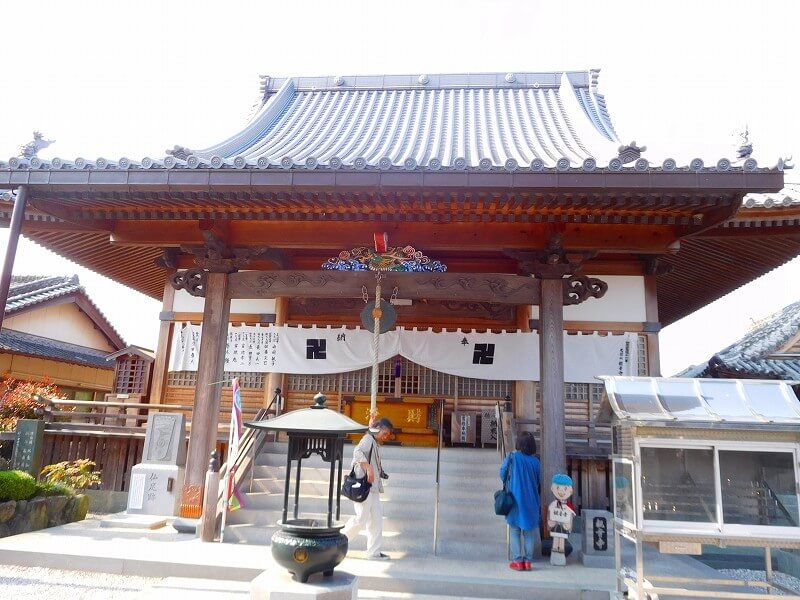
The precincts are not very large; immediately after passing through the tower gate is the main hall (Hondō). Although it is a plain wood (shiraki) building, the dragon carving applied to the frog-leg bracket (kaerumata) on the front portico (kōhai) is beautifully colored, making it very impressive.
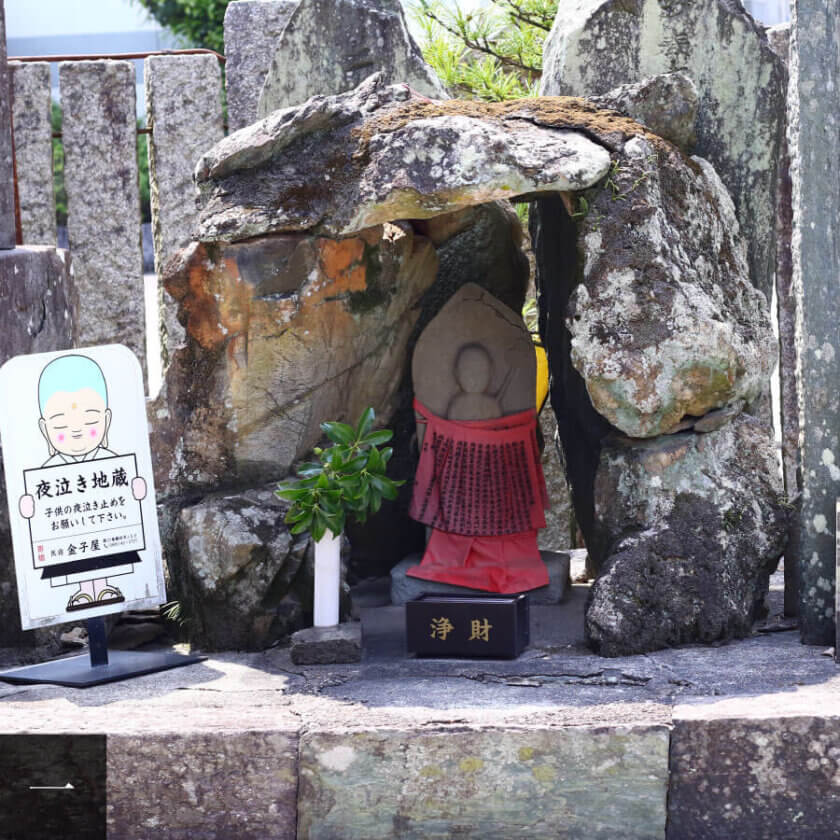
The Daishi Hall (Daishi-dō) is to the right facing the Main Hall. Between the Main Hall and the Daishi Hall is the Hachiman Sōsha Ryō Jinja, which also serves as the Sōsha (Grand Shrine) of Awa Province. It is said that worshipping here brings the same merit (kudoku) as visiting all the shrines in Awa Province. In addition, there is also the “Yonaki Jizō” (Night-Crying Jizō) which calms children’s night crying.
Legend of the Woman Engulfed in Flames

Long ago, a female pilgrim who was taking shelter from the rain at this temple was drying her wet clothes over a bonfire when the fire caught her garments, resulting in severe burns. In fact, this woman had a poor relationship with her mother-in-law and had once tied her mother-in-law to a pillar and beaten her with flaming firewood (takigi). It is easy to dismiss this story as just karmic retribution (Inga Ōhō), but one senses that there is something more to it. This episode makes one feel that sensing that “something more” is what the Eighty-Eight Temple Pilgrimage is truly about.

DATA

Address: 49-2 Kannon-ji, Kokufu-chō, Tokushima City, Tokushima Prefecture
Phone: 088-642-2375
Access: 25 minutes on the Tokushima Bus Kamoshima Line from JR Tokushima Station, alight at Kannonji-kita (North of Kannon-ji), then 5 minutes on foot.
Parking: Available (Free)
Lodging: None

Your Pilgrimage, Your Art

Completing the Shikoku Pilgrimage is a once-in-a-lifetime journey—but what if you could preserve it in a form that lasts forever?

Many pilgrims collect red stamps and calligraphy from each temple on a special silk scroll called a nōkyōjiku.

This sacred record of your path can be transformed into a kakejiku—a traditional Japanese hanging scroll—not only preserving the memories, but turning them into a work of cultural and spiritual art.

It’s more than a souvenir—it’s a way to honor your journey, your prayers, and your growth.

To learn more about how a nōkyōjiku becomes a kakejiku, and what makes this transformation so meaningful, please refer the below link.


Contact Us

Please fill out the form below and submit for your inquiry.

❈FirstName
❈LastName
Country
❈E-mail
(❈Confirm E-mail)
❈Inquiry category Question
Consultation
Impression
Request
Others
❈Comment

is the mark for required item.


Your privacy is important to us. We are committed to protecting your privacy.

(or press ESC or click the overlay)

CEO Message

Our Feelings For Kakejiku


 The Japanese people have long set a high value on aesthetic senses since ancient times. As a result, the
peculiar culture which is not seen in other countries blossomed and many aspects of the modern Japanese
culture come from it. Parts of Japanese culture has been introduced to people in other countries recently,
so the number of people from other countries who are interested in Japanese culture has been increasing.
However, the Japanese aesthetic senses, which are the bases of Japanese culture, have been nurtured
through a long history, intertwining various elements intricately, such as climate, geographical features,
religion, customs and so on. Therefore, they are very difficult to understand not only for people from other
countries, but even for the Japanese people. I think the best tool which conveys these difficult senses
understandably is a “kakejiku.”
 The kakejiku (a hanging scroll; a work of calligraphy or a painting which is mounted and hung in an
alcove or on a wall) is a traditional Japanese art. It's no exaggeration to say that paintings are what
express aesthetic senses at all times and places. The kakejiku is an art which expresses the Japanese
aesthetic senses. The kakejiku has long been used in traditional Japanese events, daily life and so on since
ancient times. As a result, there are various customs of kakejiku in Japan; kakejiku and the life of the
Japanese are closely related. We can see Japanese values through kakejiku.
 The kakejiku is a cultural tradition which the Japanese people should be proud of. However, many people
in other countries don't know much about it because it hasn't been showcased as much. This is why I
decided to try to introduce it. The kakejiku world is very interesting and beautiful. We want not only the
Japanese, but also many people from other countries to know and enjoy it. I hope that many people will
love kakejiku someday.

(or press ESC or click the overlay)
Company Profile
syaoku.jpg(120220 byte)

Name Art Nomura


President Tatsuji Nomura


Founded1973


Established1992


Address7-23 Babadori, Tarumi-ku, Kobe city,
Hyougo Prefecture, 655-0021, Japan


Capital10 million yen


URLhttp://nomurakakejiku.com


Our Business

 Art Nomura is an art dealer which produces kakejiku (hanging scrolls). We mount many paintings and calligraphic works in kakejiku in my factory. Kakejiku are our main product. We also remount and repair old or damaged kakejiku. We share the traditional Japanese art of kakejiku with people all over the world.


(or press ESC or click the overlay)
Access Map

Access Map


 The Japanese people have long set a high value on aesthetic senses since ancient times. As a result, the
peculiar culture which is not seen in other countries blossomed and many aspects of the modern Japanese
culture come from it. Parts of Japanese culture has been introduced to people in other countries recently,
so the number of people from other countries who are interested in Japanese culture has been increasing.
However, the Japanese aesthetic senses, which are the bases of Japanese culture, have been nurtured
through a long history, intertwining various elements intricately, such as climate, geographical features,
religion, customs and so on. Therefore, they are very difficult to understand not only for people from other
countries, but even for the Japanese people. I think the best tool which conveys these difficult senses
understandably is a “kakejiku.”
 The kakejiku (a hanging scroll; a work of calligraphy or a painting which is mounted and hung in an
alcove or on a wall) is a traditional Japanese art. It's no exaggeration to say that paintings are what
express aesthetic senses at all times and places. The kakejiku is an art which expresses the Japanese
aesthetic senses. The kakejiku has long been used in traditional Japanese events, daily life and so on since
ancient times. As a result, there are various customs of kakejiku in Japan; kakejiku and the life of the
Japanese are closely related. We can see Japanese values through kakejiku.
 The kakejiku is a cultural tradition which the Japanese people should be proud of. However, many people
in other countries don't know much about it because it hasn't been showcased as much. This is why I
decided to try to introduce it. The kakejiku world is very interesting and beautiful. We want not only the
Japanese, but also many people from other countries to know and enjoy it. I hope that many people will
love kakejiku someday.

(or press ESC or click the overlay)