Shikoku Pilgrimage Temple: No. 15 Kokubunji

Kokubunji: Ruins from the Nara Period Tell the History.
- Name: Yakuōzan Konjiki-in Kokubunji
- Main Deity: Yakushi Nyorai (Bhaisajyaguru / Medicine Buddha)
- Goeika (Pilgrimage Song):
- Just as autumn leaves are dyed in various shades of light and dark,
- so too do we wander through the cycle of birth and death.
Access From Temple No. 14 (Jōrakuji Temple):
- On Foot: A straight path going through a residential area amidst a rural landscape. 800m, 15 minutes.
- By Car: Same route as the walking path. 2–3 minutes.
- Public Transport: Local buses are available, but depending on the schedule, it is often faster to walk.
“Five-Temple Pilgrimage” Area
Temples 13 through 17 are all located within Tokushima City. Since you can easily visit all five on foot in a single day, this section is called the “Five-Temple Pilgrimage” (Gokasho Mairi). From Temple 14 Jōrakuji to here, Temple 15 Kokubunji, is only 800m. Even walking slowly, you can arrive in 15 minutes.
The Tiles of the Tenpyō Era
Kokubunji is one of the provincial temples established in the 13th year of Tenpyō (741) by the order of Emperor Shomu in 66 locations nationwide. It served as a place of prayer for the protection of the nation. It is said to have been a vast temple complex with many halls, including a seven-storied pagoda. However, the temple’s power eventually declined, and all the buildings were lost to fire during the Warring States period.
Ruins of the original Tenpyō-era Kokubunji are scattered throughout the grounds. The foundation stone for the central pillar of the seven-storied pagoda, located beside the bell tower, was excavated from a nearby rice field and brought here. The grounds are designated as a Tokushima Prefectural Historic Site known as the “Awa Kokubunji Ruins.”
The Majestic Main Hall
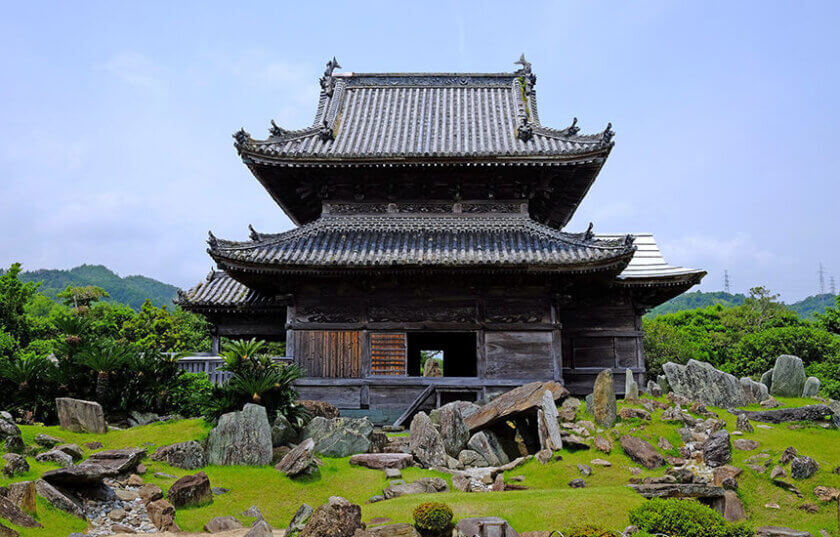
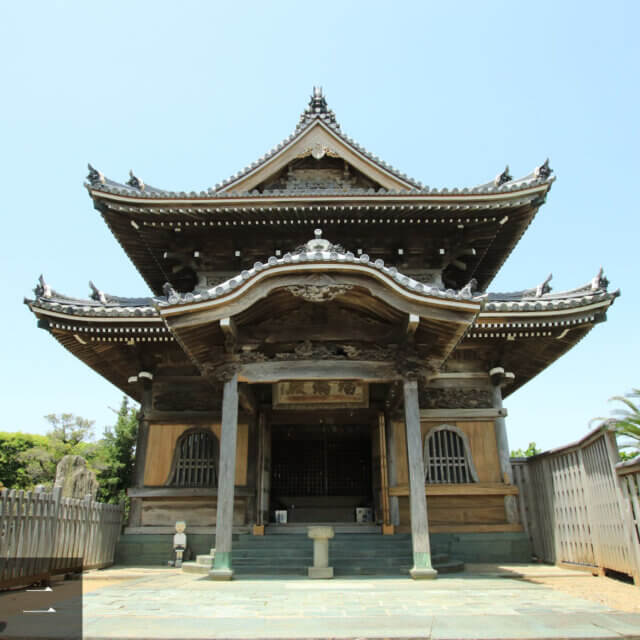
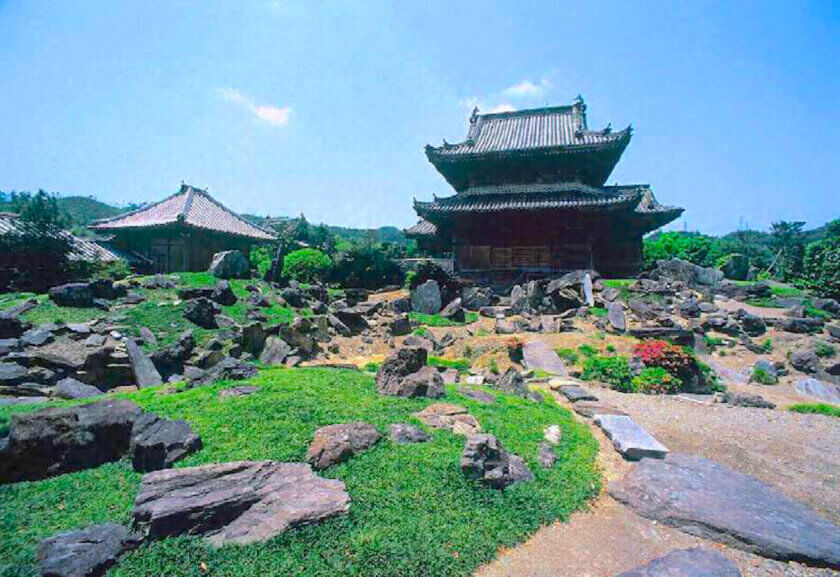
The temple buildings of Kokubunji stand out conspicuously amidst the rural landscape. Passing through the sturdy, formal tiled mountain gate (Sanmon), the Main Hall stands in front, the Bell Tower to the left, and the Daishi Hall to the right. The current Main Hall was rebuilt in the late Edo period. It is a multi-storied Irimoya (hip-and-gable) style structure with a mokoshi (pent roof), making it look like a two-story building at first glance. Its majestic towering appearance seems to convey the vestiges of the great temple it once was, overwhelming visitors.
Nationally Designated Scenic Garden
Next to the Main Hall lies a garden that underwent major renovations in the late Edo period. You can see dynamic rock arrangements spread over approximately 1,900 square meters. It is said to be a garden that influenced Mirei Shigemori, a representative landscape architect of the Showa era. Admission fee: 300 yen.
DATA
Address: 718-1 Yano, Kokufu-chō, Tokushima City, Tokushima Prefecture
Phone: 088-642-0525
Access: From JR Tokushima Station, take the Tokushima Bus “Kamiyama Line” (via Enmei) for 25 minutes. Get off at “Kokubunji-mae” and walk 10 minutes.
Parking: Available (Free)
Lodging: None
Your Pilgrimage, Your Art
Completing the Shikoku Pilgrimage is a once-in-a-lifetime journey—but what if you could preserve it in a form that lasts forever?
Many pilgrims collect red stamps and calligraphy from each temple on a special silk scroll called a nōkyōjiku.
This sacred record of your path can be transformed into a kakejiku—a traditional Japanese hanging scroll—not only preserving the memories, but turning them into a work of cultural and spiritual art.
It’s more than a souvenir—it’s a way to honor your journey, your prayers, and your growth.
To learn more about how a nōkyōjiku becomes a kakejiku, and what makes this transformation so meaningful, please refer the below link.